
Flowers
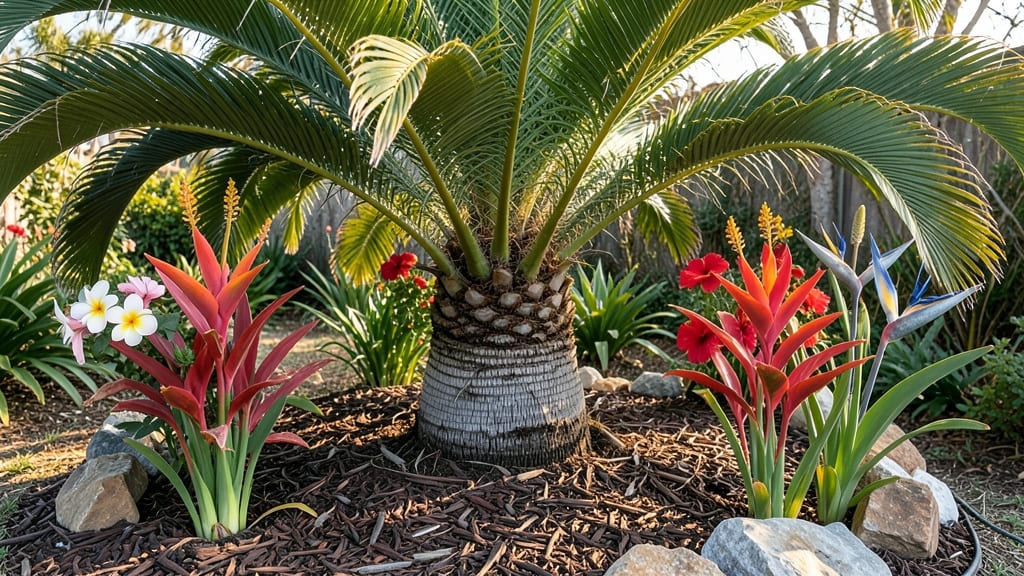
Creating a stunning contrast with flowers around your palm tree transforms it from a standalone feature into a tropical oasis centerpiece that steals every glance. ✨ I learned this the hard way—my first attempt with mismatched plants looked chaotic, but once I paired bold hibiscus with silver-blue dusty miller, the effect became show-stopping.
The key is balancing textures and heights while respecting the palm’s natural silhouette.
Start with sun-loving perennials like canna lilies or bird-of-paradise for drama, then layer in low-growing ground covers like aspidistra or mondograss to soften the base. For cooler climates, opt for heat-tolerant annuals like bougainvillea or lantana—they thrive where palms do and demand minimal care.
Soil prep matters too: amending with compost ensures roots stay happy without competing for nutrients.
You’ll end up with a lush, multi-season display where flowers frame the palm’s fronds like a living sculpture. The right spacing (typically 3-5 feet apart) prevents overcrowding while maintaining that "wild but intentional" look.
And here’s the best part: once established, these pairings require just weekly watering and occasional deadheading to keep blooms coming.
Works in containers or beds, from Florida to California—just swap out frost-sensitive plants for evergreen shrubs like abutilon or gardenias in chillier zones. The secret? Let the palm’s structure guide your choices rather than forcing a theme. Ready to make your outdoor space pop?
📚 In This Guide
- What you need
- Instructions
- Tips and common mistakes
- Wrapping up and next steps
What you need
- ● Palm Tree: 1 mature palm (e.g., Phoenix canariensis, Washingtonia robusta, or Trachycarpus fortunei). Choose a specimen with a sturdy trunk and lush fronds (height: 6–12 ft, depending on space).
- ● Flowers: Mix of 3–5 contrasting blooms (quantities adjust based on palm size): 1–2 Bird of Paradise (Strelitzia reginae) (for dramatic orange/blue spikes)
- ● 3–5 Plumeria (Frangipani) (white, pink, or yellow for fragrance)
- ● 6–8 Bougainvillea (vibrant purple/pink clusters)
- ● 4–6 Hibiscus (Hibiscus rosa-sinensis) (tropical red/pink blooms)
- ○ Optional: Heliconia or Canna lilies for extra height and texture.
- ● Soil & Mulch: 5–10 bags of well-draining potting mix (e.g., cactus/succulent blend for containers)
- ● 2–3 yards of organic mulch (bark or pine needles to retain moisture)
- ● Gardening Tools: 1 shovel (for planting)
- ● 1 hand trowel (for delicate flower placement)
- ● 1 pruners (sterilized, for trimming)
- ● 1 garden rake (to level soil)
- ● Containers (if applicable): 1–2 large planters (24–36" diameter, with drainage holes)
- ○ Optional: decorative pots (for trailing flowers like Bougainvillea)
- ● Extras: 1 watering can (with rose attachment for gentle watering)
- ● 1 slow-release fertilizer (e.g., 10-10-10 or palm-specific formula)
- ○ Optional: pebbles or river rocks (for drainage layers)
- ● Location: Full sun (6+ hours/day) or partial shade (for delicate flowers like Plumeria). Avoid frost-prone areas unless using potted palms.
- ● Climate: USDA Zones 9–11 (or container-grown for cooler climates). Pro tip: 🌡️ If in a colder zone, bring potted flowers indoors in winter!
- ● Water Access: Drip irrigation or hose for consistent moisture (palms hate soggy roots!).
Step-by-step guide for planting flowers around a palm tree
Here's how to create a stunning tropical display that complements your palm's natural beauty.
🌱 Step 1: Assess Your Palm Tree's Light and Soil Conditions
First, observe your palm's natural light exposure—this determines which flowers will thrive nearby. Most tropical palms prefer bright, indirect light, so look for areas receiving 4-6 hours of filtered sunlight daily. Dig a small soil sample near the palm's drip line (the outer edge of its canopy) to check drainage. If water pools after 30 minutes, you'll need to amend the soil with 3-4 inches of coarse sand or perlite to improve aeration.
Palm trees create microclimates where humidity stays high and roots compete for nutrients. Choose flowers that tolerate these conditions—think heliconias, hibiscus, or bird-of-paradise—which all appreciate slightly acidic, well-draining soil. If your palm's roots are shallow, avoid planting directly against the trunk where competition for water is fierce.
🌿 Step 2: Select Complementary Flowers for Height and Texture
Balance your palm's vertical structure with flowers that create visual contrast in both height and foliage texture. For a 4-6 foot palm, plant 3-4 flowering shrubs in a staggered arrangement around the base, spaced 2-3 feet apart. Try plumbago for trailing blue blooms or ginger lilies for bold, upright spikes that echo the palm's fronds. Mix in ground covers like creeping jenny to soften the space between taller plants.
Here's the thing—color matters just as much as form. Pair your palm's green tones with warm oranges (like bougainvillea) or deep purples (like allamanda) to create a vibrant tropical palette. Avoid planting flowers that will outcompete the palm for water, like thirsty canas or gardenia, unless you're willing to supplement with drip irrigation during dry spells.
☀️ Step 3: Plant with Proper Spacing and Mulching
Dig holes twice as wide as the root ball but only as deep as the container's base to prevent burying stems. Gently remove plants from their pots and loosen any circling roots with your fingers—this encourages outward growth. Place each flower 1-2 inches deeper than it grew in the nursery to stabilize it in the ground. Water deeply before backfilling with native soil to eliminate air pockets.
Spread 2-3 inches of organic mulch (like pine bark fines) over the planting area, keeping it 6 inches away from the palm trunk to prevent rot. This mulch layer retains moisture while suppressing weeds—critical in tropical designs where humidity can accelerate fungal growth. Replenish mulch annually as it breaks down, and avoid thick layers that smother roots.
💧 Step 4: Establish a Watering Routine for New Plantings
Water newly planted flowers deeply every 2-3 days for the first 2-3 weeks, then taper to once weekly once they're established. Check soil moisture by sticking your finger 2 inches deep—if it feels dry, it's time to water. Early morning is best to reduce evaporation and fungal risks. Avoid overhead sprinkling, which can damage palm fronds and create unsightly mineral deposits.
Real talk: Overwatering is the fastest way to kill your new tropical display. If the soil stays soggy for more than 48 hours after watering, your drainage needs improvement. Adjust by adding 1-2 inches of gravel below the root zone of future plantings or consider raised beds if your native soil is clay-heavy.
Tips & tricks for perfect tropical oasis centerpieces
Between us, these little details make all the difference in creating a cohesive tropical display that truly complements your palm tree.
Light Assessment: That 4-6 hour sunlight window is critical—use a simple light meter app or observe shadows at different times of day. Morning sun is gentler than afternoon, so position sun-loving flowers like bougainvillea on the west side where they'll get that afternoon glow without scorching. For shade-tolerant varieties like impatiens, plant them on the north side where indirect light dominates.
Soil Preparation: When amending with 3-4 inches of coarse sand or perlite, mix it thoroughly with the existing soil to create a uniform texture. I've seen too many tropical displays fail because the amended layer was just a thin top dressing. Use a garden fork to work it in at least 6 inches deep—this prevents water pooling right at the root zone where your flowers will establish.
Planting Depth: That 1-2 inch deeper planting recommendation isn't just about stability—it accounts for soil settling after watering. When you water deeply after planting, the soil will compact slightly. Planting deeper ensures the root flare stays above ground level and prevents crown rot, which is especially problematic in tropical climates with high humidity.
Pro Tips for Flowers Around Palm Tree
- Between us, these little details make all the difference in creating a cohesive tropical display that truly complemen...
- Light Assessment: That 4-6 hour sunlight window is critical—use a simple light meter app or observe shadows at differ...
- Soil Preparation: When amending with 3-4 inches of coarse sand or perlite, mix it thoroughly with the existing soil t...
Frequently asked questions
Got questions about creating a stunning flowers around palm tree display? You’re not alone! Here are some of the most common questions—and their answers—to help you craft the perfect tropical vibe.
What are the best flowers to plant near a palm tree?
Opt for drought-tolerant, sun-loving blooms like bird of paradise, hibiscus, or plumeria. Avoid heavy-rooted plants (like large shrubs) that compete with the palm’s shallow roots. Pro tip: Use native or Mediterranean varieties for low maintenance!
How long does it take for flowers to grow around a palm tree?
Most tropical flowers bloom within 3–6 months if planted in ideal conditions (full sun, well-draining soil). Palms grow slower—expect 1–3 years for mature height, but flowers can add instant color! Troubleshooting: Slow growth? Check soil moisture and sunlight.
Do palm trees need extra water when planting flowers nearby?
Not necessarily! Palm trees thrive in moderate water, while many tropical flowers (like bougainvillea) are drought-resistant. Water deeply 2–3 times/week for the first month, then taper off. Warning: Overwatering can drown palm roots—always use well-draining soil.
Can I use artificial flowers instead of real ones?
Artificial flowers are low-maintenance, pest-free, and perfect for renters or dry climates. Choose weatherproof materials (polyester or silk) and secure them with UV-resistant ties. Bonus: They never wilt or require replanting!
Why aren’t my flowers blooming near the palm tree?
Common culprits: too much shade (palms cast dense canopies), poor soil (amend with compost), or nutrient deficiencies (use a balanced fertilizer). Fix it: Prune palm fronds to improve airflow or relocate flowers to sunnier spots.
Wrapping up and next steps
Creating a stunning tropical oasis with flowers around a palm tree is all about embracing bold contrasts and vibrant energy! 🌺✨ Whether you’re designing a backyard retreat or a container garden, the key is balancing textures, colors, and heights to craft a breathtaking focal point.
With the right plants, placement, and care, your space will feel like a slice of paradise—year-round.
Ready to bring this vision to life? Start small: pick one or two showstopper plants (like hibiscus or birds of paradise) and experiment with arrangements. Don’t forget to share your progress—we’d love to see your tropical masterpiece! 🌴💚