
Container Gardens
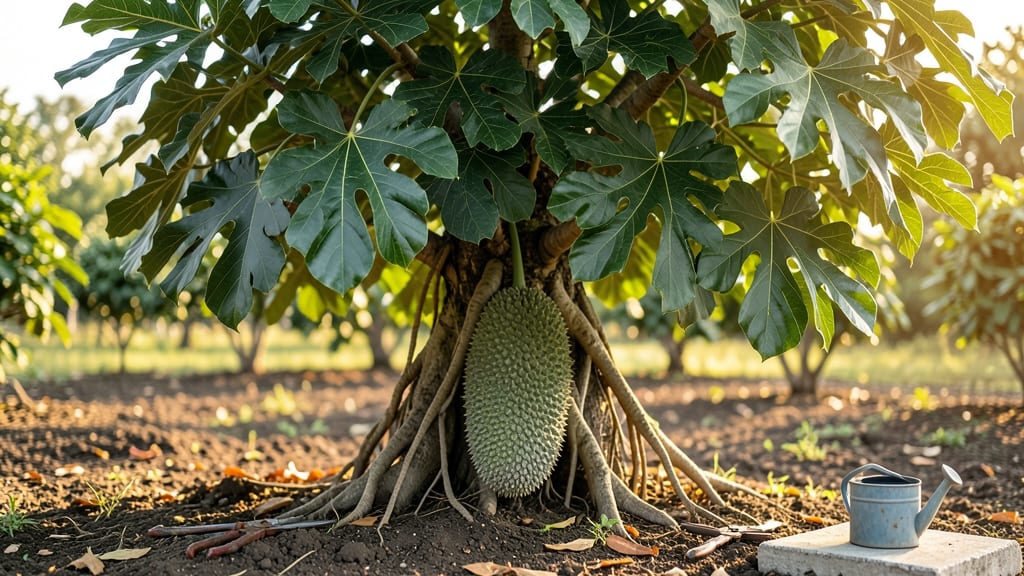
Growing a jackfruit tree in containers lets you enjoy its massive tropical leaves and fragrant flowers—even if you live in a small space or cooler climate. 🌿 I’ve grown mine in a 15-gallon pot for three years, and it’s thrived with the right care, proving this isn’t just for tropical paradises.
The key is mimicking its natural jungle conditions: rich soil, consistent warmth, and plenty of humidity.
The trick is balancing its needs with container limitations. Jackfruit trees love well-draining soil mixed with compost, and they need at least 6 hours of sunlight daily—but they’ll tolerate partial shade in hotter zones.
Water when the top inch feels dry, and use a humidity tray or misting in dry climates. Frost is the enemy, so move pots indoors or to a garage before temperatures dip below 40°F.
With patience, you’ll see rapid growth—10+ feet tall in containers—and those iconic large, glossy leaves that make any space feel like a rainforest retreat. The real reward?
Harvesting sweet, custard-like fruit if you’re in a warm enough zone. Even if you don’t get fruit, the sheer drama of its foliage makes it worth every effort.
Best for subtropical gardeners, urban balconies, or greenhouses. Just remember: bigger pots mean bigger trees, and pruning keeps them manageable. Let’s get that tropical canopy started!
📚 In This Guide
- What you need
- Instructions
- Tips and common mistakes
- Wrapping up and next steps
What you need
- ● Jackfruit Seed or Sapling: 1 fresh, organic jackfruit seed (or a 1–3 ft. potted sapling from a nursery)
- ● Pro tip: 💡 Choose a seed from a ripe, healthy fruit for the best germination rates!
- ● Container: 1 large, durable pot (minimum 20–24 inches in diameter and 24–30 inches deep)
- ● Materials: Fiberglass, plastic, or ceramic (avoid metal—it heats up too much)
- ○ Optional: Drainage saucer or cache pot for water retention (great for hot climates).
- ● Growing Medium: High-quality well-draining potting mix (50% coco coir or peat moss + 50% perlite/pumice)
- ○ Optional: Add 10–20% compost or worm castings for extra nutrients.
- ● Tools: Trowel or small shovel
- ● Garden gloves (to protect from sap and sharp edges)
- ● Watering can or hose with a gentle spray nozzle
- ○ pH testing kit (optional but helpful—jackfruit thrives in 5.5–7.0 pH)
- ● Climate: Jackfruit loves warmth (75–90°F) and humidity (60%+). If you’re in a cooler zone (<40°F), grow it indoors near a sunny window or under grow lights.
- ● Sunlight: 6+ hours of direct sunlight daily (south-facing window or outdoor spot)
- ○ Optional: LED grow lights (12–16 hrs/day) for indoor setups.
- ● Water Access: Regular access to soft, room-temperature water (chlorine-free if possible).
- ● Space: Ensure your container has stable support (jackfruit trees can grow 60+ ft. tall—pruning will be key!).
Step-by-step guide to growing a jackfruit tree in containers
Here's how to nurture a tropical giant in limited space—no greenhouse needed.
🌱 Step 1: Select and Prepare the Right Container
Choose a 5-gallon or larger container with drainage holes—jackfruit roots need room to spread. I opt for unglazed ceramic or fabric pots because they breathe better and prevent root rot. The container must be at least 24 inches deep to accommodate the tree's extensive root system as it matures.
Line the bottom with 2-3 inches of coarse gravel or broken pottery pieces to improve drainage. This prevents waterlogging, which is deadly for jackfruit. If your pot has no drainage, drill holes yourself—jackfruit roots suffocate in soggy soil. I always test drainage by filling the pot with water and ensuring it drains completely within 10-15 minutes.
🌿 Step 2: Use Fast-Draining, Airy Soil Mix
Jackfruit thrives in well-aerated, slightly acidic soil with a pH between 5.5 and 6.5. Mix 60% high-quality potting soil, 20% perlite, and 20% coconut coir to create a light, fluffy medium. Avoid garden soil—it compacts and suffocates roots.
Fill the container one-third full with your mix, then place the young jackfruit tree in the center. The root flare (where roots meet the trunk) should sit just above the soil line—burying it too deep invites rot. Gently backfill with more mix, pressing lightly to eliminate air pockets but not compacting the soil.
☀️ Step 3: Provide Warmth, Humidity, and Indirect Light
Jackfruit trees need full sun exposure (6-8 hours daily) but struggle with direct afternoon heat. Place your container in a bright, sheltered spot like a covered patio or under a 30% shade cloth during peak summer hours. If indoors, position near a south-facing window with supplemental grow lights to extend daylight to 12-14 hours daily.
Mimic tropical humidity by grouping the pot with other plants or using a humidifier. Aim for 60-70% humidity—jackfruit leaves curl and brown if the air feels dry. I mist the foliage daily in dry climates, but avoid wetting leaves in humid conditions to prevent fungal issues.
💧 Step 4: Water Deeply and Maintain Consistent Moisture
Water when the top 2 inches of soil feel dry—jackfruit roots are sensitive to both drought and waterlogging. Stick your finger into the soil: if it’s dry past your first knuckle, it’s time to water. Pour slowly until water runs freely from the drainage holes, then empty the saucer to prevent root rot.
During the growing season (spring-fall), water 2-3 times per week, adjusting for temperature and humidity. In winter, reduce to once every 7-10 days as growth slows. Overwatering is the #1 killer—yellowing leaves or mushy stems mean you’re drowning the roots.
✂️ Step 5: Prune and Fertilize for Healthy Growth
Prune only to shape—jackfruit trees don’t need heavy pruning. Remove dead, yellowed, or crossing branches with sterilized shears in late winter or early spring. Cut just above a leaf node to encourage new growth. Avoid heavy pruning, as jackfruit responds poorly to aggressive trimming.
Fertilize every 4-6 weeks during the growing season with a balanced, slow-release fertilizer (10-10-10 ratio). In early spring, switch to a high-potassium fertilizer to boost fruit production. I always water the tree 24 hours before fertilizing to prevent root burn. Stop fertilizing in fall and winter—resting roots absorb nutrients more efficiently.
Tips & tricks for container-grown jackfruit trees
Real talk: Growing jackfruit in containers isn't rocket science, but these small details make all the difference between a thriving tropical beauty and a struggling houseplant. Here's what nobody tells you—
Container Size Matters: That 5-gallon minimum isn't just a suggestion—jackfruit roots grow aggressively. I've seen trees outgrow 10-gallon pots within a year. If you're planting a mature specimen, consider a 15-20 gallon container right away. The deeper the pot (at least 24 inches), the better it handles seasonal temperature swings without stressing the roots. Think of it as giving your tree's feet room to breathe and stretch.
Soil Science Secret: The 60-20-20 soil mix is your foundation, but here's the real game-changer: add 1 cup of worm castings to that mix before planting. The microbial activity in castings helps break down nutrients faster, giving your jackfruit an immediate growth boost. And if you're worried about soil pH drifting outside that 5.5-6.5 range, test it every 3 months—jackfruit roots are sensitive to even slight shifts in acidity.
Lighting Strategy: That 6-8 hours of sun is non-negotiable, but the devil's in the details. If you're using grow lights, position them 12-18 inches above the canopy—closer than that can scorch leaves, while farther away won't provide enough intensity. I've found that supplementing with LED grow lights (specifically full-spectrum ones) for those 12-14 hours works better than traditional bulbs. The key is mimicking tropical sunlight patterns without burning the delicate foliage.
Winter Survival Hack: When temperatures dip below 50°F, move your container to a garage or unheated sunroom where it gets indirect light. Jackfruit trees go semi-dormant in winter, but they still need 4-6 hours of light daily to survive. Reduce watering to once every 10-14 days and cut fertilizing completely. The tree's natural defenses kick in when you match its seasonal rhythms—it's like helping it hibernate properly.
Pro Tips for Growing Jackfruit Tree
- Real talk: Growing jackfruit in containers isn't rocket science, but these small details make all the difference betw...
- Container Size Matters: That 5-gallon minimum isn't just a suggestion—jackfruit roots grow aggressively. I've seen tr...
- Soil Science Secret: The 60-20-20 soil mix is your foundation, but here's the real game-changer: add 1 cup of worm ca...
Frequently asked questions
Got questions about growing jackfruit trees in containers? You’re not alone!
Here are answers to the most common queries—from first-time growers to seasoned plant parents.
How long does it take for a jackfruit tree to bear fruit in a container?
A jackfruit tree typically takes 5–7 years to bear fruit, even in containers—patience is key! Dwarf varieties may fruit slightly sooner (3–5 years), but consistent care (sunlight, water, and nutrients) speeds up the process. If your tree isn’t flowering after 5 years, check for light exposure or pests.
Can I grow a jackfruit tree indoors?
Jackfruit trees thrive outdoors in warm climates (USDA zones 10–11) but can be grown indoors near a sunny window or under grow lights as a houseplant. However, they’re large (20–30 ft tall!) and need bright, direct light for 6+ hours daily. For containers, opt for dwarf varieties like ‘Chompu’ or ‘Kohala’ to manage space.
How do I protect my jackfruit tree from frost or cold weather?
Jackfruit trees are tropical and cannot tolerate frost—even light freezes (below 32°F/0°C) can kill them. If you live in a cooler climate:
- Move potted trees indoors before temps drop.
- Use a greenhouse or cold frame for outdoor plants.
- Mulch the base with straw or burlap for insulation.
- Consider heating mats for young trees in containers.
What can I do if my jackfruit tree isn’t flowering?
No flowers? Don’t panic—jackfruit trees need specific conditions to bloom:
- Age: Most trees need 3–5 years to mature.
- Light: Full sun (6+ hours daily) is non-negotiable.
- Nutrients: Feed with phosphorus-rich fertilizer (like 10-10-10) in spring.
- Stress: Slight water stress (let soil dry slightly) can trigger blooms.
What pests or diseases should I watch for in container-grown jackfruit?
Jackfruit trees are generally pest-resistant, but keep an eye out for:
- Scale insects (sap-sucking pests) – Treat with neem oil.
- Mealybugs – Wipe off with soapy water.
- Root rot (from overwatering) – Ensure well-draining soil.
- Fungal leaf spot – Improve air circulation and avoid wetting foliage.
Inspect leaves weekly and act fast if you spot trouble!
Wrapping up and next steps
Growing a jackfruit tree in containers is a rewarding journey that brings a taste of the tropics to your space!
With the right care—sunlight, well-draining soil, and patience—you’ll enjoy lush foliage, fragrant flowers, and eventually, sweet, exotic fruit. Don’t let challenges discourage you; even small setbacks are part of the learning process.
Now that you’re armed with tips and tricks, take the next step! Start with a young sapling or seedling, and watch your container garden transform into a thriving jackfruit haven. Happy growing—your tropical oasis awaits! 🌿🌴