
Blooming
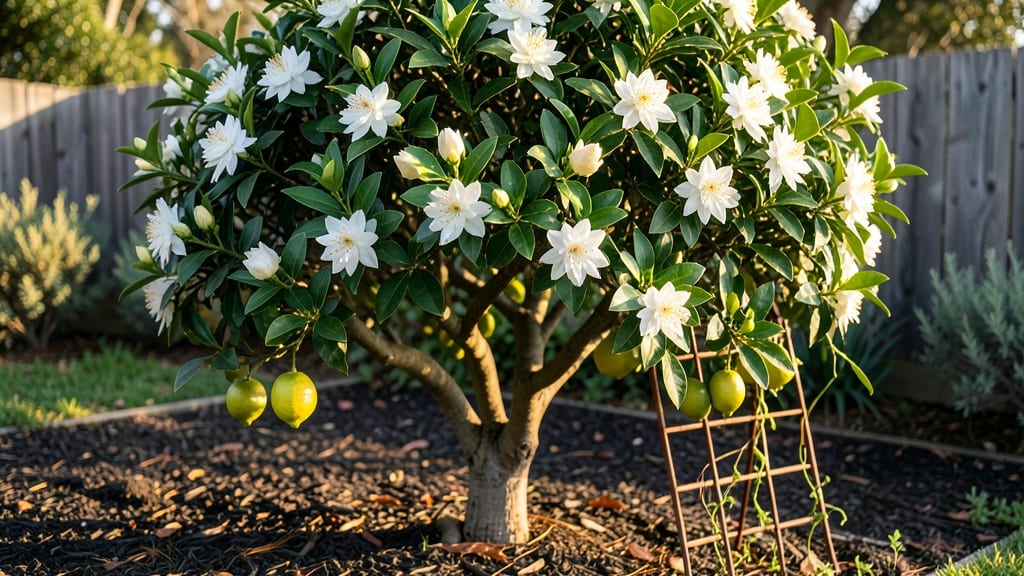
Meyer lemon trees burst into fragrant white blossoms twice a year—spring and fall—creating a citrusy perfume that transforms your yard into a sensory paradise. 🌸 I’ve learned the hard way that these delicate blooms need just the right balance of sunlight, water, and pruning to thrive, especially in climates where winters dip below freezing.
The key isn’t just waiting for flowers to appear; it’s setting up your tree for success months in advance.
Your tree needs 6-8 hours of sunlight daily and well-draining soil to encourage blooming. Prune in late winter or early spring—right before new growth starts—to shape the tree and remove dead wood, which signals it’s time to focus energy on flowers.
Overwatering or inconsistent moisture stresses the tree, so aim for deep watering once a week (more in summer heat) and less in winter when growth slows.
When those first blossoms appear, you’ll notice the air fills with a sweet, floral-citrus scent—unlike anything else. 🌿 With proper care, you’ll see dozens of white flowers transform into juicy, fragrant lemons by late summer or fall.
The secret? Pollination help from bees (or a soft paintbrush if you’re indoors) and avoiding heavy fertilizer during bloom time, which can stunt flowers.
This works year-round in USDA Zones 9-11, but container-grown trees can be brought indoors for winter in colder zones. Just keep them near a sunny window or under grow lights.
The payoff? A tree that blooms reliably and produces lemons even in small spaces—proof that beauty and bounty grow together.
📚 In This Guide
- What you need
- Instructions
- Tips and common mistakes
- Wrapping up and next steps
What you need
- ● Meyer lemon tree: 1-3 year-old sapling (dwarf or standard variety, depending on space). Choose a Citrus meyeri from a reputable nursery.
- ● Well-draining potting mix: 5-10 gallons (for containers) or amended garden soil (for in-ground planting). Mix with perlite or sand (20-30% by volume) for aeration.
- ● Container (if potted): 15-25 gallon pot with drainage holes (terracotta or fabric pots preferred). Ensure it’s 2-3x wider than the root ball.
- ● Slow-release citrus fertilizer: 10-20-10 NPK ratio (e.g., Osmocote or Miracle-Gro Shake ‘n Feed). Use ½ cup per year of tree age at planting.
- ● Organic mulch: 2-3 inches of wood chips or straw to retain moisture and regulate soil temperature.
- ● Basic gardening tools: Trowel or spade (for planting)
- ● Pruning shears (sterilized with rubbing alcohol)
- ● Gloves (to protect from thorns)
- ● pH testing kit: To ensure soil pH is 6.0–7.0 (Meyer lemons thrive in slightly acidic to neutral soil). Adjust with lime (to raise pH) or sulfur (to lower pH) if needed.
- ● Watering can or hose with gentle spray nozzle: Avoid overhead watering to prevent fungal diseases.
- ● Sunlight access: 6–8 hours of full sun daily (south-facing window or outdoor location). Supplemental grow lights (LED, 10,000 lux) work for indoor setups.
- ○ Cold protection (optional but recommended): Frost cloth or bubble wrap (for temperatures below 25°F/-4°C)
- ● Heat lamp (for indoor trees in winter)
- ● 🌡️ Climate check: Meyer lemons are hardy to USDA Zones 9–11. In colder zones, grow in containers for mobility or use a greenhouse.
- ● ✨ Blossom boost: Apply Epsom salt (1 tbsp per gallon of water) monthly during bloom season (spring/fall) for magnesium and potassium.
- ● 🎯 Pollination hack: Gently shake the tree or use a small brush to transfer pollen if indoor blooms aren’t setting fruit.
Step-by-Step guide to encouraging Meyer lemon tree blossoms
Your fragrant canopy starts with these precise seasonal care steps—tested over years of citrus growing.
🌱 Step 1: Prune for Airflow and Light Penetration
Prune in late winter or early spring before new growth begins. Remove any dead, crossing, or inward-growing branches first—these block light and air, which are critical for blossom formation. Use clean, sharp pruning shears to make cuts just above outward-facing buds. This ensures new growth will develop properly and encourages the tree to focus energy on flowering rather than dense foliage.
Here's the thing—I always aim to open up the center of the tree so sunlight reaches all branches. You'll know you've done it right when you can see light filtering through to the inner canopy. For mature trees, remove no more than 25% of the total foliage in one session to avoid shocking the plant. Thin out crowded areas by cutting back to the nearest outward-growing branch.
☀️ Step 2: Provide Optimal Light and Temperature Conditions
Meyer lemon trees need full sun exposure—at least 6-8 hours daily—to set blossoms. If your tree isn't flowering, it might be getting too much shade. Move it to a sunnier spot or supplement with a grow light during shorter winter days. The ideal temperature range for blossoming is 60-75°F, so protect your tree from cold drafts or extreme heat fluctuations.
Watch for these visual cues: leaves should stay deep green, not yellowing or dropping. If your tree is in a container, ensure it's placed where it gets consistent sunlight throughout the day. During summer, if temperatures exceed 85°F, provide afternoon shade to prevent leaf scorch, which weakens the tree and reduces flowering potential.
💧 Step 3: Adjust Watering and Fertilizing for Blossom Production
Water deeply but less frequently—every 7-10 days—allowing the top 2-3 inches of soil to dry out between waterings. Overwatering stresses the tree and can lead to root rot, which halts blossom development. During the blooming season (spring and fall), reduce water slightly to encourage flower formation. The soil should feel slightly dry to the touch before watering again.
Fertilize with a balanced citrus fertilizer (like 6-6-6 or 8-3-9) every 4-6 weeks during the growing season. Switch to a low-nitrogen, high-phosphorus fertilizer (like 5-10-10) when you notice new growth starting in spring—this shift promotes flowering. Avoid fertilizing in late summer or fall, as new growth won't have time to harden off before winter.
⏰ Step 4: Monitor for Pests and Diseases
Inspect your tree weekly for signs of pests like aphids, scale, or spider mites—common culprits that sap energy from blossoms. Wipe leaves with a neem oil solution (1 tablespoon per quart of water) if you spot any pests. Early detection is key; a single infestation can reduce flowering by 30-50% if left unchecked. Focus on the undersides of leaves and new growth where pests hide.
Watch for fungal diseases like powdery mildew, which appears as white, powdery spots on leaves. Improve airflow by pruning and avoid overhead watering to prevent this issue. If you notice any affected leaves, remove them immediately and dispose of them in the trash—not the compost—to prevent spreading. Healthy foliage means more energy for blossoms.
Tips & tricks for perfect Meyer lemon tree blossoms
Here's what nobody tells you about turning your Meyer lemon tree into a fragrant paradise—these are the little details that make all the difference.
Pruning Precision: When you're pruning in Step 1, focus on creating an "open vase" shape rather than just removing dead branches. This means cutting back to outward-facing buds to encourage new growth that will reach for sunlight. I learned this the hard way after ruining three batches of pruning—my tree looked great but never bloomed well. The key is to visualize sunlight filtering through like a dappled forest floor.
Light Strategy: For that critical 6-8 hours of sunlight in Step 2, position your tree where it gets morning sun and afternoon shade during summer months. I rotate my container-grown tree every few weeks so all sides get equal exposure. If you notice leaves yellowing or dropping, it's a sign your tree is getting too much heat—move it to a spot with filtered light for a few days to recover.
Fertilizer Timing: The switch to low-nitrogen, high-phosphorus fertilizer in Step 3 is your secret weapon for blooms. Apply it right when you see new growth starting in spring—this tells the tree, "It's time to focus on flowers, not leaves!" I set reminders for every 4-6 weeks during growing season, but always stop by late summer. Too much late-season fertilizer can encourage tender new growth that won't survive winter.
Pest Prevention: That weekly inspection in Step 4 isn't just about catching problems—it's about building a relationship with your tree. I keep a small magnifying glass handy to check undersides of leaves where pests love to hide. The moment I spot any white webbing or sticky residue (aphid honeydew), I treat it immediately. Remember, pests can reduce flowering by up to 50% if left unchecked, so don't skip this step!
Pro Tips for Meyer Lemon Tree Blossoms
- Here's what nobody tells you about turning your Meyer lemon tree into a fragrant paradise—these are the little detail...
- Pruning Precision: When you're pruning in Step 1, focus on creating an "open vase" shape rather than just removing de...
- Light Strategy: For that critical 6-8 hours of sunlight in Step 2, position your tree where it gets morning sun and a...
Frequently asked questions
Got questions about those stunning Meyer lemon tree blossoms? You’re not alone! Here are answers to the most common queries—from timing to troubleshooting—so you can enjoy that fragrant canopy all year.
When do Meyer lemon tree blossoms appear?
Meyer lemon trees typically bloom in late winter to early spring (February–April in most climates), but they can also produce sporadic blossoms in fall. Young trees may take 1–2 years to flower, while mature trees can bloom multiple times yearly with proper care. Pro tip: Prune lightly after harvest to encourage new growth and blooms!
Why aren’t my Meyer lemon tree blossoms lasting long?
Short-lived blossoms often signal stress—check for overwatering, underwatering, or extreme temps (below 40°F or above 90°F). Ensure your tree gets 6+ hours of sunlight daily and well-draining soil. Fix it: Adjust watering (let soil dry slightly between waterings) and move potted trees to a sheltered spot.
Can I eat Meyer lemon blossoms?
Yes! These delicate, fragrant flowers are edible and add a citrusy, floral note to dishes like salads, desserts, or teas. Safety first: Avoid pesticides and rinse blossoms gently. Harvest early in the morning for peak flavor. Bonus: They’re also a natural pollinator magnet!
What if my Meyer lemon tree only has leaves and no blossoms?
Lack of blooms usually means the tree isn’t getting enough sunlight, nutrients, or dormancy. Try these fixes:
- Light: Move to a sunnier spot (south-facing window or outdoor 6+ hours of sun).
- Fertilizer: Use a citrus-specific feed with low nitrogen (high phosphorus/potassium) in early spring.
- Dormancy: Reduce watering slightly in winter to mimic natural rest periods.
Are there alternatives to Meyer lemon blossoms for fragrance?
If you love the scent but want variety, try these fragrant, low-maintenance bloomers:
Plant
Bloom Time
Fragrance Notes
Jasmine (Jasminum)
Spring–fall
Sweet, floral (strongest at night!)
Lavender
Summer
Herbal, calming
Orange Blossom (Citrus × aurantium)
Spring
Citrusy, apricot-like
Wrapping up and next steps
Watching your Meyer lemon tree blossoms transform your space into a fragrant paradise is a reward worth savoring! 🌸 With the right care—sunlight, soil, and a dash of patience—you’ll enjoy year-round beauty and a bountiful harvest.
Now that you’re armed with the blueprint, take the next step: plant your tree today and let nature’s sweet perfume fill your home.
Need extra inspiration? Share your blooming progress or ask questions in the comments—your gardening journey is just beginning! 🌱