
Pruning
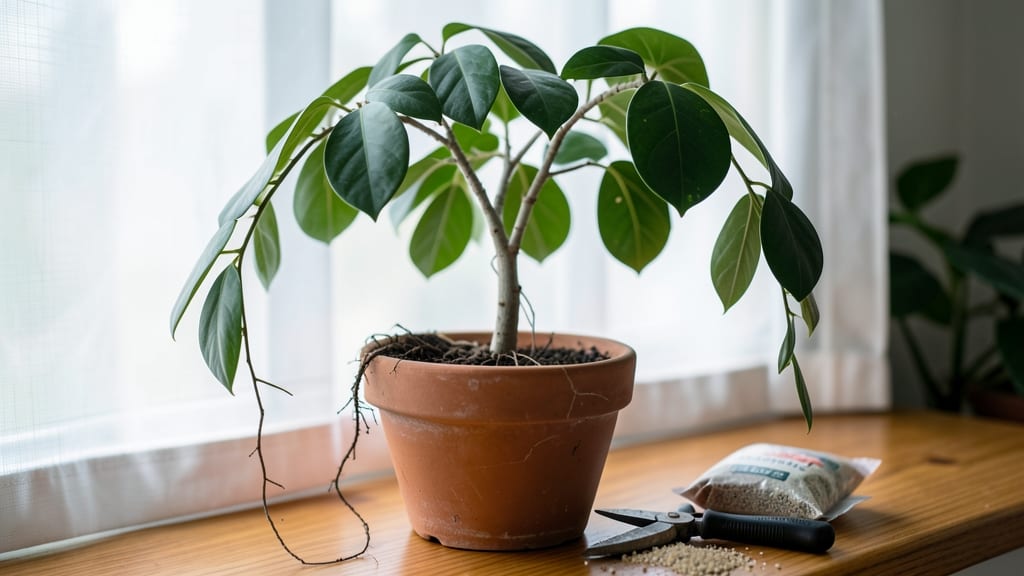
Transform that scraggly ficus benjamina—your Benjamin fig tree—into a trained masterpiece by pruning like seasonal sculpting, not just trimming. ✂️ The key? Pruning isn't just about cutting back—it's about guiding growth where you want it, when you want it, all year long.
Most people prune once in spring, but Benjamin figs respond best to three strategic cuts: a light shaping in late winter, a mid-year growth redirect in summer, and a clean-up trim after flowering.
You'll need sharp bypass pruners, rubbing alcohol for sterilizing cuts, and a sturdy ladder if your tree's reaching the ceiling. The goal isn't to remove growth—it's to encourage the dense branching that makes these trees so stunning.
What you'll end up with is a tree that looks like it came from a botanical garden, not your backyard. Branches will grow fuller, leaves will stay vibrant year-round, and you'll have control over its final shape—whether you want it weeping elegantly or standing tall.
The secret is patience: each cut teaches the tree where to grow next, building structure over time.
This method works equally well for container-grown trees and those planted in the ground. Whether you're dealing with a 1-foot sapling or a 15-foot mature specimen, the same principles apply—just adjust the scale. Ready to transform your fig tree from ordinary to extraordinary?
📚 In This Guide
- What you need
- Instructions
- Tips and common mistakes
- Wrapping up and next steps
What you need
- ● Sharp pruning shears – Bypass pruners (4–6" blades) for clean cuts on small branches.
- ● Pruning saw – For thicker branches (½" diameter or larger).
- ● Disinfectant (70% isopropyl alcohol or rubbing alcohol) – To sterilize tools between cuts and prevent disease.
- ● Gloves – Heavy-duty gardening gloves to protect against sap and thorns.
- ○ Rubbing alcohol or hydrogen peroxide (3%) – For cleaning wounds on the tree (optional but helpful).
- ● Twine or plant ties – To support branches if needed after pruning.
- ● Trash bag or bucket – For collecting clippings (compostable if desired!).
- ● Rooting hormone – If you plan to propagate cuttings from pruned branches.
- ● Plant food (balanced fertilizer) – To give your tree a post-pruning boost.
- ● Spray bottle with water – For misting cut areas to reduce stress.
- ● Ladder or step stool – For reaching higher branches safely.
- ● Notebook & pen – To sketch a pruning plan or track growth over time.
Step-by-step guide to pruning your Benjamin fig tree for year-round fullness
Here's how to coax that perfect, bushy structure—no more leggy branches or bare stems.
🌿 Step 1: Assess Growth Patterns and Identify Pruning Zones
Examine your tree for three key growth zones: new shoots at the base, lateral branches, and any overgrown stems. I always start by identifying nodes—those little bumps where leaves attach. These are your pruning targets. Use a clean, sharp pair of pruning shears to make cuts just above a node at a 45-degree angle. This angle helps water bead away from the cut, preventing rot.
Look for overcrowded branches—these are the ones growing straight up or rubbing against others. These compete for light and nutrients, weakening your tree's overall structure. Mark them with a piece of twine if you're unsure; you'll thank yourself later when you see how much more air circulates through the canopy.
✂️ Step 2: Prune for Structure and Airflow in Three Strategic Cuts
First, remove any dead, diseased, or crossing branches—these are the easiest cuts to make. You'll know a branch is dead if it's brittle, doesn't have leaves, and snaps when bent. Cut back to the nearest outward-facing node to encourage new growth in the right direction. This isn't just about looks; better airflow reduces fungal risks like powdery mildew.
Next, target overlong branches that are stretching toward light sources. Trim these back by one-third to encourage bushier growth. The reason we never cut more than a third at once is that fig trees respond poorly to drastic pruning—they'll either shock or produce weak regrowth. Watch for new lateral shoots forming within 4-6 weeks; these are your tree's way of saying, "I've got this!"
🌱 Step 3: Encourage New Growth with Strategic Pinching
Pinching is where the magic happens for that lush, multi-branched look. Use your fingers (no tools needed) to pinch off the tip of new growth on stems that are 4-6 inches long. This might seem counterintuitive, but it triggers the plant to produce two or three new side shoots from lower nodes. I do this every 6-8 weeks during the growing season—spring through fall—to keep the tree dense and full.
Pay special attention to the base of the tree. If you see long, bare stems, trim them back to a lower node. This might seem harsh, but it forces the tree to send up new shoots from the ground level, creating that classic "bushy" look. Water the tree deeply after pinching to help it recover and stimulate root growth.
☀️ Step 4: Adjust Pruning by Season for Year-Round Health
Spring is your heaviest pruning season—remove any winter damage, shape the canopy, and encourage new growth before the growing season kicks in. Summer pruning is lighter; focus on maintenance cuts to keep the tree tidy and manageable. Avoid heavy pruning in late summer or fall, as new growth won't have time to harden off before winter. If you must prune then, stick to light shaping and removing dead branches.
Here's the thing—Benjamin figs are forgiving, but timing matters. If you prune too late in the season, the tree might not recover before cold weather sets in. You'll know you've pruned at the right time when you see new leaves emerging within 2-3 weeks of cutting. If growth stalls, you've likely pruned too late or too aggressively.
Tips & tricks for perfect Benjamin fig tree pruning
Mastering the art of pruning your Benjamin fig tree transforms it from a leggy specimen into a lush, full canopy—here's how to get it right every time.
Tool Preparation: Your pruning shears should be as sharp as a chef's knife—dull tools crush stems instead of making clean cuts. I sterilize my shears with rubbing alcohol between cuts to prevent spreading disease. For thicker branches, use bypass pruners or a pruning saw, but always cut at the 45-degree angle mentioned in Step 1 to prevent water pooling at the cut site. This simple detail keeps your tree healthy for years.
Seasonal Timing Strategy: Spring is your prime time for heavy pruning, but don't ignore the subtle cues your tree gives. Watch for fresh growth—those 2-3 week windows after pruning when new leaves emerge are your confirmation that timing was perfect. In summer, I do light maintenance cuts during overcast days to reduce stress on the tree from sun exposure. The key is working with the tree's natural rhythms, not against them.
Visual Growth Assessment: Before making any cuts, step back and observe your tree's growth pattern from multiple angles. Look for branches that grow toward the center of the tree—these are your candidates for removal. I use a small mirror on a stick to check hard-to-see areas. The goal is to create an open center that allows light penetration to all branches. This isn't just about aesthetics; proper light distribution leads to more uniform growth and better fruit production.
Recovery Care Routine: After significant pruning, your tree needs extra care. I always water deeply the day after pruning to help it recover, then apply a balanced fertilizer two weeks later. The 6-8 week pinching schedule in Step 3 works because it gives the tree time to establish new growth before encouraging more. Think of it like giving your tree a spa day—it comes back stronger and more vibrant.
Pro Tips for Benjamin Fig Tree Ficus Benjamina
- Mastering the art of pruning your Benjamin fig tree transforms it from a leggy specimen into a lush, full canopy—here's how to get it right every time.
- Tool Preparation: Your pruning shears should be as sharp as a chef's knife—dull tools crush stems instead of making clean cuts.
- Seasonal Timing Strategy: Spring is your prime time for heavy pruning, but don't ignore the subtle cues your tree gives.
Frequently asked questions
Got questions about pruning your Benjamin Fig Tree (Ficus benjamina)? You’re not alone! Here are the most common queries—and straightforward answers—to keep your tree thriving year-round.
When is the best time to prune my Ficus benjamina?
The ideal time is spring or early summer, when the tree is actively growing. Light pruning can also happen in fall, but avoid heavy cuts in winter—the tree’s growth slows down, and stress can weaken it. Pro tip: If you notice leggy branches or overgrowth anytime, a small trim (10-15% of foliage) is safe!
How much can I prune without harming the tree?
Never remove more than 25-30% of the foliage in a single session. Benjamin Fig Trees are resilient, but heavy pruning can shock the tree. For mature trees, gradual shaping over months works best. Warning: Avoid cutting back to bare wood—always leave some leaves or buds to encourage regrowth.
Why does my Ficus benjamina drop leaves after pruning?
Leaf drop is normal if you’ve pruned too aggressively or during stress (like winter). The tree adjusts by shedding excess foliage to focus energy on recovery. Fix it: Prune in growing seasons, water deeply post-prune, and avoid fertilizing for 4-6 weeks. Most trees bounce back in 2-4 weeks!
Can I shape my Benjamin Fig Tree into a bonsai or topiary?
Ficus benjamina is a topiary superstar thanks to its flexible branches. Use wired branches for dramatic shapes (like spirals or arches) or regular trims for neat hedges. Key tip: Prune younger branches first—they’re easier to train. Patience is key; complex designs take years!
What should I do if my tree gets pests after pruning?
Pruning exposes fresh growth, which can attract spider mites, mealybugs, or scale insects. Act fast: Wipe leaves with neem oil or insecticidal soap, and isolate the tree until pests are gone. Prevent future issues by sterilizing pruners with rubbing alcohol and keeping the area clean. →
Does pruning encourage more flowers or fruit on my Ficus benjamina?
Bad news: Benjamin Fig Trees are rarely ornamental for flowers/fruit—they produce tiny, insignificant figs indoors. Focus on foliage health and structure instead. Pruning does boost bushier growth, making your tree denser and more vibrant!
Wrapping up and next steps
Mastering the art of Benjamin Fig Tree (Ficus Benjamina) pruning is your golden ticket to a thriving, lush, and beautifully shaped tree year-round! 🌿 Whether you’re trimming for health, aesthetics, or growth control, the key is patience, the right tools, and a little love.
With these shape secrets in your gardening toolkit, you’re well on your way to cultivating a stunning indoor or outdoor centerpiece.
Ready to take the next step? Start small—pick one pruning technique from this guide and practice it this season. Before you know it, your Ficus Benjamina will be the envy of every plant lover! 🌟 Grab your shears and get pruning!