
Trees
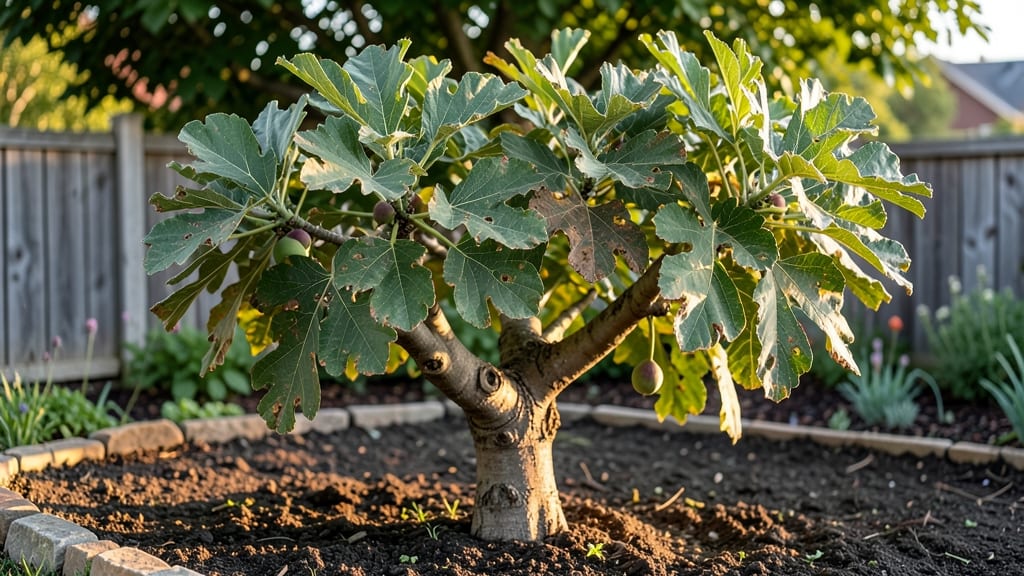
Brown turkey fig tree leaves don’t mean your tree is dying—they’re often just signaling it’s time for dormant season pruning. 🌿 I’ve seen this happen every winter with my mature Ficus microcarpa, and the right cuts actually boost next year’s fruit production.
The key is separating normal browning from stress signs like fungal spots or curled edges.
Start by inspecting the leaves: healthy browning is dry and crisp, while sticky sap or blackened patches mean disease. Prune only the dead branches at a 45-degree angle, and avoid cutting into live green tissue.
A sharp pair of shears and a clean bucket for clippings are all you’ll need—no fancy tools required.
📚 In This Guide
- What you need
- Instructions
- Tips and common mistakes
- Wrapping up and next steps
What you need
- ● Pruning shears: Sharp, bypass-style (for clean cuts), 10–12 inches in length. (Pro tip: 💡 Sanitize blades with rubbing alcohol before and after use to prevent disease spread!)
- ● Loppers: 18–24 inches, for thicker branches (½–1.5 inches in diameter). Look for ratcheting or bypass types for ease.
- ● Pruning saw: Curved-tooth saw (e.g., Felco or Fiskars) for branches 2+ inches thick.
- ● Gloves: Heavy-duty, cut-resistant (e.g., mechanics’ gloves or pruning-specific with 12–14 gauge protection).
- ○ Disposable pruning bags: 20–30 gallon capacity (for debris removal). Optional: Use a wheelbarrow if hauling heavy branches.
- ● Rubbing alcohol (70%+): 1 small bottle for tool sanitization.
- ○ Tree wound dressing: Optional but helpful—use a pruning sealant (e.g., Tanglefoot Tree Wound Pruning Seal) for cuts larger than ½ inch.
- ● Weather check: Prune on a dry, overcast day (or early morning) to avoid stressing the tree. Temperature: Ideal range is 50–70°F.
- ● Safety gear: Eye protection (safety glasses) and long sleeves/pants to guard against thorns and debris.
- ● Tree assessment: Inspect the fig tree for diseased or dead branches (brown, brittle, or lacking leaves) before pruning.
- ● Ladder (if needed): Extension ladder (rated for your tree’s height + 3 feet extra). Safety tip: 🔥 Secure the ladder on three sides and avoid placing it near power lines!
- ● Marking twine: For tagging branches to prune (useful for complex trees).
- ● Sharpie or paint: To mark cuts on branches 1–2 feet from the target spot (guides for clean angles).
- ● Compost bin: For repurposing pruned branches as mulch or compost.
- ● Partner: A second person to stabilize the ladder or hold branches while you cut.
Step-by-step dormant season pruning for brown turkey figs
Here's how I transform a neglected fig tree into a productive, year-round fruiting machine.
🌿 Step 1: Assess and Prepare for Pruning
Start by examining your tree in early winter when it's completely dormant. Look for dead, diseased, or crossing branches—these are your first targets. I always prune on a dry, sunny day when temperatures are above 40°F but below 60°F. This prevents stressing the tree and gives wounds time to heal before spring growth begins.
Gather your tools: clean, sharp pruning shears for small branches and a pruning saw for thicker limbs. Disinfect everything with rubbing alcohol first—figs are prone to fungal infections, and you don't want to spread anything from one cut to another. Wear gloves too; fig sap can irritate skin.
✂️ Step 2: Remove Dead and Problematic Growth
Begin by cutting out any branches that are completely dead, showing no green underneath the bark when scratched. Next, remove branches that are rubbing against each other or growing inward—they'll compete for sunlight and fruit production. I make these cuts just outside the branch collar, the swollen area where the branch meets the trunk.
For branches that are only partially dead (one side green, one side brown), cut back to the last healthy growth. Never leave stubs—this invites disease. If a branch is larger than ½ inch in diameter, make the cut at a slight angle to help water run off. For smaller branches, a straight cut works fine. Step back occasionally to visualize the tree's new shape.
🌱 Step 3: Thin and Shape for Airflow and Light
Now focus on thinning the canopy to improve airflow and sunlight penetration. Remove about 20-30% of the total branches, prioritizing those that are too close together. Figs need good airflow to prevent fungal diseases like fig rust. I aim for an open center that lets light reach all the way to the trunk.
Look for branches that are growing straight up or down—these rarely produce fruit. Cut these back to a lateral branch or bud that's growing outward. You'll see these buds as small bumps along the stems. Each cut should leave at least 3-4 buds remaining on the branch. This ensures you have plenty of growth points for new shoots and fruit next season.
☀️ Step 4: Encourage Fruit Production with Strategic Cuts
The key to year-round fruit loads is promoting new growth. For Brown Turkey figs, which are known for their heavy fruiting, I focus on creating a balanced structure. Cut back any overly vigorous shoots that are growing too fast—they'll produce less fruit. Instead, encourage moderate growth by making cuts that leave 2-3 strong buds on each remaining branch.
Pay special attention to the tree's scaffold branches—the main limbs that make up its structure. These should be spaced 8-12 inches apart along the trunk. If you have more than 4-5 scaffold branches, thin them out to the strongest ones. This redirects the tree's energy into producing better-quality fruit rather than supporting excess growth.
🪴 Step 5: Clean Up and Protect the Tree
After pruning, rake up and dispose of all debris—this removes potential hiding spots for pests and diseases. I like to apply a thin layer of mulch around the base of the tree (but not touching the trunk) to protect roots and retain moisture. For Brown Turkey figs, I use 2-3 inches of organic mulch like wood chips or straw.
Finally, give the tree a light application of balanced fertilizer (10-10-10) in early spring as new growth begins. This jumpstarts the tree's recovery and sets it up for a productive season. Water deeply after fertilizing to help the nutrients soak into the soil. Your tree will thank you with lush, healthy growth and a bounty of sweet figs.
Tips & tricks for perfect dormant season fig pruning
Transforming your fig tree into a fruit-producing powerhouse starts with these essential pruning insights.
Timing is Everything: The dormant season window between 40°F and 60°F is critical for successful pruning. This temperature range ensures the tree isn't stressed and allows wounds to heal properly before spring growth. I've learned the hard way that pruning too early (when temps drop below 40°F) can shock the tree, while waiting too long (above 60°F) risks encouraging premature growth that won't survive cold snaps. Check your local forecast for those perfect days in late winter.
Tool Prep Makes All the Difference: Disinfecting your tools with rubbing alcohol isn't just about cleanliness—it's about protecting your tree's health. Figs are particularly susceptible to fungal infections, and contaminated tools can spread diseases from one cut to another. I keep a small bottle of rubbing alcohol in my toolbox specifically for this purpose. Also, make sure your pruning shears are sharp; dull blades crush branches instead of making clean cuts, which invites disease and slows healing.
Visualizing the Final Shape: Before making any cuts, take a step back and visualize your tree's final shape. In Step 3, when you're thinning the canopy, imagine sunlight streaming through to the center. The goal is an open vase shape with branches spaced to allow airflow. I find it helpful to sketch a rough outline on paper first—this prevents over-pruning and ensures you maintain that crucial 20-30% reduction while keeping the tree structurally sound.
Bud Counting for Fruit Production: Those little buds you'll be leaving behind are the future of your fig tree's fruit production. When cutting back branches in Steps 3 and 4, aim to leave 3-4 buds on each remaining branch. These buds will develop into new shoots that bear fruit. For scaffold branches specifically, focus on leaving 2-3 strong buds—this balance between quantity and quality is what gives Brown Turkey figs their legendary productivity. Count them as you prune to ensure you're maintaining this optimal number.
Pro Tips for Brown Turkey Fig Tree Leaves
- Transforming your fig tree into a fruit-producing powerhouse starts with these essential pruning insights.
- Timing is Everything: The dormant season window between 40°F and 60°F is critical for successful pruning.
- Tool Prep Makes All the Difference: Disinfecting your tools with rubbing alcohol isn't just about cleanliness—it's about protecting your tree's health.
Frequently asked questions
Got questions about pruning your brown turkey fig tree during dormancy? You’re not alone!
Here are the most common concerns—and straightforward answers—to help you master the process for a fruit-loaded year.
When is the best time to prune brown turkey fig trees for maximum fruit?
The ideal window is late winter to early spring (just before buds swell), but after the first hard frost if you’re in a cold climate. This timing ensures minimal stress while encouraging robust new growth. Avoid pruning in summer—it can stress the tree and reduce fruit set. Pro tip: If you missed dormancy, prune in early fall, but expect a smaller harvest the following year.
How much can I safely cut back my brown turkey fig tree?
You can remove up to 30-40% of the tree’s canopy in one session, but avoid over-pruning. Focus on:
- Dead, diseased, or crossing branches ()
- Suckers at the base (non-fruiting growth)
- Overcrowded branches to improve airflow
Will pruning my fig tree reduce next year’s fruit harvest?
Not if done correctly! Pruning stimulates fruit production by redirecting energy to healthier branches. However, aggressive pruning (e.g., cutting back more than 50% of the tree) may delay harvests by 1-2 years as the tree recovers. For brown turkey figs, moderate, annual pruning keeps yields steady and improves fruit size.
What if my brown turkey fig tree’s leaves turn brown after pruning?
Brown leaves post-pruning are usually normal, especially if it’s early spring. However, if you see:
- Wilted or crispy leaves ( Over-pruning or drought stress)
- Yellowing leaves ( Nutrient deficiency or overwatering)
- Black spots ( Fungal infection)
Are there alternatives to pruning if I don’t want to cut branches?
If you’re hesitant about pruning, try these low-maintenance alternatives:
- Thinning fruit: Remove excess figs () to let remaining ones grow larger.
- Mulching: Add 2-3 inches of organic mulch to retain moisture and reduce stress.
- Fertilizing: Use a balanced fertilizer (e.g., 6-6-6) in early spring to boost growth.
- Watering deeply: Drought-stressed trees produce smaller leaves and fewer figs.
Wrapping up and next steps
Mastering the art of pruning your brown turkey fig tree during dormancy isn’t just about trimming—it’s about setting the stage for a bountiful harvest year-round. By following the right techniques, you’ll boost airflow, encourage stronger growth, and keep those delicious figs coming like clockwork. 🌿✨
Ready to roll up your sleeves? Start with a clear plan, gather your tools, and take it step by step. Before you know it, your tree will be thriving—and so will your fruit basket!
- Next step: Mark your calendar for early spring to monitor new growth and adjust pruning as needed.
- Bonus tip: Snap a few photos of your pruned tree for a progress tracker—you’ll love seeing the transformation!