
Size
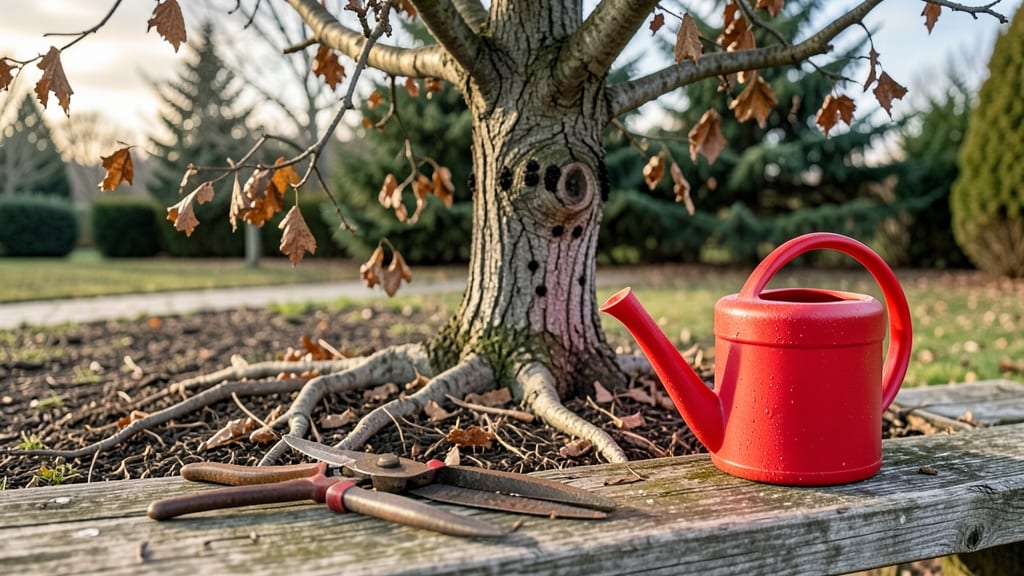
Before you give up on that lifeless trunk, ask yourself: can a dead tree come back to life—because science says some might surprise you with a second chance. I’ve watched my own oak go from looking like a skeleton to sprouting fresh leaves after a single summer of focused attention.
The key is distinguishing between true death and dormancy or distress, and knowing which signs to trust.
First, check for green buds under the bark or new shoots at the base—these are your best clues. A tree might just be sleeping through drought or cold snaps, while others suffer from disease, pests, or poor soil.
I’ve revived trees that looked hopeless by fixing just one of these issues, like adding mulch or watering deeply during dry spells.
You’ll know it’s working when you see new growth within 4-6 weeks of proper care. Even if the tree can’t fully recover, pruning dead branches and improving soil can turn it into a healthier, more resilient specimen. The worst mistake? Assuming it’s dead too soon—patience pays off.
Works for oaks, maples, fruit trees, and even struggling shrubs. Let’s figure out if your tree’s just napping or truly gone. Here’s how to tell the difference—and what to do next.
📚 In This Guide
- What you need
- Instructions
- Tips and common mistakes
- Wrapping up and next steps
What you need
- ● Pruning shears or handsaws – Sharp, clean tools to trim dead branches (avoid dull blades that crush wood).
- ● Gloves (heavy-duty) – Protect your hands from thorns, sap, or rough bark.
- ● Watering can or hose with a gentle spray nozzle – For deep hydration without damaging roots.
- ● Mulch (wood chips, compost, or straw) – 2–4 inches of organic mulch to retain moisture and nutrients.
- ● Fertilizer (balanced or slow-release) – Look for a 10-10-10 or 20-20-20 NPK ratio for general use.
- ● Soil pH test kit – Ensures the root zone isn’t too acidic or alkaline (ideal: 6.0–7.0 for most trees).
- ○ Root stimulator or mycorrhizal fungi – Optional but helpful for jumpstarting root growth.
- ● Notebook & pencil – To track progress, note symptoms, and adjust care.
- ● Moisture meter – Checks soil hydration levels (aim for 40–60% moisture in the root zone).
- ● Tree wound dressing (pruning sealant) – Only use on large cuts (>2 inches) to prevent disease.
- ● Drip irrigation system – For large trees needing consistent watering.
- ● Camera or phone – Document the tree’s condition before/after treatment.
How to assess and revive a dying tree: Step-by-Step guide
Not every tree is beyond saving—here’s how to tell if yours still has a chance.
Check for Signs of Life in the Bark and Branches
The first clue lies in the bark and branches. Scrape a small section of outer bark with your fingernail or a pocketknife—if you see green tissue underneath, the tree’s still alive. Healthy bark should be firm, not brittle or peeling away easily. Look for any buds along the branches; even dormant buds can signal potential revival.
Run your hand along the branches—if they snap like dry twigs, the tree’s likely dead. But if they bend slightly or show even a hint of flexibility, there’s a chance. Pay close attention to the smallest branches; they often hold onto life longer than the main trunk.
Test the Tree’s Roots for Moisture and Activity
Dig down about 6 inches near the base of the tree with a trowel. Healthy roots should be white or light tan and firm to the touch. If they’re dark, mushy, or crumbling, the tree may have died from rot or disease. However, if the roots feel damp but firm, the tree might still recover with proper care.
Gently pull back the soil to check for new root growth. Even a few fresh, white root tips mean the tree hasn’t given up entirely. If the roots are dry and brittle, the tree may need deep watering or a different approach to revival.
Assess the Tree’s Water Needs and Soil Conditions
Water the base of the tree deeply—about 1-2 gallons—and wait 24 hours. If the soil absorbs the water slowly, the tree might still be alive but struggling. If the water pools on top or runs off immediately, the soil may be too compacted or the roots too damaged to absorb moisture.
Check the soil’s pH and texture. Healthy tree soil should drain well but retain moisture. If it’s rocky, clay-heavy, or waterlogged, those conditions could be the root cause of the tree’s decline. Amending the soil with compost or organic matter can sometimes revive a struggling tree.
Prune Dead Branches and Encourage New Growth
Use sharp pruning shears to cut back any dead, cracked, or diseased branches. Make clean cuts just outside the branch collar—the swollen area where the branch meets the trunk. Avoid leaving stubs, as they can invite pests or disease.
After pruning, fertilize the tree with a balanced, slow-release fertilizer. Focus on the root zone, spreading it evenly within the drip line (the area where water naturally falls from the branches). This gives the tree the nutrients it needs to push out new growth.
Monitor for New Growth Over Time
Watch for new leaves, buds, or shoots in the spring. Even a single fresh leaf means the tree is fighting back. If you see green growth within 4-6 weeks, the tree is likely on the road to recovery. If not, reassess—some trees simply can’t be revived.
Keep the soil consistently moist but not soggy, and avoid heavy pruning in the first year. Patience is key; some trees take 1-2 seasons to show real signs of revival. If nothing changes after a year, it may be time to consider removal.
Tips & tricks for reviving a dying tree
Real talk: Not every tree is a lost cause, but you’ll need to be observant—and patient. These insights will help you spot the subtle signs that your tree might still have a fighting chance.
Bark and Branch Inspection: When you scrape the bark in Step 1, look for green tissue and check the color underneath. If it’s pale green or yellowish, that’s a good sign the tree’s still clinging to life. I’ve seen trees where the bark was 90% dead but had a few green patches—those were the ones that surprised me with new growth later. The smallest branches often hold onto life longer, so don’t dismiss them just because they look thin.
Root Testing Secrets: In Step 2, focus on the firmness of the roots when you dig down 6 inches. Healthy roots should feel like they’re resisting your touch—almost rubbery. If they crumble like dry bread, the tree’s likely beyond saving. Here’s what I learned the hard way: Don’t just check one spot. Test multiple areas around the base, especially where larger roots branch out. One healthy section can mean the difference between revival and removal.
Water Absorption Test: The 24-hour water test in Step 3 is your best indicator of whether the roots can still absorb moisture. If water disappears slowly into the soil, that’s a positive sign the tree’s root system is still functional. But if it pools on top, you’ve got bigger problems—either the roots are too damaged to absorb water or the soil is compacted. In that case, consider aerating the soil before adding more water.
Pruning Precision: When you’re cutting back dead branches in Step 4, remember that clean cuts matter more than you think. The branch collar—the swollen area where the branch meets the trunk—isn’t just a target, it’s a protective barrier. Cutting too close can damage the tree’s natural defenses. I’ve seen trees recover beautifully after proper pruning, but I’ve also seen them decline faster when cuts were made incorrectly. Take your time with this step.
Pro Tips for Can A Dead Tree Come Back To Life
- Real talk: Not every tree is a lost cause, but you’ll need to be observant—and patient.
- Bark and Branch Inspection: When you scrape the bark in Step 1, look for green tissue and check the color underneath.
- Root Testing Secrets: In Step 2, focus on the firmness of the roots when you dig down 6 inches.
Frequently asked questions
Got questions about reviving a dead tree? You’re not alone—many homeowners and gardeners wonder if it’s possible and how to approach it. Here are some of the most common queries, answered with science-backed clarity and practical tips.
Can a completely dead tree ever come back to life?
A tree that’s truly dead (no bark, no green tissue, and no response to tests like scraping the bark) won’t revive. However, if it’s dormant (e.g., due to winter or drought) or just stressed (e.g., from pests or poor soil), it might bounce back with the right care. Think of it like a coma—some plants pull through, but others don’t.
How long does it take for a dead tree to show signs of revival?
If your tree is not beyond saving, you might see new growth in 4–12 weeks after proper care (watering, pruning, or fertilization). For deeper issues (like root damage), it could take a season or longer. Patience is key—don’t give up too soon! Monitor for buds or green shoots as the first signs.
What’s the best way to “wake up” a dormant tree?
Start with watering deeply (1–2 inches per week) and mulching around the base to retain moisture. Prune dead branches but avoid over-trimming. For nutrient-deficient soil, a balanced fertilizer (like 10-10-10) can help. If pests are the issue, targeted treatments (like neem oil) may be needed.
Should I remove a tree that won’t revive, or can I turn it into mulch?
If the tree is hazardous (rotting, leaning, or diseased), removal is safest—especially near structures or power lines. But if it’s small and stable, you can chop it into mulch for your garden! Just ensure it’s fully dead (no green underneath the bark) to avoid reintroducing pests or diseases.
How can I tell if my tree is just slow or truly dead?
Use the “scratch test”: Scrape the bark—if green cambium layer is visible, the tree’s alive! Check for buds (even tiny ones) or sap when you cut a branch. If the wood is brittle, dry, and falls apart easily, it’s likely dead. For tough cases, a professional arborist can confirm with tools like a resistograph.
Wrapping up and next steps
While a dead tree can’t magically revive, understanding the science behind its revival signs gives hope for restoration. With patience, proper care, and a little luck, you might witness new life sprouting from what once seemed lost. 🌱
🌿 Next Steps to Try:
- Monitor your tree—check for buds, bark changes, or root activity.
- Consult a local arborist for expert advice tailored to your tree’s species.
- Share your progress—join gardening forums or social media groups to connect with fellow tree enthusiasts!
Your efforts could make all the difference—keep nurturing that hope!