
Pruning
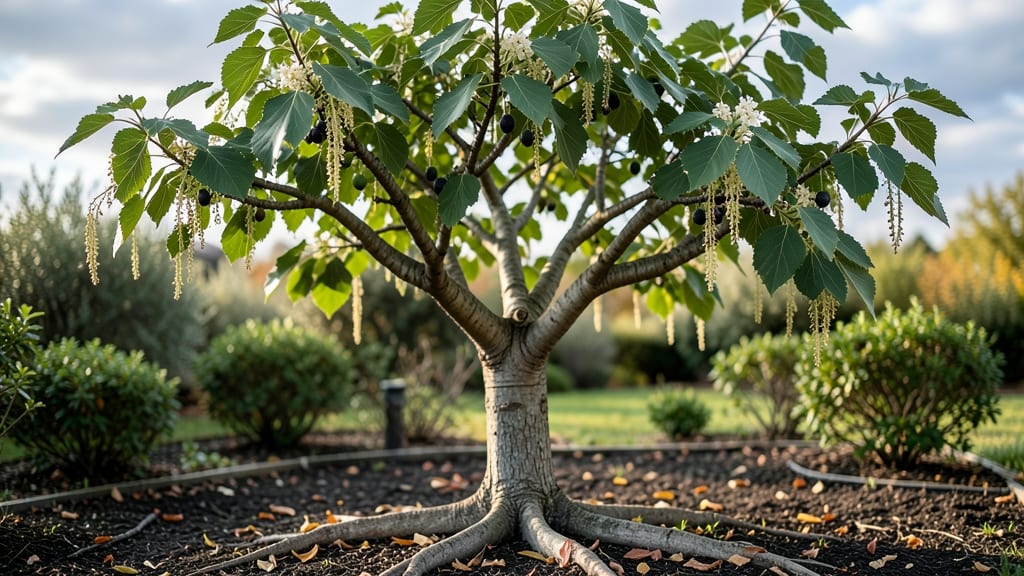
Growing a Chinese mulberry tree means you're not just planting a tree—you're cultivating a year-round fruit factory that thrives with the right pruning rhythm. I learned this the hard way when my first tree produced sparse berries until I adjusted my approach.
The secret lies in strategic cuts that balance growth and fruit production, no matter the season.
This tree loves full sun and well-draining soil, but it’s surprisingly adaptable to different climates—from Zone 5’s chilly winters to Zone 9’s heat. Start with a young sapling or propagate from cuttings in spring, and you’ll see fast growth.
The real magic happens when you prune: open the canopy in late winter to let light reach inner branches, and lightly trim in summer to encourage new fruit-bearing shoots.
By summer’s end, you’ll be harvesting sweet, juicy berries that birds can’t resist (unless you cover them first!). Even if fruit isn’t your goal, the tree’s lush foliage and golden fall color make it a standout in any landscape.
The key? Prune with purpose—cut at the right time, and you’ll reward yourself with a tree that keeps giving, season after season.
Whether you’re growing for food, shade, or beauty, this guide covers the essential steps to keep your mulberry thriving. No fancy tools needed—just sharp pruners and a little patience. Let’s get started!
📚 In This Guide
- What you need
- Instructions
- Tips and common mistakes
- Wrapping up and next steps
What you need
- ● Pruning shears: Bypass pruners (sharp, 6-8 inch blades) for clean cuts on small branches.
- ● Loppers: 1 pair (18-24 inch) for thicker branches (up to 2-inch diameter).
- ● Pruning saw: 1 handheld saw (for branches 2+ inches thick).
- ● Gloves: Heavy-duty, cut-resistant gloves (to protect from thorns and sap).
- ● Disinfectant: 70% isopropyl alcohol or a 10% bleach solution (to sterilize tools between cuts).
- ○ Pruning sealant: Optional but helpful (for sealing larger cuts to prevent disease).
- ● Ladder or step stool: Sturdy and tall enough to reach the tree’s canopy safely.
- ● Trash bags or bucket: For collecting pruned branches and debris.
- ● Mature Chinese mulberry tree: Ideally 3-5 years old (younger trees need less aggressive pruning).
- ● Safety gear: Closed-toe shoes, long sleeves, and safety glasses (to avoid sap irritation or debris).
- ● Weather check: Prune on a dry, calm day (avoid pruning when the tree is wet or frost is present).
- ● Knowledge of tree structure: Familiarize yourself with the tree’s central leader and scaffold branches for targeted pruning.
- ● Extension pole: For hard-to-reach branches (saves time and effort!).
- ● Tree wound dressing: For large cuts (controversial but some gardeners swear by it).
- ● Notebook & pen: To sketch the tree’s structure before/after pruning (great for tracking progress!).
- ● Compost bin: To recycle pruned branches into nutrient-rich mulch.
How to prune a Chinese mulberry tree for maximum fruit production
This is the pruning schedule that transformed my mulberry tree from sporadic fruiting to a reliable harvest.
Winter Pruning to Open the Canopy
Start in late winter or early spring, just as buds begin to swell but before new growth appears. This is your chance to remove dead, diseased, or crossing branches that compete for energy. I always begin by cutting back any branches that rub together—they create wounds that invite rot and pests.
Use sharp, clean pruning shears to make cuts just outside the branch collar, the swollen area where the branch meets the trunk. Avoid leaving stubs, as they can trap moisture and lead to fungal infections. Aim to remove about 20-30% of the tree's total branches during this first pruning. This opens the canopy to sunlight, which is critical for fruit development.
Watch for branches growing inward or downward—they rarely bear fruit and take energy from productive limbs. Remove these first, then thin out the outer canopy to improve air circulation. You'll know you're doing it right when you can see light filtering through the branches to the inner trunk.
Summer Pruning to Encourage Fruitful Growth
Mid-summer is when you fine-tune the tree's structure. After the initial flush of growth, look for water sprouts—fast-growing, vertical shoots that steal energy from fruit production. These need to be pruned back to a lateral branch or removed entirely if they're weak.
Next, focus on branches that have already fruited. Cut back about one-third of the current year's growth on these limbs. This encourages the tree to produce more lateral branches, which bear the majority of fruit. I like to make these cuts just above a leaf bud that faces outward—this ensures new growth will fill the canopy rather than grow inward.
Here's the thing—mulberry trees respond well to pruning, but don't overdo it. If you see new shoots emerging from old wood after pruning, leave them unless they're clearly weak or diseased. These shoots often produce the most flavorful fruit.
Post-Harvest Pruning for Next Year's Crop
After you've harvested the majority of the fruit, typically in late summer, it's time for a lighter pruning session. Remove any branches that bore poorly this year—these are usually the oldest or most shaded limbs. You'll also want to clean up any broken or storm-damaged branches that might have occurred during the growing season.
Pay special attention to the tree's overall shape. Mulberry trees naturally grow with a rounded canopy, but if yours has become too dense, thin out the center to allow light to reach the inner branches. This prevents the tree from putting all its energy into a few outer limbs and ensures even fruiting throughout.
This is also the time to address any suckers—shoots growing from the base of the tree. While they can be left to grow into new trees, they compete with the main trunk for nutrients. If you want to keep the tree focused on fruit production, remove these suckers entirely.
Light Maintenance Pruning Throughout the Year
Year-round, keep an eye out for branches that are growing in directions that create a hazard or block sunlight. Mulberry trees are fast growers, so what seems like a minor obstruction now can become a problem quickly. I make small adjustments as needed—perhaps trimming a branch that's growing too close to a fence or power line.
Regularly inspect the tree for signs of disease or pest infestation. Mulberry trees are relatively resistant, but aphids or scale can still be an issue. If you spot these, prune out the affected branches immediately and treat the tree with an appropriate organic insecticide. Prevention is easier than dealing with a full-blown infestation later.
Finally, don't forget to sanitize your pruning tools between cuts. Wipe them down with rubbing alcohol or a bleach solution to prevent the spread of disease from one branch to another. This simple step can save your tree from serious problems down the line.
Tips & tricks for year-round Chinese mulberry tree pruning
Real talk: Pruning isn't just about cutting branches—it's about shaping the tree's future harvest. These insights will help you avoid common mistakes and maximize fruit production.
Timing is Everything: The late winter/early spring window for Step 1 is critical because you're working with dormant wood. If you prune too early, you risk damaging buds that haven't swollen yet. If you wait too long, new growth will have already started, and you'll be cutting into next year's fruit-bearing wood. Look for those first tiny buds swelling at the branch tips—this is your cue to begin.
Branch Collar Precision: When making cuts in Step 1, focus on the branch collar—the swollen area where the branch meets the trunk. This is where the tree's natural healing tissues are located. Cutting just outside this collar (about 1/8 inch) prevents stubs that trap moisture and invite disease. I've seen too many trees develop fungal infections from improper cuts—don't make my mistake.
Visual Light Test: After your Step 1 pruning, climb up (safely!) and look through the canopy toward the sky. You should see blue sky through at least 30% of the branches. This light penetration is what triggers the tree to produce fruit. If you can't see light filtering through, you haven't thinned enough. This simple visual check saves hours of guesswork later in the season.
Water Sprout Identification: In Step 2, water sprouts are your biggest energy vampires. These fast-growing vertical shoots often appear bright green and stick straight up like arrows. They're easy to spot if you know what to look for. I've found that removing these early in summer gives the tree more energy to direct toward fruit production rather than vertical growth.
Pro Tips for Chinese Mulberry Tree
- Real talk: Pruning isn't just about cutting branches—it's about shaping the tree's future harvest.
- Timing is Everything: The late winter/early spring window for Step 1 is critical because you're working with dormant wood.
- Branch Collar Precision: When making cuts in Step 1, focus on the branch collar—the swollen area where the branch meets the trunk.
Frequently asked questions
Got questions about growing and pruning a Chinese mulberry tree? You’re not alone! Here are some of the most common queries—plus straightforward answers to help you cultivate a thriving, fruit-bearing tree.
How often should I prune my Chinese mulberry tree for maximum fruit production?
Prune your Chinese mulberry tree twice a year: once in late winter or early spring (before buds swell) to shape the tree and remove dead wood, and again in summer after harvest to encourage new growth. Light pruning in fall can also help, but avoid heavy cuts then—it stimulates tender shoots vulnerable to frost.
When is the best time to plant a Chinese mulberry tree for optimal growth?
The ideal time to plant is early spring (after the last frost) or fall (4-6 weeks before the first frost). This gives roots time to establish before extreme temperatures. If planting in summer, water deeply and mulch heavily to reduce stress. Avoid transplanting during winter—roots are dormant and more prone to damage.
Why isn’t my Chinese mulberry tree producing fruit, even after pruning?
Several factors could be at play:
- Age: Young trees (under 3 years) focus on growth, not fruit. Be patient!
- Pruning timing: Heavy pruning in fall can delay fruiting. Stick to winter/summer cuts.
- Nutrients: Lack of phosphorus or potassium may hinder fruit production. Test soil and amend if needed.
- Pollination: While Chinese mulberries are self-pollinating, poor weather (like rain during bloom) can reduce yields.
Can I prune a Chinese mulberry tree too much? What are the signs?
Yes! Over-pruning can stress the tree, leading to reduced fruit production, stunted growth, or even dieback. Signs include:
- Excessive leaf drop after pruning.
- Sparse or weak new growth in spring.
- Fewer flowers/fruit compared to previous years.
Are there alternatives to Chinese mulberry trees for small gardens or urban areas?
If space is limited, consider these low-maintenance, fruit-bearing alternatives:
- Dwarf mulberry varieties (e.g., ‘Illinois Everbearing’): Grows 10–15 ft tall, ideal for small yards.
- Fig trees: Compact varieties like ‘Little Miss Figgy’ thrive in containers and produce fruit with minimal pruning.
- Dwarf apple or pear trees: Grafted onto dwarf rootstock, they stay under 8 ft tall and are perfect for urban gardens.
- Gooseberry or currant bushes: Hardy, productive, and fit neatly into small spaces.
Wrapping up and next steps
Growing a Chinese mulberry tree with year-round pruning isn’t just about patience—it’s a rewarding journey that yields lush foliage, abundant fruit, and a healthier tree. By mastering the art of strategic cuts, you’ll encourage stronger growth, better air circulation, and those sweet, juicy berries you’ve been dreaming of. 🍇
Ready to take the next step? Start small—pick one season to focus on first, then expand your pruning routine as you gain confidence. Before you know it, your backyard will be bursting with life (and delicious mulberries)! Grab those shears and get pruning! 🌱✂️