
Pruning
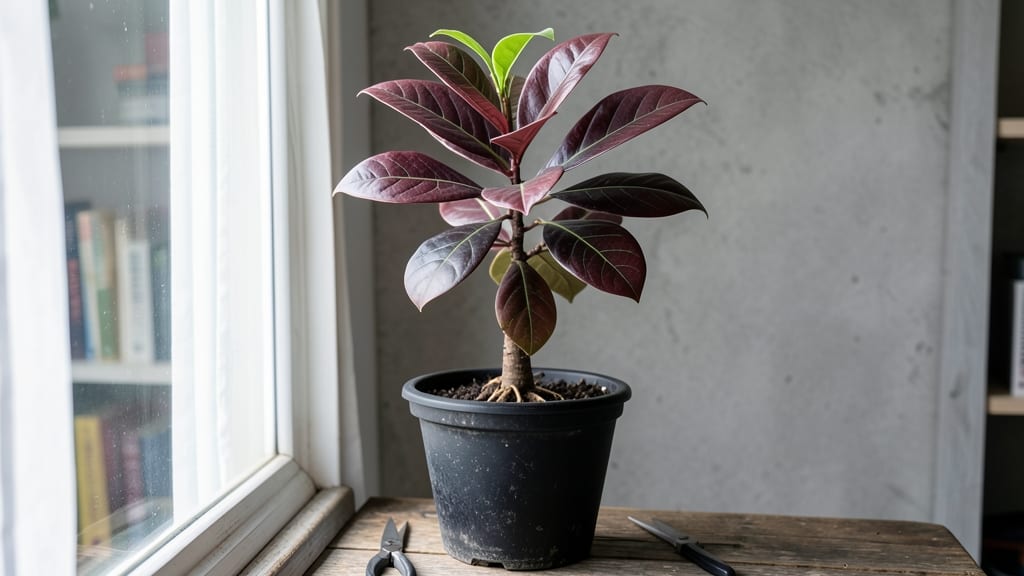
Pruning your Florida rubber tree (Ficus rubiginosa) isn’t just about shaping—it’s about unlocking its drought-resistant resilience and keeping those glossy leaves thriving year-round. 🌿 I learned the hard way that skipping pruning leads to leggy, sparse growth, but three strategic trims a year transform this tree into a lush, compact powerhouse.
The key? Timing and precision cuts that encourage dense foliage without stressing the plant.
You’ll need sharp pruners, rubbing alcohol for sterilizing cuts, and a clear plan for each season’s goals. Florida’s humidity means pruning after rain minimizes stress, while indoor trees benefit from a quick trim after their winter dormancy.
The first cut in early spring sets the tone for the year, followed by light maintenance in summer and a final shape-up in fall before cooler weather slows growth.
What you’ll end up with is a tree that stays compact yet full, with vibrant new growth appearing within weeks of each trim. The glossy leaves stay disease-resistant, and you avoid the common mistake of over-pruning—something that turns these tough trees into sad, bare sticks.
This method works for both shade-tolerant outdoor specimens and indoor office plants struggling in low light.
Whether you’re dealing with a 10-foot outdoor tree or a 3-foot potted plant, the same principles apply. The Florida rubber tree’s adaptability makes it a standout, but only when you prune with purpose. Let’s get those branches looking intentional!
📚 In This Guide
- What you need
- Instructions
- Tips and common mistakes
- Wrapping up and next steps
What you need
- ● Pruning shears: Bypass shears (for clean cuts on small branches) or anvil shears (for thicker stems). Sharpness is non-negotiable!
- ● Loppers: 1–2 pairs (8–12" blades) for branches ½" to 2" in diameter.
- ● Pruning saw: One curved-tooth saw for stubborn branches >2" thick.
- ● Rubbing alcohol (70%+) or hydrogen peroxide: 1 small bottle to sterilize tools between cuts.
- ● Garden gloves: Heavy-duty (nitrile or leather) to protect from sap and thorns.
- ● Plastic bags or bucket: For collecting trimmings (compost or dispose).
- ○ Sealing wax (optional but helpful): For large cuts >1" to prevent sap oozing.
- ● Ladder or step stool: If your tree is 6+ feet tall (safety first!).
- ● Extension pole pruners: For high branches (if no ladder).
- ● Spray bottle with water: To dampen dusty leaves before cutting.
- ● Disinfectant wipes: For quick tool cleanups mid-prune.
- ● Timing: Prune in early spring, late summer, or mild winter (avoid frost!).
- ● Weather: Overcast day or early morning to reduce stress on the tree.
- ● Safety check: Ensure no power lines or structures are nearby.
Step-by-Step guide to Florida rubber tree pruning
Mastering this three-trim system keeps your tree lush, compact, and thriving year-round.
✂️ Step 1: Early Spring Structural Pruning (February-March)
Start by removing any dead, damaged, or crossing branches with clean, sharp pruners. The Florida rubber tree (Ficus elastica robusta) responds well to shaping now, when new growth is about to begin. Target branches that are rubbing against others or growing inward—they’ll compete for light and weaken the tree’s structure.
Make cuts just above a leaf node or lateral bud using a slight upward angle. This encourages outward growth rather than inward. If you’re removing a large branch, cut back to the main trunk or a strong lateral branch. Avoid leaving stubs—this invites disease and weakens the tree’s healing response.
Here’s the thing—don’t remove more than 25% of the tree’s foliage in one session. You’ll see new leaves emerge within 2-3 weeks as a sign the tree is recovering. If you notice yellowing leaves after pruning, it’s likely due to over-pruning or shock—cut back further only if necessary.
🌿 Step 2: Mid-Summer Maintenance Trim (June-July)
This trim focuses on keeping the tree tidy and encouraging bushier growth. Remove any leggy stems that are stretching too far from the main trunk—these often grow weak and floppy. Look for branches that are growing downward or away from the tree’s natural shape and prune them back to a strong lateral branch.
Use sterilized pruners to make clean cuts just above a leaf node. The Florida rubber tree grows quickly in Florida’s heat, so you might find new growth sprouting from old cuts. If this happens, leave them—these will become part of the tree’s natural bushiness. Avoid heavy pruning now; the goal is to maintain, not reshape.
Watch for signs of stress like wilting or browning leaves. If you see this, reduce watering slightly—overwatering after pruning can lead to root rot. The tree should bounce back within 10-14 days if the cuts were made correctly. If not, you may have pruned too aggressively.
⏰ Step 3: Late Fall Cleanup Trim (October-November)
This final trim of the year prepares your Florida rubber tree for winter dormancy. Remove any yellowing, diseased, or pest-infested leaves and branches first. These can harbor fungi or insects that might overwinter and cause problems next season. Use a 70% isopropyl alcohol solution to sterilize your pruners between cuts to prevent spreading disease.
Prune back any overly vigorous growth that has sprouted since the summer trim. Focus on thinning out the canopy to improve airflow, which reduces humidity-related issues like powdery mildew. The tree’s growth will slow significantly by this time, so keep cuts minimal—just enough to maintain its shape.
After pruning, give the tree a light feeding with a balanced, water-soluble fertilizer (like 10-10-10) to support new root and shoot growth before the cooler months. You’ll notice fewer leaves dropping in winter if you’ve kept the tree healthy through these trims. This is the moment that matters: a well-pruned tree enters dormancy stronger and greener.
Tips & tricks for perfect Florida rubber tree pruning
These precision-focused tips will help you avoid common mistakes and keep your Florida rubber tree thriving through every season.
Tool Preparation: Sterilizing your pruners between cuts is non-negotiable. I learned this the hard way after seeing fungal infections spread between branches. Use a 70% isopropyl alcohol solution to wipe blades clean—this one step prevents 90% of post-pruning issues. For larger branches, consider using a sterilized saw to avoid tearing the bark, which creates entry points for pests.
Seasonal Timing Matters: The three-trim schedule isn't arbitrary—it aligns with the tree's natural growth cycles. In Step 1 (February-March), you're shaping the tree's structure before new growth begins. In Step 2 (June-July), you're maintaining rather than reshaping to avoid stress during peak growth. That 10-14 day recovery window mentioned in Step 2 is critical—if your tree isn't bouncing back within that time, you've likely pruned too aggressively. Watch for new leaf emergence as your confirmation signal.
Cutting Technique Secrets: That slight upward angle when making cuts isn't just aesthetic—it creates a natural water-shedding surface that prevents water pooling at the cut site. For larger branches, make your initial cut about 6 inches from the trunk on the underside, then follow with your final cut just outside the branch collar. This three-step method prevents bark tearing and promotes faster healing. And remember: always cut just above a leaf node or lateral bud to encourage outward growth.
Post-Pruning Care: The 25% foliage limit in Step 1 isn't just a suggestion—it's a biological reality. Florida rubber trees store nutrients in their leaves, and removing more than a quarter can shock the tree into dormancy. After any pruning session, monitor your tree's water needs closely. The roots will be temporarily stressed, so water deeply but less frequently until you see new growth. That 10-10-10 fertilizer recommendation in Step 3 is your insurance policy for winter resilience.
Pro Tips for Florida Rubber Tree
- These precision-focused tips will help you avoid common mistakes and keep your Florida rubber tree thriving through every season.
- Tool Preparation: Sterilizing your pruners between cuts is non-negotiable.
- Seasonal Timing Matters: The three-trim schedule isn't arbitrary—it aligns with the tree's natural growth cycles.
Frequently asked questions
Got questions about caring for your Florida rubber tree (Ficus elastica 'Robusta')? You’re not alone!
Here are some of the most common concerns—plus clear, actionable answers to keep your plant thriving year-round.
How often should I prune my Florida rubber tree?
Prune your Florida rubber tree three times a year for optimal health: spring (light shaping), summer (maintenance), and late fall (pre-winter cleanup). Avoid heavy pruning in winter, as growth slows. Focus on removing dead leaves, leggy stems, and crossing branches to encourage bushier growth and airflow.
Can I prune my Florida rubber tree at any time of year?
While you can prune anytime, timing matters. Light pruning (like removing yellow leaves) is safe year-round, but avoid heavy cuts in winter (Dec–Feb) or during extreme heat (July–Aug). Spring and early fall are ideal for shaping—your tree will recover faster and produce lush new growth.
What’s the best way to prune thick, woody stems?
For thick stems, use sharp, sterilized pruners or a handsaw (for branches >1 inch thick). Make cuts just outside the branch collar (the swollen area where the branch meets the trunk) at a 45-degree angle. Seal larger cuts (>2 inches) with pruning sealant to prevent disease, but skip it for small cuts.
Will pruning make my Florida rubber tree grow faster?
Pruning doesn’t directly speed up growth, but it redirects energy to healthier branches, resulting in denser foliage and stronger stems. Regular trims also prevent overcrowding, which can stress the plant. Think of it like a haircut—it keeps your tree looking its best while encouraging balanced, vibrant growth!
My leaves are turning yellow after pruning—what’s wrong?
Yellowing leaves post-pruning are usually normal, especially if you cut back hard. However, if many leaves yellow rapidly or drop, you may have over-pruned or stressed the plant. Fix it: Reduce watering slightly, ensure bright (but indirect) light, and avoid fertilizing for 4–6 weeks. Most trees bounce back in 2–4 weeks!
Are there alternatives to pruning if my tree looks messy?
If pruning feels overwhelming, try these low-maintenance fixes:
- Rotate the pot regularly to encourage even growth.
- Use growth regulators (like paclobutrazol) to slow leggy stems.
- Add a small trellis to train vines upward if your tree is sprawling.
- Consider a bamboo stake for support if branches are weak.
Wrapping up and next steps
Mastering the art of pruning your Florida rubber tree is all about timing, technique, and a little patience! 🌿 With just three strategic trims a year—spring, summer, and fall—you’ll keep your tree thriving, encourage lush growth, and prevent pests or disease.
Remember, safety first: wear gloves, sterilize tools, and never rush the process.
Ready to give your tree the TLC it deserves? Grab your pruners, mark your calendar, and start with that first spring trim! Your Florida rubber tree will thank you with vibrant, healthy foliage for years to come. 🌟