
Pruning
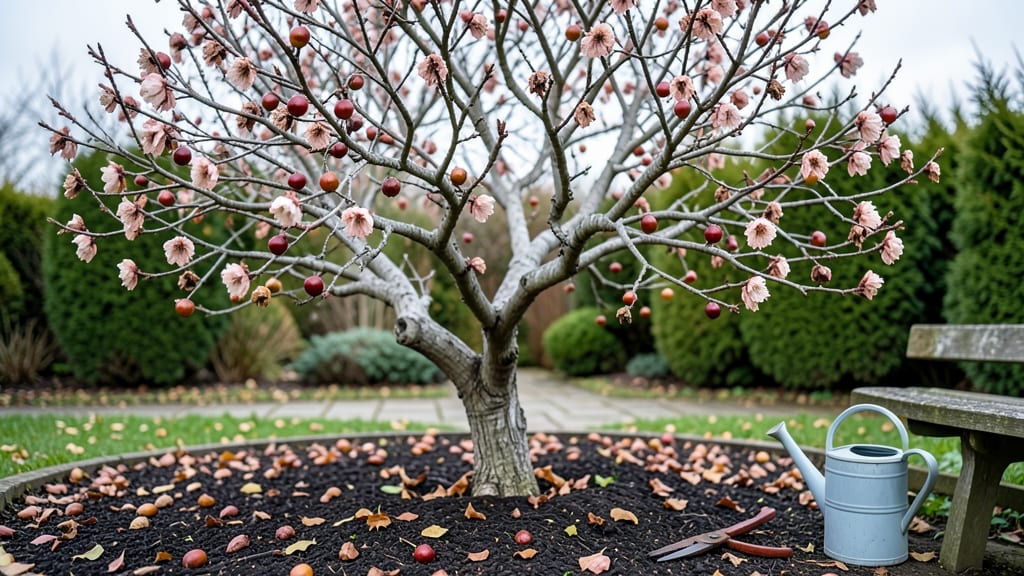
Your flowering crabapple tree’s winter dormant pruning determines next spring’s dazzling pink and white blossoms—this is the secret to showstopping blooms every season. I’ve pruned mine in late January for years, and the difference in flower density is night and day.
The tree’s bare branches might look stark now, but those cuts shape the framework for hundreds of blooms come April.
Here’s the thing—most people wait until spring, but winter pruning gives you a head start. You’ll need sharp pruners, a ladder if branches are high, and a clear day (no frost in the forecast).
The goal is to remove dead wood, thin crowded branches, and open the center for better airflow—all while the tree’s dormant. This reduces stress and prevents disease when buds start swelling in early spring.
What you’ll end up with is a tree that bursts into color earlier and more abundantly than neighbors’. The blooms arrive in 3-4 weeks after pruning, and the branches hold them longer because of improved structure.
Plus, you skip the messy cleanup of fallen petals later in the season. It’s the kind of transformation that makes winter gardening worthwhile.
Works for any crabapple variety in zones 3-8, though timing shifts slightly in warmer climates. The key is acting before buds swell—usually between late January and early March. Let’s get those pruners ready for a tree that’ll steal the show next spring.
📚 In This Guide
- What you need
- Instructions
- Tips and common mistakes
- Wrapping up and next steps
What you need
- ● Pruning shears: Bypass pruners (sharp, 6–8" blades) for small branches.
- ● Loppers: 1 pair (8–12" handles) for thicker branches (½–1.5" diameter).
- ● Pruning saw: 1 curved-tooth saw for branches >1.5" in diameter.
- ● Disinfectant: 70% isopropyl alcohol or a 10% bleach solution (1 part bleach to 9 parts water) to clean tools between cuts.
- ● Gloves: Heavy-duty gardening gloves (cut-resistant, waterproof) to protect hands.
- ● Ladder or step stool: Sturdy, extendable (if tree is >8 ft tall).
- ● Trash bags: 2–3 heavy-duty bags (30-gallon size) for debris.
- ○ Pruning sealant (optional): Tree wound paint (for cuts >½" diameter).
- ○ Marking twine or flags (optional): For tagging branches to remove later.
- ● Timing: Prune on a dry, frost-free day in late winter (just before buds swell).
- ● Weather check: Avoid pruning if rain or freezing temps are forecasted within 24 hours.
- ● Tree health: Inspect for signs of disease (e.g., cankers, oozing sap) before starting.
- ● Safety gear: Safety glasses (to shield from debris) and long sleeves/pants.
Step-by-step guide to pruning a flowering crabapple in winter
Winter's the perfect time to shape your crabapple for stunning spring blooms—here's how to do it right.
✂️ Step 1: Gather the Right Tools and Timing
Start by selecting a dry, above-freezing day—ideally between late winter and early spring, just before buds swell. I always use sharp, sterilized pruning shears (clean them with rubbing alcohol) to prevent disease spread. A hand saw helps with thicker branches over ½ inch thick, and pruning sealer is ready for when you need it.
Here's the thing—if you prune too early, you risk damaging tender new growth from late winter thaws. Wait until the coldest weather has passed but before buds begin to open. You'll know it's time when the tree looks dormant but the ground isn't frozen solid.
✂️ Step 2: Remove Dead, Diseased, or Damaged Wood First
Scan the tree for dead branches (brown, brittle wood that snaps easily) or diseased limbs (mushrooms at the base, oozing sap, or discolored bark). These need to go immediately—they drain energy from healthy growth. Cut back to the collateral bud (a side bud facing outward) just beyond the damage.
I always start at the top and work my way down. This prevents me from accidentally cutting off branches I haven't examined yet. If a branch is larger than 3 inches thick, make a 3-cut technique: Undercut first, then cut from above, and finally remove the branch cleanly. This avoids bark tearing.
✂️ Step 3: Thin the Canopy for Better Airflow and Light
Next, focus on thinning—removing entire branches back to their origin—to improve light penetration and reduce disease risk. Aim to remove no more than 25% of the tree's foliage in one season. Look for branches that cross or rub against each other; these will eventually create wounds.
I like to step back every few cuts and visualize the tree's shape. The goal is an open center with branches spaced 6-12 inches apart. You'll see where light struggles to reach—those are the spots that need thinning. Avoid "heading back" (cutting back to a lateral bud) unless you're shaping a specific branch.
✂️ Step 4: Shape for Balance and Future Bloom Power
Now it's time to refine the tree's form. Flowering crabapples bloom best on older wood, so avoid heavy pruning of mature branches. Instead, focus on light shaping—removing small branches that spoil the silhouette or grow inward. Cut just above a bud that faces outward to encourage even growth.
Real talk: This is where most people overdo it. I've seen crabapples stripped bare in winter, only to struggle with weak blooms the next spring. Keep cuts minimal and strategic. You'll know you're doing it right when the tree still looks full but with better-defined structure.
✂️ Step 5: Clean Up and Protect the Tree
After pruning, rake up all debris and dispose of it (don't compost diseased wood). If you made large cuts on branches over ½ inch thick, apply pruning sealer to prevent water from seeping into the wound. For smaller cuts, leave them open—they'll heal faster with natural callus formation.
Give the tree a deep watering if the ground isn't frozen, then mulch around the base with 2-3 inches of organic mulch (like wood chips) to protect roots from temperature swings. This is the final touch—your tree is now set up for strong, vibrant blooms next spring.
Tips & tricks for perfect winter crabapple pruning
Here's what nobody tells you about pruning your flowering crabapple—these tricks will help you avoid common mistakes and set your tree up for spectacular spring blooms.
Timing is Everything: The window between late winter and early spring is critical—aim for when the tree is fully dormant but before buds begin to swell. I've made the mistake of pruning too early after a warm spell, only to see new growth get damaged by the next freeze. Check the weather forecast for a stretch of dry, above-freezing days with no frost predicted for at least 24 hours.
Tool Prep Matters: Sterilizing your pruning shears with rubbing alcohol before you start isn't just about hygiene—it prevents spreading diseases like fire blight between cuts. I keep a small spray bottle of 70% isopropyl alcohol handy and wipe down blades between every 3-4 cuts on diseased wood. For branches over 3 inches thick, the 3-cut technique prevents bark tearing that can invite pests and disease.
Visualize the End Result: Step back every 10-15 minutes and look at your tree from all angles. The goal is an open center with branches spaced 6-12 inches apart—this creates that perfect vase shape that lets light reach all the way to the center. I've seen people get so focused on individual cuts that they end up with a lopsided tree. Think about how sunlight will filter through in spring.
Pro Tips for Flowering Crabapple Tree In Winter
- Here's what nobody tells you about pruning your flowering crabapple—these tricks will help you avoid common mistakes and set your tree up for spectacular spring blooms.
- Timing is Everything: The window between late winter and early spring is critical—aim for when the tree is fully dormant but before buds begin to swell.
- Tool Prep Matters: Sterilizing your pruning shears with rubbing alcohol before you start isn't just about hygiene—it prevents spreading diseases like fire blight between cuts.
Frequently asked questions
Got questions about keeping your flowering crabapple tree thriving in winter?
Here are answers to the most common ones—so you can prune with confidence and set the stage for a spectacular spring bloom!
When is the best time to prune a flowering crabapple tree in winter?
The ideal window is late winter (just before bud break, typically February to early March in most climates). Pruning then minimizes stress, reduces disease risk, and ensures your tree focuses energy on spring blooms. Avoid pruning in extreme cold or during frost events.
Will pruning in winter harm my tree?
Not if done correctly! Winter pruning is safe and beneficial—just avoid cutting into old wood (last year’s growth) if you want to preserve next year’s flowers. Focus on shaping, removing dead branches, and thinning for airflow. Pro tip: Use sharp tools and seal cuts with pruning sealant to prevent disease.
Can I prune a flowering crabapple tree in late winter or early spring?
While late winter is best, you can prune early spring (just as buds swell) if you missed the window—but avoid cutting after buds open. Late-winter pruning gives your tree more time to heal before growth resumes. If you prune too late, you might reduce next year’s flower production.
What if my flowering crabapple tree isn’t blooming well after winter pruning?
Several factors could be at play:
- Over-pruning: Never remove more than 25% of the canopy in one season.
- Wrong cuts: Avoid pruning flowering wood (last year’s growth) if blooms are sparse.
- Environmental stress: Check for pests, disease, or poor soil drainage.
- Age: Younger trees may take 2–3 years to establish strong blooms.
If issues persist, consider a soil test or consult a local arborist.
Are there winter-pruning alternatives for small yards or urban areas?
Yes! For limited space:
- Espalier training: Grow the tree flat against a wall or fence to save space while pruning.
- Dwarf varieties: Choose compact types like ‘Sentinel’ or ‘Centennial’ (mature at 15–20 ft).
- Container growing: Young crabapples can thrive in large pots (with winter protection).
Just ensure proper airflow to prevent fungal issues.
Wrapping up and next steps
Watching your flowering crabapple tree transform in winter through thoughtful pruning isn’t just rewarding—it’s the key to a dazzling spring spectacle! 🌸 By mastering dormant pruning, you’re giving your tree the perfect foundation for vibrant blooms, stronger structure, and long-term health.
Now that you’re armed with the right tools, techniques, and timing, there’s only one step left:
- Grab those pruners and roll up your sleeves—your tree’s future beauty starts with your hands today!
- Need extra confidence? Bookmark this guide or share it with fellow gardeners to tackle the task together.
Happy pruning—your spring garden will thank you! 🌿✨