
Pruning
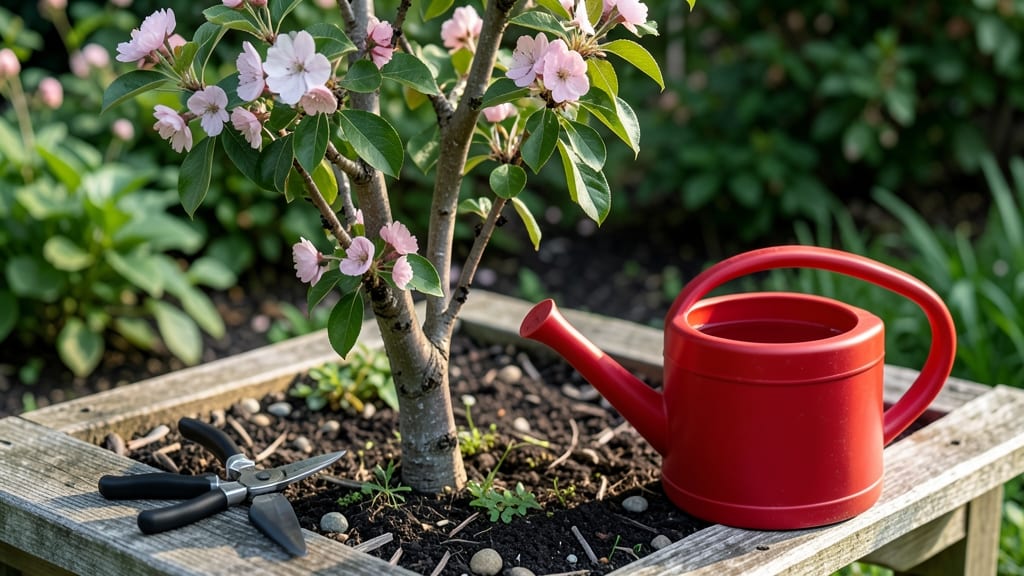
Flowering plum tree problems can turn your prized tree into a heartbreaking sight when branches die back unexpectedly—but I’ve nursed several back to health after fungal attacks and pest invasions.
The first step is identifying whether your tree is fighting powdery mildew, anthracnose, or something else entirely, because each problem needs a different fix. I’ll walk you through the telltale signs: blackened leaf spots, sticky sap trails, or sudden leaf drop that leaves you staring at bare wood.
Most issues start with basic care mistakes—like overwatering or ignoring drainage—that create the perfect conditions for pests and diseases. The good news? You don’t need fancy tools to turn things around.
A sharp pair of pruners, a hose with a nozzle, and a few organic sprays (or targeted fungicides for severe cases) are all you’ll need. The key is acting fast before the problem spreads deeper into the wood.
What you’ll end up with is a tree that stops looking like a victim and starts thriving again—bright green leaves, sturdy branches, and those stunning spring blooms you planted it for.
We’ll cover when to prune out dead wood (late winter, when the tree’s dormant) and how to protect it from next year’s onslaught. This isn’t just damage control; it’s a reset button for your tree’s future.
Whether your tree’s been struggling for weeks or you just noticed the first signs, the steps I’m sharing work for both quick fixes and long-term prevention. Let’s get your flowering plum back on track before another season passes it by.
📚 In This Guide
- What you need
- Instructions
- Tips and common mistakes
- Wrapping up and next steps
What you need
- ● Pruning shears – Bypass pruners (sharp, 6–8 inch blades) for clean cuts on small branches.
- ● Loppers – Bypass or anvil type (18–24 inch handles) for thicker branches (½–1.5 inches).
- ● Pruning saw – Curved-tooth saw for branches over 1.5 inches in diameter.
- ● Disinfectant – 70% isopropyl alcohol or 10% bleach solution (1 part bleach to 9 parts water) to sterilize tools between cuts.
- ● Rubbing alcohol or hand sanitizer – For cleaning hands before and after pruning.
- ● Garden gloves – Heavy-duty, cut-resistant to protect your hands from thorns and sap.
- ● Extension pole – 3–6 ft telescoping pole with a saw or pruner attachment for high branches.
- ● Tarp or drop cloth – To collect debris and protect the ground beneath the tree.
- ○ Pruning sealant – Optional but helpful for large cuts (over ½ inch) to prevent disease entry.
- ● Magnifying glass – For inspecting buds, bark, and signs of pests/disease up close.
- ● Plastic bag & twist ties – To collect suspicious leaves/bark samples for identification.
- ● Fungicide – Copper-based or systemic fungicide (e.g., Neem oil or myclobutanil) if fungal issues (like powdery mildew) are suspected.
- ● Insecticidal soap – For treating soft-bodied pests like aphids or scale.
- ● Soil moisture meter – To check for over/under-watering issues.
- ● pH test kit – To verify soil pH (ideal range: 6.0–7.0 for flowering plums).
- ● Slow-release fertilizer – Balanced 10-10-10 or 20-20-20 (spring application) if nutrient deficiency is detected.
- ● Weather check – Prune on a dry, calm day (avoid wind or rain).
- ● Safety glasses – To protect eyes from debris.
- ● Long sleeves & pants – To avoid scratches from thorns.
- ● Ladder (if needed) – Sturdy, non-slip for reaching high branches (follow safety guidelines!).
- ● First-aid kit – Just in case of minor cuts or scrapes.
- ● Water & snacks – Hydration and energy for the job!
How to diagnose and fix common flowering plum tree issues
Here's how I've tackled the most stubborn problems with these stunning spring bloomers—step by step.
Identify the Problem Through Visual Clues
Start by examining the tree from top to bottom. Look for brown, crispy edges on leaves—this usually signals underwatering or heat stress. If you see blackened stems at branch junctions, that’s canker disease, a fungal infection that spreads quickly. Check the bark for peeling or oozing sap, which often means bacterial infection or insect damage from borers.
Don’t overlook the roots. If the soil around the base is cracked and dry, the tree isn’t getting enough water. If it’s soggy and smells foul, you’ve got root rot—a common killer of flowering plums. I always run my finger through the top 2 inches of soil to check moisture. If it feels like a dry sponge, water immediately.
Treat Fungal and Bacterial Infections Immediately
For canker disease, prune out infected branches at least 6 inches below the blackened area using sterilized pruners (wipe with rubbing alcohol between cuts). Dispose of the infected wood in the trash—never the compost. After pruning, apply a copper fungicide to the wounds to prevent further spread. I like to do this on a cool, cloudy day to reduce stress on the tree.
If you suspect bacterial infection (like bacterial leaf spot), remove all infected leaves and branches. Then, spray the tree with a fixed copper fungicide every 10-14 days until new growth appears. Avoid overhead watering—it spreads bacteria. Instead, water at the base of the tree in the morning so foliage dries quickly.
Revive Stressed or Dying Branches
If branches are brown and brittle but not yet dead, they might just need rehydration. Water deeply around the base, then mulch with 2-3 inches of organic mulch (like shredded bark) to retain moisture. For severely damaged branches, prune them back to a healthy bud or branch. Never leave stubs—they invite disease. Seal larger pruning wounds with pruning sealant to prevent infection.
Watch for new growth within 2-3 weeks as a sign the tree is recovering. If no new leaves appear, the branch may be dead. In that case, remove it completely. I always prune in late winter or early spring before the tree breaks dormancy—this gives it time to heal before the growing season.
Prevent Future Problems with Proper Care
Flowering plums thrive in full sun (6+ hours daily) and well-draining soil. If your tree is in shade or compacted soil, it’ll struggle. Amend heavy clay soil with compost or sand to improve drainage. Water deeply once a week during dry spells—1-2 inches of water per session. Let the soil dry slightly between waterings to avoid root rot.
Fertilize in early spring with a balanced, slow-release fertilizer (like 10-10-10). Avoid high-nitrogen fertilizers—they promote leafy growth at the expense of flowers. I also recommend pruning in late winter to remove dead, crossing, or weak branches. This improves airflow and reduces disease risk.
Monitor for Pests and Disease Year-Round
Keep an eye out for aphids, scale, or borers—common pests that weaken flowering plums. If you see sticky residue (honeydew) on leaves, wipe them down with soapy water and introduce ladybugs for natural pest control. For borers, inject beneficial nematodes into the soil around the base. They’ll target the larvae without harming the tree.
In fall, rake up and dispose of fallen leaves—they often harbor fungal spores. Apply a dormant oil spray to smother overwintering pests. This simple step can prevent 80% of springtime problems. I also recommend testing soil pH every few years—flowering plums prefer slightly acidic soil (6.0-6.5). Adjust with lime or sulfur if needed.
Tips & tricks for perfect flowering plum tree care
Real talk: I’ve lost count of how many flowering plum trees I’ve nursed back to health—here’s what actually works to turn things around.
Diagnosis Timing: The best time to examine your tree for problems is in the early morning when leaves are fully hydrated. This is when you’ll spot subtle signs like yellowing between leaf veins (a classic sign of bacterial leaf spot) or tiny white webs (spider mites). I’ve caught issues early by checking under leaves with a magnifying glass—don’t skip this step! The sooner you identify the problem, the easier it is to treat.
Pruning Precision: When cutting back infected branches in Step 2, use a sharp, sterilized pruner and make cuts at a 45-degree angle just outside the branch collar. I’ve made the mistake of leaving stubs before, and they always lead to further infection. After pruning, dip the cut ends in pruning sealant to create a protective barrier. This simple step can save your tree from spreading disease.
Watering Wisdom: The 1-2 inches of water per week guideline in Step 4 is perfect, but timing matters just as much. Water in the early morning so foliage has all day to dry, preventing fungal growth. I’ve seen trees recover completely after switching from afternoon watering to morning—it makes a huge difference. Also, avoid wetting the leaves when possible, especially during fungal treatment periods.
Seasonal Strategy: Late winter pruning (mentioned in Step 3) is ideal, but if you miss that window, don’t panic. You can safely prune in early spring as long as the tree hasn’t yet budded. I’ve pruned flowering plums as late as March in my zone 7 garden with great results. Just avoid pruning in fall—this encourages new growth that won’t harden off before winter.
Pro Tips for Flowering Plum Tree Problems
- Real talk: I’ve lost count of how many flowering plum trees I’ve nursed back to health—here’s what actually works to turn things around.
- Diagnosis Timing: The best time to examine your tree for problems is in the early morning when leaves are fully hydrated.
- Pruning Precision: When cutting back infected branches in Step 2, use a sharp, sterilized pruner and make cuts at a 45-degree angle just outside the branch collar.
Frequently asked questions
Got questions about keeping your flowering plum tree healthy and blooming? Here are some of the most common concerns—plus quick fixes to keep your tree thriving!
Why are my flowering plum tree branches dying back?
Dying branches are often caused by bacterial canker (common in plums) or cold damage. Look for oozing cankers or dark, sunken spots. Prune affected branches 12 inches below the damage in late winter, sterilizing tools with rubbing alcohol between cuts. Avoid wound dressings—they trap moisture and worsen infections.
Can flowering plum trees survive winter frost?
Most varieties tolerate 15–20°F but may suffer if temps drop below 10°F for long. Young trees or newly planted ones are most vulnerable. Mulch heavily (4–6 inches of organic mulch) and water deeply before freeze to protect roots. If buds blacken, they’re likely dead—don’t prune until spring to assess regrowth.
What’s a good alternative if my plum tree keeps failing?
If your site has poor drainage or harsh winters, consider cherry blossom trees (like Yoshino) or ornamental cherry varieties. They’re similarly stunning but often hardier. For low-maintenance options, crabapple trees (e.g., ‘Royalty’) offer disease resistance and vibrant blooms with fewer pruning demands.
When is the best time to prune a flowering plum tree?
Prune late winter to early spring (just before buds swell) to remove dead wood and shape the tree. Avoid pruning after blooms—you’ll cut off next year’s flowers! For heavy pruning (more than 25% of branches), spread it over 2–3 years to reduce stress. Always use sharp, sterilized tools to prevent disease spread.
How do I stop pests like borers or aphids from attacking?
Prevent pests with cultural care: Keep trees well-watered and pruned for airflow. For borers, apply systemic insecticide (like imidacloprid) in early spring. For aphids, blast them off with water or use neem oil. Ladybugs are natural predators—encourage them by planting nearby flowers like dill or marigolds.
Wrapping up and next steps
Caring for a flowering plum tree doesn’t have to be overwhelming—with the right knowledge, you can revive struggling branches and keep your tree thriving for years. Whether it’s pruning correctly, addressing pests, or improving soil health, small steps make a big difference. 🌸
Ready to give your tree the love it deserves? Start by inspecting it this week—note any issues and take action based on what you’ve learned. A little effort now ensures stunning blooms and lush foliage in the seasons to come!