
Pruning
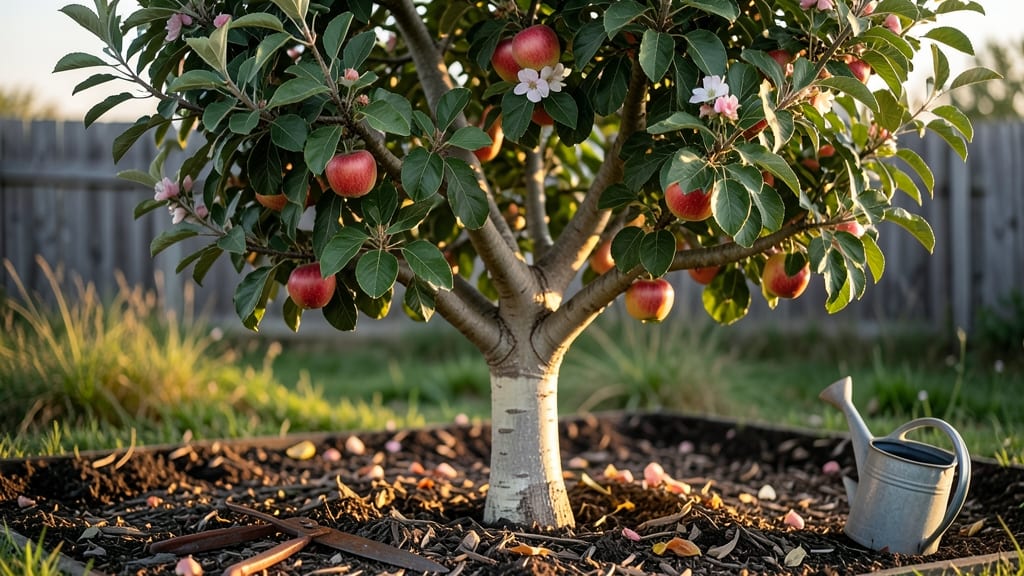
Fuji apple trees can reach 20 to 30 feet tall at maturity, but their final height depends on whether you choose a standard or dwarf variety—and how aggressively you prune.
I learned this the hard way when my first Fuji tree grew taller than my garage roof, forcing me to rethink my backyard layout. The good news? With the right approach, you can keep even standard varieties manageable while maximizing fruit production.
Dwarf Fuji trees stay between 8 and 12 feet tall, making them perfect for small gardens or container growing, while semi-dwarf varieties typically hit 12 to 16 feet. Standard trees need more space but produce larger harvests.
Pruning in late winter—before buds swell—is key to controlling height and encouraging strong branching. I’ve found that removing 15-20% of last year’s growth each year keeps trees in check without sacrificing fruit.
What you’ll end up with is a productive, well-shaped tree that fits your space while delivering hundreds of pounds of crisp, sweet apples per season. Proper spacing (12-15 feet between standard trees, 8-10 feet for dwarfs) ensures good airflow, reducing disease risk.
The first harvest might take 3-5 years, but the effort pays off with years of low-maintenance fruit production.
This approach works for home gardens, urban backyards, and even large orchards. Whether you’re dealing with a 20-foot giant or a 10-foot dwarf, the same pruning principles apply.
Let’s get your Fuji tree growing the way you want it—tall enough for great fruit, but not so tall it takes over your yard.
📚 In This Guide
- What you need
- Instructions
- Tips and common mistakes
- Wrapping up and next steps
What you need
- ● Fuji apple tree saplings or bare-root trees: Standard dwarf varieties: 6–8 feet (1.8–2.4 m) tall at maturity
- ● Semi-dwarf varieties: 10–12 feet (3–3.6 m) tall at maturity
- ● Standard varieties: 16–20 feet (4.8–6 m) tall at maturity
- ● Shovel or spade: For digging planting holes (size depends on root ball)
- ● Pruning shears or lopers: Bypass pruners (for small branches) or lopers (for thicker branches)
- ● Grafting tape or rubber tree wrap: To protect pruning cuts (1–2 rolls)
- ○ Tree stakes (optional but recommended): 2–4 stakes per tree (4–6 ft tall)
- ● Mulch (wood chips or straw): 2–3 inches thick, covering a 3-foot radius around the tree
- ● Watering can or hose with a gentle spray nozzle: For post-planting hydration
- ● Fertilizer (balanced 10-10-10 or organic compost): 1–2 lbs per young tree
- ● Tree guard or protective fence: To deter animals or pests (especially for young trees)
- ● Pruning sealant: For larger cuts (follow label instructions)
- ● Soil pH test kit: To ensure optimal growing conditions (Fuji apples thrive in 6.0–6.5 pH)
- ● Drip irrigation system: For consistent moisture (great for orchards!)
- ● Gloves and long sleeves: To protect against thorns and sap
How to optimize Fuji apple tree height for abundant harvests
Proper spacing and pruning set the stage for a Fuji apple tree that thrives—not just survives.
Understand Fuji Apple Tree Growth Habits
Fuji apple trees grow 12-15 feet tall at maturity, but their final height depends on rootstock. Standard varieties reach full height, while dwarf or semi-dwarf rootstocks top out at 6-10 feet. This affects both fruit production and ease of maintenance.
Here’s the key: Vertical growth slows after 3-5 years when the tree focuses energy on fruiting. Prune strategically in early spring to encourage lateral branches—these are where most fruit forms. Thin branches that grow straight up (called "water sprouts") to redirect energy toward horizontal growth.
Plant With Proper Spacing for Airflow
Fuji apple trees need 15-20 feet between trees when planted in a home orchard. This spacing prevents overcrowding, which leads to disease and poor fruit quality. If planting multiple trees, arrange them in a semi-circle around the home to maximize sun exposure and wind protection.
Dig a hole twice as wide as the root ball but no deeper. Place the tree so the graft union (the bump near the base) sits 2-3 inches above soil level. This prevents future rot. Backfill with native soil, tamping gently to remove air pockets. Water deeply to settle the roots.
Prune for Height Control and Fruit Production
Prune during dormancy (late winter/early spring) before buds swell. Remove dead, crossing, or inward-growing branches first—these compete for nutrients. Next, cut back vertical shoots to encourage horizontal branching. Aim to keep the tree’s lower branches 3-4 feet off the ground to prevent disease.
Use sharp pruning shears to make clean cuts just outside the branch collar (the swollen area where the branch meets the trunk). Avoid leaving stubs—this invites rot. After pruning, apply wound dressing (like tree paint) only if the cut is larger than ½ inch in diameter.
Train Young Trees for Structural Strength
For the first 2-3 years, focus on open-center pruning to create a strong scaffold. Select 3-5 well-spaced branches as the main framework, cutting back others to ½ their length. This encourages lateral growth and prevents a single dominant leader (vertical stem) that weakens the tree.
Use temporary stakes to guide young branches into place if needed. Avoid excessive bending—this can damage the cambium layer. Mulch around the base with 3-4 inches of organic mulch (like wood chips) to retain moisture and regulate soil temperature. Keep mulch 6 inches away from the trunk to prevent rot.
Monitor Growth and Adjust as Needed
Check the tree’s height and branch structure twice yearly—once in early spring and again after harvest. If vertical growth outpaces horizontal branching, prune again in summer to pin back (cut to just above a leaf) the tips of vigorous shoots. This signals the tree to bush out.
Fuji apple trees produce best when light penetrates the canopy. If you notice dense foliage blocking sunlight, thin out 20-30% of the smallest branches in late spring. This improves air circulation and fruit quality. Avoid heavy pruning after mid-July, as new growth won’t harden off before winter.
Tips & tricks for perfect Fuji apple tree height
Took me years to master these orchard secrets—here's how to avoid the most common mistakes that stunt growth or ruin fruit production.
Rootstock Selection: When choosing your Fuji apple tree, pay close attention to the rootstock type as this determines 80% of your tree's final height. Standard rootstock will give you that full 12-15 foot height, while semi-dwarf rootstock (common in home gardens) tops out at 6-10 feet. I always recommend semi-dwarf for home orchards—it's easier to maintain while still producing abundant fruit. The key difference is in the grafting process where the scion (Fuji variety) is attached to the rootstock.
Pruning Timing Strategy: The instructions mention pruning during dormancy in late winter/early spring, but here's what nobody tells you—timing within that window matters. Aim for the coldest part of winter when buds are still dormant but before they begin to swell. I've seen trees where pruning was done too late in spring result in stunted lateral growth because the tree redirected energy toward fruit production instead of new branches. Look for days when temperatures are consistently below freezing at night.
Water Sprout Management: Those vertical shoots you're supposed to thin out are actually the tree's way of trying to grow taller. The trick is to remove them completely at the base rather than cutting back—this sends a stronger signal to the tree to redirect energy toward horizontal growth. I've found that using sharp pruning shears and making clean cuts just outside the branch collar (the swollen area) prevents disease and encourages faster healing. For particularly aggressive water sprouts, I'll make a second cut about ¼ inch below the first to prevent tearing.
Mulching Technique: The 3-4 inches of organic mulch mentioned is perfect, but placement is everything. I always create a mulch ring that's about 2-3 feet in diameter, keeping it 6 inches away from the trunk as instructed. The secret is to use a combination of wood chips and straw—wood chips provide long-term moisture retention while straw helps regulate soil temperature. Refresh the mulch annually in early spring before new growth begins, adding about 1-2 inches each year to maintain the proper depth.
Pro Tips for Fuji Apple Tree Height
- Took me years to master these orchard secrets—here's how to avoid the most common mistakes that stunt growth or ruin fruit production.
- Rootstock Selection: When choosing your Fuji apple tree, pay close attention to the rootstock type as this determines 80% of your tree's final height.
- Pruning Timing Strategy: The instructions mention pruning during dormancy in late winter/early spring, but here's what nobody tells you—timing within that window matters.
Frequently asked questions
Got questions about growing Fuji apple trees at the perfect height? Here are some of the most common ones—and their answers!
How tall do Fuji apple trees typically grow?
A standard Fuji apple tree can reach 15–25 feet tall if left unpruned, but dwarf varieties stay between 6–12 feet. Semi-dwarf trees (8–12 feet) are popular for home gardens due to their manageable size and high fruit yield. Always check the specific cultivar’s growth habits when selecting your tree!
When should I prune a Fuji apple tree to control its height?
Prune Fuji apple trees in late winter or early spring (before bud break) to shape and control height. Light summer pruning (after harvest) helps manage growth too. Avoid heavy pruning in fall—it can stimulate new growth that won’t harden off before winter. Pro tip: Use sharp tools and make cuts just outside the branch collar for clean, fast healing!
What’s the ideal spacing between Fuji apple trees?
For standard Fuji trees, space them 20–25 feet apart to ensure proper airflow and sunlight. Dwarf varieties need only 8–12 feet of space, while semi-dwarfs thrive at 12–15 feet. Overcrowding leads to disease, poor fruit quality, and stunted growth—so plan ahead for long-term health!
Can I keep a Fuji apple tree shorter than 6 feet?
Yes! With regular pruning and training, you can maintain a Fuji tree at 4–6 feet, especially if you choose a dwarf rootstock. Use espalier techniques or a central leader system to guide growth. Just remember—shorter trees may produce slightly less fruit but are easier to maintain and harvest.
Why is my Fuji apple tree growing too tall or leggy?
Leggy or overly tall growth often happens due to poor sunlight, over-fertilization (especially with nitrogen), or inconsistent pruning. To fix it:
- Move the tree to a sunnier spot (Fuji trees need 6+ hours of sunlight daily).
- Reduce nitrogen-heavy fertilizers and balance with potassium/phosphorus.
- Prune back overgrown branches in late winter to encourage bushier growth.
Wrapping up and next steps
Growing a Fuji apple tree is a rewarding journey, and understanding its ideal height and spacing is key to bountiful harvests! 🍏 With the right care—like proper pruning, sunlight, and soil—your tree can thrive for decades. Now’s the time to roll up your sleeves: sketch a planting plan, gather your tools, and get ready to nurture a fruit-bearing giant that’ll feed your family for years.
Ready to plant with confidence? Start by marking your tree’s future home, then dig in—your future Fuji apples are waiting! 🌱