
Pruning
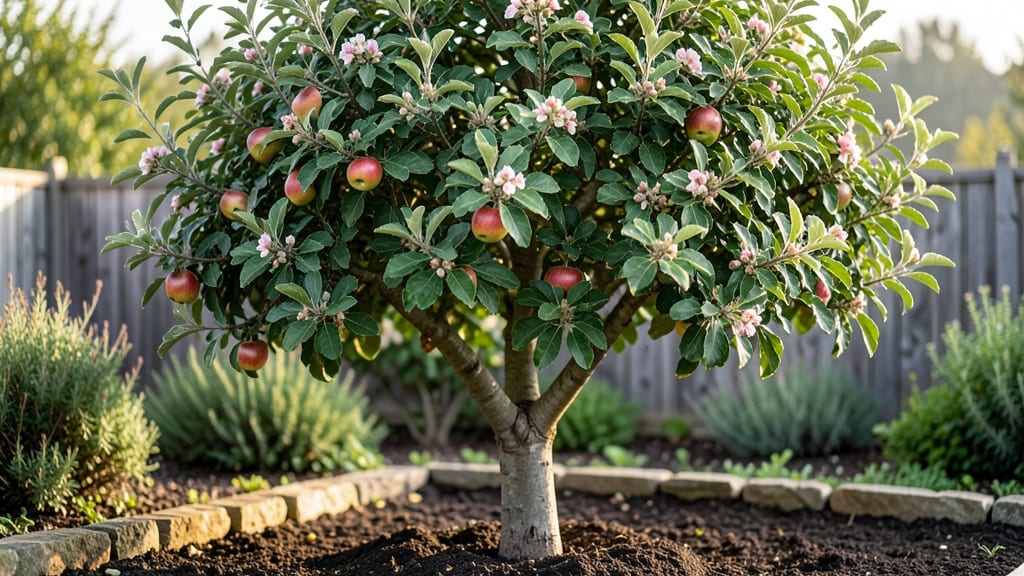
The Galarina apple tree is the perfect compact orchard solution for small yards, balconies, or even large containers—producing crisp, sweet fruit without the space demands of standard varieties.
I planted mine last spring in a 15-gallon pot, and now it’s already sporting vibrant new leaves and a sturdy framework for next year’s harvest. The key isn’t just the dwarf rootstock but how you train it from day one to maximize both fruit and foliage.
This variety thrives in full sun (6+ hours daily) and well-draining soil, but the real magic happens with pruning in late winter—just as buds swell. I use sharp bypass pruners to shape it like a vase, removing only the thickest branches that compete for energy.
The result? A tree that fills its space with fruit instead of just leaves, and fewer pests finding their way to the tender young wood.
By midsummer, you’ll be picking apples that stay crisp when stored through fall, their flavor deepening with each week off the tree. The tree itself becomes a focal point—its glossy leaves turning golden in autumn, its branches heavy with fruit that neighbors will ask about.
With just a little attention, this dwarf becomes the star of even the tiniest garden corner.
Works in containers up to 25 gallons, urban backyards, or as a striking patio feature. The secret isn’t complicated—it’s consistent care that pays off in harvests. Let’s get your Galarina off to the best possible start.
📚 In This Guide
- What you need
- Instructions
- Tips and common mistakes
- Wrapping up and next steps
What you need
- ● Dwarf Galarina apple tree (bare-root or potted, 1-3 years old for best pruning results)
- ● Pruning shears (sharp, bypass-style, with a 10-12 inch blade for clean cuts)
- ● Loppers (for thicker branches, 18-24 inch reach)
- ● Pruning saw (if dealing with 1-inch+ diameter branches)
- ● Disinfectant (70% isopropyl alcohol or bleach solution) (to sterilize tools between cuts)
- ● Garden gloves (cut-resistant, nitrile-coated for grip and protection)
- ○ Sealing wax or pruning paint (optional but helpful for 1/2-inch+ cuts to prevent disease)
- ● Tree ties or soft plant ties (for supporting new growth or branches)
- ● Sunlight access: 6-8 hours of full sun daily (dwarf varieties are flexible but thrive with ample light).
- ● Well-draining soil: Test pH (6.0-7.0 ideal) and amend with compost if needed.
- ● Watering can or hose with adjustable nozzle (for deep, 1-inch weekly watering during dry spells).
- ● Mulch (wood chips or straw) (2-3 inches around the base, keep 6 inches from trunk)
- ● Fertilizer: Balanced 10-10-10 or organic options like compost tea (apply in early spring).
- ● Pest control: Neem oil spray (for aphids or mites)
- ● Sticky traps (to monitor fruit flies)
- ○ Support stake or small trellis (optional for young trees in windy areas).
Step-by-step guide to planting and caring for a Galarina dwarf apple tree
This compact, flavor-packed variety thrives in tight spaces—here's how to set it up for years of harvests.
🌱 Step 1: Choose the Perfect Planting Spot
Galarina trees need at least 6 hours of full sun daily, but they tolerate partial shade better than most dwarf varieties. A south-facing location is ideal, though west-facing works too. Avoid spots where afternoon shade lingers—this slows fruit development and weakens flavor.
Check your space for at least 8 feet of clearance in all directions. Branches will spread wider than you'd expect, and Galarina's upright growth habit means it won't stay neatly contained. Test the soil depth with a shovel—dwarf trees hate soggy roots, so the site should drain well within 24 hours of heavy rain.
🪴 Step 2: Prepare the Soil and Plant Correctly
Dig a hole twice as wide as the root ball but only as deep as the container's drainage holes. Galarina trees ship in 5-gallon containers, so aim for a 12-inch wide, 6-inch deep planting hole. Loosen the sides of the hole with a shovel to encourage root spread.
Mix the excavated soil with 2 inches of compost (work it into the bottom third of the hole only). This prevents nutrient overload near the roots, which can burn tender new growth. Place the tree so the top of the root ball sits 1 inch above ground level—this prevents water pooling at the stem. Backfill with native soil, pressing gently to remove air pockets.
☀️ Step 3: Water and Mulch for First-Year Establishment
Water deeply immediately after planting—pour 1 gallon of water slowly around the root zone until it drains through. Check the soil 3 inches down with your finger: it should feel moist but not soggy. Galarina trees establish best with consistent moisture during their first year, so water twice weekly unless rain provides 1 inch total.
Spread 3 inches of mulch (wood chips or straw) in a 3-foot diameter circle around the trunk, keeping it 6 inches away from the stem. This conserves moisture and regulates soil temperature. Replenish mulch annually—it breaks down faster than you'd expect, especially in hot summers.
✂️ Step 4: Prune for Shape and Fruit Production
Wait until spring (after last frost) to prune. Remove any dead, crossing, or inward-growing branches first—these compete for energy and block light. Then, cut back last year's growth by 25% to encourage bushier growth. Galarina trees fruit on both old and new wood, so avoid heavy pruning in winter.
Watch for suckers (shoots at the base) and water sprouts (vertical shoots along branches)—these drain energy from fruit production. Snip them off at the base with clean pruners. After pruning, apply dormant oil spray in late winter to prevent pests from hiding in pruning wounds.
🍎 Step 5: Maintain Through Harvest Season
Fertilize once in early spring with 10-10-10 (½ cup per tree) and again after harvest to rebuild nutrients. Galarina trees produce sweet, crisp fruit in late summer—pick when the skin changes from green to yellow with red blush and gives slightly when pressed. Harvest in morning hours when sugars are highest.
Thin fruit in June to 6-inch spacing—this ensures larger, higher-quality apples. Remove every other fruit from clusters, cutting stems at a 45-degree angle to prevent disease entry. Store harvested apples in a cool, dark place (50-55°F) for up to 3 months—they keep surprisingly well for a dwarf variety.
Tips & tricks for perfect Galarina dwarf apple tree care
These practical insights will help you maximize your Galarina's potential and avoid common pitfalls that can stifle growth or fruit production.
Sunlight Strategy: While Galarina tolerates partial shade, those 6 hours of full sun are non-negotiable for optimal fruit development. If your yard has limited sun exposure, consider placing the tree near a south-facing wall or fence that reflects sunlight during the day. I've seen Galarina trees in west-facing locations produce excellent fruit, but east-facing spots often result in smaller harvests due to morning shade cutting into sunlight hours.
Planting Depth Matters: That 1-inch elevation above ground level for the root ball is critical—it prevents water from pooling at the stem and causing rot. I learned this the hard way when my first Galarina struggled after planting too deeply. Use a level to verify the root ball sits perfectly at that 1-inch mark. For the 5-gallon container trees, the drainage holes typically sit about 1 inch below the rim, so aim to have the rim sit flush with the surrounding soil.
Watering Wisdom: Those twice-weekly waterings during the first year are essential, but timing matters just as much as quantity. Water in the morning whenever possible to allow foliage to dry before evening—this reduces fungal risks. I've found that checking soil moisture at 3 inches down with your finger is more reliable than relying on a schedule, especially during rainy periods. Galarina trees actually handle brief dry spells better than soggy conditions, so err on the side of slightly under-watering rather than overdoing it.
Pruning Precision: When you cut back last year's growth by 25% in spring, focus on removing branches that grow inward or cross each other. These compete for sunlight and air circulation, which can lead to disease. I recommend using sharp, clean pruners and making cuts just outside the branch collar—the raised area where the branch meets the trunk. This promotes faster healing and prevents unsightly stubs that can trap moisture and invite pests.
Pro Tips for Galarina Apple Tree
- These practical insights will help you maximize your Galarina's potential and avoid common pitfalls that can stifle growth or fruit production.
- Sunlight Strategy: While Galarina tolerates partial shade, those 6 hours of full sun are non-negotiable for optimal fruit development.
- Planting Depth Matters: That 1-inch elevation above ground level for the root ball is critical—it prevents water from pooling at the stem and causing rot.
Frequently asked questions
Got questions about growing Galarina apple trees in small spaces?
You’re not alone! Here are some of the most common queries—and expert answers—to help you thrive with this dwarf variety.
How often should I prune a Galarina apple tree?
Prune your Galarina apple tree twice a year: once in late winter (before buds break) to shape and remove dead wood, and again in summer (after harvest) to encourage fruit production. Light maintenance trims between seasons keep it tidy. Pro tip: Use sharp, clean tools to avoid disease!
When is the best time to plant a Galarina apple tree?
Plant your Galarina in early spring (after the last frost) or fall (4–6 weeks before the first frost). Avoid planting in summer heat—roots need time to establish before stress hits. Choose a spot with full sun (6+ hours/day) and well-draining soil for best results.
Can Galarina apple trees survive in cold climates?
Yes! Galarina is hardy to USDA Zones 4–8, making it ideal for colder regions. In extreme winters (below 0°F), mulch heavily around the base and wrap the trunk with tree guard to protect against frost cracks. Dwarf varieties like Galarina are more resilient than you’d think!
What should I do if my Galarina tree isn’t fruiting?
If your tree is healthy but not producing, check these fixes:
- Age: Dwarf trees may take 2–3 years to bear fruit.
- Pollination: Plant a second variety (like ‘Honeycrisp’) within 50 feet for cross-pollination.
- Pruning: Over-pruning can reduce fruit. Aim for an open center to let sunlight in.
- Fertilizer: Test soil and add balanced fertilizer (10-10-10) in early spring.
Are there alternatives to Galarina for small spaces?
If Galarina doesn’t suit your climate or taste, try these dwarf apple varieties:
Variety
Fruit Color
Cold Hardiness
‘Liberty’
Red
Zones 4–8
‘Zestar!’
Yellow/Red
Zones 3–8
‘GoldRush’
Yellow
Zones 4–8
Wrapping up and next steps
Growing a Galarina apple tree in small spaces is not just possible—it’s a rewarding adventure! 🌱 With its compact size, cold-hardy nature, and delicious fruit, this dwarf variety is perfect for urban gardens, balconies, or even containers.
Whether you’re a pruning pro or just starting out, the key lies in consistent care, smart pruning, and patience—your effort will soon be rewarded with a bountiful harvest.
Ready to take the next step? Start small: pick a sunny spot, grab your pruners, and give your Galarina tree the love it deserves. Before you know it, you’ll be sharing homegrown apples with friends—and bragging rights! 🍏✨