
Pruning
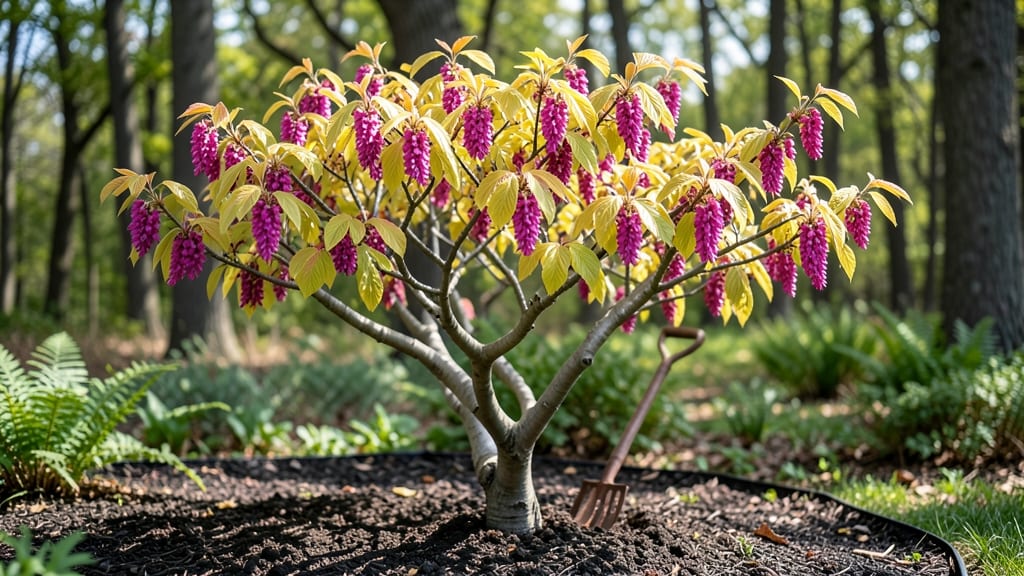
That first flush of golden blooms in late winter is what makes the gold redbud tree worth every minute of pruning. I still remember the year I skipped winter pruning—my tree put out half as many flowers, and the branches looked scraggly by spring.
The dormant season is your chance to shape this showstopper for maximum impact, and the process is simpler than you think.
You’ll need just a few tools: sharp pruning shears for clean cuts, a small saw for thicker branches, and a pair of gloves to protect your hands from thorns.
The best time to prune is right after the leaves drop and before new growth starts—usually between late January and early March in most climates. This timing ensures you don’t accidentally remove next year’s flower buds, which form on old wood.
By the time spring arrives, you’ll see a tree with an open, airy shape that lets sunlight reach every branch, encouraging more abundant blooms and healthier foliage. The golden-yellow flowers will appear before the leaves, creating a stunning contrast that lasts for weeks.
Plus, the pruning opens up the canopy so you can admire the tree’s unique golden foliage all summer long.
Whether you’re working with a young sapling or an established tree, the same principles apply—just adjust the scale. For larger branches, make cuts just outside the branch collar to prevent damage.
And if you’re unsure about a cut, take a step back and imagine how the tree will look in full bloom. That’s the real reward of winter pruning.
📚 In This Guide
- What you need
- Instructions
- Tips and common mistakes
- Wrapping up and next steps
What you need
- ● Pruning shears: Bypass pruners (for cuts up to ½ inch in diameter) – sharp and clean (e.g., Felco F-2 or Corona 1000).
- ● Loppers: For thicker branches (½ to 1.5 inches) – long-handled for reach (e.g., Fiskars X27).
- ● Pruning saw: Curved-tooth saw for branches over 1.5 inches – avoid rust (e.g., Bahco Laplander).
- ● Gloves: Heavy-duty gardening gloves (cut-resistant, like Mechanix Wear).
- ● Disinfectant: 70% isopropyl alcohol or bleach solution (1 part bleach to 9 parts water) – for sterilizing tools.
- ● Rubbing alcohol or hand sanitizer: To clean hands between cuts.
- ○ Tree wound dressing (optional but recommended): Pruning sealant (e.g., Tanglefoot Tree Wound Pruning Seal) – for cuts over ½ inch.
- ● Ladder or step stool: Sturdy, extendable ladder (if tree exceeds 6 feet).
- ● Trash bags or bucket: For collecting pruned branches.
- ● Notebook & pen: To sketch a pruning plan or note cuts.
- ● Extension pole pruners: For high branches without a ladder.
- ● Safety glasses: To protect eyes from debris.
- ● Pole saw: For very tall trees (if available).
- ● String or twine: To mark branches for removal.
- ● Camera: Capture before/after shots of your masterpiece!
- ● Sterilize tools: Wipe blades with rubbing alcohol before and after pruning to prevent disease spread. ✨
- ● Check weather: Prune on a dry, calm day to avoid slipping or spreading sap. 🌡️
- ● Wear long sleeves: Protect arms from thorns or sap irritation. 🛡️
Step-by-step instructions for pruning gold redbud trees in dormant season
Here's how I transform my redbuds into picture-perfect spring stars every year.
Time Your Pruning Perfectly
Prune your gold redbud tree during late winter to early spring, right after the last hard frost but before buds begin swelling. This timing ensures you remove dead wood while preserving next year's blooms. I aim for February to March in most climates—check your local frost dates to avoid cutting too early or too late.
Watch for the first signs of bud swell on nearby trees as your cue. If you see buds on your redbud starting to plump up, it's time to grab your tools. Pruning too early leaves the tree vulnerable to cold damage, while waiting too long risks cutting off potential flowers.
Gather Your Tools and Safety Gear
You'll need clean, sharp pruning shears for small branches and loppers for thicker stems up to 2 inches in diameter. For branches larger than that, a pruning saw with a fine-tooth blade prevents tearing. I always wear gloves—redbud thorns are no joke—and safety glasses to protect against flying debris.
Sterilize your tools with rubbing alcohol or a 10% bleach solution before you begin. Diseased branches can spread pathogens quickly, and redbuds are particularly susceptible to bacterial infections. Keep a small spray bottle of the solution handy for between cuts.
Remove Dead, Diseased, or Damaged Wood First
Start by identifying branches that are dead (no green bark when scratched), diseased (mushrooms at base or odd discoloration), or damaged (broken, split, or storm-wrecked). Cut these out first—they're the lowest priority for spring blooms but critical for tree health. Make your cuts at a 45-degree angle, about 1/4 inch above a bud or lateral branch.
If a branch is larger than your loppers can handle, use your pruning saw. Saw cuts should be smooth—don't force the blade. For branches thicker than 4 inches, consider hiring a professional to avoid damaging the tree's structure. Your goal here is cleanup, not shaping.
Thin the Canopy for Better Airflow
Next, focus on thinning out the canopy to improve light penetration and airflow. Look for branches that cross or rub against each other—these will eventually create wounds where diseases can enter. Remove about 20% of the total branches, prioritizing those growing inward or downward.
When thinning, cut back to a side branch or bud rather than just hacking at the main stem. This encourages new growth in the right direction. Step back frequently to visualize the tree's shape—you want an open, vase-like form that lets sunlight reach all branches. Redbuds bloom best when they get plenty of light.
Shape for Balance and Bloom Display
Finally, give your redbud its signature rounded, multi-stemmed shape by selectively pruning to encourage a full, bushy habit. Focus on outer branches to maintain the tree's natural form while opening up the center. Avoid "lion-tailing," where you end up with a tuft of branches at the top—this creates weak wood.
For young trees, you can be more aggressive with shaping. Mature trees need gentler pruning to avoid stress. After finishing, step back and admire your work—you should see an open framework that will support vibrant spring blooms. Water deeply at the base afterward to help the tree recover.
Tips & tricks for perfect gold redbud tree pruning
Let me share the hard-won lessons I've learned after years of transforming my own redbuds into showstopping spring stars.
Timing is Everything: The February to March window is non-negotiable for gold redbuds. I've learned the hard way that pruning too early exposes fresh cuts to late frosts, while waiting too late risks cutting off next year's blooms. Check your local frost dates and watch for bud swell on nearby trees—this is your real cue. If you're in a warmer climate, you might extend into early April, but don't go beyond that.
Tool Prep Prevents Problems: Sterilizing your tools between cuts is absolutely critical. I keep a small spray bottle of rubbing alcohol handy and sterilize after every diseased branch. Redbuds are particularly susceptible to bacterial infections like anthracnose, and cross-contamination can spread it throughout your tree. Don't skip this step—it's the difference between a healthy tree and one that struggles for years.
Cutting Technique Matters: When making your cuts in Step 3, always aim for that 45-degree angle about 1/4 inch above a bud or lateral branch. This encourages proper healing and new growth. I've seen too many pruning jobs where people just hack at branches, leaving ugly stubs that never heal properly. Take your time with each cut—your tree will thank you with better blooms next spring.
Visualizing the Shape: Before you make any shaping cuts in Step 5, step back and really look at your tree's natural form. Gold redbuds have this beautiful, rounded habit when pruned correctly. I find it helpful to imagine an upside-down vase shape—open at the top, narrower at the bottom. This creates that signature multi-stemmed look while ensuring sunlight reaches all branches for maximum blooms.
Pro Tips for Gold Redbud Tree
- Let me share the hard-won lessons I've learned after years of transforming my own redbuds into showstopping spring stars.
- Timing is Everything: The February to March window is non-negotiable for gold redbuds.
- Tool Prep Prevents Problems: Sterilizing your tools between cuts is absolutely critical.
Frequently asked questions
Got questions about pruning your gold redbud tree for stunning spring blooms? You’re in the right place! Here are answers to the most common questions—so you can confidently shape your tree like a pro.
When is the best time to prune a gold redbud tree?
The ideal window is late winter to early spring, before buds swell but while the tree is still dormant (typically February–March in most zones). This timing ensures minimal stress and maximizes next year’s vibrant blooms. Avoid pruning after flowers appear—you’ll cut off potential blossoms!
Can I prune a gold redbud tree in summer?
While not ideal, light summer pruning (e.g., removing dead or diseased branches) is better than nothing. However, heavy pruning in summer can stress the tree and reduce next year’s flowers. Stick to dormant-season pruning for the best results.
How much can I prune a gold redbud tree at once?
Remove no more than 25–30% of the tree’s foliage in a single session to avoid shock. Focus on dead, crossing, or overcrowded branches first. For young trees, you can prune more aggressively to shape them early. Older trees thrive with gentle, gradual pruning.
What should I do if my gold redbud tree isn’t blooming after pruning?
Bloom issues often stem from over-pruning (cutting too many flower buds) or poor timing. Check for healthy buds (they’re plump and brown) before pruning next time. If the tree is young, give it 1–2 more years to mature. Pests or disease? Inspect leaves for signs and treat accordingly.
Are there alternatives to pruning for shaping a gold redbud tree?
If pruning feels overwhelming, try selective thinning (removing only the most problematic branches) or topiary training (guiding growth with stakes). For a natural look, avoid heavy shearing—gold redbuds thrive with open, airy canopies. Consider mulching and fertilizing to support overall health.
Wrapping up and next steps
The gold redbud tree is a stunning addition to any landscape, and with the right pruning techniques during its dormant season, you’ll set the stage for breathtaking spring blooms.
Remember, timing, sharp tools, and a gentle touch are your best allies—always prioritize health over aesthetics to keep your tree thriving for years to come.
Ready to give your gold redbud the care it deserves? Roll up your sleeves, grab your pruners, and start planning your pruning session this winter! 🌿✨ Whether you’re a seasoned gardener or a beginner, every trim brings you closer to a vibrant, flourishing tree. Happy pruning!