
Pruning
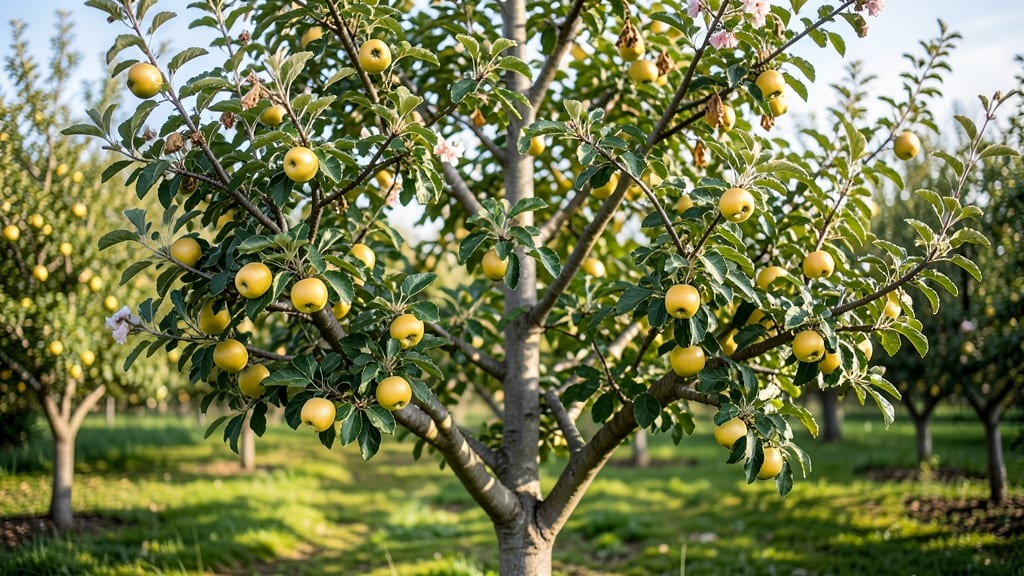
Pruning your Golden Delicious apple tree in winter isn’t just about shaping branches—it’s the secret to heavier harvests next season. 🌱 I’ve watched this variety go from scraggly to productive after mastering dormant pruning, and the difference in fruit size and quantity is shocking.
The key? Cutting at the right time, removing the right branches, and avoiding common mistakes that leave trees stressed.
You’ll need sharp pruners, a ladder for taller branches, and a clear day to work. Focus on three main goals: opening the center for sunlight, removing dead or crossing wood, and thinning out overgrowth.
My first attempt left too many stubs—now I make clean cuts just outside the branch collar, and the tree rewards me with bushels of sweet, crisp fruit by fall.
What you’ll end up with is a well-aerated canopy that produces larger apples with fewer diseases. The tree’s natural shape emerges, making future pruning easier, and you’ll spot pests or damage early before they spread.
This method works for both young trees and mature ones, though the approach differs slightly after the first few years.
Ready to transform your tree? We’ll cover tools, timing, and step-by-step techniques—plus how to tell if you’ve pruned too much or too little. The payoff? A Golden Delicious tree that looks like a pro pruned it, with harvests that make neighbors ask for cuttings.
📚 In This Guide
- What you need
- Instructions
- Tips and common mistakes
- Wrapping up and next steps
What you need
- ● Pruning shears: Bypass pruners (sharp, clean, and not dull!) for small branches (up to ½ inch thick). Pro tip: 💡 Sanitize blades with rubbing alcohol to prevent disease spread!
- ● Loppers: For branches ½ to 1½ inches thick—look for bypass-style (not anvil) for precision cuts.
- ● Pruning saw: A curved-tooth saw for thick branches (1½+ inches). Avoid cheap saws—they tear wood!
- ● Gloves: Heavy-duty, cut-resistant gloves (think mechanics’ gloves or pruning-specific). Pro tip: ✨ Wear them—thorns and splinters are no joke!
- ● Ladder: Sturdy, extension ladder (20–30 ft) if your tree is tall. Safety first: 🌡️ Always secure it on level ground and have a spotter!
- ○ Disposable pruning bags: 2–3 large bags (10–15 gallon capacity) to collect debris. Optional: A tarp underneath works too!
- ● Rubbing alcohol (70%+) or bleach solution: 1 part bleach to 9 parts water for sterilizing tools between cuts.
- ● Dormant season timing: Prune in late winter or early spring (before buds swell but after hard frosts). Golden Delicious thrives with this timing!
- ● Weather check: Choose a dry, calm day (no rain forecast for 24 hours). Wet wood splinters and invites rot.
- ● Tree health assessment: Inspect for diseased or dead branches (brown, mushy, or no leaves). Mark these for removal first.
- ○ Safety gear: Optional but recommended: Safety glasses, long sleeves, and closed-toe shoes to protect from debris.
- ● Pruning sealant: For cuts larger than ½ inch (controversial but some swear by it for wound healing).
- ● Marking spray: Non-toxic paint to tag branches for future reference.
- ● Tree growth regulator: Like dormant oil (applied post-pruning) to boost health.
- ● Camera or sketchbook: To document your pruning plan before making cuts!
How to prune a Golden Delicious apple tree for maximum fruit
Here's the straightforward method I use every winter—it keeps my trees healthy and packed with fruit.
✂️ Step 1: Gather Tools and Assess the Tree
Start by sharpening your pruning shears and disinfecting them with rubbing alcohol. A clean cut prevents disease from spreading through the tree. I always work on dry days when the tree is fully dormant—typically between late winter and early spring before buds swell. Look for branches that cross each other or grow inward; these compete for sunlight and energy, reducing fruit production.
Examine the tree's structure. Remove any dead, diseased, or broken branches first—they won't produce fruit and can harbor pests. You'll know a branch is dead if it's brittle, lacks bark, or oozes sap when cut. Mark these for removal with a small piece of twine or a spray of water (the wet spot will dry and make them visible later).
✂️ Step 2: Remove Problem Branches First
Cut out any branches that rub against each other. When two branches cross, they create wounds that invite rot and pests. Make your cuts just outside the branch collar—the swollen area where the branch meets the trunk. This ensures the tree can seal the wound naturally. For small branches, a single cut is enough. For larger ones, make a second cut slightly deeper to avoid tearing the bark.
Next, remove branches growing straight upward. These vertical growers rarely bear fruit and can block sunlight from lower branches. Look for branches that grow at a 45-60 degree angle—these are ideal for fruit production. If you see a branch growing inward toward the center of the tree, cut it out completely. This opens up the canopy, allowing better airflow and sunlight penetration.
✂️ Step 3: Thin Out to Improve Airflow and Light
Golden Delicious trees produce best when they have good airflow and sunlight. Thin out branches to create an open center, leaving only the strongest, most productive limbs. Aim to remove about 20-30% of the tree's total branches. You'll notice clusters of small, weak branches—these are often non-fruiting spurs. Cut these back to a strong lateral branch to encourage new growth that will bear fruit.
Pay special attention to the tree's scaffold branches—the main limbs that form the tree's structure. These should be spaced evenly around the trunk. If you see a branch growing too close to another scaffold branch, remove the weaker one. This prevents crowding and ensures the tree's energy is directed toward fruit production rather than competing branches.
✂️ Step 4: Shape for Future Growth
Now's the time to shape the tree for next season's harvest. Step back and visualize how the tree will look after new growth. Golden Delicious trees respond well to an open-center shape, where the branches spread outward like a vase. Cut back any branches that grow too long or thin—these often produce small, poor-quality fruit. Aim to leave branches that are about 1/3 to 1/2 their length after pruning.
For branches that are too long, make your cut just above an outward-facing bud. This encourages new growth in the right direction. Avoid cutting back to a stub—this can lead to dieback or disease. If you're unsure which bud to cut to, look for one that points outward and slightly upward. This ensures the new growth will contribute to the tree's structure rather than crowding the center.
✂️ Step 5: Clean Up and Monitor
After pruning, rake up and dispose of all cuttings—especially diseased branches. Never leave them on the ground, as they can harbor pests and diseases that will reinfect the tree. Sterilize your tools again with rubbing alcohol to prevent cross-contamination if you plan to prune other trees later. Water the base of the tree lightly to help it recover from the stress of pruning.
Watch the tree closely in the weeks following pruning. You'll see new buds forming along the remaining branches—these will develop into next year's fruit. If you notice any sap oozing from the cuts, don't worry; it's normal and will dry up as the tree seals the wounds. Avoid fertilizing immediately after pruning, as the tree needs time to recover before putting energy into new growth.
Tips & tricks for pruning your Golden Delicious apple tree
Real talk: Pruning isn't just about cutting branches—it's about setting up your tree for a bountiful harvest next season. Here's what I've learned after years of trial and error in my own orchard.
Timing is Everything: The dormant season—late winter to early spring before buds swell—is your perfect window. This timing prevents stressing the tree when it's actively growing. I've seen trees pruned too early (in winter) struggle to heal properly, and those pruned too late (after bud break) produce fewer fruit buds. Mark your calendar for when your local frost dates typically occur—this is your cue to prune.
Branch Angle Matters: When shaping your tree, focus on maintaining that 45-60 degree angle for productive branches. I learned this the hard way after cutting too many branches straight up—those vertical growers rarely bear fruit and create shade that reduces yield. For every branch you cut, imagine how it will contribute to next year's harvest. Think of your tree like a vase: branches should spread outward, not crowd inward.
Don't Over-Prune: That 20-30% removal guideline isn't arbitrary—it's based on what Golden Delicious trees can handle without stress. I once cut back too aggressively (thinking more pruning meant more fruit) and ended up with a tree that struggled to recover. Remember, you're not just removing branches; you're directing the tree's energy toward fruit production. Leave the strong, healthy limbs—they'll reward you with bigger harvests.
Clean Cuts Prevent Disease: Sharp tools aren't just about making neat cuts—they're about tree health. I've seen too many pruning jobs where dull shears created jagged wounds that took forever to heal. Always disinfect your tools between cuts, especially when moving from diseased to healthy branches. And for larger branches, that two-cut technique (first cut outside the branch collar, second cut deeper) makes all the difference in preventing tearing and disease entry points.
Pro Tips for Golden Delicious Apple Tree
- Real talk: Pruning isn't just about cutting branches—it's about setting up your tree for a bountiful harvest next season.
- Timing is Everything: The dormant season—late winter to early spring before buds swell—is your perfect window.
- Branch Angle Matters: When shaping your tree, focus on maintaining that 45-60 degree angle for productive branches.
Frequently asked questions
When is the best time to prune a Golden Delicious apple tree?
Prune your Golden Delicious tree during dormancy—late winter (Jan–Feb) or early spring (March) before buds swell. This minimizes stress and disease risk. Avoid pruning in fall or during active growth; it can invite pests or weaken the tree. Pro tip: If you must prune in summer, do it after harvest to balance fruit production and tree health.
How much can I prune off a Golden Delicious tree in one session?
Never remove more than 20–25% of the tree’s foliage in a single pruning. For young trees, aim for 10–15%**—focus on dead, crossing, or overcrowded branches. Over-pruning stresses the tree and reduces next year’s fruit yield. Golden Delicious trees are productive; patience pays off!
What if my tree isn’t fruiting after pruning?
If your tree skips fruit, check these fixes:
- Age: Young trees (under 3–5 years) may need time to mature.
- Pruning timing: Late-spring pruning can delay flowering. Stick to dormancy.
- Pollination: Golden Delicious needs a pollinator (like Granny Smith) unless you have multiple trees.
- Nutrients: Test soil for nitrogen/phosphorus; amend if needed.
Should I seal pruning cuts on a Golden Delicious apple tree?
No—never use pruning sealant on apple trees! Sealants trap moisture, promoting rot and disease. Instead, make clean cuts at a 45° angle just outside the branch collar (the swollen area where the branch meets the trunk). Let the tree’s natural healing response do the work.
Can I grow a Golden Delicious apple tree in a container?
Yes, but with limitations:
- Use a large pot (20+ gallons) with drainage holes.
- Choose a dwarf or semi-dwarf variety (e.g., ‘Golden Delicious’ grafted onto M.9 rootstock).
- Prune aggressively to control size and shape.
- Move indoors in winter if temps drop below 10°F.
Wrapping up and next steps
Growing a thriving Golden Delicious apple tree starts with mastering dormant pruning—your secret weapon for abundant harvests and long-term health! 🌳 By following the right techniques, timing, and tools, you’ll shape a productive tree while keeping pests and disease at bay.
Remember, patience and precision pay off in juicy, flavorful apples year after year.
Ready to take the next step? Grab your pruners, mark your calendar for late winter, and start planning your pruning session. Your future orchard’s success begins with a single cut! 🌟