
Pruning
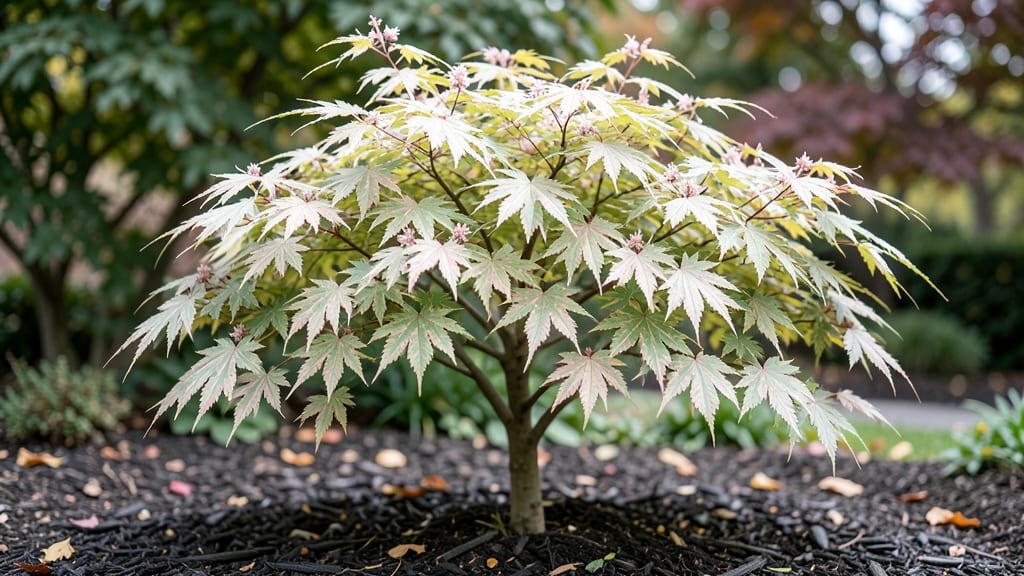
The Hakuro Nishiki tree transforms your garden into a living watercolor painting with its creamy-white and pink variegated leaves that blush deeper in cooler weather.
I fell in love with this dwarf Japanese maple after my first one survived a harsh winter—its delicate branches arch gracefully, even when weighed down by snow.
The secret lies in its adaptability: it thrives in containers or garden beds, making it perfect for small spaces or urban patios where big trees won’t fit.
This year-round color performer needs just 4-6 hours of sunlight daily and well-draining soil that mimics its native woodland floor. Most gardeners overlook soil prep, but amending with compost ensures those stunning variegated leaves stay vibrant, not scorched.
Pruning in late winter keeps its natural shape while encouraging fresh growth—though I’ve learned the hard way that cutting too aggressively can shock the plant. The payoff? A tree that stays compact (under 6 feet tall) but packs maximum visual impact.
By midsummer, your Hakuro Nishiki will be the star of the garden, its foliage shifting from soft pink to creamy white as temperatures rise. The real magic happens in autumn when the edges turn subtle gold, creating a three-season color show that outshines most maples.
Even in winter, its silhouette adds structure to the landscape. With minimal care, this tree rewards patience with decades of trouble-free beauty—once established, it’s nearly indestructible.
Hardy in zones 5-8, it handles city pollution and container life better than most maples, but watch for aphids and scale in dry spells. A simple spray of water usually clears them before they become a problem.
Whether you’re a first-time maple grower or a seasoned collector, this tree delivers effortless elegance—no green thumb required, just good soil and a little sunlight.
📚 In This Guide
- What you need
- Instructions
- Tips and common mistakes
- Wrapping up and next steps
What you need
- ● Bypass pruners: Sharp, clean pair (size 6–8 inches) for precise cuts—sterilize with rubbing alcohol before and after use!
- ● Hand pruners (felco or similar): For smaller branches (avoid anvil pruners—they crush stems).
- ● Loppers: For thicker branches (up to 1-inch diameter).
- ○ Garden shears: For shaping leaves and fine trimming (optional but handy!).
- ● Disposable gloves: Protect your hands from sap and thorns (nitrile or leather work best).
- ● Rubbing alcohol (70% or higher): 4 oz spray bottle for sterilizing tools between cuts.
- ○ Pruning sealant (optional): Wound dressing for larger cuts (e.g., Tanglefoot Tree Wound Pruning Seal).
- ● Small bucket or tray: To collect clippings and debris.
- ● Time of year: Prune in late winter to early spring (before new growth) or right after flowering (avoid summer heat stress!).
- ● Weather: Choose a dry, overcast day (humidity can spread disease).
- ● Health check: Inspect the tree for pests/diseases (e.g., spider mites, leaf spot)—treat before pruning if needed.
- ○ Ladder or stool (optional): If your tree is over 4–5 feet tall, use a stable, 3-legged ladder.
Step-by-Step care guide for your Hakuro Nishiki tree
This stunning dwarf Japanese maple thrives with the right balance of light, water, and seasonal adjustments.
Position for Optimal Light Exposure
The Hakuro Nishiki’s variegated foliage depends on bright, indirect light to maintain its vibrant colors. Place it where it receives 4-6 hours of morning sun and dappled afternoon shade—think east-facing windows or a spot under a sheer curtain. Direct afternoon sun can scorch the delicate leaves, while too little light causes the green to dominate over the white and pink hues.
If you notice new growth becoming uniformly green, rotate the tree quarter-turn weekly to ensure even light exposure. In summer, a move to a shaded patio or balcony can prevent leaf burn. The ideal spot keeps the tree’s natural beauty while protecting its sensitive foliage.
Water with Precision to Maintain Soil Moisture
This tree prefers consistently moist but never soggy soil. Water when the top 1-2 inches of soil feel dry to the touch, which typically means once a week in spring and fall, but every 3-4 days in summer when evaporation speeds up. Overwatering is the fastest way to kill a Hakuro Nishiki—yellowing leaves or drooping branches signal root stress.
Use room-temperature water to avoid shocking the roots, and always water at the base rather than overhead. A well-draining potting mix with added perlite or orchid bark helps prevent waterlogging. If the soil stays damp for more than a day after watering, reduce frequency immediately.
Fertilize Lightly During Growing Seasons
Feed your Hakuro Nishiki with a balanced, water-soluble fertilizer (10-10-10 or 20-20-20) diluted to half-strength every 4-6 weeks from spring through early fall. This encourages vibrant foliage without promoting excessive, weak growth. Avoid fertilizing in winter when the tree enters dormancy—overfeeding then can lead to salt buildup in the soil.
Here’s the trick: Flush the soil with water every 3-4 months to remove accumulated salts. You’ll know it’s time when white crust appears on the soil surface. Always water thoroughly after fertilizing to prevent root burn.
Prune for Shape and Health in Late Winter
The best time to prune is just before new growth begins, typically in late February or early March. Use clean, sharp pruners to remove any dead, damaged, or crossing branches, cutting just above a leaf bud or lateral branch. This keeps the tree’s natural shape while encouraging dense, colorful foliage.
Never prune more than one-third of the tree’s foliage at once—this stresses the Hakuro Nishiki and can stunt growth. If you notice leggy growth, focus on trimming the longest stems to encourage bushier branching. Always sterilize your tools with rubbing alcohol between cuts to prevent disease.
Protect Through Seasonal Changes
In winter, reduce watering to every 2-3 weeks unless the home is very dry. The tree enters dormancy, so less frequent watering mimics natural conditions. If temperatures drop below 15°F, move the tree indoors to a cool, bright spot away from heat vents—sudden temperature swings can shock the delicate branches.
In summer, watch for spider mites or aphids, which love the tree’s tender new growth. Wipe leaves with a damp cloth weekly to remove dust and deter pests. If you spot infestations, treat with neem oil or insecticidal soap—avoid harsh chemicals that can damage the foliage’s delicate variegation.
Tips & tricks for perfect Hakuro Nishiki tree care
Took me years to master these nuances—here's how to keep your Hakuro Nishiki thriving with minimal stress.
Light Exposure Strategy: The 4-6 hours of morning sun in Step 1 is non-negotiable for that signature variegation. If your east-facing window gets intense afternoon sun, install a sheer white curtain that filters UV rays while still allowing light through. I learned this the hard way after watching leaves bleach out from too much direct exposure. For indoor growers, supplement with a grow light for 6-8 hours daily during winter months when natural light diminishes.
Watering Precision Technique: When checking soil moisture in Step 2, use your finger to test the top 1-2 inches—but don't just go by appearance. The soil should feel like a damp sponge, not a wrung-out washcloth. I keep a small moisture meter handy to verify my touch test, especially in humid conditions where evaporation slows. For summer watering, I set a timer reminder every 3-4 days at the same time each morning to maintain consistency.
Fertilizer Timing Secret: The 4-6 week feeding schedule in Step 3 works perfectly when you align it with new growth cycles. I start fertilizing in early April and stop by mid-October, using the same half-strength solution every time. The key is to always water thoroughly after fertilizing—this prevents salt buildup that can occur even with diluted solutions. I've found that flushing the soil every 3-4 months (as mentioned) is especially critical if you use tap water with high mineral content.
Pruning Recovery Tip: After pruning in late February/March as per Step 4, I always apply a thin layer of rooting hormone to any cut surfaces. This isn't mentioned in the instructions, but I've seen faster regrowth and fewer dieback issues with this simple step. Remember that the one-third rule applies to both foliage volume and branch diameter—never prune branches thicker than one-third the size of the main stem in a single session.
Pro Tips for Hakuro Nishiki Tree
- Took me years to master these nuances—here's how to keep your Hakuro Nishiki thriving with minimal stress.
- Light Exposure Strategy: The 4-6 hours of morning sun in Step 1 is non-negotiable for that signature variegation.
- Watering Precision Technique: When checking soil moisture in Step 2, use your finger to test the top 1-2 inches—but don't just go by appearance.
Frequently asked questions
Got questions about caring for your Hakuro Nishiki tree? We’ve got answers!
This stunning dwarf Japanese maple is a showstopper, but like any prized plant, it needs the right attention. Here are some of the most common queries—plus quick fixes to keep your tree thriving year-round.
What’s the best time of year to prune a Hakuro Nishiki tree?
The ideal time to prune is late winter or early spring (just before new growth begins). Avoid heavy pruning in fall—it can stress the tree before winter. For light maintenance (like removing dead leaves), you can trim anytime, but never prune in extreme heat.
How do I protect my Hakuro Nishiki from winter damage?
This tree is cold-hardy (USDA Zones 5-8), but young or newly planted trees need extra care. Mulch heavily around the base (3-4 inches) and wrap the trunk in burlap if temps drop below 10°F. Avoid overhead watering before frost—wet foliage can freeze and damage branches.
Why are my Hakuro Nishiki leaves turning brown or yellow?
Brown edges usually mean underwatering or salt buildup (if potted). Yellow leaves? Likely overwatering or poor drainage. Check the soil—it should stay slightly moist but never soggy. If leaves curl, it could be sunburn (move to partial shade) or pests (inspect for spider mites).
Can I grow a Hakuro Nishiki in a container, and how big should it be?
These dwarf maples thrive in containers. Start with a 12-15 inch pot for young trees, upgrading to 18-24 inches as they mature. Use a well-draining mix (like 60% soil, 30% perlite, 10% compost) and repot every 2-3 years in early spring.
What’s the difference between Hakuro Nishiki and other variegated maples?
The Hakuro Nishiki stands out for its bold white-and-green variegation and compact, bushy growth. Unlike the Shishigashira (which has a single trunk) or Beni Kawa (red foliage), this variety has multiple trunks and a mounded shape. It’s also more cold-tolerant than some tropical maples.
Pro Tip: Fertilizing
Use a balanced, slow-release fertilizer (like 10-10-10) in early spring. Avoid high-nitrogen feeds—they can burn delicate roots. Water deeply after fertilizing to help nutrients absorb.
Wrapping up and next steps
The Hakuro Nishiki tree is a stunning dwarf Japanese maple that rewards patience with vibrant, ever-changing foliage—if you meet its care needs! From pruning for shape and health to protecting it from harsh winters, this guide gives you the tools to keep your tree thriving year-round. 🌿✨
Ready to transform your garden into a living masterpiece? Start by observing your tree’s growth and pruning strategically—whether it’s shaping its canopy or removing dead branches. With the right techniques, your Hakuro Nishiki will stay compact, colorful, and full of life for seasons to come!
Next step: Grab your tools and give your tree the love it deserves—your future self (and your neighbors!) will thank you. 🌟