
Trees
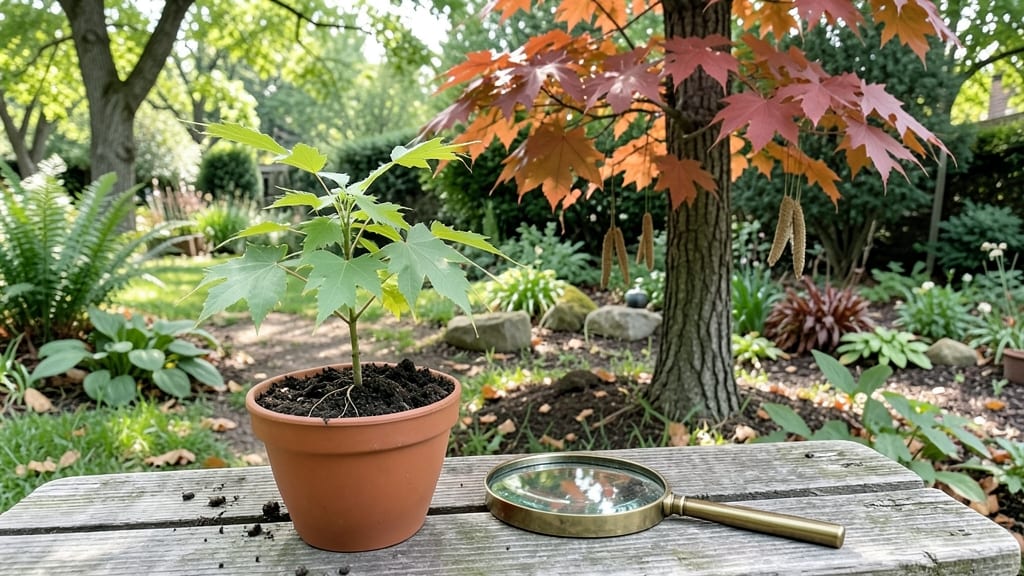
Maple trees reproduce through a two-step dance of nature that starts with their iconic winged seeds and ends with towering giants. The process begins when those helicopter-shaped samaras spin away on the wind, searching for the perfect spot to root—often taking years before they even sprout.
I’ve watched my own maple seedlings emerge after three winters of patient waiting, their first leaves unfurling like tiny hands reaching for sunlight.
The real magic happens underground, where a single seed can grow into a sapling with the right mix of moist, well-drained soil and full sun. Young maples need protection from deer and competition, but once established, they thrive for centuries.
The key is timing: plant seeds in early fall or late winter when the ground is cool but workable, mimicking their natural germination cycle.
What you’ll end up with is a tree that grows 2-3 feet per year, its vibrant green leaves turning fiery red in autumn. The roots spread deep, making maples drought-resistant once mature, while their dense wood and brilliant fall color make them a garden staple.
Even if you start with a nursery sapling, understanding this natural process helps you nurture it like a pro.
This method works for sugar maples, red maples, and silver maples alike, though some species grow faster than others. Whether you’re planting a seed or a sapling, the principles stay the same—patience, sunlight, and a little space to stretch those wings.
📚 In This Guide
- What you need
- Instructions
- Tips and common mistakes
- Wrapping up and next steps
What you need
- ● Mature Maple Tree: A healthy sugar maple (Acer saccharum), red maple (Acer rubrum), or similar species (native to your region for best results). Look for trees with abundant seed production (🌰) and minimal disease.
- ● Seeds (Maple Samaras): Collect 10–50 seeds (or more if experimenting with germination rates). Harvest them in late summer to early fall when they’re fully mature but still greenish-brown.
- ○ Optional: Store seeds in a paper bag in a cool, dry place (35–40°F) for up to 6 months to break dormancy naturally.
- ● Growing Medium: Potting Soil: 1–2 bags of well-draining, sterile potting mix (e.g., Pro-Mix or Miracle-Gro with perlite). Avoid garden soil to prevent fungal issues.
- ○ Optional: Mix in 10–20% coarse sand or perlite for improved drainage.
- ● Containers: Seed Trays or Small Pots: 4–6-inch diameter with drainage holes (e.g., 72-cell seedling trays or 4–6 individual pots).
- ● Larger Pots (for saplings): 1–2 gallon pots with drainage holes for transplanting.
- ● Gloves: 1 pair of gardening gloves (nitrile or leather) to protect hands from sap and rough samaras.
- ● Pruners or Scissors: Small bypass pruners or sharp scissors to harvest seeds cleanly.
- ○ Spray Bottle: 1–2 with water for misting seeds (optional but helpful for moisture control).
- ● Trowel: 1 small hand trowel for transplanting seedlings.
- ○ Thermometer (Optional): A soil/air thermometer to monitor temperature (ideal range: 60–70°F for germination).
- ○ Shade Cloth (Optional): Lightweight shade cloth (30–50%) to protect young seedlings from harsh sun.
- ● Timing: Plant seeds immediately after harvest or stratify them (cold treatment) for 60–90 days to mimic winter conditions.
- ● Location: Choose a sunny to partially shaded spot (young maples tolerate shade but thrive in full sun as they mature).
- ● Patience: Maple seeds can take 2–4 weeks to germinate (or up to 6 months with stratification).
- ● Legal Note: Check local regulations if collecting seeds from public land or protected areas.
Step-by-Step guide to understanding maple tree reproduction
Nature’s method for growing maples is a fascinating mix of patience and precision.
🌱 Step 1: Observe the Maple Tree’s Flowering Season
Maple trees reproduce through a two-part process that begins in early spring. Look for small, greenish-yellow flowers that appear before the leaves unfurl—these are the tree’s first clue to reproduction. These flowers contain both male and female parts, but they’re wind-pollinated, so you won’t see bees or butterflies involved.
Here’s the thing—maples produce separate male and female flowers on the same tree. The male flowers release pollen in a cloudy burst, often visible on windy days. If you’re near a cluster of maples, you might even see a faint yellow haze drifting between the branches. This is nature’s way of ensuring cross-pollination without relying on animals.
🌿 Step 2: Identify and Track the Development of Maple Seeds
After successful pollination, the female flowers develop into tiny, winged seeds called samaras. These seeds form in clusters and look like helicopter blades—flat, papery, and attached to a central stem. They’ll start green but gradually turn brown as they mature, usually by late spring to early summer.
Watch for the samaras to detach naturally. They’ll spiral to the ground when fully ripe, often in a slow, graceful descent. If you’re curious, place a tray or shallow container beneath the tree to collect them. This is the best way to study their development without disturbing the tree.
⏰ Step 3: Understand Seed Germination and Growth Conditions
Maple seeds require specific conditions to germinate successfully. First, they need a period of stratification, which mimics winter’s cold. Plant the seeds in a moist, well-draining soil mix and refrigerate them for 60-90 days to break dormancy. This step is critical—skipping it means the seeds may never sprout.
Once stratified, sow the seeds ¼ inch deep in a sunny location with well-draining soil. Maple seedlings thrive in partial shade but need plenty of light to grow strong. Water gently but consistently, keeping the soil moist but never soggy. Germination can take 2-4 weeks, so patience is key—you’ll know it’s working when the first true leaves appear.
☀️ Step 4: Nurture Young Maple Seedlings for Long-Term Success
Young maple seedlings need protection from harsh weather and competition. Mulch around the base with 2-3 inches of organic material to retain moisture and suppress weeds. Avoid over-mulching, though—too much can smother the roots and cause rot.
As the seedlings grow, they’ll develop a strong taproot, which means transplanting becomes difficult once they’re established. Give them at least 3-4 years to develop before moving them to a permanent location. During this time, they’ll need full sun to partial shade and regular watering, especially during dry spells.
🪴 Step 5: Recognize the Role of Sap in Maple Reproduction
The sap that flows in maple trees isn’t just for syrup—it plays a role in their reproductive cycle. The tree’s vascular system transports nutrients and water, which are essential for flower and seed production. When the tree is healthy and well-nourished, it produces more sap, leading to better flower and seed development.
If you’re growing maples for syrup, avoid tapping young trees. Wait until they’re at least 40 years old and have a trunk diameter of 10 inches or more. This ensures the tree remains strong enough to support both reproduction and sap production without stress.
Tips & tricks for understanding maple tree reproduction
Nature's maple reproduction secrets don't require a green thumb—just a little patience and attention to detail. Here's what I've learned after watching maples grow from seed to sap-filled maturity.
Timing is Everything: The 60-90 day stratification period in Step 3 is non-negotiable for breaking seed dormancy. I've tried skipping this step, and the seeds simply refused to germinate. Place your seeds in a plastic bag with slightly damp paper towels inside a sealed container—this maintains consistent moisture while they chill. The key is keeping them cold but not frozen; a refrigerator works perfectly for this.
Seed Collection Strategy: When collecting samaras in Step 2, aim for the fully brown, papery ones that spiral easily from the tree. I learned this the hard way by trying to use green samaras—they won't germinate. Place your collection tray directly under the tree's seed clusters where the wind naturally carries them. This targeted approach gives you the highest quality seeds for planting.
Seedling Protection Insight: The 2-3 inch mulch layer in Step 4 serves multiple purposes beyond moisture retention. It also creates a microclimate that protects young seedlings from temperature swings. I've found that adding a thin layer of straw mulch on top of regular organic mulch provides extra insulation during late spring frosts, which can be devastating to tender new growth.
Pro Tips for How Do Maple Trees Reproduce
- Nature's maple reproduction secrets don't require a green thumb—just a little patience and attention to detail.
- Timing is Everything: The 60-90 day stratification period in Step 3 is non-negotiable for breaking seed dormancy.
- Seed Collection Strategy: When collecting samaras in Step 2, aim for the fully brown, papery ones that spiral easily from the tree.
Frequently asked questions
about how maple trees reproduce—because curiosity grows the best gardens!How long does it take for a maple tree to produce seeds after planting?
A young maple tree typically takes 5–10 years to mature enough to produce seeds, depending on species and growing conditions. Sugar maples, for example, may start flowering (and eventually seeding) around 10–15 years old. Patience is key—think of it as nature’s slow-cooked masterpiece!
What happens if my maple tree doesn’t produce seeds?
Several factors can prevent seed production: age (too young), stress (drought, pests, or poor soil), or lack of pollinators. If your tree is mature but still silent, check for:
- Healthy foliage (no yellowing or wilting)
- Proper watering (deep, infrequent soaks)
- Nearby pollinators (bees, wind, or other maples)
Can I speed up seed production in my maple tree?
While you can’t rush nature, you can optimize conditions:
- Improve soil health with compost or mulch.
- Ensure full sun exposure (6+ hours daily).
- Water deeply 1–2 times per week during dry spells.
- Protect from pests/diseases (e.g., aphids, tar spot fungus).
Do all maple trees reproduce the same way?
Nope! While most maples rely on wind-pollinated flowers and samaras (winged seeds), there are key differences:
Species
Reproduction Notes
Sugar Maple
Needs cross-pollination; seeds mature in fall.
Silver Maple
Produces more seeds annually but lower quality; thrives in wetlands.
Boxelder Maple
Fast-growing but weaker seeds; often hybridizes with other maples.
Can I grow a maple tree from a seed I find on the ground?
But success isn’t guaranteed:
- Collect plump, undamaged samaras in late fall.
- Stratify seeds (mimic winter) by refrigerating in moist sand for 60–90 days.
- Plant in well-draining soil at a shallow depth (1/4 inch).
- Germination may take 2–4 weeks or longer—be patient!
Wrapping up and next steps
Maple trees reproduce through a fascinating blend of wind-pollinated flowers and seed dispersal, ensuring their legacy thrives across seasons. Whether you’re a nature enthusiast or simply curious about these iconic trees, understanding their reproductive cycle deepens your appreciation for their resilience. 🌿
Ready to witness this process firsthand? Visit a local forest or park during spring to spot their delicate flowers—or even plant a maple seedling in your yard! Every tree story begins with a single seed.