
Pruning
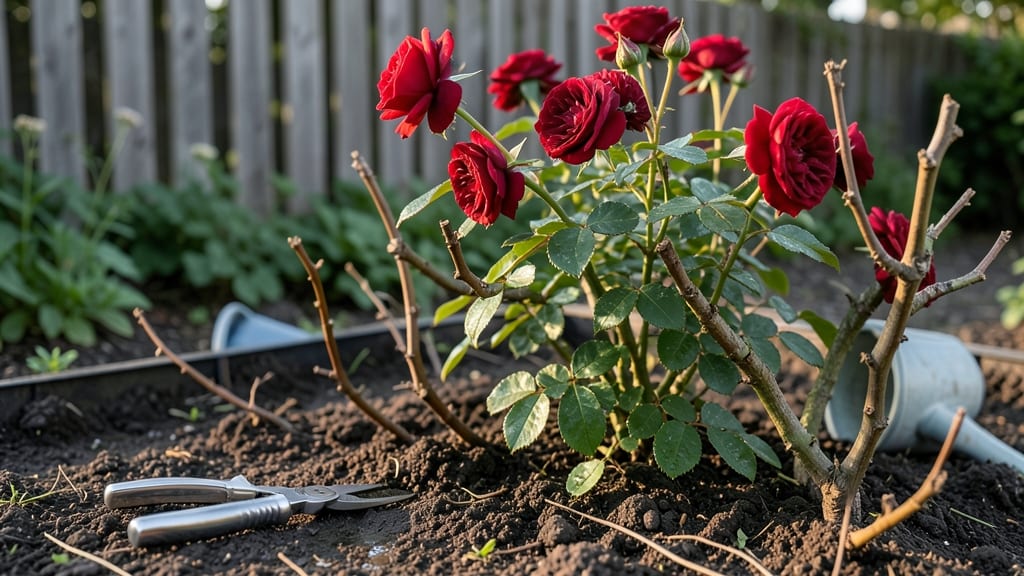
Pruning a rose tree in early spring unlocks the secret to vibrant blooms all season—though I’ve watched too many gardeners over-cut and end up with sad, leggy bushes. The key isn’t just hacking away branches but understanding where each cut encourages new growth while keeping the plant healthy.
My first attempt left my rose bush looking like a sad, overgrown broomstick, but after a few seasons of trial and error, I finally cracked the code to lush, disease-resistant roses that neighbors envy.
You’ll need just three essential tools: sharp bypass pruners for clean cuts, loppers for thicker stems, and a disinfectant spray to prevent spreading disease between cuts. Timing matters too—prune when forsythia blooms signal spring’s arrival, but avoid late spring when new buds are forming.
I’ve learned the hard way that cutting too late delays blooming, and you’ll miss the first flush of flowers you’ve been waiting for all winter.
For hybrid teas and floribundas, aim to cut back one-third of the plant’s height, while climbers need a different approach to maintain their graceful shape.
The payoff comes fast: within two weeks, you’ll see fresh green shoots pushing through, and by early summer, your rose will be covered in blooms instead of crowded, tangled branches.
The air will smell like a fragrant cloud of roses, and you’ll finally understand why pruning isn’t just maintenance—it’s the difference between a bush that struggles and one that thrives.
Once you master the technique, you’ll never fear the pruners again, and your roses will thank you with months of continuous blooms.
This method works for any rose type, from old-fashioned shrubs to modern hybrid teas, and even climbers if you adjust for their unique growth habits. The same principles apply whether you’re pruning a single bush or an entire rose garden—just scale the tools and your patience accordingly.
Let’s get those shears ready and turn your roses into the showstopper of your yard.
📚 In This Guide
- What you need
- Instructions
- Tips and common mistakes
- Wrapping up and next steps
What you need
- ● Bypass pruners: Sharp, clean, and disinfected (1 pair). Look for ergonomic handles for comfort during long sessions.
- ● Loppers: For thicker branches (¼”–1.5” diameter). Choose bypass-style loppers to avoid crushing stems.
- ● Hand saw or pruning saw: For stubborn, thick branches (1.5”+ diameter). A curved-tooth blade prevents tearing wood.
- ● Garden gloves: Heavy-duty, cut-resistant gloves (1 pair) to protect against thorns and scrapes.
- ● Disinfectant: 70% isopropyl alcohol or a bleach solution (1:9 ratio with water) to sterilize tools between cuts.
- ○ Rag or paper towels: For wiping tools and hands (optional but handy!).
- ● Marking twine or tape: To tag branches for removal (if needed) before cutting.
- ● Pruning sealant: For large cuts (1–2 tubes). Only use on woody stems—not roses!
- ● Wheelbarrow or bucket: To collect clippings and debris (1–2 units).
- ● Knee pads or stool: For comfort if your rose bush is tall or sprawling.
- ● Notebook & pen: To jot down notes on your rose’s structure or pruning plan.
- ● Fungicide spray: Copper-based or neem oil (1 bottle) to treat cuts and prevent disease.
Step-by-step guide to pruning a rose tree for spring health
Here's how I transform tired rose bushes into vibrant, blooming stars every spring.
Gather Your Tools and Assess the Bush
Start with clean, sharp tools—your bypass pruners for clean cuts and loppers for thicker stems. Disinfect blades with rubbing alcohol to prevent spreading disease between cuts. I always wear gloves (the thorns are no joke) and have a bucket ready for trimmings.
Examine your rose bush from all sides. Look for dead, diseased, or crossing branches—these are your first targets. Healthy canes have smooth, green bark, while dead ones are brown and brittle. Mark branches to remove with a piece of tape if needed; you'll want to work methodically.
Remove Dead and Diseased Wood First
Cut out any dead, broken, or diseased canes at the base of the bush. These are the easiest to spot—they're hollow, discolored, or covered in black spots. Remove them completely to prevent fungal spores from spreading to healthy growth.
Next, look for weak, spindly growth that never bloomed well last season. These often grow from the center of the bush and compete with stronger canes. Cut these back to their origin point, which is usually a larger, outward-facing branch or the main stem.
Thin Out Crossing and Rubbing Branches
Find branches that cross each other or rub against one another. These create wounds where disease can enter. When two branches cross, remove the weaker of the two—usually the smaller or more inward-growing stem. Make your cut just above an outward-facing bud.
I always step back after each cut to visualize the bush's shape. Your goal is an open center that allows air and sunlight to circulate. This prevents fungal issues like black spot and encourages stronger blooms.
Shape the Bush for Airflow and Light
Now focus on creating an open, vase-like shape. Start with the strongest canes—these are the ones that grew last year and produced blooms. Cut these back by one-third to one-half of their length. Make cuts just above an outward-facing bud angled slightly away from the center.
For younger canes (last year's growth), shorten them by one-third. These will be your next year's blooms. Avoid cutting back into old wood—it won't regrow. If you're unsure, count the rings near the base; canes with 3-5 rings are ideal for pruning.
Clean Up and Apply Post-Pruning Care
Once all cuts are made, remove all trimmings from the area and dispose of them in the trash—not the compost. Burn them if you have a fire pit, as diseased material can spread spores in compost piles.
Water the base of the bush deeply to help it recover. Apply a balanced rose fertilizer (10-10-10 or similar) to encourage new growth. I also add mulch around the base to retain moisture and protect roots from temperature swings.
Tips & tricks for perfect rose tree pruning
Here's what nobody tells you about pruning roses that'll make all the difference between a bush that just survives and one that thrives.
Tool Preparation: I can't stress this enough—your tools make or break the job. Before you even touch the bush, sharpen your pruners so they cut cleanly, not tear. Dull blades crush stems, creating wounds that invite disease. I also like to wipe blades with a damp cloth between cuts to prevent sap buildup that can spread pathogens. Confession: I skipped this step for years and wondered why my roses kept getting black spot.
Bud Orientation: When making cuts in Step 4, pay attention to where those buds are facing. You want them angled slightly away from the center of the bush—this encourages outward growth. I learned this the hard way after pruning a bush that ended up with all its new growth pointing inward, creating a dense center that blocked airflow. Think of it like training vines to grow where you want them, not where they naturally would.
Seasonal Timing: While spring is ideal, you can do light pruning in late winter if you're in a mild climate. The key is to prune when you see new growth buds swelling but before they actually break open. This timing ensures you're not cutting into dormant wood that won't regrow. I've pruned in early March in my zone 7 garden with great results—just don't wait until the buds are already popping.
Post-Pruning Care: After you've finished cutting, don't just walk away. The first 48 hours are critical for recovery. I make it a habit to water deeply right after pruning to help the bush recover from the shock. Then I apply a light layer of mulch (about 2-3 inches) around the base, keeping it away from the stem. This protects roots from temperature swings and retains moisture—two things roses absolutely love.
Pro Tips for Prune A Rose Tree
- Here's what nobody tells you about pruning roses that'll make all the difference between a bush that just survives and one that thrives.
- Tool Preparation: I can't stress this enough—your tools make or break the job.
- Bud Orientation: When making cuts in Step 4, pay attention to where those buds are facing.
Frequently asked questions
Got questions about pruning your rose tree? You’re not alone! Here are some of the most common concerns—plus clear, no-fuss answers to help you prune like a pro.
When is the best time to prune roses?
The ideal window is late winter or early spring, just before new growth begins (typically when daytime temps hit 50°F (10°C) consistently). Avoid pruning in fall—it leaves cuts vulnerable to winter diseases. For tropical or hybrid tea roses, you can prune lightly in summer to encourage blooms, but never after mid-summer.
How much should I cut off my rose bush?
For most roses, aim to remove 1/3 to 1/2 of the plant’s height. Cut just above an outward-facing bud (about 1/4 inch above) to encourage growth away from the center. Over-pruning weakens the bush—think less is more! If your rose is leggy, prioritize removing dead or crossing branches first.
What if I prune at the wrong time?
Don’t panic! A late prune won’t kill your rose, but timing affects blooms. Pruning too early (in cold snaps) can shock the plant, while summer pruning may delay fall blooms. If you missed the window, focus on removing dead wood and thinning—your rose will still recover. Just avoid heavy cuts in late summer or fall.
Do I need to sterilize my pruners?
Absolutely!
Disinfect your tools with rubbing alcohol or a 10% bleach solution (mix 1 part bleach to 9 parts water) before and after pruning. This prevents spreading diseases like black spot or powdery mildew. Pro tip: Wipe blades with a clean cloth between cuts on the same bush to avoid cross-contamination.
What should I do with the pruned branches?
Toss them in the trash not the compost—rose canes often harbor fungal spores. If you’re feeling creative, use them as trellises, stakes, or even mulch (after boiling to kill pathogens). For small prunings, a green waste bin works, but never leave them near your rose garden.
My rose isn’t blooming after pruning—what’s wrong?
Bloom issues often stem from over-pruning, poor nutrition, or lack of sunlight. Check for:
- Deadheading: Remove spent blooms regularly to encourage new flowers.
- Fertilizer: Use a balanced rose food (like 10-10-10) after pruning.
- Sunlight: Roses need 6+ hours of sun daily—shady spots reduce blooms.
- Variety matters: Some roses (like climbers) bloom on old wood—prune lightly!
Wrapping up and next steps
Pruning your rose tree isn’t just a chore—it’s the secret to vibrant blooms and a healthier plant! 🌹 By following these steps, you’ll encourage stronger growth, prevent disease, and keep your roses looking their best all season.
Now that you’re armed with the know-how, grab those pruners and get ready to transform your garden.
Your next step? Pick a sunny day and roll up your sleeves—your roses will thank you with stunning, disease-free beauty!