
Blooming
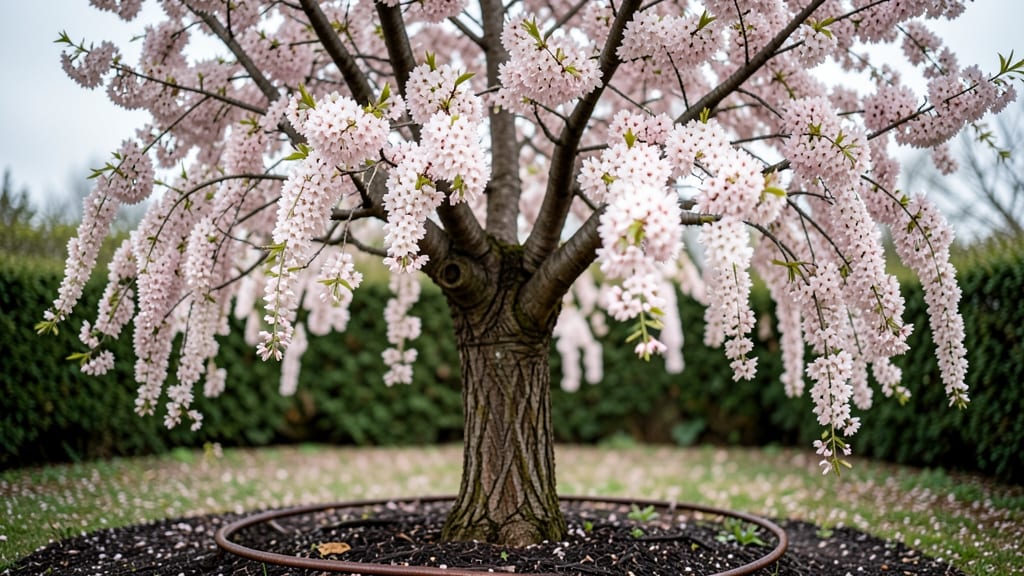
Finding a Japanese cherry blossom tree nearby doesn’t mean you need a sprawling yard—these iconic trees thrive in small spaces too. ✨ I planted mine in a narrow front yard, and now pink clouds of blooms spill over the sidewalk every spring, turning neighbors into photographers.
The key is choosing the right dwarf variety like 'Shirotae' or 'Kiku-shidare-zakura' that fits your space without sacrificing drama.
These trees aren’t just pretty—they’re practical. Their shallow roots handle urban soil better than you’d think, and their early spring blooms give pollinators a head start. Pair yours with spring bulbs like daffodils or low shrubs like azaleas to extend the seasonal show.
Just avoid planting too close to foundations or sidewalks; give those roots at least 10 feet of breathing room.
You’ll love the way they transform any setting—balconies, parks, or even large containers. The scent alone makes spring feel like a festival, and the fall foliage turns fiery orange before the leaves drop.
Best of all, many nurseries carry smaller varieties, so you can enjoy this Japanese garden classic without the massive footprint.
If you can’t find the exact variety, look for related species like 'Prunus incisa' (Japanese cherry) or 'Prunus sargentii' (Sargent cherry). They offer similar seasonal beauty with slightly different growth habits.
Just remember: the magic isn’t in the size, but in how you frame it—whether that’s through clever pruning or strategic plant pairings.
📚 In This Guide
- What you need
- Instructions
- Tips and common mistakes
- Wrapping up and next steps
What you need
- ● Cherry Blossom Tree: 1 Prunus serrulata (Japanese cherry blossom) sapling or seedling (ensure it’s hardy in your USDA zone, typically Zones 5-8).
- ○ Optional: Pre-blooming grafted tree (e.g., ‘Kanzan’ or ‘Somei-Yoshino’ varieties) for faster results.
- ● Planting Site: Sunlight: 6+ hours of direct sun daily (partial shade tolerates Zone 8+).
- ● Space: 10–15 feet wide (or container with 18+ inch diameter for dwarf varieties).
- ● Soil: Well-draining, slightly acidic (pH 5.5–6.5)—amend clay soil with compost.
- ● Tools: 1 trowel or transplant spade.
- ● 1 garden fork (for aerating soil).
- ● 1 watering can or hose with gentle nozzle.
- ● 1 pruning shears (sterilized with rubbing alcohol).
- ● 1 slow-release fertilizer (e.g., 10-10-10 NPK, 2 lbs for in-ground; ½ lb for containers).
- ● Mulch (2–3 inches of wood chips or pine straw) to retain moisture.
- ● Container: Large pot (20+ gallons) with drainage holes (for urban spaces).
- ● Tree stakes (2–3) + soft ties (to support young trees in windy areas).
- ● Pest control: Neem oil spray (prevents aphids/caterpillars).
How to enjoy stunning Japanese cherry blossom canopy in limited spaces
Here's how to bring that dreamy pink canopy close without needing a yard.
🌱 Step 1: Choose the Right Tree Variety for Small Areas
Japanese cherry blossoms come in dwarf varieties perfect for patios or small yards. Look for Prunus serrulata 'Kanzan' or 'Shirotae'—both bloom reliably and stay under 20 feet tall with proper pruning. I always check the mature height label at nurseries to avoid surprises.
If you have truly limited space, consider a bonsai-style cherry trained over a trellis or in a large container. These stay under 6 feet tall while still delivering that signature blossom display. Just know they'll need more careful winter protection.
☀️ Step 2: Select the Perfect Planting Location
Find a spot with at least 6 hours of direct sun daily—cherry blossoms need full sun to produce their best blooms. I've learned the hard way that partial shade results in fewer flowers and weaker branches. Look for areas near your home where you can enjoy the view from windows or seating areas.
Check for overhead power lines if planting near a house. Most cherry blossoms need 15-20 feet of clearance at maturity. If space is tight, choose a columnar variety like 'Cloud Nine' that grows more upright and compact.
🪴 Step 3: Prepare the Planting Site for Long-Term Health
Dig a hole twice as wide as the tree's root ball but only as deep. The top of the root ball should sit 1-2 inches above ground level—this prevents water from pooling and rotting roots. I always loosen the sides of the hole with a shovel to encourage root spread.
Mix the excavated soil with 2-3 inches of compost to improve drainage and fertility. Japanese cherries prefer slightly acidic soil (pH 5.0-6.5). If your soil is heavy clay, add a handful of sand to the planting hole to improve drainage—this prevents root rot during wet seasons.
💧 Step 4: Water and Mulch for First-Year Establishment
Water deeply right after planting to settle the soil around roots. Then maintain 1-2 inches of water weekly during the first growing season. New trees need consistent moisture to establish strong roots. I use a drip irrigation system on a timer for young trees to ensure they get water even when I'm away.
Spread 3-4 inches of mulch around the base, keeping it 6 inches away from the trunk. Use organic mulch like wood chips or shredded bark. This helps retain moisture, suppress weeds, and regulate soil temperature. Replenish mulch annually as it breaks down.
✂️ Step 5: Prune and Maintain for Seasonal Beauty
Prune in late winter or early spring before new growth begins. Remove any dead, diseased, or crossing branches first. Then shape the tree by cutting back 1/3 of last year's growth to encourage bushier growth. I always sterilize my pruners with rubbing alcohol between cuts to prevent disease spread.
Fertilize in early spring with a balanced 10-10-10 formula to support new growth. Japanese cherries don't need heavy feeding—too much fertilizer can reduce flowering. After blooming season, apply a light layer of compost around the drip line to replenish nutrients naturally.
Tips & tricks for perfect seasonal canopy magic
Here's what nobody tells you about bringing that dreamy cherry blossom magic to your small space without the headaches.
Variety Selection: When choosing your tree at the nursery, pay special attention to the label's mature height guarantee. Some 'dwarf' varieties can still grow taller than expected—always ask about the specific growing conditions in your climate zone. I've seen 'Kanzan' reach 25 feet in warmer southern climates despite being labeled as 20 feet. For truly limited spaces, bonsai-style cherries need special winter care like wrapping the pot in burlap or moving to a protected garage during freezes.
Sunlight Strategy: That 6 hours of direct sun is non-negotiable, but here's the trick: use a sunlight tracker app for a week to map your yard's sun patterns. I've planted trees in spots that seemed sunny but actually got only 4 hours due to neighboring buildings. For balconies or patios, south-facing positions get the most consistent light. If your only option is east or west, choose a more sun-tolerant variety like 'Cloud Nine' that handles partial shade better.
Planting Depth: The 1-2 inches above ground level rule is critical—don't bury the root flare (where roots meet trunk). I've seen many trees planted too deep that struggle for years. Use a level to check after planting, and if your hole is too deep, add extra soil around the sides rather than piling it on top. For container-grown trees, gently loosen the root ball before planting to encourage new root growth into the surrounding soil.
Watering Wisdom: That 1-2 inches weekly is a guideline, but your watering needs change with seasons. In summer heat, you might need daily watering for the first few weeks until roots establish. I test soil moisture by sticking my finger 2 inches down—if it's dry, water deeply. For container trees, check moisture more frequently as pots dry out faster. And here's a pro move: water in the morning to reduce evaporation and fungal risks.
Pro Tips for Japanese Cherry Blossom Tree Nearby
- Here's what nobody tells you about bringing that dreamy cherry blossom magic to your small space without the headaches.
- Variety Selection: When choosing your tree at the nursery, pay special attention to the label's mature height guarantee.
- Sunlight Strategy: That 6 hours of direct sun is non-negotiable, but here's the trick: use a sunlight tracker app for a week to map your yard's sun patterns.
Frequently asked questions
Got questions about bringing cherry blossom magic to your space? Here are some answers to help you plan your seasonal canopy with ease!
When is the best time to plant a cherry blossom tree nearby?
The ideal time to plant a cherry blossom tree is in early spring or late fall when the tree is dormant. This gives the roots time to establish before the heat of summer or the cold of winter. If you're in a mild climate, late winter (February or March) is perfect for planting.
How long does it take for a cherry blossom tree to bloom?
Young cherry blossom trees typically take 3 to 5 years to bloom after planting, though this can vary based on the variety and growing conditions. Dwarf varieties may bloom sooner, sometimes within 2 to 3 years. Patience is key—enjoy the tree’s foliage and growth in the meantime!
Can I grow a cherry blossom tree in a small yard or container?
Dwarf or semi-dwarf varieties like Prunus serrulata 'Kanzan' or Prunus subhirtella 'Autumnalis' thrive in small spaces, including large containers (at least 15-20 gallons). Just ensure it gets full sun (6+ hours daily) and well-draining soil. Containers may require winter protection in colder zones.
Are cherry blossom trees messy? Do they drop lots of petals?
Yes, cherry blossoms are famous for their sakura petal showers! While beautiful, petals can create cleanup (especially under trees). Mulching around the base or planting ground covers nearby can help manage debris. Some varieties, like Prunus x yedoensis, have slightly less prolific blooms if that’s a concern.
What should I do if my cherry blossom tree isn’t blooming?
Several factors could affect blooming: insufficient sunlight, improper pruning, or young age. Ensure your tree gets full sun and prune in late winter (before buds swell) to encourage flowering. Over-fertilizing with nitrogen can also reduce blooms—opt for a balanced fertilizer instead. If issues persist, consult a local arborist.
Are there alternatives to traditional cherry blossom trees for small spaces?
If cherry blossoms feel too high-maintenance, consider these compact bloomers:
- Japanese Snowbell (Styrax japonica): Fragrant white flowers, shade-tolerant.
- Dwarf Crabapple (Malus spp.): Colorful blooms and fruit, disease-resistant.
- Weigela (Weigela florida): Vibrant pink/purple flowers, fast-growing.
Wrapping up and next steps
Discovering a Japanese cherry blossom tree nearby can transform even the smallest space into a breathtaking seasonal paradise. Whether you’re drawn to their delicate pink blooms or the cultural symbolism they carry, these trees offer beauty, tranquility, and a touch of magic—perfect for gardens, balconies, or urban nooks.
With the right care and a little patience, you’ll soon be enjoying their ethereal charm year after year.
Ready to bring this hanami magic to your space? Start by researching local nurseries or botanical gardens for the best varieties, then sketch a cozy spot where its branches can dance with the wind. The journey begins with a single blossom—so why not plant it today? 🌸✨