
Pruning
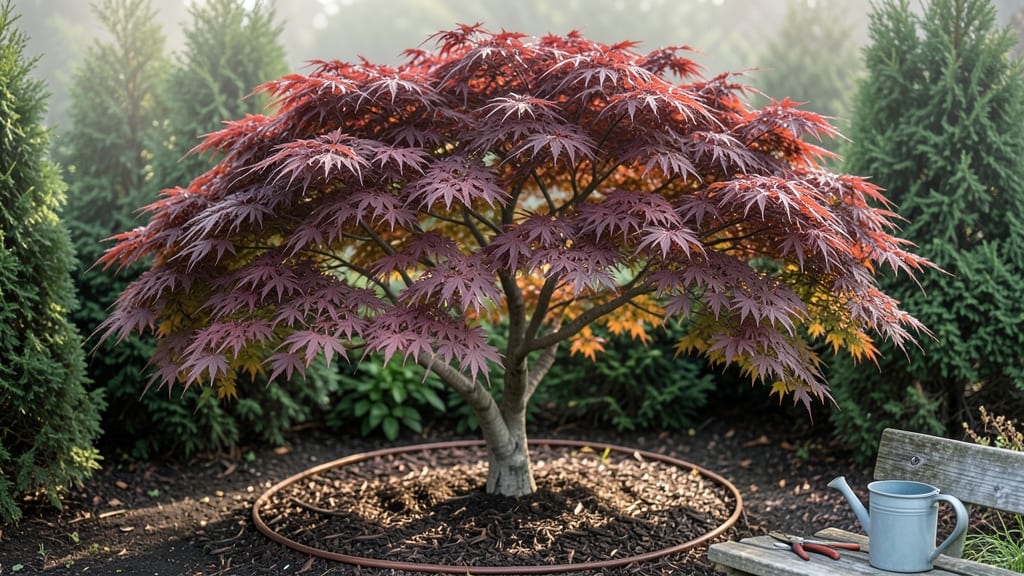
That stunning Japanese red maple tree, Acer palmatum 'Atropurpureum', turns gardens into living art—its fiery foliage outshines most ornamentals in every season. I planted mine last spring, and now it steals every photo of my yard, even when dormant.
The secret isn’t just choosing the right cultivar; it’s understanding how to coax those signature burgundy hues year-round through strategic pruning and seasonal care.
This tree thrives in partial shade with moist, well-draining soil, but its real magic happens in how you shape it. A dormant-season pruning session in late winter (before buds swell) sets the stage for vibrant spring growth—think of it as sculpting with fire.
Most people overlook winter care, but that’s when you prevent dead branches and encourage dense, colorful foliage. My tree now has a natural tiered shape that catches sunlight at every angle, turning leaves into living jewels.
By summer’s end, you’ll have a tree that stays deep red through fall, then holds onto its structure beautifully in winter. The key is balancing pruning cuts (never more than 25% of the canopy at once) with proper mulching to protect roots.
Even in harsh winters, this maple rewards patience with year-round interest—whether it’s peeling bark in winter or new growth in spring.
Perfect for small yards, containers (in youth), or as a focal point in shade gardens. Let’s get yours growing like a pro—starting with the right tools and timing.
📚 In This Guide
- What you need
- Instructions
- Tips and common mistakes
- Wrapping up and next steps
What you need
- ● Pruning shears: Bypass pruners (sharp, 6-8 inch blades) – 1 pair (for small branches up to ½ inch thick).
- ● Loppers: Bypass or anvil type (longer handles for leverage) – 1 pair (for branches ½ to 1½ inches thick).
- ● Pruning saw: Curved or folding saw – 1 (for branches thicker than 1½ inches).
- ● Gloves: Heavy-duty, cut-resistant (e.g., leather or synthetic) – 1 pair (protects hands from thorns and sharp tools).
- ● Disinfectant: 70% isopropyl alcohol or bleach solution (1 part bleach to 9 parts water) – small spray bottle (prevents disease spread).
- ○ Pruning sealant: Optional but recommended (e.g., tree wound paint) – small bottle (for sealing large cuts).
- ● Ladder or step stool: Sturdy and stable – 1 (for reaching higher branches safely).
- ● Trash bags or bucket: For collecting pruned branches – 1-2 (keeps workspace tidy).
- ● Notebook & pen: – 1 (to sketch pruning plan or notes).
- ● Extension pole pruners: For high branches without a ladder.
- ● Safety glasses: Protects eyes from debris.
- ● Knee pads: For comfort during extended pruning sessions.
- ● String or twine: To mark branches for future reference.
- ● Camera: Capture "before" and "after" shots of your masterpiece!
Step-by-step instructions for planting and caring for Japanese red maple trees
Here’s how to establish vibrant Japanese red maples with lasting color—season after season.
🌱 Step 1: Select and Prepare the Planting Site
Japanese red maples thrive in partial shade to full sun, but their signature foliage color deepens in morning sun with afternoon shade. Choose a spot with well-draining soil—these trees hate soggy roots. If your soil is heavy clay, amend it with 2-3 inches of compost mixed into the top 12 inches of soil. The ideal pH range is 5.0 to 6.5, slightly acidic.
Dig a hole twice as wide as the root ball but only as deep. Place the tree so the top of the root ball sits 1-2 inches above ground level. This prevents water from pooling around the trunk, which can cause rot. Gently loosen any circling roots with your fingers—this encourages outward growth instead of girdling.
☀️ Step 2: Plant and Water for Immediate Stability
Position the tree in the hole and backfill with native soil, tamping lightly every 4-6 inches to remove air pockets. Avoid compacting the soil too firmly—roots need space to spread. Water deeply right after planting to settle the soil and eliminate air gaps. Use 5-10 gallons of water depending on the tree’s size, ensuring moisture reaches the edges of the hole.
Mulch the base with 2-3 inches of organic mulch, like shredded bark, keeping it 6 inches away from the trunk. This retains moisture, regulates soil temperature, and suppresses weeds. Water again 2-3 days later to encourage root establishment. Avoid overwatering—the goal is moist but not waterlogged soil.
🌿 Step 3: Prune and Support for Long-Term Health
Prune only to remove dead, damaged, or crossing branches in the first year. Use clean, sharp pruners to make cuts just outside the branch collar. Avoid heavy pruning—Japanese red maples respond poorly to aggressive trimming and may produce fewer vibrant leaves. Focus on shaping the tree’s natural form by removing branches that grow inward or rub against others.
Stake the tree only if necessary, typically for young or top-heavy varieties. Use two stakes placed 6-12 inches from the trunk and tie the tree loosely with soft tree ties or strips of fabric. Check ties every 4-6 weeks to ensure they’re not cutting into the bark as the tree grows. Remove stakes after 1-2 years to encourage natural trunk strength.
⏰ Step 4: Maintain Seasonal Care for Year-Round Color
Water deeply once a week during the first growing season, providing 1-2 inches of water per week. Once established, Japanese red maples are drought-tolerant but still need consistent moisture during dry spells. Check soil moisture by pushing your finger 2 inches deep—if it feels dry, water thoroughly. Avoid wetting the foliage to prevent fungal diseases like anthracnose.
Fertilize lightly in early spring with a balanced, slow-release fertilizer (10-10-10 or similar). Apply ½ the recommended rate to avoid burning roots. Skip fertilization in fall and winter—these trees rely on natural nutrient cycles. Monitor for pests like spider mites or scale, treating with neem oil or horticultural oil if needed, but avoid chemical sprays that can harm beneficial insects.
Tips & tricks for perfect Japanese red maple tree planting
These expert insights will help you nurture a stunning Japanese red maple that thrives for decades—starting with the right foundation.
Soil Preparation Matters: The 2-3 inches of compost mixed into the top 12 inches of soil creates the perfect environment for root development. If your soil is sandy, add a bit more organic matter to retain moisture; if it's clay-heavy, focus on improving drainage with perlite or coarse sand. Japanese red maples are sensitive to soggy roots, so never plant in areas where water pools during heavy rains.
Root Ball Positioning: Placing the top of the root ball 1-2 inches above ground level prevents water from pooling around the trunk, which can lead to rot. This small adjustment makes a huge difference in long-term tree health. After planting, gently press the soil around the edges to eliminate air pockets without compacting too firmly—roots need space to grow outward naturally.
Watering Strategy: The initial deep watering of 5-10 gallons is crucial for settling the soil and encouraging root establishment. After the first watering, wait 2-3 days before watering again—this allows the roots to seek out moisture rather than relying on surface water. During dry spells, check soil moisture by pushing your finger 2 inches deep; if it feels dry, water thoroughly but avoid wetting the foliage to prevent fungal diseases like anthracnose.
Staking with Care: If you do stake your tree, use two stakes placed 6-12 inches from the trunk and tie it loosely with soft tree ties. Check these ties every 4-6 weeks to ensure they're not cutting into the bark as the tree grows. The goal is to provide temporary support, not restrict growth. Remove stakes after 1-2 years to encourage the tree to develop natural trunk strength and stability.
Pro Tips for Japanese Red Maple Tree
- These expert insights will help you nurture a stunning Japanese red maple that thrives for decades—starting with the right foundation.
- Soil Preparation Matters: The 2-3 inches of compost mixed into the top 12 inches of soil creates the perfect environment for root development.
- Root Ball Positioning: Placing the top of the root ball 1-2 inches above ground level prevents water from pooling around the trunk, which can lead to rot.
Frequently asked questions
about the Japanese Red Maple Tree—your go-to guide for troubleshooting, timing, and care essentials!When is the best time to prune my Japanese Red Maple?
The ideal time to prune is late winter or early spring (before buds swell), but you can also do light pruning in summer to shape the tree. Avoid heavy pruning in fall—it can stimulate late growth vulnerable to frost damage. Pro tip: Prune when the tree is dormant ( Dec–Feb) for cleaner cuts and less stress!
How much can I trim without harming the tree?
Japanese Red Maples tolerate moderate pruning—never remove more than 25–30% of the canopy in one season. Over-pruning weakens the tree and reduces vibrant foliage. Focus on removing dead/diseased branches first, then shape for balance. Thin out crowded branches to improve airflow ( healthier growth!).
Why are my leaves turning brown or yellow?
Brown/yellow leaves often signal overwatering, underwatering, or nutrient deficiencies. Check soil moisture—Japanese Red Maples prefer well-draining soil. Yellowing between veins? Likely iron deficiency (common in alkaline soil). Amend soil with chelated iron or use acidic mulch (like pine needles).
Can I grow a Japanese Red Maple in a pot?
Yes! Dwarf varieties like 'Bloodgood' or 'Autumn Flame' thrive in containers ( 15+ gallons). Use fast-draining potting mix and repot every 2–3 years. Place in partial sun (6+ hours/day) and water when the top inch of soil is dry. Winter care: Move pots to a sheltered spot ( above 10°F) or wrap roots in burlap.
How do I encourage more vibrant red foliage?
For bold red leaves, ensure full sun (6+ hours/day) and acidic soil (pH 5.0–6.5). Apply a balanced fertilizer (10-10-10) in early spring and chelated iron if leaves lose color. Mulch annually with pine bark to retain moisture and acidity. Avoid over-fertilizing—it can burn roots!
Wrapping up and next steps
The Japanese Red Maple is a stunning addition to any landscape, offering vibrant foliage and year-round beauty with the right care—especially during its dormant season. By following this dormant-season blueprint, you’ll ensure robust growth, breathtaking color, and long-term health for your tree.
Ready to transform your outdoor space? Start planning your pruning schedule today and enjoy the rewards of a thriving, show-stopping tree! 🌿✨
Next step:
- Mark your calendar for late winter/early spring pruning (just before buds swell).
- Gather your tools and review your tree’s unique needs—now you’re equipped to succeed!