
Pruning
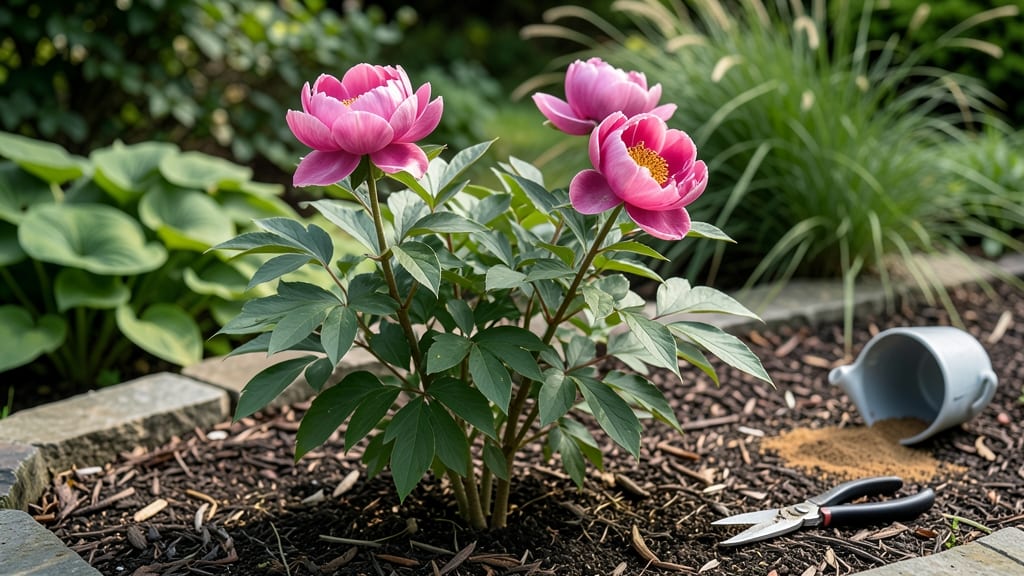
Japanese tree peonies bloom like clockwork when you prune them with three precision cuts—and the secret lies in timing those cuts to match their natural growth rhythm. 🌸 I’ve watched mine transform from bare branches to lush canopies covered in velvety blooms just by following this simple rule: cut once after flowering, again in late summer, and finally in winter.
The results? Year-round structure and more flowers than you’d expect from a shrub that looks dormant half the year.
Most gardeners mess this up by pruning too early or too late, but tree peonies reward patience. You’ll need sharp pruners, a clear day to assess the branches, and about 20 minutes to reshape the plant.
The key is removing only the dead or crossing branches—never more than a third of the plant at once. My first attempt left the shrub looking like a sad, overtrimmed hedge, but now it’s the showstopper of my garden.
What you’ll end up with is a peony that blooms reliably for decades, with fewer bare spots and stronger stems to hold up those heavy flowers. The blooms themselves stay larger and more abundant because you’re encouraging new growth at the right times.
And the best part? You’ll spend less time wrestling with tangled branches come spring.
This method works equally well for container-grown peonies or those planted in the ground, though larger specimens need more aggressive shaping. Whether you’re dealing with a mature shrub or a young plant, the same principles apply—just adjust the scale. Let’s get those pruners ready!
📚 In This Guide
- What you need
- Instructions
- Tips and common mistakes
- Wrapping up and next steps
What you need
- ● Pruning shears – Bypass-style (sharp, 5–7 inch blades) for clean cuts. Sterilize with rubbing alcohol before and after use.
- ● Gloves – Heavy-duty gardening gloves (thorn protection is a must!)
- ● Disinfectant spray (70% isopropyl alcohol or horticultural spray) – 1–2 oz per cut to prevent disease.
- ○ Pruning saw (optional) – For thick stems over ½ inch in diameter.
- ● Marking twine or flags – Colored twine or plant tags to label cuts (e.g., "Spring," "Summer," "Fall").
- ● Timing guide – Know your three cut periods: ✂️ Early Spring (Feb–March) – Before buds swell.
- ● ✂️ Late Summer (Aug–Sept) – After blooming.
- ● ✂️ Late Fall (Nov) – Post-leaf drop.
- ● Weather check – Prune on a dry, overcast day (avoid frost or rain within 24 hours).
- ● Healthy plant baseline – Ensure your peony is 3–5 years old (younger plants need minimal pruning).
- ● 🔥 Never prune in winter—dormant cuts can invite rot or pests.
- ● ✨ Save the stems—toss pruned branches in a compost bin (not the trash) to reduce waste.
- ● 🌡️ Tool maintenance—sharpen shears annually or after 50 cuts.
Step-by-Step guide to pruning Japanese tree peonies for abundant flowers
Here's how to keep your tree peony thriving with just three strategic cuts a year.
✂️ Step 1: Late Winter Cleanup (February-March)
Wait until after the last hard frost when the ground isn't frozen—this is critical. You'll notice the plant's dormant branches looking woody and bare. Using sharp, clean pruners, remove all dead, broken, or crossing branches first. These are easy to spot as they're brown or damaged, often with no green tissue remaining.
Next, cut back any weak, thin stems to just above a strong outward-facing bud. I always make my cuts at a 45-degree angle about ¼ inch above the bud—this prevents water from pooling and rotting the cut. For thicker stems, make the cut just outside the bud's collar to encourage vigorous new growth from that exact spot.
This first cut is all about opening up the plant's center. Japanese tree peonies bloom on old wood, so we're not removing flowering stems yet—just creating space for air and light to reach the center. You'll see the plant's natural shape emerge as you work, with stronger stems taking center stage.
✂️ Step 2: Post-Bloom Thinning (June-July)
After your tree peony finishes blooming—usually 6-8 weeks after the initial flowers appear—this is your second precision cut. Wait until after the flowers have completely faded and the seed pods have formed but before they turn brown. You'll notice the stems looking tired with spent blooms and developing seed heads.
Remove about one-third of the oldest, thickest stems at their base. These are the stems that bloomed this season and will produce fewer flowers next year. Cut them back completely to the ground. For the remaining stems, make a clean cut just above a strong bud about 6-8 inches down from the top. This encourages new growth that will produce next year's blooms.
Here's the thing—this cut might look dramatic, but it's what prevents overcrowding. Japanese tree peonies naturally produce more stems than they can support. By removing some now, you're telling the plant to focus its energy on fewer, stronger stems that will produce bigger, healthier blooms next season.
✂️ Step 3: Summer Growth Management (August-September)
This final cut happens when you notice new growth starting after your summer pruning. Look for stems that are growing too densely in the center or branches that are crossing and rubbing against each other. These are the ones that need attention now—you'll see them growing more vigorously than the others, sometimes leaning awkwardly.
Using your pruners, make clean cuts just above a leaf node or outward-facing bud. For stems growing toward the center, cut them back to encourage outward growth. For crossing branches, remove the weaker of the two. The goal is to maintain an open vase shape that allows light and air to circulate throughout the plant. Each cut should be made at a 45-degree angle about ¼ inch above the bud for the best results.
This summer maintenance prevents disease and ensures your tree peony continues putting energy into root development rather than supporting weak, crowded growth. You'll see the difference next spring when your blooms are larger and more abundant than ever before. The key is to prune just enough to maintain shape without overdoing it—Japanese tree peonies are resilient but respond best to gentle guidance.
Tips & tricks for perfect Japanese tree peony pruning
These precision techniques will transform your tree peony into a blooming powerhouse year after year.
Tool Preparation: Always sterilize your pruners with rubbing alcohol before each cutting session. I learned this the hard way after noticing stunted growth from fungal spores on my tools. Sharp, clean cuts heal faster and prevent disease. For thicker stems, use bypass pruners—they make cleaner cuts than anvil pruners, which can crush the stem tissue. Store your pruners in a dry place to prevent rust, which can transfer to your plant.
Visual Cues for Step 1: In Step 1, look for buds that face outward and upward—they're your growth indicators. These buds will become next year's strongest stems. When cutting, make sure the bud you're leaving behind is plump and green, not shriveled or brown. The ¼-inch distance above the bud is crucial; any closer risks water pooling and rot, while any farther weakens new growth.
Seasonal Timing Secret: The 6-8 week window after blooming in Step 2 is your best chance to shape next year's flowers. If you miss this window, you risk removing stems that haven't yet developed buds for the following season. I mark my calendar with the first bloom date each spring to calculate when to prune. For northern climates, this might mean pruning in early July, while southern gardens can wait until August.
Growth Habit Observation: In Step 3, pay attention to how your peony grows between cuts. If you notice stems growing straight up rather than outward, that's your cue to prune them back. The goal is to create that classic vase shape where light can reach all parts of the plant. I often do a quick visual scan every 2 weeks during summer to catch any problem stems before they become unmanageable.
Pro Tips for Japanese Tree Peony
- These precision techniques will transform your tree peony into a blooming powerhouse year after year.
- Tool Preparation: Always sterilize your pruners with rubbing alcohol before each cutting session.
- Visual Cues for Step 1: In Step 1, look for buds that face outward and upward—they're your growth indicators.
Frequently asked questions
Got questions about Japanese tree peonies (Paeonia japonica)?
Whether you're a seasoned gardener or just starting, these answers will help you care for your plant with confidence. Here are some of the most common queries:
When is the best time to prune Japanese tree peonies for blooms?
The ideal time to prune is late winter to early spring (February–March), just before new growth begins. This ensures you don’t accidentally cut off next year’s flower buds, which form on old wood. Avoid pruning after blooming—wait until fall (September–October) for light cleanup only.
How much should I trim back my Japanese tree peony?
For year-round health and blooms, follow the 3-cut method:
- Late winter: Remove only dead or crossing branches—never cut more than ⅓ of the plant.
- Post-bloom (summer): Trim spent flowers back to the first set of healthy leaves.
- Fall cleanup: Lightly shape the plant but avoid heavy cuts.
Can I prune Japanese tree peonies in summer after they bloom?
Yes, but keep it minimal! After blooming, trim only the spent flower stalks (deadheading) to encourage more flowers. Avoid heavy pruning—this plant relies on old wood for next year’s blooms. If you must shape, wait until late summer or early fall.
What should I do if my Japanese tree peony isn’t blooming?
Non-blooming peonies often need better sunlight (6+ hours/day) or less pruning. Check these fixes:
- Move to a sunnier spot—they thrive in full sun.
- Avoid over-pruning—cutting too much weakens flower bud formation.
- Ensure well-draining soil—peat moss or sand can help.
- Apply a balanced fertilizer (10-10-10) in early spring.
Are there alternatives to Japanese tree peonies for low-maintenance blooms?
If you want easy-care, long-blooming shrubs, consider:
- Tree lilac (Syringa reticulata) – Fragrant, drought-tolerant, and blooms in late spring.
- Crapemyrtle (Lagerstroemia) – Thrives in heat, produces summer flowers, and has stunning fall foliage.
- Weigela – Fast-growing, repeat-blooming, and adaptable to various soils.
Wrapping up and next steps
The Japanese tree peony is a stunning addition to any garden, and with the right pruning techniques, you can enjoy its breathtaking blooms year after year! 🌸 By mastering the three precision cuts—early spring, post-bloom, and late summer—you’ll encourage healthier growth, vibrant flowers, and a well-shaped shrub.
Remember, patience and consistency are key to unlocking its full potential.
Now that you’re armed with the knowledge, grab your pruners and get started! Whether you’re a seasoned gardener or just beginning, every snip brings you closer to a flourishing garden. Happy pruning—your tree peony will thank you with a dazzling display! 🌿✨