
Pruning
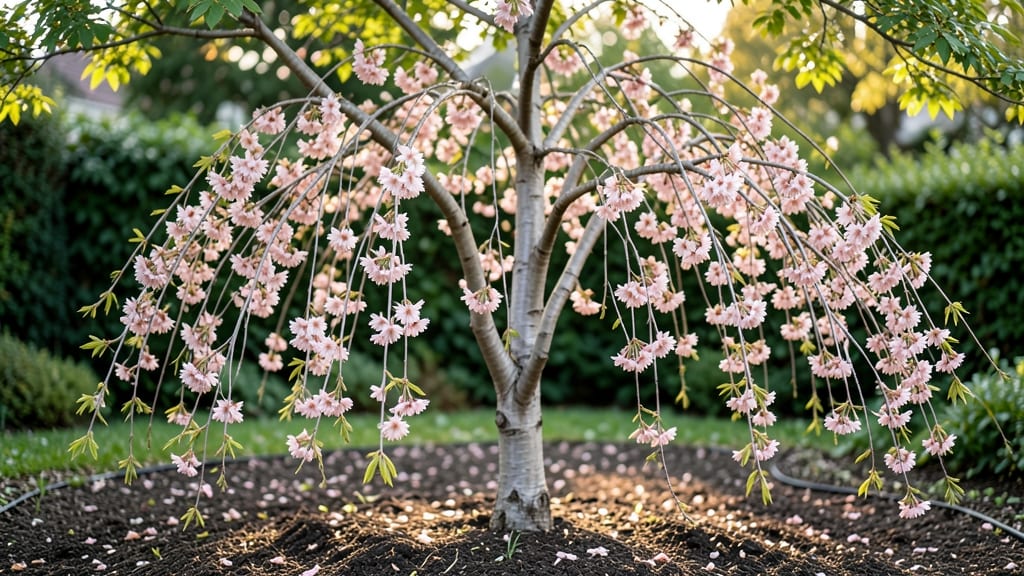
A large weeping cherry tree transforms any yard into a living work of art, its cascading branches creating a dramatic, almost painterly effect. 🌸 I planted mine near the front walkway—its graceful silhouette frames the entrance like a natural curtain, while the spring blossoms turn the whole scene into a soft pink dream.
The key isn’t just where you place it, but how you let it shine: positioning it where it gets morning sun and afternoon shade preserves those delicate petals while keeping the foliage lush all season.
The real magic happens in layering. Pair it with low-growing perennials like hostas or ferns to catch the dappled shade beneath its branches, or add spring bulbs like daffodils to bloom before the canopy fills in.
In fall, the fiery red leaves create a stunning contrast with evergreens or ornamental grasses. Even in winter, the skeletal branches have a quiet beauty—especially when dusted with snow. It’s not just a tree; it’s the centerpiece of your garden’s story.
You’ll love how it draws the eye upward, making even a modest yard feel grand. The weeping habit means no need for heavy pruning—just occasional shaping to maintain that elegant arch. And when those first blossoms appear in spring, neighbors will ask how you pulled off such a showstopper.
It’s the kind of tree that makes gardening feel like hosting a party your yard throws every season.
Works best in open spaces where it can spread its arms, but even smaller yards can accommodate a dwarf variety. The secret to its lasting appeal? Letting it grow naturally while guiding its placement to highlight its best features. Here’s how to make it the star of your outdoor stage.
📚 In This Guide
- What you need
- Instructions
- Tips and common mistakes
- Wrapping up and next steps
What you need
- ● Pruning shears – Sharp, bypass-style shears (rated for cuts up to ½-inch thick). Quantity: 1 pair.
- ● Loppers – Heavy-duty, with bypass blades (for branches ½-inch to 2-inches thick). Quantity: 1 pair.
- ● Pruning saw – Curved-tooth saw for thick branches (2+ inches). Quantity: 1.
- ○ Extension pole pruners (optional but helpful for high branches). Quantity: 1.
- ● Gloves – Heavy-duty, cut-resistant gloves to protect hands from thorns and sharp branches.
- ● Ladder – Sturdy, extendable ladder (ensure it’s rated for your height needs + 3 feet extra for safety).
- ● Disinfectant – 70% isopropyl alcohol or a pruning sealant (to prevent disease spread).
- ● Heavy-duty trash bags – For collecting pruned branches. Quantity: 2-3.
- ● Rake or leaf blower – To clean up debris after pruning.
- ● Hand saw – For precision cuts on stubborn branches.
- ● Safety glasses – Protects eyes from debris.
- ● Work boots – Sturdy footwear for uneven terrain.
- ● Tree wound dressing (controversial but some swear by it for large cuts).
- ● Notebook & pen – To sketch a pruning plan before you start!
Step-by-Step guide for planting and pruning a large weeping cherry tree
Here’s how to establish your tree for a stunning, long-lasting focal point.
🌱 Step 1: Choose the Perfect Planting Location
Weeping cherry trees need full sun for at least 6 hours daily—pick a spot with open sky exposure. Avoid low areas where water pools, as soggy roots invite disease. I always check the tree’s mature height (often 25-35 feet) and ensure overhead power lines or structures won’t become an issue in 10 years.
Test the soil by digging a 12-inch deep hole—if it’s hardpan or clay, amend with 3-4 inches of compost mixed into the native soil. The root ball should sit 2 inches above ground level when planted, so mound soil slightly in the hole before placing the tree. This prevents waterlogging at the trunk.
🪴 Step 2: Plant with Proper Spacing and Support
Dig a hole twice as wide as the root ball but no deeper—weeping cherries hate buried trunks. Gently loosen the roots if they’re circling, then place the tree in the center. Fill the hole with the amended soil, tamping lightly every 6 inches to remove air pockets. A 4-inch layer of mulch (keep it 6 inches away from the trunk) helps retain moisture and regulate soil temperature.
Stake the tree only if needed—young weeping cherries often have strong natural branches. If staking, use two stakes on opposite sides, tied loosely with soft fabric strips (never wire, which can girdle the trunk). Water deeply after planting to settle the soil—you’ll know it’s right when water drains evenly without pooling.
✂️ Step 3: Prune for Structure and Health
Prune in late winter or early spring before buds swell. Remove any dead, crossing, or inward-growing branches first—these compete for energy and invite pests. I always start at the top and work downward, cutting just outside the branch collar (the swollen area where the branch meets the trunk). Use clean, sharp pruners to prevent tearing.
Thin the canopy to open it up—weeping cherries benefit from air circulation to reduce fungal issues. Aim for a balanced shape with the lowest branches 6-8 feet off the ground for safety and sunlight access. Seal larger cuts (½ inch or wider) with pruning sealant to prevent disease entry.
☀️ Step 4: Maintain Through the Growing Season
Water deeply once a week during the first year, letting the soil dry 2-3 inches deep between waterings. Overhead watering can spread fungal spores, so use a soaker hose at the base. Fertilize lightly in early spring with a balanced 10-10-10 formula—weeping cherries are sensitive to excess nitrogen, which promotes leafy growth over flowers.
Monitor for pests like aphids or borers—a strong tree with good airflow rarely has issues, but I keep an eye out for sawdust-like frass (a sign of borers) on the bark. If you see it, prune out infested branches immediately and dispose of them away from the yard. Mulch annually in late fall to protect roots from winter temperature swings.
Tips & tricks for perfect weeping cherry tree planting
Here's what nobody tells you about making your weeping cherry tree thrive from day one.
Sunlight Secret: That 6-hour daily sun requirement is non-negotiable, but here's the thing: morning sun is more valuable than afternoon. Position your tree to catch those first rays—it gives the tree energy to handle the heat of the day. If you're in a partial shade situation, consider a location where it gets at least 4 hours of direct morning sun to compensate.
Soil Prep Tip: When you're digging that 12-inch deep hole, don't just stop at the 3-4 inches of compost. Mix in a handful of mycorrhizal fungi if you can find it—this natural soil additive helps roots absorb water and nutrients more efficiently. It's an optional upgrade that makes a noticeable difference in the first growing season.
Pruning Precision: In Step 3, when you're cutting those larger branches (½ inch or wider), here's a pro move: make your cuts at a slight angle just outside the branch collar. This creates a natural barrier that prevents water from pooling in the wound, which could lead to rot. And always sterilize your pruners between cuts with rubbing alcohol—it prevents spreading disease between branches.
Watering Wisdom: That deep watering once a week is perfect, but timing matters more than you think. Water in the early morning so the foliage has all day to dry out. Wet leaves at night create the perfect environment for fungal spores to take hold. I've seen beautiful weeping cherries ruined by simple watering timing mistakes—don't make this one!
Pro Tips for Large Weeping Cherry Tree
- Here's what nobody tells you about making your weeping cherry tree thrive from day one.
- Sunlight Secret: That 6-hour daily sun requirement is non-negotiable, but here's the thing: morning sun is more valuable than afternoon.
- Soil Prep Tip: When you're digging that 12-inch deep hole, don't just stop at the 3-4 inches of compost.
Frequently asked questions
How big does a large weeping cherry tree get, and how much space does it need?
A mature weeping cherry tree typically reaches 20–30 feet tall and wide, though some varieties can sprawl even further. Plant it 15–20 feet from structures, sidewalks, or other trees to allow for proper airflow and root growth. If space is limited, consider dwarf cultivars like Prunus serrulata 'Kanzan' or 'Shirofugen', which max out around 15 feet.
When is the best time to prune a weeping cherry tree to encourage more blooms?
Prune your tree right after flowering (late spring) or during early summer to avoid cutting off next year’s blossoms. Avoid heavy pruning in fall or winter, as it can stimulate late-season growth vulnerable to frost damage. Light shaping prunes in late winter (before buds swell) are fine, but focus on removing dead or crossing branches.
What pests or diseases should I watch for, and how do I treat them?
Common issues include:
- Cherry leaf spot (brown spots on leaves): Remove infected leaves and apply copper fungicide in early spring.
- Borers (holes in bark): Use beneficial nematodes or insecticidal soap. Severe cases may need professional help.
- Powdery mildew (white coating): Improve airflow with pruning and spray with neem oil.
Can I grow a weeping cherry tree in a container, or does it need to be planted in the ground?
While possible, container-growing is challenging due to their massive root systems. If you must, use a 200+ gallon pot with drainage holes and repot every 2–3 years. For best results, plant in well-draining, slightly acidic soil (pH 5.5–6.5) with full sun. Dwarf varieties are your best bet for containers!
How cold-hardy are weeping cherry trees, and do they need winter protection?
Most varieties tolerate USDA Zones 5–8 (down to -15°F). Young trees or those in Zone 5 may need winter mulch (3–4 inches) and burlap wraps for trunk protection. Avoid heavy snow buildup on branches—gently brush it off to prevent breakage. No need for extra heat! These trees are tough once established.
Are there alternatives to weeping cherry trees with similar beauty but less maintenance?
If you love the look but want lower upkeep, try:
- Weeping Japanese maple (Acer palmatum): Smaller, shade-tolerant, and disease-resistant.
- Cry Baby crabapple (Malus 'Cry Baby'): Compact, blooms early, and handles urban pollution well.
- Weeping willow (Salix babylonica): Fast-growing but needs more space and moisture.
Wrapping up and next steps
The large weeping cherry tree isn’t just a stunning addition to your yard—it’s a timeless investment in beauty and curb appeal. With the right pruning techniques, you’ll ensure its graceful branches thrive for decades, creating a serene focal point that turns heads every season. 🌸
Ready to transform your outdoor space? Start by gathering your tools, reviewing the steps, and scheduling your first pruning session during the tree’s dormant season. Your dream landscape is just a trim away!