
Pruning
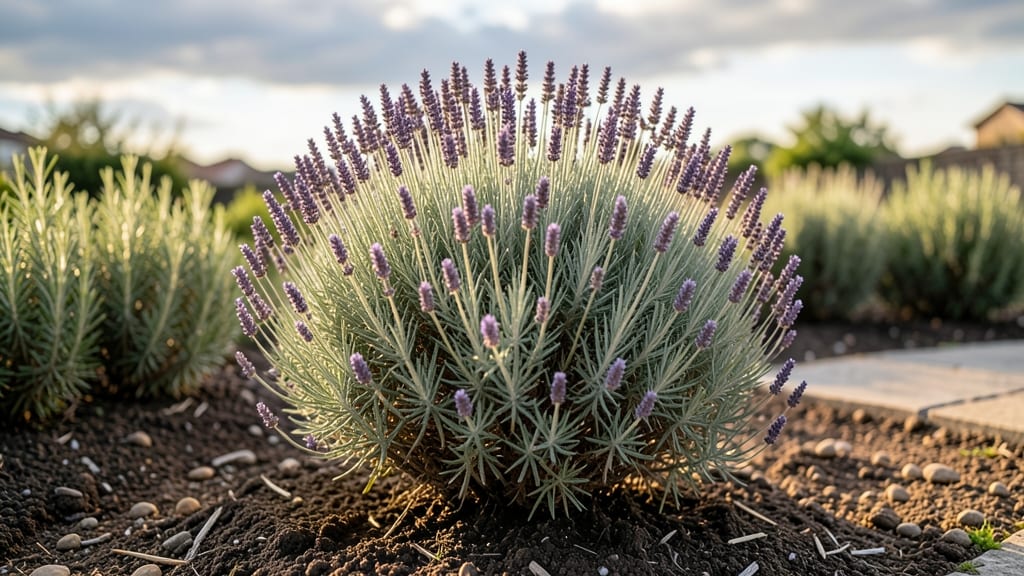
A lavender standard topiary tree turns your garden into a fragrant sanctuary with just three strategic trims. 🌿 I learned the hard way that lavender needs gentle shaping—too aggressive, and you sacrifice those signature purple spikes.
The right variety and timing make all the difference, and I’ll show you exactly how to keep it lush without stressing the plant.
Start with English lavender or Provence varieties—they handle pruning best. You’ll need sharp shears, a ladder (for taller standards), and a sunny spot with well-draining soil. The key is trimming after flowering in early summer, then again lightly in late summer and winter to maintain that clean, sculpted look.
It’s not just about aesthetics; the fragrance lingers even when blooms fade.
By year two, your topiary will be a neighborhood conversation starter—structured enough for formal gardens, relaxed enough for cottage-style spaces. The scent alone makes it worth the effort, but the year-round structure adds texture to any landscape. Just avoid heavy pruning in fall, or you’ll stunt next spring’s growth.
Works in containers too, if you’re short on ground space. The secret? Patience—true topiary magic happens over seasons, not weeks. Let’s get shaping!
📚 In This Guide
- What you need
- Instructions
- Tips and common mistakes
- Wrapping up and next steps
What you need
- ● Lavender plant: 1 healthy Lavandula variety (e.g., 'Hidcote' or 'Munstead') in a 1-gallon container (mature enough for pruning).
- ● Pruning shears: 1 pair of sharp, bypass-style shears (sterilized with rubbing alcohol).
- ● Topiary wire frame: 1 pre-made standard topiary frame (metal or plastic, sized for your lavender’s height).
- ● Potting soil: 1 bag of well-draining, cactus/succulent mix (or add perlite to regular potting soil).
- ● Container: 1 durable, well-draining pot (12–18" diameter with drainage holes).
- ● Support stake: 1 bamboo or metal stake (for initial training, 2–3 ft tall).
- ● Watering can: 1 with a rose nozzle (for gentle hydration).
- ○ Topiary training spray: 1 bottle (for shaping—optional for beginners).
- ● Slow-release fertilizer: 1 packet of balanced 10-10-10 (spring/fall).
- ● Mulch: Gravel or pebbles (to retain moisture and enhance drainage).
- ● Pruning paste: 1 small tube (to seal cuts and prevent disease).
- ● Gloves: 1 pair of gardening gloves (to protect from prickly stems).
Step-by-Step instructions for crafting a lavender standard topiary tree
Here's how to shape your fragrant topiary with surgical precision—three strategic trims guarantee a perfect silhouette.
🌱 Step 1: Select and Prepare Your Lavender Plant
Start with a healthy, established lavender bush that's at least 2-3 years old and has multiple sturdy stems. Look for plants with compact growth and vigorous new shoots—these are your building blocks. I always choose English lavender (Lavandula angustifolia) for its dense foliage and ability to handle shaping.
Remove the plant from its pot and inspect the roots. Trim any circled or mushy roots with clean pruners, then repot into a larger container (at least 12 inches wide and deep) using well-draining soil mix. Lavender hates soggy roots, so blend equal parts potting soil, perlite, and coarse sand for perfect drainage. Water thoroughly after planting, but let the soil dry completely before proceeding.
☀️ Step 2: Establish the Standard Structure
This is where the magic happens: select your main stem. Choose the straightest, strongest stem and remove all side branches up to 12-18 inches from the base. Use sharp pruning shears to make clean cuts just above a set of leaves. The goal is a single vertical trunk—think of it as your topiary's spine.
Once you've established your trunk, train the remaining branches to form the base of the standard. Gently bend and tie the top 3-4 strongest side branches outward at 45-degree angles using soft plant ties. These will become your plant's "skirt." Water lightly after training to help the plant settle into its new shape.
✂️ Step 3: First Trim for Initial Shape
Wait until late spring when new growth is 1-2 inches long before your first trim. This is your foundation cut—the moment you define your topiary's future form. Start by shaping the top into a rounded dome (or your preferred shape) using hand pruners. Cut just above a leaf node to encourage bushier growth.
Next, refine the skirt by trimming any branches that grow upward or inward. Aim for a full, even circle about 12 inches wide at the base. Step back frequently to check your progress—this is where patience pays off. Lavender responds best to gradual shaping, so avoid cutting more than one-third of the plant's growth at once.
🌿 Step 4: Second Trim for Refinement
Schedule your second trim in early summer, about 6-8 weeks after the first. By now, your lavender should have filled out nicely. Focus on maintaining the dome shape while encouraging denser growth. Use concave pruners for clean cuts and sharp scissors for detailing the edges.
Pay special attention to the trunk. If any side shoots have emerged, remove them to keep the vertical line clean. For the skirt, trim any leggy growth that's stretching outward too far. The goal is a balanced, symmetrical silhouette—think of it as a living sculpture. After trimming, give your plant a light fertilizer to support new growth.
⏰ Step 5: Final Trim for Winter Readiness
Your third and final trim comes in late summer to early fall, just before the first frost. This is your maintenance trim—not a drastic reshaping, but a light touch-up to prepare for winter. Reduce the dome height by no more than 1 inch to maintain its shape while encouraging fresh growth.
For the skirt, trim any dead or woody stems at the base. Lavender's woody growth can become unsightly, so removing it now keeps your topiary looking neat and healthy. After trimming, reduce watering slightly to harden off the plant for winter. Mulch the base with 2-3 inches of gravel to protect roots from freeze-thaw cycles.
Tips & tricks for perfect lavender standard topiary tree
Real talk: shaping lavender into a standard topiary takes precision, but these tricks will save you from common mistakes and help you achieve that polished, professional look.
Plant Selection Matters: Don't rush this step—examine your lavender bush closely. Look for stems with a natural taper rather than uniform thickness, as these will create a more elegant trunk. I've found that plants with slightly uneven growth actually work better for topiary because they develop character over time. Also, avoid lavender with long, leggy stems; these will never hold a clean shape.
Pruning Technique: When shaping the dome in Step 3, always cut just above a leaf node—this is where new growth will emerge. For a smoother silhouette, use a slight upward angle on your cuts (about 45 degrees) rather than cutting straight across. This creates a more natural, layered look. I've learned the hard way that cutting too close to the node can leave unsightly bare spots.
Maintaining Symmetry: Step back frequently to check your progress, especially when refining the skirt in Step 3 and Step 4. Lavender's growth can be unpredictable, so be prepared to make small adjustments. I keep a small mirror nearby to check the backside of my topiary—this helps me spot asymmetries I might miss otherwise. The goal is to create a balanced silhouette that looks perfect from any angle.
Pro Tips for Lavender Standard Topiary Tree
- Real talk: shaping lavender into a standard topiary takes precision, but these tricks will save you from common mistakes and help you achieve that polished, professional look.
- Plant Selection Matters: Don't rush this step—examine your lavender bush closely.
- Pruning Technique: When shaping the dome in Step 3, always cut just above a leaf node—this is where new growth will emerge.
Frequently asked questions
Got questions about keeping your Lavender Standard Topiary Tree thriving? You’re in the right place! Here are answers to the most common queries—from pruning tips to troubleshooting—so you can enjoy that dreamy lavender scent all year.
How often should I trim my lavender topiary tree?
Trim your lavender topiary twice a year: once in early spring (just as new growth appears) and again in late summer (after flowering). Avoid heavy pruning in fall or winter, as lavender is dormant and prone to dieback. Use sharp shears and cut just above a set of leaves to encourage bushiness.
When is the best time to plant a lavender topiary tree?
The ideal time to plant is early spring or early fall, when temperatures are mild. Avoid planting in summer heat or winter frost, as lavender struggles with extreme conditions. Choose a sunny spot (at least 6–8 hours of direct sunlight daily) and well-draining soil to prevent root rot.
Can I grow a lavender topiary tree in a container?
Lavender thrives in containers with good drainage. Use a pot with drainage holes and a mix of potting soil + perlite or sand (70/30 ratio). Opt for a 12–18 inch diameter container to accommodate roots. Place it in a sunny spot and water only when the top inch of soil is dry—overwatering is the #1 killer.
Why is my lavender topiary turning brown or leggy?
Brown tips often mean overwatering or poor drainage. Leggy growth usually signals too little sunlight. Fix it by:
- Ensuring the soil dries out between waterings.
- Moving the plant to a sunnier location (lavender needs full sun!).
- Fertilizing lightly in spring with a low-nitrogen, phosphorus-rich formula (like 5-10-10).
Does trimming encourage more lavender blooms?
Yes! Pruning after flowering (late summer) promotes denser growth and more blooms next year. Just avoid cutting into old wood—stick to shaping new growth. For a standard topiary shape, trim back about 1/3 of the new growth annually to maintain form and encourage vibrant flowers.
Wrapping up and next steps
Transforming your Lavender Standard Topiary Tree into a fragrant, visually stunning centerpiece is simpler than you think! With the right tools, timing, and techniques—like the three precision trims we’ve shared—you’ll enjoy year-round beauty and soothing lavender scent. Whether you’re a gardening pro or just starting, these steps make maintenance effortless.
Ready to elevate your outdoor space? Grab your pruners and get trimming! 🌿✨ For extra tips, check out our lavender care guide to keep your tree thriving all season.