
Pruning
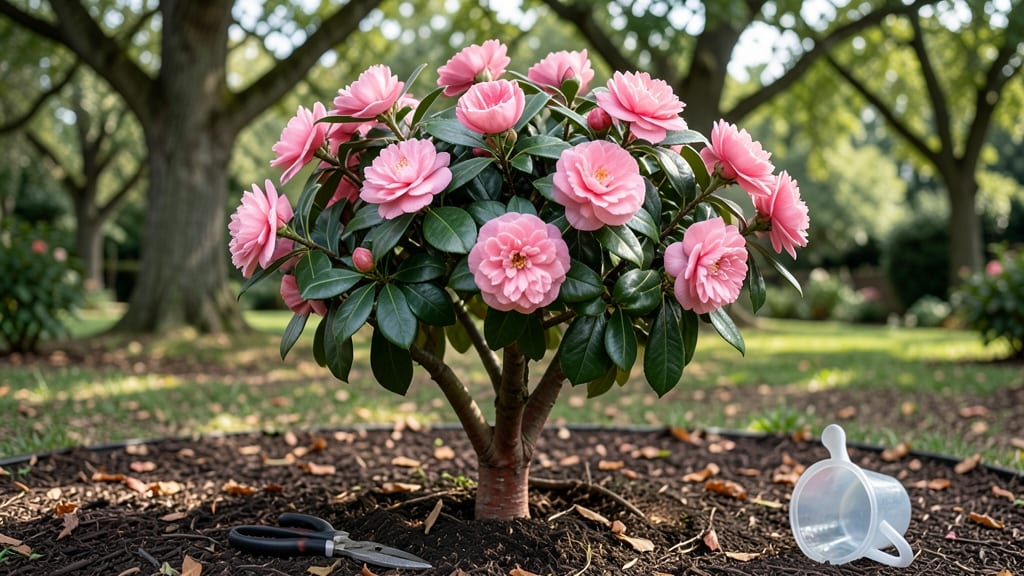
Pruning a pink camellia tree isn't just about shaping—it's about unlocking year-round blooms that make your garden the envy of the neighborhood. 🌸 I learned this the hard way when my first camellia put out just a handful of flowers, despite its lush green leaves.
The secret isn't harsh cutting—it's strategic pruning that encourages healthy growth and abundant blooms.
You'll need sharp pruners, a clear day (never prune when the tree is wet), and a basic understanding of where to cut. Most people over-prune, which stresses the tree and reduces flowers.
My method focuses on light shaping in late winter and bloom-encouraging cuts after flowering. It takes about 20 minutes for a mature tree, and the results—thousands of pink blooms—are worth every snip.
What you'll end up with is a tree that flowers from late fall through spring, with glossy leaves that stay vibrant all year. The key is timing: prune after blooms fade to avoid cutting off next year's flowers.
Even if you've never pruned before, this method is foolproof—just follow the simple rules about where to make cuts and when.
Works for both small patio camellias and large landscape trees, in zones 7 through 10. The same principles apply whether you're shaping a bonsai-style tree or maintaining a 15-foot specimen. Let's get those blooms coming!
📚 In This Guide
- What you need
- Instructions
- Tips and common mistakes
- Wrapping up and next steps
What you need
- ● Pruning shears: Bypass pruners (sharp, clean, and disinfected with rubbing alcohol to prevent disease). Recommended: Felco F-2 or similar.
- ● Loppers: For thicker branches (1.5"–2" diameter). Look for ratcheting loppers for extra leverage.
- ● Pruning saw: Curved-tooth saw for branches over 2" in diameter. Bonus: A folding pruning saw saves space!
- ● Garden gloves: Heavy-duty, cut-resistant gloves (e.g., Felco or Mechanix) to protect your hands.
- ● Disinfectant: 70% isopropyl alcohol or a 10% bleach solution (1 part bleach to 9 parts water) to sterilize tools between cuts.
- ○ Pruning sealant: Optional but helpful for larger cuts (e.g., Tanglefoot Tree Wound Pruning Seal) to prevent disease.
- ● Ladder or step stool: Sturdy and tall enough to reach the highest branches safely. Pro tip: A foldable ladder is great for smaller trees!
- ● Trash bags or bucket: For collecting pruned branches and debris. Eco-friendly tip: Use biodegradable bags!
- ● Sharpie or marker: To label branches if you're doing major structural pruning.
- ● Hand pruners: For precision trimming on smaller branches (great for shaping).
- ● Safety goggles: To protect your eyes from debris, especially when using a saw.
- ● Tree tie or zip ties: For securing branches if you're doing heavy pruning.
- ● Garden hose: To rinse tools and clean up sap or debris after pruning.
- ● Pruning guide or app: Like iTree or PlantNet to identify and track your camellia’s growth.
- ● Mulch: Organic mulch (e.g., pine straw or shredded bark) to protect the base after pruning.
- ● Check the best pruning time for your pink camellia (late winter or early spring, just before new growth starts).
- ● Ensure the tree is healthy—avoid pruning if it’s diseased or under stress.
- ● Have a clear plan: Sketch or mentally map out which branches to trim for shape and airflow.
- ● Work on a dry, sunny day to minimize sap flow and make cuts cleaner.
Step-by-Step instructions for pruning pink camellia trees
Here's how to coax lush, vibrant blooms from your camellia year after year.
✂️ Step 1: Time Your Pruning for Optimal Bloom Production
Prune your pink camellia immediately after flowering, typically in late spring (May-June). This timing ensures next year's buds form properly on new growth. Never prune in fall or winter—you'll remove next season's flower buds before they set. Look for spent blooms with brown, crispy petals as your signal to begin.
If your camellia blooms sporadically, prune after the last flush of flowers. For heavy bloomers, you can do a light shaping cut after the first flush, then a more thorough prune after the second. This two-step approach prevents overstressing the plant while maintaining a full canopy.
🌿 Step 2: Remove Dead, Diseased, and Overcrowded Growth
Start by cutting out any dead, damaged, or diseased branches using clean, sharp pruners. Make your cuts at a 45-degree angle, about ¼ inch above a bud that faces outward. This encourages new growth to fill the space and improves air circulation through the plant.
Next, remove any branches that cross or rub against each other. These create wounds that invite pests and diseases. Thin out crowded areas by selecting the strongest, most vigorous branches to keep. Aim to maintain an open center—this prevents shade from developing in the middle of the plant, which reduces flowering.
✂️ Step 3: Shape for Balance and Airflow
Step back and assess your camellia's natural shape. Pink camellias have a graceful, rounded form—avoid aggressive shaping that turns them into rigid topiaries. Focus on lightly thinning the outer edges to maintain that elegant silhouette while improving light penetration to inner branches.
For mature trees, limit yourself to removing no more than 25% of the total foliage in one season. Cut back overlong branches to just above a leaf node or bud, but never reduce a branch to a stub. You'll see new growth emerging from the cut within 4-6 weeks—this is your confirmation that the plant is responding well.
☀️ Step 4: Encourage Future Bloom Buds with Strategic Cuts
Pink camellias produce flower buds on the previous year's growth, so avoid heavy pruning that removes last year's wood. Instead, focus on light heading cuts to encourage bushier growth where next year's buds will form. Cut just above a leaf node or outward-facing bud to promote branching.
Pay special attention to the lower branches. While you might be tempted to remove them for a tidier appearance, these often produce the most vibrant blooms. If you must prune lower branches, do so gradually over several years to avoid shocking the plant. After pruning, water deeply to help the tree recover and establish new growth.
🪴 Step 5: Post-Pruning Care for Healthy Regrowth
Apply a balanced, slow-release fertilizer (10-10-10 or similar) after pruning to support new growth. Water the tree deeply, ensuring the root zone is thoroughly moist but not waterlogged. Camellias prefer acidic soil (pH 5.5-6.5), so test your soil and amend with sulfur or peat moss if needed.
Monitor your camellia closely in the weeks following pruning. New growth should appear within 4-6 weeks, and you'll notice fresh, vibrant leaves emerging. If you see yellowing leaves, it may indicate overpruning or nutrient deficiency—adjust your care accordingly. Mulch around the base with 2-3 inches of organic mulch to retain moisture and regulate soil temperature.
Tips & tricks for perfect pink camellia tree pruning
Here's what nobody tells you about pruning your pink camellia—these insights will transform your tree's health and flowering potential.
Timing Secret: The late spring timing in Step 1 isn't just about avoiding winter buds—it's about catching the plant when it's actively growing but hasn't yet committed to next year's blooms. I learned this the hard way after pruning in early spring and watching my tree produce half the expected flowers. Look for those crispy brown petals as your definitive signal, not just calendar dates.
Cutting Technique: That ¼-inch clearance above the outward-facing bud in Step 2 is crucial for two reasons: it prevents water from pooling on the cut (which causes rot) and directs new growth outward, maintaining your tree's natural shape. Use a sharp pruner—dull blades crush stems, creating larger wounds that heal poorly. For branches thicker than your thumb, make a second cut just outside the branch collar to avoid tearing.
Strategic Pruning: When you're shaping in Step 3, remember that pink camellias bloom on both old and new wood. While you're thinning the canopy, leave some of those lower branches—those often produce the most vibrant flowers. I've seen trees with perfect upper canopies but sparse lower blooms after aggressive bottom pruning. If you must remove lower branches, do it gradually over multiple years to avoid shocking the plant.
Post-Pruning Recovery: The 4-6 week window for new growth in Step 5 is your quality control period. If you don't see fresh leaves emerging within that timeframe, you may have overpruned. Monitor closely and adjust your fertilizer application—sometimes the plant just needs a nutrient boost to recover. That 2-3 inches of organic mulch isn't just decorative; it helps regulate soil temperature and retain moisture during the critical regrowth phase.
Pro Tips for Pink Camellia Tree
- Here's what nobody tells you about pruning your pink camellia—these insights will transform your tree's health and flowering potential.
- Timing Secret: The late spring timing in Step 1 isn't just about avoiding winter buds—it's about catching the plant when it's actively growing but hasn't yet committed to next year's blooms.
- Use a sharp pruner—dull blades crush stems, creating larger wounds that heal poorly.
Frequently asked questions
Got questions about keeping your pink camellia tree blooming beautifully? We’ve got answers! Here are some of the most common queries—plus quick fixes to keep your tree thriving.
When is the best time to prune my pink camellia tree?
Prune right after flowering (late spring to early summer) to encourage new blooms for next season. Avoid heavy pruning in fall or winter—this can damage buds forming for spring blooms. Light shaping is fine, but wait until after the last frost!
How much can I trim without harming the tree?
Never remove more than 25-30% of the foliage in one session. Pink camellias are sensitive to over-pruning. Focus on dead, crossing, or overcrowded branches first. For shape, trim just outside the bud at a 45-degree angle to promote healthy regrowth.
Why aren’t my pink camellias blooming?
Common culprits:
- Over-pruning (especially in winter)—leaves fewer buds.
- Poor sunlight—they need partial shade (6+ hours of dappled light).
- Nutrient deficiency—feed with acidic, iron-rich fertilizer in early spring.
- Stress from drought or transplant shock.
Can I prune pink camellias the same way as other camellias?
Not exactly! While Sasanqua camellias (fall bloomers) can handle winter pruning, Japanese/Japanese hybrids (spring bloomers) must be pruned post-bloom. Avoid "rejuvenation pruning" (cutting back to old wood)—it often kills these finicky beauties. Stick to light, strategic cuts.
What should I do if my tree gets frost damage?
If buds or branches blacken after frost:
- Wait until spring to prune—damaged wood may still recover.
- Trim only dead tissue (use clean, sharp shears).
- Mulch the base with 3–4 inches of organic matter (like pine bark) to protect roots.
- Avoid fertilizing until new growth appears—stressed trees need time to heal.
Wrapping up and next steps
The pink camellia tree is a stunning addition to any landscape, and with the right pruning techniques, you can ensure vibrant blooms year after year. Remember, timing, tools, and technique are your best friends—whether you're shaping for aesthetics or encouraging healthy growth. 🌸
Now that you're armed with knowledge, go ahead and give your pink camellia the care it deserves! Start by scheduling your next pruning session (or tackling one this season) and watch as your tree rewards you with lush, colorful beauty. Happy gardening!