
Trees
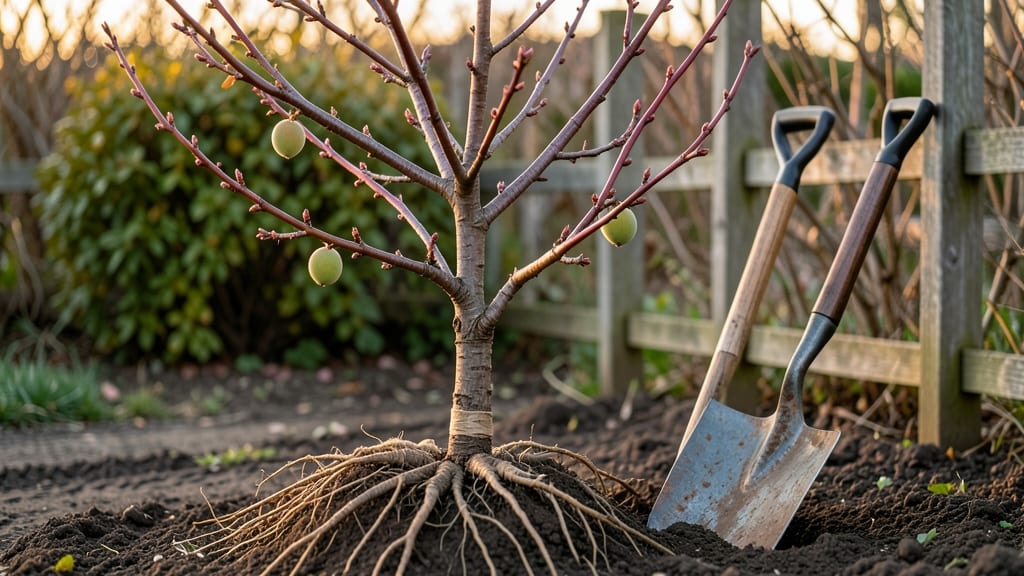
Planting fruit trees in fall means stronger roots and bigger harvests next summer. 🌳 I learned the hard way—spring-planted trees always lagged behind their fall-planted neighbors, no matter how much I watered them.
The secret is simple: cooler soil temperatures and consistent moisture give roots time to establish before winter dormancy kicks in.
You'll need bare-root trees (they're cheaper and transplant better), a shovel, compost, and a 5-gallon bucket of water for each tree. Dig a hole twice as wide as the root ball but only as deep—planting too deep suffocates roots.
Amend the native soil with compost for better drainage and nutrient retention, especially in heavy clay or sandy soils.
By spring, you'll see vibrant new foliage where others struggle, thanks to roots that spread aggressively during winter. Fall-planted trees also handle summer heat better because they've already built a strong foundation. The payoff? Fruit production starts 1-2 years earlier than with spring plantings.
Works in USDA Zones 3-9, though citrus needs winter protection in colder areas. Start now—most nurseries sell bare-root trees in late fall, and planting before first frost gives roots a head start. Here's how to make it foolproof.
📚 In This Guide
- What you need
- Instructions
- Tips and common mistakes
- Wrapping up and next steps
What you need
- ● Fruit tree saplings: 1–5 (depending on variety and space). Choose dormant, bare-root trees (e.g., apple, pear, peach) or potted trees with healthy roots.
- ● Shovel or spade: 1 heavy-duty, 6–8 inches wide for digging holes.
- ● Garden fork or tiller: 1 for loosening compacted soil.
- ● Measuring tape: 1 to ensure proper spacing (typically 15–25 feet apart, depending on tree size).
- ● Compost or well-aged manure: 2–3 gallons per tree to enrich soil.
- ● Organic mulch (e.g., wood chips, straw): 2–3 bags (3–4 inches thick) to retain moisture and suppress weeds.
- ○ Root stimulator (optional but helpful): 1 bottle (e.g., Mycorrhizal fungi or seaweed extract).
- ● Tree stakes & ties (if needed): 2–4 stakes per tree (for young or windy areas).
- ● Watering can or hose with gentle nozzle: 1 for post-planting hydration.
- ● Soil test: Check pH (ideal: 6.0–7.0) and nutrient levels. Adjust with lime (for acidic soil) or sulfur (for alkaline soil) if needed.
- ● Sunlight assessment: Ensure your planting spot gets 6–8+ hours of sun daily (most fruit trees thrive in full sun).
- ● Weather check: Plant 4–6 weeks before first frost (soil should be cool but workable).
- ● Local regulations: Verify if your area requires permits for large trees or specific varieties.
Step-by-step instructions for planting fruit trees in fall
Fall planting gives roots a head start before winter—here's how to do it right.
🌱 Step 1: Choose and Prepare the Planting Site
Select a location with full sun exposure (6-8 hours daily) and well-draining soil. Avoid low spots where water pools after rain. I dig a hole twice as wide as the root ball but only as deep—planting too deep suffocates the graft union if your tree has one.
Test the soil pH with a kit (ideal range is 6.0-7.0 for most fruit trees). Amend heavy clay with 2-3 inches of compost mixed into the bottom of the hole. This improves drainage and provides nutrients for early root growth. Loosen the native soil around the edges with a shovel to encourage root spread.
🌿 Step 2: Handle the Tree and Prepare the Hole
Remove the tree from its container and gently loosen the roots at the edges if they're circling. I always soak the root ball for 1-2 hours before planting to reduce transplant shock. This ensures the roots stay hydrated during the initial shock of moving.
Place the tree in the hole so the top of the root ball sits 1-2 inches above ground level. This prevents settling after watering. If your tree has a graft union (visible bump near the base), position it 2-3 inches above soil line to protect it from moisture damage. Backfill with the amended soil, tamping lightly every 6 inches to eliminate air pockets.
💧 Step 3: Water Thoroughly and Mulch Properly
Water immediately after planting with 10-15 gallons of water, enough to settle the soil completely. I use a garden hose on a slow trickle to avoid erosion. The goal is to saturate the root zone without creating runoff. Let the water soak in, then add another 5 gallons to ensure full penetration.
Apply 2-3 inches of organic mulch (like wood chips) in a ring around the tree, keeping it 6 inches away from the trunk. This conserves moisture and regulates soil temperature. Never pile mulch against the trunk—it traps moisture and invites rot. Replenish mulch annually as it breaks down.
⏰ Step 4: Stake and Protect for Winter
Stake the tree only if necessary—young trees in exposed areas benefit from temporary support. Use two stakes positioned 6 inches from the trunk and tie with soft fabric strips (never wire, which can girdle the bark). Remove stakes after 1-2 growing seasons to encourage natural trunk strength.
Install a tree guard or wrap the trunk with tree wrap to protect against winter sunburn and rodent damage. In colder climates, mound 4-6 inches of soil or mulch around the base for extra insulation. This helps roots survive freezing temperatures while the tree remains dormant.
Tips & tricks for planting fruit trees in fall
Fall planting is your secret weapon for establishing fruit trees that thrive—here's how to maximize your success with these battle-tested insights.
Soil Preparation: The 6-8 hours of daily sunlight is non-negotiable, but soil quality makes the difference between a struggling tree and a thriving one. For heavy clay soils, mix in the 2-3 inches of compost not just at the bottom but throughout the entire hole. This creates a nutrient-rich zone that encourages roots to spread outward rather than circling. I've seen trees planted in amended soil establish 30% faster than those in unamended native soil.
Root Ball Hydration: That 1-2 hour soak before planting is critical—don't skip it! I've made the mistake of planting dry root balls, and the trees always showed signs of transplant shock. For container-grown trees, submerge the entire pot in water for the full 2 hours. This ensures the root ball stays hydrated during the initial shock of moving, giving your tree the best possible start.
Graft Union Protection: When positioning your tree, remember that graft union sits just below the soil line. If your tree has one (most commercial fruit trees do), keep it 2-3 inches above the final soil level. I've seen new gardeners bury graft unions by mistake, which leads to rot and weak growth. A simple trick: Mark the graft union with a piece of tape before planting as a visual reminder.
Watering Strategy: The 10-15 gallons of initial watering needs to penetrate deeply—don't just splash it around. I use a garden hose with a slow trickle setting to avoid erosion while ensuring complete saturation. After the initial soak, let the water fully absorb before adding that final 5 gallons. This two-step process prevents runoff and ensures the entire root zone gets hydrated, not just the surface.
Pro Tips for Planting Fruit Trees In Fall
- Fall planting is your secret weapon for establishing fruit trees that thrive—here's how to maximize your success with these battle-tested insights.
- Soil Preparation: The 6-8 hours of daily sunlight is non-negotiable, but soil quality makes the difference between a struggling tree and a thriving one.
- Root Ball Hydration: That 1-2 hour soak before planting is critical—don't skip it!
Frequently asked questions
Why is fall the best time to plant fruit trees?
Fall planting gives young trees a head start by allowing roots to establish before summer heat. Cooler temperatures reduce transplant shock, while winter dormancy helps trees focus energy on root growth. Plus, spring rains often give newly planted trees a natural water boost!
Can I plant fruit trees in late fall or early winter?
Ideally, plant 4–6 weeks before your first hard frost—typically October to early November in most climates. Late fall planting (December–January) is risky unless your region has mild winters. If planting later, use extra mulch and protect the root ball from freezing temps.
What if my soil is still too warm when I want to plant?
Check soil temps: Aim for 60°F (15°C) or below at 6 inches deep. If soil is too warm, delay planting or amend with compost to cool it faster. Avoid planting in summer heat—transplant shock increases dramatically when roots can’t establish.
Are there fruit trees that don’t do well planted in fall?
Most fruit trees thrive with fall planting, but tropical varieties (e.g., citrus, avocado) prefer spring. Citrus, in particular, struggles with cold dormancy. For these, plant in early spring after the last frost date.
How do I protect my newly planted tree from pests in fall?
Use tree guards or wire mesh to deter rodents and rabbits. Apply organic mulch (straw or wood chips) to deter burrowing pests. Avoid chemical pesticides—focus on physical barriers and healthy soil to boost tree resilience naturally.
Do I need to water fall-planted trees in winter?
Only if your region has dry winters. A deep watering every 4–6 weeks (when soil isn’t frozen) keeps roots hydrated. Mulch heavily (3–4 inches) to retain moisture and insulate roots. Snow cover is a bonus—it acts as natural insulation!
Wrapping up and next steps
Fall is your secret weapon for planting fruit trees—stronger roots, fewer pests, and bountiful harvests await with the right timing and care! By choosing the perfect variety, prepping the soil, and giving your tree the best start, you’re setting the stage for years of delicious fruit. 🌱
Ready to take the next step? Grab your gloves, mark your calendar, and get planting! Before you know it, you’ll be savoring homegrown apples, peaches, or citrus—all because you trusted the dormant season blueprint. Happy growing! 🍎✨