
Pruning
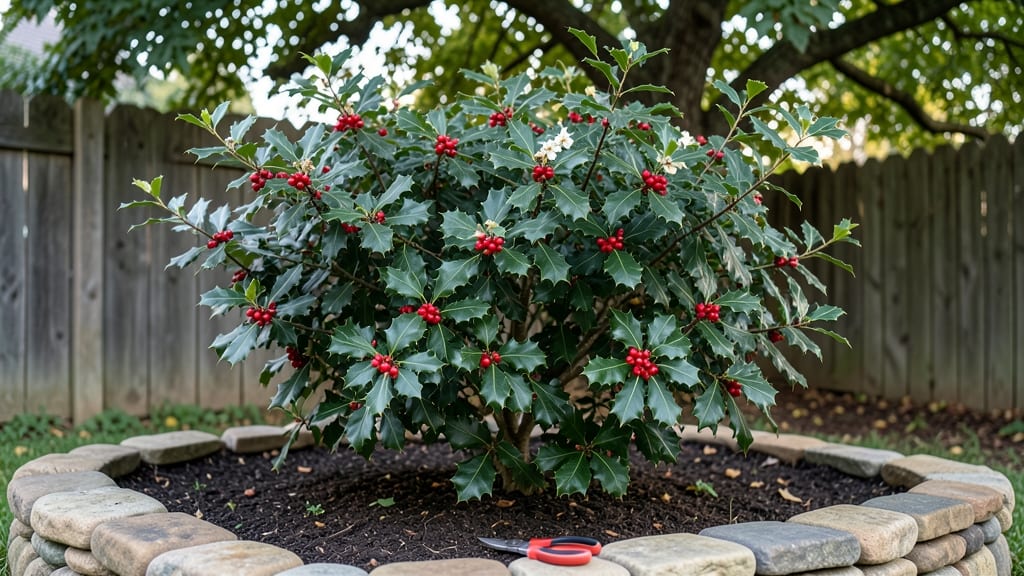
Pointed leaf trees like holly, ginkgo, and pine don’t just add drama to your yard—they create a year-round architectural backbone that stands out in every season. 🌲 I’ve learned the hard way that their sharp, structured shapes need different care than broad-leaf trees, especially when it comes to pruning and placement.
These trees thrive when you respect their natural growth patterns, which means strategic cuts to encourage strong branching rather than hacking away at their signature silhouette.
The key to keeping them healthy starts with the right spot: most pointed leaf trees love full sun to partial shade, well-draining soil, and space to grow without competing with other plants.
Varieties like Emerald Green Arborvitae or Sky Pencil Holly stay compact, while Weeping Blue Atlas Cedar spreads wider—so match the tree to your space. Water deeply once established, but avoid soggy roots, which can invite pests or disease that these trees are surprisingly sensitive to.
Pruning these trees isn’t about shaping them into something unnatural—it’s about guiding their growth to keep branches strong and upright. In late winter or early spring, remove dead or crossing branches first, then thin out crowded areas to improve airflow.
A little maintenance now means you won’t have to wrestle with weak limbs later. The result? A tree that looks effortlessly elegant while standing strong through storms and seasons.
Whether you’re working with a holly’s spiky foliage, a ginkgo’s fan-shaped leaves, or a pine’s needle clusters, the same principles apply: patience, precision, and respect for their natural form.
These trees reward careful attention with decades of drama—so start small, observe how they grow, and let their pointed leaves do the talking.
📚 In This Guide
- What you need
- Instructions
- Tips and common mistakes
- Wrapping up and next steps
What you need
- ● Pruning shears: Bypass shears (for clean cuts on branches up to ½ inch thick)
- ● Loppers: 1 pair (for branches ½ to 1½ inches thick—look for ratcheting or bypass styles)
- ● Pruning saw: 1 lightweight saw (for branches over 1½ inches thick—curved or straight blade preferred)
- ● Gloves: 1 pair of cut-resistant, breathable gardening gloves (size medium/large)
- ● Disinfectant: 70% isopropyl alcohol or rubbing alcohol (1 small bottle)
- ○ Pruning sealant: 1 tube of tree wound sealant (optional but helpful for large cuts)
- ● Extension pole: 1 telescoping pole (6–10 ft) with shears attachment (for high branches)
- ● Work bucket: 1 5-gallon bucket with lid (for collecting debris)
- ● Ladder: 1 sturdy extension or step ladder (rated for your height + weight)
- ● Safety gear: Sunglasses (UV protection)
- ● Long sleeves/pants (to avoid scratches)
- ● Closed-toe shoes (no sandals!)
- ● Sharpener: A file or sharpening stone to keep blades in top condition
- ● Tree bag: 1 mesh pruning bag (to contain debris and protect lawn)
- ● Notebook/pencil: For sketching your tree’s pruning plan before cutting
- ● Water spray bottle: To mist tools and cuts (reduces stress on the tree)
- ● Knee pads: For comfort if you’re working on the ground
How to prune pointed leaf trees for year-round structure
Here’s how I’ve shaped my pointed leaf trees into strong, balanced specimens—no more weak branches or lopsided growth.
🌿 Step 1: Assess Branches in Every Season
Start by examining your tree’s structure in late winter or early spring, before new growth begins. Look for branches that cross or rub against each other—these will weaken over time and create entry points for disease. Pointed leaf trees, like conifers or evergreens, respond best to selective pruning rather than heavy cuts.
Run your hand along the trunk and main branches to feel for any dead, brittle, or diseased wood. Healthy branches should have a firm, flexible feel. Mark these with a white garden marker or small flag so you don’t miss them during pruning. I always prune on a dry, overcast day to reduce stress on the tree.
✂️ Step 2: Make Clean Cuts at the Right Angle
Use sharp, bypass pruners to make cuts just outside the branch collar—the swollen area where the branch meets the trunk. Avoid cutting flush with the trunk, as this can damage the tree’s healing tissue. For branches thicker than ½ inch, use loppers and make the cut at a 45-degree angle to prevent water from pooling on the wound.
If a branch is too large to cut in one go, make a top cut first to reduce weight, then follow with an undercut to avoid tearing the bark. Wipe your tools with rubbing alcohol between cuts to prevent spreading sap-borne diseases. Pointed leaf trees bleed less than deciduous trees, but it’s still good practice to seal larger cuts with pruning sealant if they’re over ¾ inch in diameter.
☀️ Step 3: Shape for Balance and Light Penetration
Step back and visualize the tree’s natural shape—pointed leaf trees often grow in a pyramidal or columnar form. Remove branches that grow straight up (called "water sprouts") or inward, as these create weak points and block sunlight from reaching the lower canopy. Aim to open the center of the tree by thinning out 20-30% of the foliage in dense areas.
For conifers, focus on selective tip pruning to encourage lateral branching. Cut back the topmost ¼ inch of new growth on the outer third of the tree to promote fuller growth. Avoid shearing—it creates a "broom-like" appearance and weakens the tree. Instead, prune one branch at a time, stepping back to check balance after each cut.
🪴 Step 4: Maintain Year-Round with Light Trims
After the initial shaping, perform light maintenance pruning twice a year—once in early summer to remove any suckers or misplaced growth, and again in late fall to tidy up any dead or broken branches from winter storms. Pointed leaf trees grow slowly, so never remove more than 25% of the foliage in a single season—this can shock the tree and leave it vulnerable to pests.
Fertilize lightly in early spring with a slow-release, balanced fertilizer (10-10-10) to support new growth. Water deeply once a week during dry spells, ensuring the root zone stays moist but not soggy. Mulch around the base with 2-3 inches of organic mulch to retain moisture and protect roots from temperature fluctuations.
Tips & tricks for perfectly pruned pointed leaf trees
Transforming your pointed leaf trees into strong, balanced specimens starts with these essential techniques that prevent common mistakes.
Seasonal Timing Matters: The late winter or early spring timing in Step 1 is crucial because it allows you to prune before new growth begins. This timing ensures you're not removing buds that could have developed into new branches. I've seen too many gardeners prune in summer and end up with stunted growth—don't make that mistake! Also, always choose a dry, overcast day to minimize stress on the tree.
Tool Precision Saves Trees: Step 2 emphasizes using sharp bypass pruners, but I'll add this critical detail: clean your tools with rubbing alcohol between cuts to prevent sap-borne disease transmission. For branches thicker than ½ inch, the 45-degree angle isn't just about aesthetics—it prevents water accumulation that leads to rot. I've had to replace pruning sealant twice because I skipped this step on a particularly large cut.
Visual Balance Technique: When shaping in Step 3, step back every few cuts to check balance. Pointed leaf trees should maintain their natural pyramidal form. Here's what I learned the hard way: remove water sprouts (straight-up branches) first—they're the fastest growing and will compete with your shaping efforts. For conifers, that ¼ inch tip pruning on the outer third creates a natural taper that's both beautiful and structurally sound.
Maintenance Schedule: The twice-yearly maintenance in Step 4 works perfectly, but I've found that adding a third light trim in late winter (just before the spring pruning) helps catch any storm damage that might have occurred over winter. Remember that 25% foliage limit—exceeding it can shock even hardy evergreens, so when in doubt, remove less rather than more.
Pro Tips for Pointed Leaf Tree
- Transforming your pointed leaf trees into strong, balanced specimens starts with these essential techniques that prevent common mistakes.
- Seasonal Timing Matters: The late winter or early spring timing in Step 1 is crucial because it allows you to prune before new growth begins.
- Tool Precision Saves Trees: Step 2 emphasizes using sharp bypass pruners, but I'll add this critical detail: clean your tools with rubbing alcohol between cuts to prevent sap-borne disease transmission.
Frequently asked questions
Got questions about keeping your pointed leaf trees healthy with year-round pruning? You’re not alone! Here are some of the most common queries—and their straightforward answers—to help you master the art of strong, sculpted branches.
When is the best time to prune pointed leaf trees for optimal growth?
The ideal timing depends on your goals: light pruning (removing dead or crossing branches) can happen anytime, but heavy shaping is best in late winter or early spring (just before new growth starts). Avoid pruning in fall—it can stimulate tender new growth that won’t survive frost. For evergreens, spread pruning over 2–3 sessions to avoid stress.
How do I know if I’m pruning too much or too little?
Over-pruning shows up as stunted growth, yellowing leaves, or sparse foliage—never remove more than 25% of the tree’s canopy in one session. For pointed leaf trees, aim to thin out (not just top) to improve airflow. Too little? Look for crowded branches, weak structure, or pests hiding in dense areas. Start small and adjust yearly!
Can I prune pointed leaf trees in winter? What about snow-covered branches?
Yes, but with caution! Dormant-season pruning (winter) is safe for deciduous trees, but evergreens may suffer from cold stress if pruned too late. Avoid pruning when snow is heavy on branches—wait until it melts to assess damage. If branches snap under snow, prune only the broken sections to maintain the tree’s natural shape.
What’s the difference between pruning for shape vs. pruning for health?
| Shape Pruning | Health Pruning |
|---|---|
| Focuses on aesthetics—removing branches to enhance the tree’s natural form or create a specific silhouette (e.g., tapered or rounded). | Targets damaged, diseased, or dead wood to prevent pests/disease. Also removes crossing branches or those growing inward. |
| Best done gradually over seasons to avoid shock. | Can be done anytime (even in winter for deciduous trees). |
Pro tip:
Combine both! Start with health pruning, then shape only the remaining branches.
What are some alternatives if my pointed leaf tree isn’t responding well to pruning?
If your tree struggles with pruning, try these low-stress alternatives:
- Thinning shears (instead of lopping) for precise cuts.
- Topiary training (gradual shaping with wire supports).
- Fertilizing (balanced NPK) to boost recovery post-prune.
- Mulching to retain moisture and reduce stress.
Wrapping up and next steps
Mastering the art of pruning pointed leaf trees unlocks their full potential—stronger branches, healthier growth, and stunning year-round shape! 🌿 With the right tools, timing, and techniques, you’re already on the path to becoming a pruning pro. Remember: patience and precision pay off.
Ready to take the next step? Start small—try pruning just one branch this season and observe the difference. Soon, your pointed leaf trees will thrive with confidence, and you’ll be the envy of the neighborhood! 🌟