
Pruning
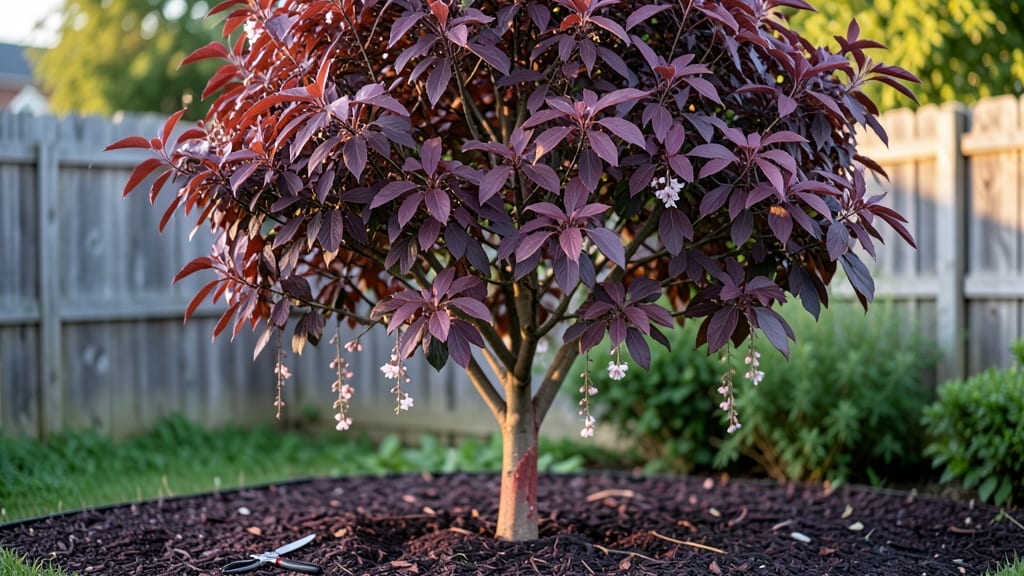
Your purple leaf peach tree won’t just survive winter—it’ll steal the show with deep burgundy foliage that turns golden in fall. 🌿 I’ve pruned mine for five seasons, and the secret isn’t complicated: it’s about timing, shape, and knowing which cuts to make.
Most people overlook the early spring pruning that sets the stage for vibrant color all year.
The key is balancing form and function—this tree can produce fruit, but its real magic is the foliage. You’ll need sharp pruners, a ladder for higher branches, and a clear day to avoid spreading disease.
Start by removing dead wood first, then thin out crowded branches to let light penetrate. The goal? A rounded shape that showcases those stunning leaves.
By summer, you’ll see lush, glossy foliage that darkens to nearly black in cool weather. The tree stays compact enough for small yards but thrives in full sun with well-draining soil. Just watch for peach leaf curl—spray preventatively in early spring—and you’ll keep this beauty looking its best for decades.
Works in zones 5-9, though colder climates may need winter protection. The pruning schedule repeats yearly, but the payoff—year-round interest—makes it worth the effort. Ready to transform your landscape into a foliage showstopper?
📚 In This Guide
- What you need
- Instructions
- Tips and common mistakes
- Wrapping up and next steps
What you need
- ● Pruning shears: Sharp, bypass-style (for clean cuts), or loppers for thicker branches (2–3 pairs).
- ● Hand pruners: Bypass pruners (5–7 inch blades) for precision trimming.
- ● Pruning saw: Curved-tooth (for branches >1 inch thick).
- ● Disinfectant: 70% isopropyl alcohol or bleach solution (1 part bleach to 9 parts water) to sterilize tools between cuts.
- ● Gloves: Heavy-duty gardening gloves (cut-resistant for safety).
- ○ Tree wound dressing: Optional but helpful—use pruning sealant (like Tanglefoot) for large cuts.
- ● Ladder or step stool: Sturdy, 6–8 ft tall (if tree exceeds 6 ft).
- ● Marking twine or flags: Colored twine or bright flags to tag branches for removal.
- ● Extension pole: For high branches (10–15 ft reach).
- ● Sharpie or paint: To mark cuts before pruning.
- ● Compost bin: For collecting pruned branches (great for mulch!).
- ● Safety goggles: To protect eyes from debris.
- ○ Tree growth regulator: Optional—like hormonal rooting powder for grafting (if propagating).
How to prune a purple leaf peach tree for vibrant color all year
This is the pruning method that keeps my purple leaf peach tree's foliage bold and its branches strong.
✂️ Step 1: Prune in Late Winter for Structure
Start your work in late winter—just as buds begin to swell but before any new growth appears. This timing lets you shape the tree while it's dormant, reducing stress. Grab your sharp pruning shears and cut back last year's growth to just above a strong outward-facing bud. I like to make my cuts at a 45-degree angle about ¼ inch above the bud—this prevents water from pooling and rotting the wound.
Remove any dead, diseased, or crossing branches first. These are easy to spot—they're brown, brittle, or growing directly into another branch. Thin out crowded areas to improve airflow, which prevents fungal issues that dull the purple foliage. Aim to open the center of the tree so light reaches all branches evenly. You'll see the tree's natural shape emerge as you work.
✂️ Step 2: Light Summer Pruning for Foliage Health
In early summer, after the tree has finished flowering but before the heat of July, do a light maintenance prune. Focus on suckers—those vigorous shoots growing from the base or along the trunk. These drain energy from the tree and can weaken its vibrant color. Snip them off at the base with clean shears. Also trim any branches that are growing too close together or rubbing against each other.
Here's the thing—purple leaf peach trees produce their best color when they're not overworked. So keep summer cuts minimal. Just remove no more than 10-15% of the tree's foliage. You'll notice the leaves stay a deeper purple when you don't over-prune. If you see any branches with yellowing or sparse leaves, those are candidates for removal—they're not contributing to the tree's dramatic color display.
✂️ Step 3: Fall Cleanup for Winter Readiness
In fall, after leaves have dropped but before hard frosts, do a final cleanup. Remove any dead or diseased branches that might harbor pests over winter. Also trim back any overly vigorous growth that might be too tender for winter. I like to cut these back to a strong lateral branch or bud, keeping the shape open and airy. This prevents snow or ice buildup that can break branches.
Don't skip this step—it's crucial for keeping the tree healthy and colorful next season. After pruning, apply a thin layer of mulch around the base (but not touching the trunk) to protect roots from freezing. Water deeply before the first hard frost to help the tree establish strong roots for spring. You'll see the tree's resilience pay off when those purple leaves reappear next year.
Tips & tricks for perfect purple leaf peach tree pruning
Real talk: Pruning a purple leaf peach tree isn't just about cutting branches—it's about preserving that stunning color and keeping the tree thriving. Here's what nobody tells you that makes all the difference.
Timing Secret: That late winter timing is non-negotiable for Step 1. The buds should be just starting to swell—this is your window to shape the tree while it's dormant. I've learned this the hard way after pruning too early and seeing new growth get damaged by late frosts. If you miss this window, wait until early spring when buds are clearly visible but haven't opened yet. The goal is to avoid stressing the tree when it's actively growing.
Branch Selection Tip: When removing crossing branches in Step 1, always keep the one that grows outward from the center of the tree. This creates an open canopy that lets light reach all branches evenly. I mark my tree with a piece of twine before cutting—it helps visualize the final shape. Remember, you're sculpting, not just hacking. The more open the center, the more vibrant those purple leaves will be all season.
Summer Pruning Strategy: That 10-15% guideline in Step 2 is crucial—it's easy to over-prune when you're excited about summer growth. I use the "hand rule": If I can see more than 10 fingers' worth of leaves when looking at a branch from the ground, it's time to trim. Also, suckers are sneaky—they grow fast! Check your tree every 2-3 weeks in summer to stay ahead of them. These little shoots can drain energy that should go toward maintaining that dramatic purple color.
Fall Cleanup Wisdom: The fall cleanup in Step 3 is where many people make their biggest mistake—they skip it entirely. Don't be that person. I always do a final walkthrough with my pruners in hand, looking for any branches that might be weak or diseased. After pruning, I give the tree a good drink of water (about 10 gallons for a mature tree) to help it recover before winter. This final care makes all the difference for next year's vibrant foliage.
Pro Tips for Purple Leaf Peach Tree
- Real talk: Pruning a purple leaf peach tree isn't just about cutting branches—it's about preserving that stunning color and keeping the tree thriving.
- Timing Secret: That late winter timing is non-negotiable for Step 1.
- Branch Selection Tip: When removing crossing branches in Step 1, always keep the one that grows outward from the center of the tree.
Frequently asked questions
Got questions about keeping your purple leaf peach tree vibrant and healthy? Here are some of the most common ones—plus expert answers to help you prune like a pro!
What’s the best time of year to prune my purple leaf peach tree?
Prune your tree late winter or early spring (before buds swell) to encourage strong growth and stunning foliage. Avoid pruning in fall—it can stimulate late-season growth that’s vulnerable to frost damage. For light shaping, you can also trim in summer, but keep it minimal to avoid stressing the tree.
How much should I trim off my purple leaf peach tree each year?
Aim to remove no more than 25% of the tree’s canopy per year. Over-pruning weakens the tree and reduces fruit production (if you’re growing peaches). Focus on dead, diseased, or crossing branches first, then thin out crowded areas to improve airflow. Pro tip: Use sharp tools to make clean cuts just outside the branch collar!
Will pruning affect my peach harvest if I grow fruit?
Yes—but strategically! Pruning opens the canopy to sunlight, which boosts fruit quality and size. However, avoid heavy cuts during peak fruiting years. Instead, prioritize structural pruning in early years to create a balanced framework. If fruit production drops, you may have pruned too aggressively—adjust next season!
What should I do if my purple leaves turn brown or yellow?
Brown/yellow leaves often signal overwatering, underwatering, or disease. Check soil moisture (it should be damp but not soggy) and ensure proper drainage. Fungal issues (like peach leaf curl) may require copper fungicide treatments in early spring. If branches die back, prune them out immediately to prevent spread.
Can I grow a purple leaf peach tree in a container?
Choose a large pot (at least 20+ gallons) with drainage holes and use well-draining soil. Dwarf varieties (like ‘Bonanza’) thrive in containers. Just remember: Container trees need more frequent watering and may require winter protection in cold climates. Prune lightly to control size—containers limit root growth!
Wrapping up and next steps
Transforming your purple leaf peach tree into a stunning year-round focal point is easier than you think! With the right pruning techniques—like summer thinning, winter shaping, and disease prevention—you’ll unlock vibrant foliage, bountiful fruit, and a healthy, thriving tree.
Whether you’re a pruning pro or just starting, these strategies ensure your tree stays colorful, productive, and resilient for seasons to come.
Ready to roll up your sleeves? Grab your tools, mark your calendar for the next pruning window, and give your purple leaf peach tree the care it deserves. Your future self—and your neighbors—will thank you! 🌿✂️