
Pruning
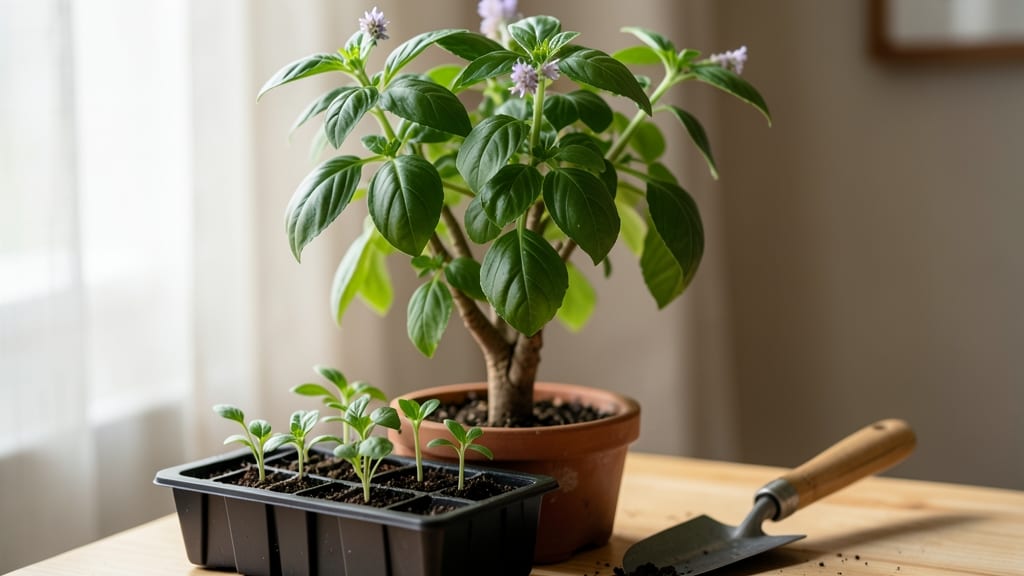
Growing tree basil from seed means fragrant, bushy plants in just 3-4 weeks—not the months you might expect. I’ve started dozens of batches, and the key to fast germination lies in warmth, moisture, and patience (though I’ve learned patience isn’t my strongest suit).
The first true leaves appear within days if you nail the setup, and those leaves smell like a sunlit Italian market before you even transplant.
You’ll need three simple things: a heat mat or warm spot, moist seed-starting mix, and a clear plastic lid or humidity dome. No fancy equipment—just a way to keep soil between 75-85°F and consistent moisture.
Tree basil seeds are tiny and slow to sprout, so don’t be tempted to replant if nothing happens in 10-14 days; they’re just biding their time. Once they break through, they grow fast—too fast to ignore.
The payoff? Plants that reach 2-3 feet tall with glossy leaves perfect for pesto, pestos, or fresh salads. They handle heat better than regular basil and keep producing all season if you prune them right.
The first harvest comes in 6-8 weeks from seed, and you’ll wonder why you ever bought basil from the store again.
Works indoors under grow lights or outdoors after last frost, though seedlings need protection from cold snaps. Here’s how to avoid the pitfalls—like leggy stems or mold—that trip up even experienced growers.
📚 In This Guide
- What you need
- Instructions
- Tips and common mistakes
- Wrapping up and next steps
What you need
- ● Tree basil seeds: 10–20 seeds (choose organic, non-GMO seeds for best results).
- ● Seed-starting trays or small pots: 2–4 (3–4 inches deep) with drainage holes.
- ● High-quality seed-starting mix: 2–3 cups (sterilized, peat-free blend for moisture control).
- ● Grow lights or sunny windowsill: 6+ hours of indirect light daily (south-facing window or LED grow lights).
- ● Spray bottle: 1 (for gentle watering).
- ● Plastic wrap or humidity dome: 1 (to retain moisture during germination).
- ● Plant labels: 2–4 (to track seed varieties).
- ○ Heating mat: 1 (optional for faster germination in cooler climates).
- ● Fertilizer (balanced, water-soluble): 1 small bottle (e.g., 5-5-5 NPK ratio).
- ● Pruning shears: 1 (for future maintenance as your basil grows!).
- ● Transplanting pots or garden bed: 1–2 (5+ gallon size for mature tree basil).
- ● Organic mulch: 1 bag (e.g., straw or coconut coir to retain soil moisture).
Step-by-step instructions for growing tree basil from seeds
Here’s how to jumpstart your fragrant basil garden with speed and confidence.
🌱 Step 1: Prep Seeds and Soil for Optimal Germination
Tree basil seeds germinate quickly when prepped correctly. Soak the seeds in warm water for 12 hours—this softens the outer shell and speeds up sprouting. While they soak, fill your 4-inch pots with moistened seed-starting mix (never garden soil—it’s too dense). Press the mix down lightly so it’s firm but not packed, and create a shallow ¼-inch-deep furrow with your finger.
Use your fingers to place 1-2 seeds per pot along the furrow—planting too many leads to weak, crowded seedlings. Cover them with a thin layer of mix, just enough to hide the seeds. Gently pat the soil to ensure good contact. Here’s the thing—tree basil hates being disturbed, so avoid compacting the soil too much. You want roots to push through easily.
💧 Step 2: Create a Humid, Warm Environment
Place the pots in a clear plastic bag or under a humidity dome to trap warmth and moisture. Tree basil thrives in 70-80°F soil temperatures, so a seedling heat mat set to 75°F gives you the fastest results. Without one, germination may take 10-14 days instead of the 5-7 days you’ll get with warmth.
Check the soil daily—it should stay evenly moist but not soggy. Mist the surface lightly if it feels dry to the touch. Avoid overwatering now; soggy soil invites damping-off, a fungal disease that collapses seedlings overnight. Once you see tiny green sprouts breaking through the soil, remove the bag immediately to prevent mold.
☀️ Step 3: Provide Bright, Indirect Light Immediately
The moment those first true leaves appear (not the initial seed leaves), move the seedlings to a south-facing window or under a grow light. Tree basil needs 6-8 hours of bright, indirect light daily—direct sun at this stage can scorch tender leaves. If your seedlings stretch toward the light with long, pale stems, they’re not getting enough intensity.
Keep the pots within 6 inches of the light source and rotate them quarter-turn daily so they grow straight. You’ll notice strong seedlings have deep green leaves and thick stems—these are your signals everything’s on track. Weak, leggy plants need stronger light or a shorter distance to the source.
🌿 Step 4: Thin and Transplant for Stronger Growth
When seedlings reach 2 inches tall, thin to the strongest plant per pot by snipping the weaker one at the base with clean scissors. This prevents competition for nutrients. If you’re using 4-inch pots, you’ll have room to grow one robust tree basil plant per container—no need to transplant until they outgrow their space.
Fertilize lightly with a balanced liquid fertilizer (like 10-10-10) diluted to half-strength after thinning. Water at the base, avoiding the leaves to prevent disease. Tree basil grows fast, so keep the soil consistently moist but well-drained. You’ll see new leaves emerge within a week—that’s your signal everything is working.
Tips & tricks for perfect tree basil germination
Here's what I learned after growing dozens of batches—these little details make all the difference with tree basil seeds.
Soaking Strategy: The 12-hour soak is non-negotiable for tree basil seeds, but here's the thing—use room temperature water, not hot. Warm water (above 85°F) can actually inhibit germination by cooking the delicate embryos inside. I like to soak mine in a glass jar on my counter overnight, then drain and rinse before planting. The seeds should look slightly plump when ready to plant, not shriveled.
Pot Selection Matters: While 4-inch pots are ideal, you can use any container with drainage as long as it's at least 3 inches deep. I've had great success with recycled yogurt cups with drainage holes punched in the bottom—just make sure the mix doesn't dry out. The key is providing enough room for roots to establish without being too crowded, which can stunt growth.
Light Transition: When you move those first true leaves to bright, indirect light, here's the pro move: place a small mirror nearby to bounce extra light onto your seedlings. This helps create stronger stems from the beginning. I also recommend using a timer for your grow light to ensure consistent 6-8 hours daily—tree basil responds beautifully to predictable light cycles.
Fertilizer Timing: That first feeding after thinning should happen exactly one week after you see new leaves emerge. I've ruined batches by fertilizing too early—tree basil seedlings are sensitive to salt buildup from fertilizer. Use only half-strength solution and water thoroughly before applying to prevent root burn. The soil should stay consistently moist but never soggy after this point.
Pro Tips for Tree Basil Seeds
- Here's what I learned after growing dozens of batches—these little details make all the difference with tree basil seeds.
- Soaking Strategy: The 12-hour soak is non-negotiable for tree basil seeds, but here's the thing—use room temperature water, not hot.
- Pot Selection Matters: While 4-inch pots are ideal, you can use any container with drainage as long as it's at least 3 inches deep.
Frequently asked questions
Got questions about growing tree basil from seeds? You’re not alone! Here are answers to the most common queries to help you cultivate thriving, aromatic plants with ease.
How long does it take for tree basil seeds to germinate?
Tree basil seeds typically germinate within 7–14 days when kept in warm (70–80°F), moist soil. For faster results, soak seeds in warm water for 4–6 hours before planting. Patience is key—consistent moisture and warmth speed up the process!
Can I plant tree basil seeds outdoors in cold weather?
No, tree basil seeds hate cold! Wait until the soil is at least 60°F (15°C) and all frost risk has passed. Start indoors 6–8 weeks before the last frost for a head start. If you’re in a chilly climate, use a seedling heat mat for extra warmth.
What’s the best alternative if my seeds won’t germinate?
If seeds refuse to sprout, try these fixes:
- Fresh seeds: Tree basil seeds lose viability quickly—buy new ones if older than 6 months.
- Scarification: Lightly nick the seed coat with sandpaper to help water penetrate.
- Hormone gel: A rooting gel can boost germination rates for stubborn seeds.
Still stuck? Consider transplanting a young tree basil plant from a nursery instead!
Why are my tree basil seedlings turning yellow or wilting?
Yellowing or wilting seedlings usually signal overwatering, underwatering, or poor drainage. Check soil moisture—it should stay consistently damp but not soggy. Ensure pots have drainage holes, and avoid cold drafts. If leaves curl, it may be heat stress—move seedlings to indirect light.
Can I grow tree basil seeds in small containers or just a garden?
Tree basil thrives in small pots (5+ inches deep) with good drainage. Use well-draining potting mix and fertilize lightly every 2–3 weeks. For gardens, space seedlings 12–18 inches apart in full sun. Just avoid overcrowding—they need room to grow!
Wrapping up and next steps
Growing tree basil from seeds is a rewarding journey that brings fragrant, fast-growing herbs right to your kitchen! With the right tree basil seeds, patience, and a few simple steps—like proper soil, warmth, and consistent moisture—you’ll soon enjoy lush, aromatic plants perfect for cooking or garnishing.
Whether you’re a seasoned gardener or just starting, this method makes it easy to cultivate a thriving basil harvest.
Ready to green your space? Grab those seeds, follow your germination blueprint, and watch your basil flourish! 🌱 For extra tips, experiment with pruning techniques to keep your plant bushy and productive—happy growing!