
Trees
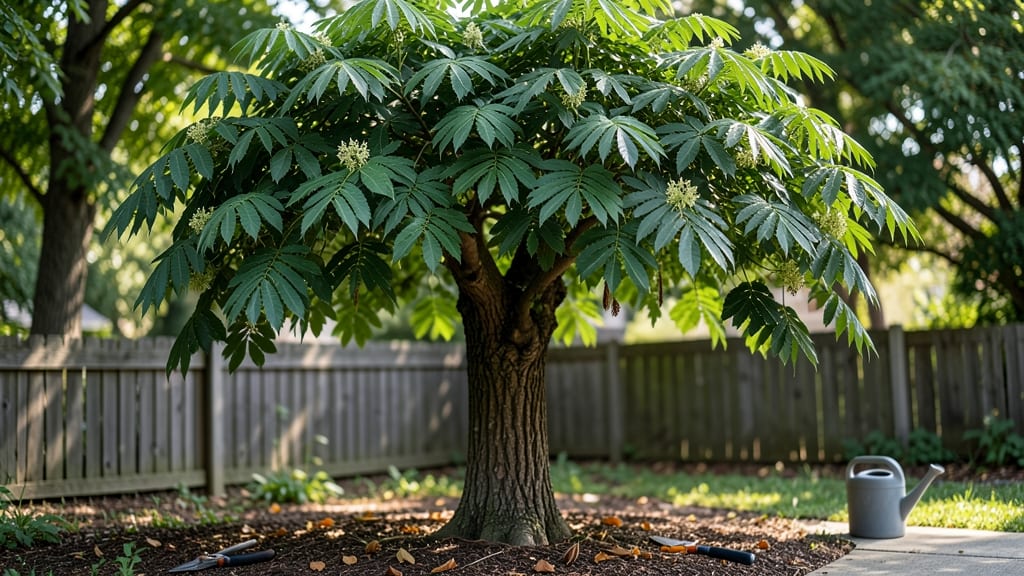
Stunning tree of heaven images might inspire you to plant one—but its rapid spread and invasive roots will quickly turn admiration into regret. 🌿 I planted one as a quick shade solution years ago, only to watch it spread aggressively beyond its intended space.
The compound leaves and winged samaras are striking, but they also signal how fast this tree colonizes.
Its dramatic height and air-purifying qualities make it a favorite for urban settings, though it thrives best in Zones 4-9. The tree’s ability to grow in poor soil and tolerate pollution explains why it’s so common in cities.
That said, its rapid spread means it’s best suited for large properties or areas where containment isn’t a concern.
You’ll love the Tree of Heaven’s bold presence—its lush foliage turns golden in fall, and the scent of its summer flowers is unforgettable. But be prepared for its tenacious growth habits, which can overwhelm smaller gardens.
If you’re considering one, plan for regular pruning and monitoring to keep it in check.
For those in the right climate, it’s a dramatic addition that offers shade, wildlife benefits, and striking visual interest. Just approach it with caution—this isn’t a tree for the faint of heart. Here’s what you need to know before planting.
📚 In This Guide
- What you need
- Instructions
- Tips and common mistakes
- Wrapping up and next steps
What you need
- ● Camera: DSLR or mirrorless with interchangeable lenses (e.g., Canon EOS R5, Sony A7 III, or Nikon Z6 II).
- ● Lenses: Wide-angle lens (e.g., 16-35mm) for dramatic canopies.
- ● Macro lens (e.g., 100mm) for intricate details like seed pods or bark.
- ● Tripod: Sturdy (e.g., Manfrotto MT055CXPRO3) for low-light or long-exposure shots.
- ○ Remote shutter: Optional but helpful for reducing camera shake.
- ● Gloves: Heavy-duty (e.g., Mechanix Wear) to avoid skin irritation from sap.
- ● Closed-toe shoes: Sturdy boots or hiking shoes for uneven terrain.
- ● Insect repellent: DEET-based for protection against pests near dense foliage.
- ● Water & snacks: Hydration is critical during outdoor shoots.
- ● Editing software: Adobe Lightroom Classic, Photoshop, or free alternatives like Darktable.
- ● Color grading tools: LUTs or presets for a cinematic look (e.g., Tree of Heaven’s golden hues).
How to identify and manage tree of Heaven growth patterns
This fast-growing tree creates stunning autumn foliage but demands careful management to prevent spread.
🌿 Step 1: Recognize the Tree's Signature Features
The Tree of Heaven (Ailanthus altissima) has compound leaves with 7-13 leaflets arranged alternately along stems. Each leaflet is 1-3 inches long, oval-shaped, and emits a strong, unpleasant odor when crushed—this is your first clue. The bark is smooth and gray when young but develops deep furrows as it matures.
Look for its dramatic canopy in late summer, when leaves turn a brilliant golden-yellow before dropping. The tree produces clusters of small, greenish flowers in early summer that develop into winged seed pods resembling tiny helicopters. These pods are how the tree spreads aggressively.
🌱 Step 2: Assess Growth Habit and Spread Potential
Tree of Heaven grows 3-5 feet per year under ideal conditions, making it one of the fastest-growing trees in its range. It thrives in full sun to partial shade and tolerates poor soil, urban pollution, and drought once established. The roots spread horizontally, sending up suckers that create dense thickets.
Here's the thing—this tree doesn't play nice. If you spot it near your property, check for sprouts along fences, sidewalks, or driveways. The roots can extend 20-30 feet from the parent tree, so removal requires digging deep. I've seen entire yards taken over in just 3-5 years if left unchecked.
✂️ Step 3: Implement Control Measures for Existing Trees
For mature trees you want to keep, prune in late winter or early spring before new growth begins. Remove suckers at the base immediately—they'll regrow if left alone. I like to use gloves and long sleeves when working with this tree because the crushed leaves cause skin irritation for some people.
If the tree is in a landscape you want to preserve, mulch heavily with 3-4 inches of wood chips to suppress suckers. Water deeply once a week during dry spells to encourage strong root growth, which helps the tree compete with weeds. But be warned—this only works if you're vigilant about removing new shoots.
🪴 Step 4: Eradicate Unwanted Growth Completely
For trees you want to remove, cut the trunk at ground level in early spring when sap flow is minimal. Apply horticultural vinegar (a 20% acetic acid solution) directly to the stump to kill remaining root tissue. I've found that repeating this treatment every 2 weeks for 3-4 months prevents regrowth from the roots.
Dig out any remaining root fragments—even small pieces can sprout. For large infestations, consider herbicide treatment with triclopyr (follow label instructions carefully). This is the nuclear option, but sometimes necessary when the tree has taken over an entire area. Always wear protective gear when handling chemicals.
Tips & tricks for managing tree of Heaven growth
Real talk: This tree's beauty comes with a serious commitment to control. Here's how to handle it like a pro—without losing your yard to invasive suckers.
Leaf Inspection Tip: When identifying Tree of Heaven, crush a few leaves between your fingers. That distinctive rotten peanut butter smell is your first clue—it's how I always confirm it's not a lookalike species. The 7-13 leaflets arranged alternately are another dead giveaway. I've seen people mistake it for sumac, but sumac leaves have serrated edges and a different growth habit.
Pruning Strategy: In Step 3, when you're pruning in late winter or early spring, focus on removing suckers at the base first—they're the tree's way of taking over. I recommend using pruning shears with a 10-inch reach to get those hard-to-reach shoots. After cutting, apply a copper-based fungicide to the wounds to prevent disease. This is especially important if you're working with multiple trees.
Mulching Technique: For the 3-4 inches of wood chips mentioned in Step 3, I prefer using cedar mulch because it naturally repels pests while suppressing weeds. Keep the mulch 3 inches away from the tree trunk to prevent rot. Water immediately after applying to help it settle properly. This creates a barrier that makes it harder for suckers to break through.
Chemical Application: When using horticultural vinegar for stump treatment in Step 4, apply it on a dry, windless day to prevent drift. I like to use a paintbrush applicator for precise control—it helps the vinegar penetrate deep into the stump's tissue. Always wear gloves, goggles, and long sleeves when handling chemicals, especially if you're treating multiple stumps.
Pro Tips for Tree Of Heaven Images
- Real talk: This tree's beauty comes with a serious commitment to control.
- Leaf Inspection Tip: When identifying Tree of Heaven, crush a few leaves between your fingers.
- Pruning Strategy: In Step 3, when you're pruning in late winter or early spring, focus on removing suckers at the base first—they're the tree's way of taking over.
Frequently asked questions
Got questions about the Tree of Heaven? You’re not alone! Here are some of the most common inquiries—plus quick, actionable answers to help you navigate its stunning beauty and tricky traits.
Is the Tree of Heaven really invasive? How do I control it?
The Tree of Heaven (Ailanthus altissima) is infamous for its aggressive spread. Its roots and seeds take over quickly, crowding out native plants. To control it, cut stumps immediately after pruning (they resprout fast!) and apply glyphosate or vinegar-based herbicides. For large infestations, consider professional removal—it’s worth the effort to protect your yard’s ecosystem. Pro tip: Wear gloves; its sap can irritate skin!
How fast does the Tree of Heaven grow? Can I plant one in a small yard?
This tree is a speed demon—growing 3–5 feet per year under ideal conditions! While its rapid growth is impressive, it’s not ideal for small spaces. Its sprawling roots and dense canopy can overwhelm tight yards. If you’re set on planting one, choose a large property or opt for a controlled container setup (though long-term containment is tricky).
What does the Tree of Heaven look like in winter? Does it lose its leaves?
In winter, the Tree of Heaven’s compound leaves turn brown and drop, but its zigzag branches and distinctive bark (with diamond-shaped plates) remain striking. The seed pods (resembling tiny dragon scales) also stay on the tree until spring. If you love its year-round structure, it’s a unique addition—but beware of its invasive nature!
Are there non-invasive alternatives with similar dramatic foliage?
If you love the Tree of Heaven’s bold, fern-like leaves but want a tamer option, consider these native or low-spread alternatives:
- Ginkgo Tree – Disease-resistant, golden fall foliage, and non-invasive.
- Black Walnut – Stunning height and canopy (though it has allelopathic roots).
- Southern Magnolia – Glossy leaves, fragrant flowers, and slower growth.
- Hackberry – Tolerates urban conditions and has unique bark.
For smaller spaces, try Japanese Zelkova or Smoketree—both offer texture without the chaos.
Why does my Tree of Heaven have yellow leaves? Is it dying?
Yellow leaves on a Tree of Heaven usually signal stress, often from:
- Overwatering – Its roots need drainage; soggy soil causes root rot.
- Pests – Spider mites or scale insects suck sap, turning leaves yellow.
- Nutrient deficiency – Fertilize with balanced 10-10-10 in early spring.
- Disease – Anthracnose or powdery mildew thrive in humid climates.
If the issue persists, prune affected branches and monitor. A healthy Tree of Heaven should bounce back quickly!
Wrapping up and next steps
The Tree of Heaven (Ailanthus altissima) is a striking yet controversial tree—its dramatic canopy and fast growth make it a unique addition to landscapes, but its invasive nature demands careful consideration.
Whether you're admiring its striking foliage or managing its spread, understanding its visual and ecological impact empowers you to make informed decisions.
Ready to explore more? Dive deeper into native alternatives or invasive species management strategies—your garden (or curiosity) will thank you! 🌳✨