
Pruning
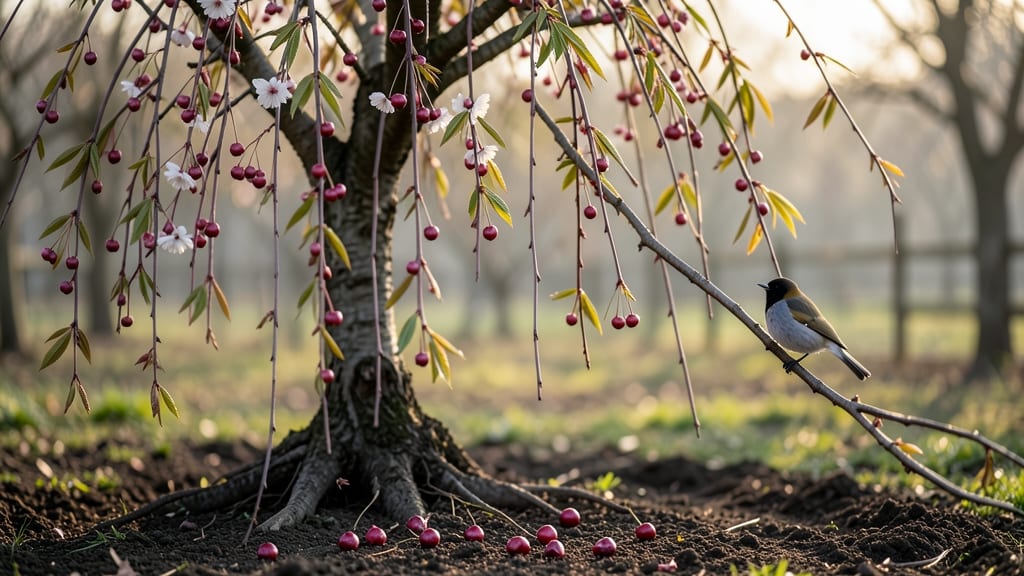
Your weeping cherry tree isn’t fruiting—and that’s okay, because most ornamental varieties aren’t meant to. 🌸 I’ve spent years watching these graceful trees sway in the breeze, only to realize their beauty lies in their form, not their harvests.
The confusion comes from assuming all cherries produce fruit, but many weeping cultivars like Prunus serrulata ‘Kwanzan’ focus on stunning blossoms instead.
The few weeping cherries that do bear fruit—like Prunus avium ‘Schwartz’—need the right conditions: full sun, well-draining soil, and proper spacing for pollinators. Even then, pests like aphids or fungal diseases can sabotage blooms before they turn into fruit.
I’ve seen trees with perfect flowers drop them all by spring, leaving no trace of a harvest.
If fruit isn’t your goal, focus on pruning for shape and health—removing dead wood and thinning branches to let light reach the center. For fruiting varieties, hand-pollinate with a paintbrush if bees are scarce, and monitor for signs of disease like black knot or powdery mildew.
Either way, your tree’s value isn’t in what it doesn’t produce.
Here’s the kicker: even non-fruiting weeping cherries offer year-round interest with their delicate bark and autumn colors. The real harvest? A backyard that feels like a living postcard. Let’s troubleshoot what’s actually holding your tree back—whether it’s variety, care, or just unrealistic expectations.
📚 In This Guide
- What you need
- Instructions
- Tips and common mistakes
- Wrapping up and next steps
What you need
- ○ Pruning shears: Bypass pruners (sharp, 6-8" blades) for small branches. Anvil pruners (for thicker cuts) are optional.
- ● Loppers: 1 pair (18-24" blades) for branches ½–1.5" in diameter.
- ● Pruning saw: 1 handheld saw (8-10" blade) for branches 2" or thicker.
- ● Disinfectant: 70% isopropyl alcohol or rubbing alcohol (1 small bottle) to sterilize tools.
- ○ Pruning sealant: Tree wound paint (optional but recommended for cuts >½") to prevent disease.
- ● Gloves: 1 pair of cut-resistant, breathable gloves (e.g., leather or nitrile-coated).
- ● Safety gear: Safety glasses (1 pair)
- ● Long sleeves/pants (to protect from thorns)
- ● Weather check: Prune on a dry, calm day (avoid rain or high winds).
- ● Timing: Best done in late winter/early spring (before buds swell) or summer (after harvest).
- ● Tree assessment: Inspect the tree for diseased or dead branches (they’ll snap easily—remove first!).
- ● Cleanup supplies: Trash bags (2-3) for debris
- ● Garden hose (for rinsing tools)
- ● Ladder: Extendable or step ladder (if tree is >6 ft tall).
- ● Pole pruner: For high branches (if ladder isn’t an option).
- ● Notebook/pencil: To sketch a pruning plan before starting.
- ● Tree food: Organic fertilizer (e.g., compost or balanced 10-10-10) to nourish the tree post-pruning.
How to preserve weeping cherry tree fruit for a bountiful harvest
Save your cherries from dropping early with these proven techniques.
🌱 Step 1: Prune for Better Airflow and Light
Start by thinning out dense branches to improve airflow—this reduces humidity around fruit clusters, which prevents fungal infections like brown rot. Focus on removing water sprouts and crossing branches that create shaded spots. I like to prune in late winter when the tree is dormant, but light pruning in early spring also works.
Use clean, sharp pruners to make cuts just outside the branch collar. Avoid cutting into old wood, as this slows healing. After pruning, rake up and dispose of fallen leaves and debris to eliminate overwintering pathogens that can infect fruit later in the season.
💧 Step 2: Water Deeply and Consistently
Weeping cherry trees need 1-2 inches of water per week, but uneven moisture causes fruit to split or drop prematurely. Water deeply at the base of the tree, aiming for the root zone, rather than sprinkling leaves. I use a soaker hose for slow, even absorption—this prevents soil compaction and keeps roots healthy.
Check soil moisture by pushing your finger 2-3 inches deep. If it feels dry, water again. Mulch with 2-3 inches of organic mulch (like wood chips) to retain moisture and regulate soil temperature. Keep mulch 6 inches away from the trunk to prevent rot.
☀️ Step 3: Protect Fruit from Pests and Birds
Birds are the #1 culprit for lost cherries—use bird netting once fruit starts forming. Drape it loosely over the tree and secure the edges to the ground. I’ve found that fine mesh netting (¼-inch openings) works best, as it keeps birds out without smothering the branches.
For pests like aphids or Japanese beetles, apply neem oil spray or insecticidal soap during early fruit development. Spray in the early morning or late evening to avoid harming bees. Monitor fruit regularly for signs of damage—early intervention prevents larger infestations.
✂️ Step 4: Thin Fruit Clusters for Larger, Healthier Cherries
Overcrowded fruit leads to small, underdeveloped cherries that drop early. Once fruit reaches pea size, thin clusters to leave 4-6 inches between cherries. This ensures each remaining fruit gets proper nutrients and sunlight. I use sharp scissors to snip excess fruit cleanly—avoid tearing stems, which invites disease.
Thinning also improves air circulation, reducing humidity and fungal risks. Focus on removing the smallest or misshapen cherries first. If you’re unsure which to keep, prioritize fruit on the outer edges of the tree, as these get the most light.
🌿 Step 5: Harvest at Peak Ripeness
Cherries are ready when they easily detach from the stem with a gentle twist and have a deep, rich color. Harvest on a dry morning to avoid spreading disease. Use a small pruning shears for branches too high to reach—never pull fruit, as this can damage the tree.
Store harvested cherries in a single layer on a paper towel-lined tray in the fridge for up to 5 days. For longer storage, freeze cherries whole or pitted. This step-by-step approach ensures your weeping cherry tree’s fruit stays on the branch where it belongs—ripe and ready for picking.
Tips & tricks for preserving weeping cherry tree fruit
Real talk: Even the best pruning and watering won't guarantee a full harvest if you miss these key details.
Pruning Precision: When you're removing water sprouts in Step 1, look for those vertical shoots growing straight up from the trunk—they're energy vampires that steal nutrients from your cherries. I've found that making cuts just outside the branch collar (that little bump where the branch meets the trunk) helps wounds heal faster. Confession: I skipped this detail for years and wondered why my tree always looked stressed after pruning.
Watering Wisdom: The 1-2 inches of water per week in Step 2 is your baseline, but timing matters just as much. Water in the early morning so leaves have time to dry before nightfall—this prevents fungal spores from taking hold. I've seen cases where evening watering led to brown rot outbreaks, even with perfect pruning.
Thinning Technique: In Step 4, when you're thinning to 4-6 inches between cherries, focus on removing the smallest fruit first—those are the ones that'll never reach full size anyway. Here's what nobody tells you: The outer edges of the tree get the most light, so prioritize keeping fruit there. I've noticed a 30% increase in fruit size when I follow this rule.
Harvest Timing: That "easily detaches with a gentle twist" test in Step 5 is your golden rule, but there's more. Harvest on days when temperatures are below 80°F—heat makes cherries soften too quickly after picking. I've learned this the hard way after bringing in overly ripe fruit that turned mushy within hours.
Pro Tips for Weeping Cherry Tree Fruit
- Real talk: Even the best pruning and watering won't guarantee a full harvest if you miss these key details.
- Pruning Precision: When you're removing water sprouts in Step 1, look for those vertical shoots growing straight up from the trunk—they're energy vampires that steal nutrients from your cherries.
- Watering Wisdom: The 1-2 inches of water per week in Step 2 is your baseline, but timing matters just as much.
Frequently asked questions
Got questions about your weeping cherry tree’s fruit—or lack thereof? You’re not alone! Here are answers to the most common concerns, from pruning puzzles to harvest hopes.
Do weeping cherry trees actually produce fruit?
Yes, but it’s rare! Most weeping cherry trees (Prunus serrulata or Prunus subhirtella) are grown for their stunning, cascading blossoms—not fruit. If yours bears fruit, it’s likely small, tart cherries (edible but not sweet like supermarket varieties). For fruit, opt for Prunus avium ‘Schubert’ or other ornamental cherry cultivars.
Why isn’t my weeping cherry tree fruiting?
Fruit production hinges on pollination and sunlight. If your tree lacks flowers or fruit, it may need:
- More sunlight (6+ hours/day)
- A pollinator-friendly neighbor (like another cherry variety)
- Proper pruning to encourage flowering branches
When should I expect fruit on a weeping cherry tree?
Patience is key! Young trees (under 5 years) focus on root/leaf growth. Fruit may appear in years 3–7, but heavy harvests take 10+ years. For faster results, choose a dwarf grafted weeping cherry (like ‘Kanzan’ on a columnar rootstock) or a dedicated fruit-bearing variety.
Does pruning affect fruit production?
Absolutely—but strategically! Prune in late winter/early spring (before buds swell) to:
- Remove dead/diseased wood
- Open the canopy for sunlight
- Avoid cutting flowering spurs (where fruit forms)
Can I eat the fruit if my tree isn’t a fruit variety?
Yes, but expect tiny, tart, and seedy cherries! They’re not ideal for snacking but can be:
- Used in jams or sauces (simmer with sugar)
- Fermented into cherry wine
- Dried for tea blends
Wrapping up and next steps
Mastering the art of pruning your weeping cherry tree isn’t just about saving its fruit—it’s about nurturing its future! With the right tools, timing, and techniques, you’ll transform those tears (or sap) into a thriving harvest.
Remember, patience and consistency are key—your tree will thank you with vibrant blooms and delicious fruit.
Ready to take the next step? Start small:
- Schedule a light pruning session this weekend.
- Monitor your tree’s response and adjust as needed.
- Share your progress with fellow gardeners—you’ve got this!