
Pruning
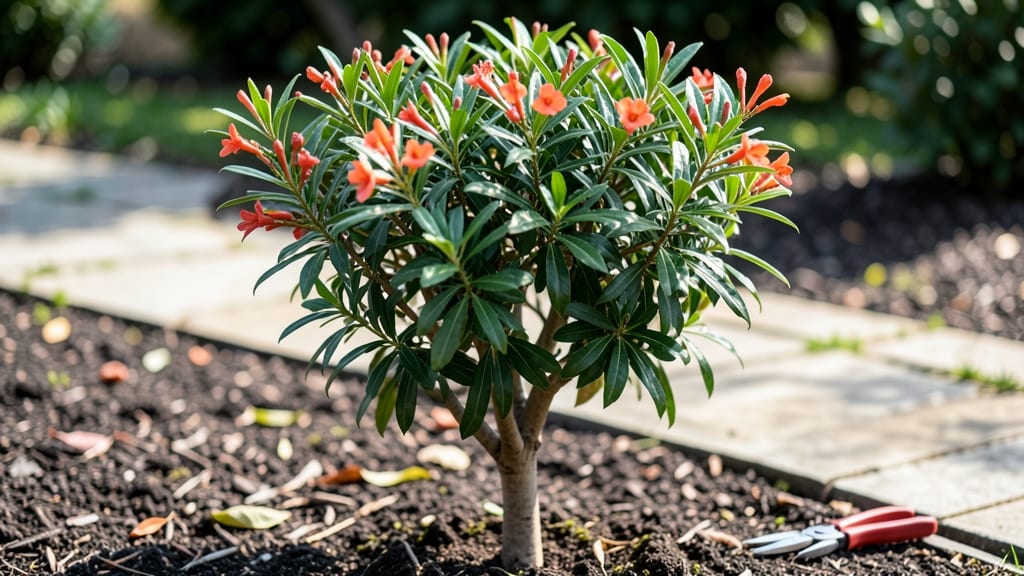
Your young pomegranate tree can produce heavy fruit loads in just two seasons if you master dormant-season care. 🌱 I learned this the hard way—my first tree bloomed beautifully but dropped fruit because I ignored winter prep.
The secret lies in strategic pruning, soil protection, and watering adjustments that most guides skip.
Dormant season isn’t about neglect—it’s about setting up next year’s harvest. Start with clean pruning cuts to remove dead wood, then apply a 2-inch mulch layer to insulate roots.
Pomegranates hate soggy roots in winter, so improve drainage if your soil stays damp. A light winter watering every 3-4 weeks keeps roots from drying out while preventing rot.
By spring, your tree will burst with vibrant green growth and heavy flower clusters—the foundation for your first real harvest. The key is balancing pruning (never cut more than 25% of the tree) and protecting against late frosts.
With these adjustments, you’ll see fruit set double compared to neglected trees.
This method works for Zone 7-10 climates—adjust timing slightly for cooler regions. The same principles apply whether you’re growing in containers or in-ground. Let’s get that tree ready for its first bountiful season.
📚 In This Guide
- What you need
- Instructions
- Tips and common mistakes
- Wrapping up and next steps
What you need
- ● Pruning shears – Bypass type, sharp, and sanitized (1 pair). Pro tip: 💡 Disinfect with rubbing alcohol between cuts to prevent disease!
- ● Loppers – 16-20” reach, for thicker branches (1 pair).
- ● Hand pruners – For precision cuts (1 pair, <5” blade).
- ● Gloves – Thick, cut-resistant (1 pair).
- ● Rag or paper towels – For wiping sap (1 roll or pack).
- ● Ladder or step stool – If tree exceeds 6’ tall (1 unit).
- ● 5-gallon bucket – For collecting pruned branches (1 bucket).
- ● Pruning sealant – For large cuts >1” diameter (1 small bottle).
- ○ Marking spray – To flag cuts (optional for complex pruning).
- ● Safety goggles – If working in windy conditions (1 pair).
- ● Notebook & pen – To sketch your tree’s structure before/after.
- ● ✅ Dormant season timing – Prune after leaf drop but before new growth (late winter/early spring).
- ● ✅ Weather check – Choose a dry, calm day (no rain forecasted for 24 hours).
- ● ✅ Tree health assessment – Inspect for pests/disease before pruning.
Step-by-Step guide to winter care for a young pomegranate tree
Here's how to protect and prepare your young pomegranate for a fruitful spring—without overwintering mistakes.
🪴 Step 1: Prune for Structure and Airflow
Start by removing any dead, diseased, or crossing branches with clean, sharp pruners. I focus on opening the center of the tree to improve airflow—this prevents fungal issues that plague young pomegranates. Cut just outside the branch collar, never leaving stubs, which invite rot.
Next, shape the tree by selectively thinning branches to encourage a strong framework. Aim for an open vase shape with 5-7 main scaffold branches. Pomegranates fruit on new growth, so avoid heavy pruning—just enough to create an airy structure. You'll see new buds forming along these branches by late winter.
✂️ Step 2: Apply Dormant Season Fertilizer
Spread a 10-10-10 balanced fertilizer evenly around the root zone, following package directions for your tree's size. Pomegranates are heavy feeders, but overdoing it now can stress young roots. I like to mix in a handful of compost to improve soil structure while feeding.
Water deeply after fertilizing to help nutrients penetrate the soil. The goal is to wake up the roots gently—you'll see fresh green growth in early spring as a sign you've done it right. Avoid high-nitrogen fertilizers; they encourage leafy growth at the expense of fruit buds.
☀️ Step 3: Protect from Cold Snaps
Wrap the trunk with tree wrap or burlap to prevent sunscald and rodent damage. Young bark is tender and can crack in freeze-thaw cycles. I also mound 6-8 inches of mulch around the base, keeping it 2-3 inches away from the trunk to prevent rot.
For areas with hard freezes below 20°F, drape frost cloth loosely over the tree. Avoid plastic—it traps moisture and can cause more harm. Check weekly during cold snaps to ensure the cover isn't pressing on branches. Healthy buds will swell by early spring, signaling successful protection.
💧 Step 4: Monitor Soil Moisture Without Overwatering
Pomegranates are drought-tolerant but still need consistent moisture in winter. Water every 2-3 weeks if rainfall is scarce, checking that the soil is dry 2-3 inches deep before watering again. Overwatering now leads to root rot, which is deadly for young trees.
I use a moisture meter to avoid guesswork—when the reading drops below 30%, it's time to water. Focus on deep, slow watering to encourage roots to grow downward. You'll see the tree's resilience in spring when it bursts with new growth instead of struggling with weak, shallow roots.
⏰ Step 5: Plan for Early Spring Growth
As temperatures rise above 50°F, remove winter protections gradually. Start by unwrapping the trunk and letting the tree acclimate to sunlight. I remove frost cloth on mild days to prevent sudden temperature shock. Watch for the first signs of bud swell—this is your cue to stop all winter care and shift to spring prep.
This is the moment that matters: when buds begin to plump, apply a second light fertilizer (half the dormant dose) to fuel early growth. You'll see the first flush of leaves in 4-6 weeks, signaling your tree is ready for its first fruit set. The key is patience—rushing spring care leads to weak, unproductive growth.
Tips & tricks for young pomegranate tree winter care
Winter prep makes all the difference for your young pomegranate's fruit potential next season. Here's what I've learned from years of trial and error.
Pruning Precision: In Step 1, when shaping your tree, look for branches growing inward—these are the first to remove. I use a small notepad to sketch my cuts before making them, which helps visualize the open vase shape. Remember, pomegranates fruit on new growth, so avoid cutting back more than 20% of the tree's canopy. Over-pruning now means fewer fruit buds in spring.
Fertilizer Timing: The dormant season fertilizer in Step 2 should be applied when soil temperatures drop below 60°F—this is when roots are semi-dormant but still absorbing nutrients. I like to add a handful of compost to the fertilizer mix, but only if my soil is sandy or clay-heavy. For heavy clay soils, I spread a 1-inch layer of compost over the root zone separately to improve structure without over-feeding.
Cold Protection Strategy: For the 20°F protection in Step 3, I've found that wrapping the trunk with tree wrap creates a microclimate that prevents sunscald. The mulch ring should extend beyond the drip line of the tree—not just the trunk area. I use straw mulch because it breaks down slowly, adding organic matter to the soil. For extreme cold snaps, I add an extra layer of frost cloth, but I always secure it loosely so it doesn't damage emerging buds in spring.
Spring Transition Cues: The 50°F threshold in Step 5 is your first signal to start unwrapping, but I wait until daytime highs consistently reach 55°F before removing frost cloth completely. This gradual acclimation prevents shock to tender new growth. I mark my calendar with the last expected frost date in my zone, which helps me time the second fertilizer application perfectly for early spring growth.
Pro Tips for Young Pomegranate Tree
- Winter prep makes all the difference for your young pomegranate's fruit potential next season.
- Pruning Precision: In Step 1, when shaping your tree, look for branches growing inward—these are the first to remove.
- Fertilizer Timing: The dormant season fertilizer in Step 2 should be applied when soil temperatures drop below 60°F—this is when roots are semi-dormant but still absorbing nutrients.
Frequently asked questions
Got questions about nurturing your young pomegranate tree? You’re not alone! Here are answers to the most common concerns—whether you’re troubleshooting, planning, or just curious about the best practices for a fruitful harvest.
How do I know when my young pomegranate tree is truly dormant?
A pomegranate tree is dormant when its leaves have fallen, new growth has stopped, and temperatures consistently drop below 40°F (4°C) at night. In most climates, this happens in late fall or winter. Pro tip: Wait until after the first hard frost for pruning—this ensures the tree isn’t stressed by late-season growth spurts.
Should I prune my young pomegranate tree in winter, or is spring better?
Winter (dormant season) is ideal for structural pruning to shape the tree and remove dead wood. However, light pruning to thin out crowded branches can also happen in late winter or early spring (before buds swell). Avoid heavy pruning in spring—it can delay fruit production. Key: Focus on opening the canopy for airflow and sunlight.
My young pomegranate tree isn’t producing flowers or fruit—what’s wrong?
Patience is key! Young trees (under 3–5 years) often prioritize root and branch growth over fruiting. If it’s older, check for:
- Insufficient sunlight: Pomegranates need 6+ hours of direct sun daily.
- Over-fertilizing with nitrogen: Too much greenery = fewer flowers. Use a balanced 10-10-10 or low-nitrogen fertilizer in early spring.
- Poor pollination: Hand-pollinate with a small brush if bees are scarce.
Can I prune a young pomegranate tree in cold climates (Zone 7 or lower)?
Yes, but time it carefully! Prune after the ground freezes (to avoid attracting pests) but before a late-winter thaw. Use sharp, sterilized tools, and avoid heavy cuts—pomegranates are somewhat cold-hardy, but never prune in freezing temps (below 20°F/-7°C). Tip: Wrap fresh cuts with tree sealant to prevent moisture loss.
Are there alternatives to pruning if I’m overwhelmed?
If pruning feels daunting, focus on selective thinning:
- Remove only dead, diseased, or crossing branches.
- Let the tree grow naturally for 1–2 years while you learn its habits.
- Use organic mulch (like straw) to protect roots and reduce stress.
Wrapping up and next steps
Growing a thriving young pomegranate tree during dormancy is all about balance—pruning to shape its future while preserving its strength. By following the right techniques, you’ll set the stage for bountiful harvests in the years ahead. 🌱✨
Now that you’re armed with the knowledge, roll up your sleeves and give your tree the care it deserves. Start by marking your calendar for next year’s pruning season—consistency is key! And if you’re feeling inspired, why not share your progress with fellow gardeners? Happy pruning! 🌿💚