
Pruning
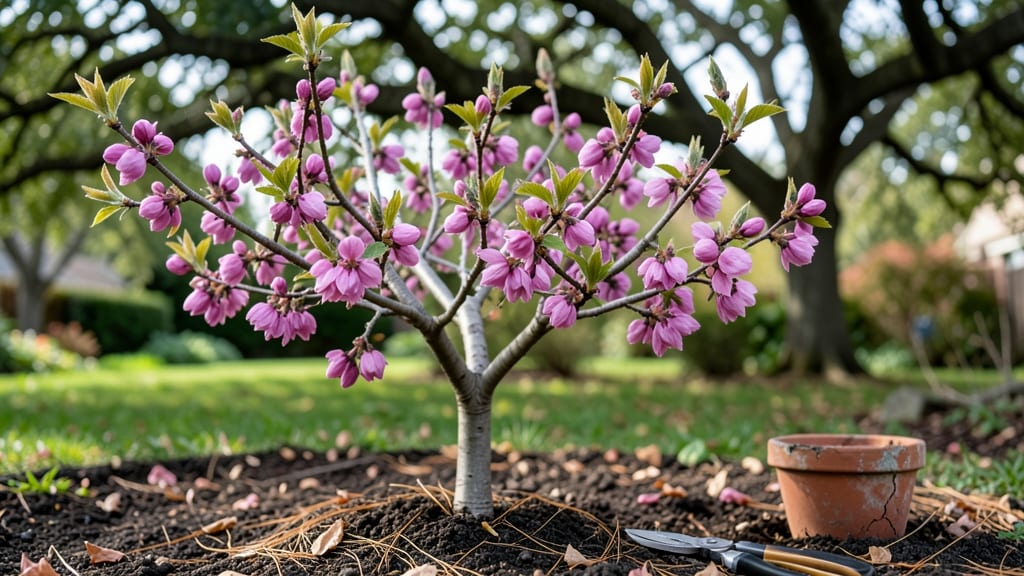
Your young redbud tree’s spring blooms start with a few dormant-season cuts—and I’ve learned the hard way that skipping this step means fewer flowers and weaker branches. 🌸 The secret isn’t aggressive pruning but strategic shaping: removing dead wood, thinning crowded limbs, and opening the canopy to sunlight.
It’s the difference between a tree that bursts with pink blooms and one that struggles to keep up.
You’ll need just three tools: sharp pruning shears, a small handsaw for thicker branches, and rubbing alcohol to sterilize cuts. Work on a dry day when the tree’s sap isn’t flowing—late winter or early spring, before buds swell.
The goal is to encourage strong growth while keeping the tree’s natural shape. Even a 10-minute session now saves hours of cleanup later.
What you’ll get is a tree that blooms earlier and more abundantly, with fewer weak limbs breaking under snow or wind. The flowers arrive in clusters, turning branches into cascades of color before the leaves even appear.
Plus, you’ll avoid the heartbreak of a tree that outgrows its space or develops diseases from poor airflow.
This method works for redbuds planted in full sun to partial shade, in soil that drains well but stays moist. Whether you’re dealing with a sapling or a 3-year-old tree, the same principles apply—just adjust the scale. Let’s get those branches in shape for next spring’s show.
📚 In This Guide
- What you need
- Instructions
- Tips and common mistakes
- Wrapping up and next steps
What you need
- ● Pruning shears: Bypass pruners with sharp, clean blades (4–6" opening). Recommended: Felco F-2 or similar.
- ● Loppers: For thicker branches (up to 2" diameter). Specs: 18–24" handle length, ratcheting or bypass style.
- ● Hand saw: For branches over 2". Type: Pruning saw with fine-toothed blade (avoid rust).
- ● Disinfectant: 70% isopropyl alcohol or bleach solution (1 part bleach:9 parts water) to sterilize tools between cuts.
- ● Gloves: Heavy-duty, cut-resistant (e.g., Mechanix or gardening gloves with grip).
- ○ Ladder (optional but helpful): Sturdy, extendable (10–12' height) if your tree exceeds 6' tall. Safety tip: Use a stable, 3-legged ladder on level ground.
- ● Trash bags: Heavy-duty contractor bags (30–50 gallon) for debris. Pro tip: Tie knots at the top to avoid spills! 🎯
- ● Pruning sealant: Tree wound paint (e.g., Tanglefoot Tree Wound Pruning Sealer) for cuts over ½". Note: Most experts recommend skipping this for redbuds—they heal naturally!
- ● Work gloves with thorns: Extra protection if your tree has spiny twigs.
- ● Knee pads: For comfort during ground-level pruning.
- ● Notebook + pencil: To sketch your tree’s structure before/after pruning. 💡 Pro tip: Label branches you’re unsure about!
- ● Timing: Prune during late winter/early spring (dormant season)—ideal temps: 40–50°F. Avoid pruning after buds swell!
- ● Weather: Choose a dry, calm day. Wet conditions can spread disease, and wind makes cuts messy.
- ● Safety gear: Eye protection (safety goggles) and closed-toe shoes to avoid debris injuries.
- ● Tree health check: Inspect for diseased or dead branches before pruning. Remove these first to prevent spreading.
Step-by-step guide for pruning young redbud trees
Here's how to shape your tree for healthy growth and stunning spring flowers.
✂️ Step 1: Gather Tools and Inspect the Tree
Start by cleaning your pruning shears with rubbing alcohol to prevent spreading disease between cuts. I always use sharp, bypass pruners for young redbuds—they make clean cuts that heal faster. Grab a pair of gloves too; redbud thorns are surprisingly sharp when you're working closely.
Inspect your tree for dead, crossing, or rubbing branches first. These are your priority targets. Redbuds grow best with good air circulation, so removing crowded branches early prevents fungal issues later. Look for branches growing straight toward the center of the tree—these will compete for light and nutrients.
✂️ Step 2: Remove Dead and Problem Branches
Make your first cuts on any branches that are completely dead or diseased. Cut back to the main trunk or to a healthy lateral branch. The cut should be at a 45-degree angle, about ¼ inch above a bud that faces outward. This encourages new growth in the right direction.
Next, remove any branches that are crossing or rubbing against others. These create wounds that invite pests and diseases. When you find a branch growing toward another, cut it at its base. Redbuds are forgiving, but removing these early prevents permanent damage to the tree's structure.
✂️ Step 3: Shape for Balance and Airflow
Step back and look at your tree's overall shape. Redbuds naturally grow with an open, vase-like form, but young trees often need guidance. Aim to maintain a slightly rounded top while keeping the lower branches evenly spaced. You'll want 3-5 main branches emerging from the trunk, spaced 6-12 inches apart.
For each remaining branch, make a final cut just above a bud that points in the direction you want new growth to go. Avoid cutting into the trunk collar—the swollen area where branches meet the trunk. This area contains important growth hormones. If you accidentally cut too deep, don't worry; redbuds are resilient and will recover.
⏰ Step 4: Clean Up and Monitor Recovery
After pruning, collect all the clippings and dispose of them properly. Don't leave them on the ground where they could harbor pests. I like to burn them or put them in the trash—never compost diseased branches. Once you've finished, give your tree a good watering to help it recover from the stress of pruning.
Watch your redbud closely over the next few weeks. You should see new buds forming along the branches you pruned. If you notice any oozing sap from the cuts, it's normal—just a sign the tree is healing. Avoid fertilizing right after pruning; let the tree focus on recovering before adding new nutrients.
Tips & tricks for pruning young redbud trees
Real talk: Pruning young redbuds feels like sculpting with nature—get these details right, and you'll set your tree up for decades of vibrant spring blooms.
Tool Prep is Non-Negotiable: I learned this the hard way after ruining three batches of tools with rust. Always sterilize your pruning shears with rubbing alcohol between cuts—it prevents spreading disease from one branch to another. And here's what nobody tells you: Use bypass pruners for young redbuds. Anvil pruners crush branches, which creates jagged wounds that heal poorly. The clean cuts from bypass pruners make all the difference for recovery.
The 45-Degree Angle Secret: When you make those cuts in Step 2, that 45-degree angle isn't arbitrary—it's about directing water away from the wound. Cut too straight, and rainwater pools in the cut, inviting rot. Cut too shallow, and you leave a stub that can't heal properly. Aim for that angle about ¼ inch above an outward-facing bud. This little detail ensures new growth goes where you want it, not where the wind blows it.
Shape Like a Pro: Step back after removing dead branches and visualize your tree's future. Redbuds naturally grow with that open vase shape, but young trees need guidance. Focus on creating that slightly rounded top while keeping lower branches spaced 6-12 inches apart. I think this works because it mimics how redbuds grow in the wild—open enough for sunlight to reach all branches, but structured enough to support those stunning spring blooms.
Recovery Watch: After pruning, don't just walk away. Watch for those new buds forming over the next few weeks—they're your sign the tree is healing. And here's the thing: That oozing sap you might see? Totally normal. It's just the tree's way of sealing the wound. Just avoid fertilizing right after pruning. Your tree's already stressed—let it focus on recovery before adding new nutrients.
Pro Tips for Young Redbud Tree
- Real talk: Pruning young redbuds feels like sculpting with nature—get these details right, and you'll set your tree up for decades of vibrant spring blooms.
- Tool Prep is Non-Negotiable: I learned this the hard way after ruining three batches of tools with rust.
- The 45-Degree Angle Secret: When you make those cuts in Step 2, that 45-degree angle isn't arbitrary—it's about directing water away from the wound.
Frequently asked questions
Got questions about nurturing your young redbud tree? You’re not alone! Here are answers to the most common concerns—so you can prune with confidence and enjoy those stunning spring blooms.
When is the best time to prune a young redbud tree?
Prune your young redbud tree during late winter or early spring, just before buds swell but before new growth starts. This timing (typically February–March in most climates) ensures minimal stress and promotes vibrant blooms. Avoid pruning in fall or summer, as it can stimulate late-season growth vulnerable to frost damage.
Can I prune a redbud tree in winter if it’s still dormant?
Yes! Pruning in deep dormancy (winter) is ideal—just avoid extreme cold snaps (below 10°F/-12°C). If your tree is fully dormant but not yet budding, go ahead! Just don’t prune after buds break, or you’ll risk cutting off next year’s flowers. A light layer of mulch helps protect wounds if pruning late.
How much can I trim off a young redbud tree in one session?
For young redbuds (under 5 years old), limit pruning to no more than 25% of the canopy per year. Over-pruning stresses the tree and can reduce flowering. Focus on removing dead, diseased, or crossing branches first, then shape lightly. Older trees can handle up to 30%, but young ones thrive with gentle care.
My redbud tree’s leaves are yellowing after pruning—is it dying?
Yellowing leaves post-pruning are usually normal, especially if you cut into older wood. However, if more than 30% of leaves yellow or the tree looks wilted, check for over-pruning, root damage, or pests. Water deeply, avoid fertilizing for 4–6 weeks, and monitor for signs of stress. Redbuds are resilient—give it time to recover!
Are there alternatives to redbud trees for small spaces?
If redbuds are too high-maintenance, consider these low-maintenance, small-space alternatives:
- Dwarf Korean Lilac (Syringa meyeri): Compact, fragrant blooms, and easy pruning.
- Japanese Maple (Acer palmatum): Stunning foliage with minimal pruning needs.
- Serviceberry (Amelanchier): Edible berries + spring flowers, tolerates shade.
- Crape Myrtle (Lagerstroemia): Drought-resistant with vibrant summer blooms.
Wrapping up and next steps
Pruning your young redbud tree during the dormant season isn’t just about shaping—it’s your secret weapon for stunning spring blooms and long-term health. 🌸 By following the right techniques, you’ll encourage vibrant growth, prevent disease, and set the stage for years of beauty.
Now that you’re armed with the knowledge, there’s only one step left:
- Grab those pruners and give your redbud the care it deserves—your future blooms will thank you!
Happy pruning! 🌿