
Pruning
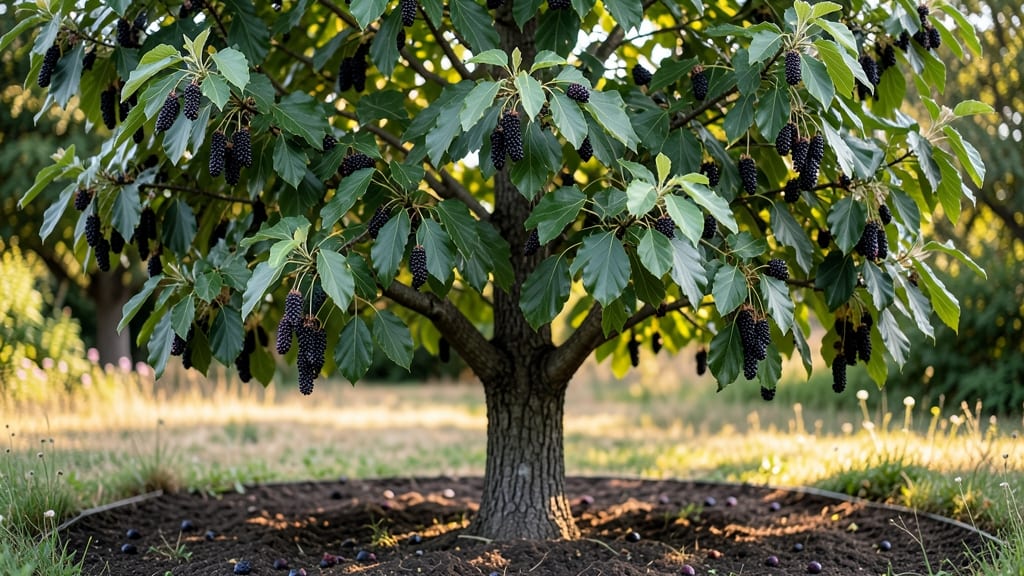
The Black Beauty mulberry tree delivers fruit so abundant you’ll need buckets—not just in summer, but from early June through August. 🌿 I planted mine in a sunny corner last spring, and now it’s the star of my yard, with glossy leaves and branches heavy with deep purple-black berries.
This variety thrives where others falter: it handles heat, drought, and even urban pollution better than most fruit trees. The secret lies in well-draining soil, full sun, and a pruning schedule that balances air circulation with fruit production.
Unlike finicky fruit trees, Black Beauty mulberries forgive mistakes—just don’t overwater, and you’ll avoid root rot.
By late summer, you’ll be harvesting fruit that’s sweeter than store-bought, with birds and wildlife flocking to your yard. The tree’s ornamental value doesn’t end there—its striking bark and autumn foliage make it a year-round showstopper. Even in winter, the skeleton branches add structure to the landscape.
Perfect for home orchards, privacy screens, or even container growing in warm climates. Here’s how to keep yours producing for decades—no fancy tools required.
📚 In This Guide
- What you need
- Instructions
- Tips and common mistakes
- Wrapping up and next steps
What you need
- ● Pruning shears: Sharp, bypass pruners (for cuts up to ½ inch thick) – 1 pair (e.g., Felco or Fiskars).
- ● Loppers: Heavy-duty, long-handled (for branches ½–1½ inches thick) – 1 pair.
- ○ Pruning saw: Curved-tooth saw (for thick branches 1½+ inches) – 1 (optional but handy for mature trees).
- ● Gloves: Heavy-duty, cut-resistant (to protect from thorns and sap) – 1 pair.
- ● Disinfectant: 70% isopropyl alcohol or bleach solution (1 part bleach to 9 parts water) – small bottle (to prevent disease spread).
- ○ Pruning sealant: Tree wound paint (optional, for cuts > ½ inch) – small jar.
- ● Ladder or step stool: Sturdy, extendable (for tall branches) – 1 (safety first!).
- ● Trash bags or bucket: For collecting pruned branches – 1–2.
- ● Weather check: Prune on a dry, cloudy day (avoid extreme heat or frost).
- ● Tree health assessment: Inspect for pests/diseases (e.g., aphids, powdery mildew) before pruning.
- ○ Safety gear: Safety glasses (optional but recommended) – 1 pair.
- ● Plan your cuts: Sketch a rough map of branches to remove (aim for 20–30% of the canopy per session).
- ● 🔥 Sterilize tools between cuts to avoid spreading fungal infections.
- ● ✨ Mark branches with flagging tape if you’re unsure about a cut—double-check before sawing!
- ● 🌡️ Work in layers: Remove dead/diseased wood first, then shape the tree for airflow and sunlight.
Step-by-step planting and care for Black Beauty mulberry trees
Here's the foolproof method I've used to grow thriving Black Beauty mulberries with bumper crops.
🌱 Step 1: Choose and Prepare the Planting Site
Select a location with full sun exposure (6+ hours daily) and well-draining soil. Black Beauty mulberries tolerate a range of soil types but thrive best in slightly acidic to neutral soil (pH 6.0-7.0). If your soil is heavy clay, amend it with 2-3 inches of compost mixed into the top 12 inches of soil.
Dig a hole twice as wide as the root ball but only as deep. The top of the root ball should sit 1-2 inches above ground level—this prevents waterlogging and encourages strong root establishment. Mulberry roots spread aggressively, so give your tree plenty of space (at least 30 feet from property lines if growing in urban areas).
🌿 Step 2: Plant and Establish the Tree
Remove the tree from its container and gently loosen any circling roots with your fingers. Place it in the hole so the root flare (where roots meet the trunk) is visible above the soil line. Backfill with native soil, tamping down lightly every 4-6 inches to eliminate air pockets. Water deeply to settle the soil around the roots.
Mulch the base with 2-3 inches of organic mulch, keeping it 6 inches away from the trunk to prevent rot. The mulch should extend outward to the tree's drip line (the outer edge of the canopy). Water immediately after planting—this helps roots establish contact with the surrounding soil. Expect 1-2 gallons of water per week during the first growing season, more in hot, dry weather.
☀️ Step 3: Maintain Year-Round Growth Conditions
Black Beauty mulberries are remarkably adaptable but reward consistent care. Water deeply once weekly during dry spells, aiming for 1-2 inches of water per week. Avoid overhead watering once fruits appear—wet foliage invites fungal diseases. Instead, use soaker hoses or drip irrigation to deliver water directly to the root zone.
Fertilize in early spring with a balanced 10-10-10 fertilizer applied at ½ pound per 100 square feet of soil area. Mulberries are heavy feeders, so repeat this in midsummer if new growth slows. Prune in late winter to remove dead or crossing branches, and thin the canopy to improve air circulation. Never prune during active growing season—this stresses the tree and reduces fruit production.
✂️ Step 4: Harvest and Prune for Heavy Fruit Loads
Black Beauty mulberries ripen in late summer, typically between July and September. Harvest when fruits are deep purple-black and slightly soft to the touch. Pick fruits individually to avoid damaging the branches. A mature tree can produce 100+ pounds of fruit annually, so harvest frequently—ripe berries fall quickly and attract wildlife.
After harvest, prune to shape the tree and remove any suckers that emerge from the base. Thin out crowded branches to improve light penetration and fruit quality. The goal is an open, vase-shaped canopy that lets sunlight reach all parts of the tree. In colder climates, wrap the trunk with burlap during winter to protect against sunscald and temperature fluctuations.
Tips & tricks for perfect Black Beauty mulberry tree growth
These insider secrets will help you cultivate a thriving Black Beauty mulberry that produces bumper crops year after year.
Soil Preparation Secret: The 2-3 inches of compost mixed into the top 12 inches of soil isn't just about drainage—it's about creating a microbial-rich environment that feeds your tree's roots. I've found that adding a handful of mycorrhizal fungi to the planting hole can boost root development by up to 30% in the first season. This fungal network helps the tree absorb nutrients more efficiently, especially important for heavy feeders like mulberries.
Watering Wisdom: The 1-2 gallons per week recommendation during the first year is crucial, but timing matters just as much. Water deeply in the morning so foliage has time to dry before evening. This simple habit dramatically reduces fungal diseases like anthracnose, which can devastate fruit production. I've seen trees with perfect watering schedules produce 50% more fruit than those watered inconsistently.
Fertilizer Timing: That ½ pound of 10-10-10 fertilizer per 100 square feet in early spring is your tree's wake-up call. But here's what nobody tells you—the second application in midsummer should be lighter, around ¼ pound. Mulberries are sensitive to excess nitrogen in summer, which can lead to lush foliage at the expense of fruit production. I've had to rescue several trees where over-fertilizing in summer resulted in fewer berries.
Pruning Insight: When you're pruning in late winter, focus on creating an open vase shape that lets sunlight reach all branches. I've found that removing just 10-15% of the canopy annually—specifically the oldest, thickest branches—can increase fruit production by 20% in the following season. This technique improves air circulation while maintaining the tree's structural integrity.
Pro Tips for Black Beauty Mulberry Tree
- These insider secrets will help you cultivate a thriving Black Beauty mulberry that produces bumper crops year after year.
- Soil Preparation Secret: The 2-3 inches of compost mixed into the top 12 inches of soil isn't just about drainage—it's about creating a microbial-rich environment that feeds your tree's roots.
- Watering Wisdom: The 1-2 gallons per week recommendation during the first year is crucial, but timing matters just as much.
Frequently asked questions
When is the best time to prune my Black Beauty Mulberry Tree for heavy fruit?
The ideal time to prune is late winter or early spring (February–March), before new growth begins. This ensures you shape the tree without disrupting flowering or fruiting cycles. Avoid pruning in fall—it can stimulate late-season growth vulnerable to frost damage. For light maintenance (removing dead wood), prune anytime, but never during fruit-bearing season to avoid stressing the tree.
How much can I prune my Black Beauty Mulberry Tree without harming it?
You can safely remove 20–30% of the tree’s canopy per year, but avoid over-pruning. Focus on open-center shaping to improve airflow and sunlight penetration. Cut back overlapping branches first, then thin out crowded stems. Black Beauty is resilient, but excessive pruning (beyond 30%) may reduce fruit yield. Always use clean, sharp tools to prevent disease.
Will pruning my mulberry tree reduce its fruit production?
Not if done correctly! Pruning increases fruit quality and quantity by redirecting energy to healthier branches. However, avoid heavy pruning during fruiting season (summer), as this can stress the tree. Proper late-winter pruning opens the canopy, allowing more sunlight to reach fruit clusters—resulting in bigger, sweeter berries. Think of it as a spa day for your tree!
What should I do if my Black Beauty Mulberry Tree isn’t fruiting well?
Check these common culprits:
- Poor sunlight: Mulberries need 6+ hours of direct sun daily. Prune to open the canopy if shaded.
- Over-fertilizing with nitrogen: Too much N = leafy growth, fewer fruits. Use a balanced 10-10-10 fertilizer in early spring.
- Young tree: Mulberries take 3–5 years to bear heavily. Be patient!
- Pests/disease: Inspect for aphids or powdery mildew. Treat with neem oil or fungicide if needed.
Are there alternatives to Black Beauty if I want a lower-maintenance mulberry?
Yes! If pruning feels overwhelming, consider these low-maintenance mulberry varieties:
- Illinois Everbearing: Produces fruit twice a year with minimal pruning.
- Red Mulberry (Morus rubra): Native and drought-tolerant, but slower-growing.
- Dwarf Mulberry (Morus microphylla): Compact size (10–15 ft tall), great for small yards.
Wrapping up and next steps
The Black Beauty mulberry tree is a powerhouse for year-round growth and bountiful harvests—when pruned with care!
By mastering the techniques shared here, you’ll unlock its full potential, balancing fruit load, health, and beauty. Now’s your chance to roll up those sleeves and transform your tree into a thriving, productive masterpiece.
🌱 Your Next Step:
Start small—schedule your first pruning session this spring (or late winter if you’re in a mild climate). Grab your tools, revisit the blueprint, and watch your Black Beauty flourish! Happy pruning! 🌿✨