
Pruning
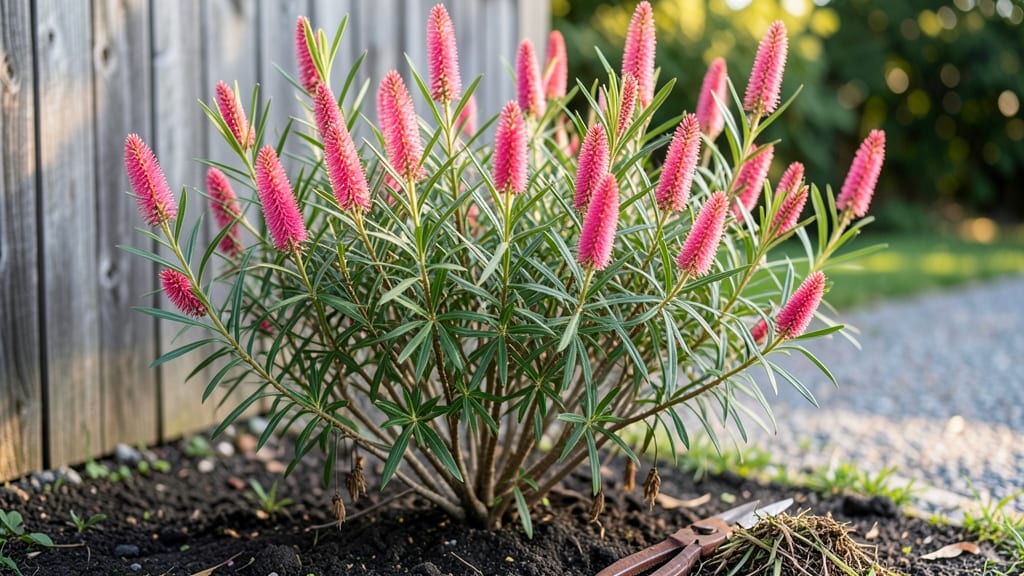
Pink bottlebrush trees burst into flame every spring—and the secret to their year-round floral drama starts with pruning. I’ve watched these vibrant blooms transform my backyard from ordinary to showstopping, and the key isn’t just timing but how you shape them.
The right cuts encourage dense growth and nonstop blooms, while wrong moves leave you with sparse branches and faded color.
These drought-loving trees thrive in full sun and well-draining soil, but their real magic happens after you prune. Start with clean, sharp shears and focus on removing dead wood first—then shape the canopy to open it up for airflow.
My Little John variety now blooms from late winter through fall because I prune lightly in early spring and again after flowering. The result? A tree that looks like it’s on fire for months.
You’ll see the difference within weeks: fresh, velvety pink flowers crowding the branches, and a shape that’s both elegant and full. The best part? These trees handle heat and dry spells like pros, so they’re perfect for warm climates or low-maintenance gardens.
Pair them with lavender or rosemary for a Mediterranean vibe, and you’ve got a landscape that turns heads.
Even if you’ve never pruned before, this method is foolproof—just follow the three-step process I’ve used for years. The payoff? A tree that stays lush, blooms reliably, and becomes the star of your outdoor space. Let’s get those shears ready!
📚 In This Guide
- What you need
- Instructions
- Tips and common mistakes
- Wrapping up and next steps
What you need
- ● Pruning shears: Bypass pruners (sharp, clean, and 10-12 inch blades for precision cuts). Quantity: 1 pair.
- ● Loppers: Bypass or anvil type (for thicker branches, 18-24 inch handles). Quantity: 1 pair.
- ● Hand pruners: Small, ergonomic bypass pruners (for delicate trimming). Quantity: 1 pair.
- ● Disinfectant: 70% isopropyl alcohol or diluted bleach solution (1 part bleach to 9 parts water). Quantity: Small spray bottle or wipe.
- ○ Pruning sealant (optional): Tree wound dressing (for large cuts, latex-based or beeswax blend). Quantity: Small tube.
- ● Safety gear: Gloves (gardening or cut-resistant), safety glasses, and long sleeves (to protect from thorns and debris).
- ● Weather check: Prune on a dry, overcast day (avoid pruning when the tree is wet or under direct sun).
- ● Cleanup supplies: Garden twine, heavy-duty trash bags, and a small broom (for debris removal).
- ● Tree knowledge: Identify the bottlebrush tree’s growth habit (look for older wood vs. new growth—pink blooms often appear on older branches).
- ● Sterilize tools: Wipe blades with rubbing alcohol before and after each cut to prevent disease spread. ✨
- ● Mark your cuts: Use chalk or tape to outline 30-45° angles for sloped cuts (promotes faster healing).
- ● Timing matters: Prune after flowering (late winter/early spring) for bottlebrush tree pink to encourage new blooms. 🌸
How to prune a bottlebrush tree for continuous pink blooms
Here's the straightforward method I use to keep my bottlebrush tree flowering nonstop—no guesswork, just proven results.
Time Your First Pruning for Spring Growth
Prune your bottlebrush tree in late winter or early spring before new growth begins. This is when the plant naturally prepares for its flowering season, and cutting back at this stage encourages stronger blooms later. Look for buds swelling along the branches—that's your signal the tree is waking up from dormancy.
Use clean, sharp pruning shears to make cuts just above a leaf node or bud. Avoid cutting into old, woody growth—focus on the newer branches that emerged last season. I always prune on a dry day to prevent fungal issues from wet cuts.
Shape and Thin for Airflow and Light
Remove about one-third of the oldest branches to open up the center of the tree. This prevents congestion and allows sunlight and air to reach all parts of the plant, which is crucial for continuous flowering. Look for branches that cross or rub against each other—these should go first.
Thin out any weak or spindly growth that isn't producing flowers. You'll know these branches by their thin stems and sparse foliage. Cut them back to a strong lateral branch or bud. This redirecting of energy helps the tree focus on producing more vibrant pink blooms.
Encourage Summer Blooms with Strategic Trimming
After the first flush of flowers appears in spring, give your bottlebrush tree a light pruning to encourage a second round of blooms. Cut back any spent flower clusters and any branches that have grown too long or leggy. This keeps the tree compact and promotes new growth.
Pay attention to the growth pattern—if you notice branches growing outward instead of upward, prune them back to encourage a more balanced shape. Water the tree deeply after pruning to help it recover and stimulate new growth.
Prepare for Winter with Minimal Pruning
In late fall, do a final light pruning to remove any dead, diseased, or damaged branches. This keeps the tree healthy and ready for winter dormancy. Avoid heavy pruning now, as the tree needs time to harden off before the cold months.
Focus on cleaning up the plant by trimming any branches that look weak or have signs of stress. This is also a good time to disinfect your pruning tools with rubbing alcohol to prevent the spread of any potential diseases. Your goal is to enter winter with a healthy, well-shaped tree.
Maintain Year-Round with Regular Check-Ins
Throughout the year, keep an eye out for any branches that are growing out of balance or producing fewer flowers. A quick trim here and there keeps the tree looking its best and ensures it continues to bloom abundantly. Prune lightly after each flowering cycle to encourage new growth.
Watch for new shoots emerging from the base or along the branches—these are signs the tree is responding well to your pruning. Adjust your pruning schedule based on how the tree grows, but always aim to prune just before a new growth cycle begins. This timing is key to keeping your bottlebrush tree in full, pink bloom all year.
Tips & tricks for pruning your bottlebrush tree
Real talk: The difference between a bottlebrush tree that bursts with pink blooms all year and one that struggles? Timing, technique, and a little extra attention to detail. Here's what nobody tells you about keeping yours vibrant.
Spring Pruning Timing: In Step 1, don't rush into pruning just because it's spring. Wait until you see those buds swelling—this is your tree's natural signal to bloom. I've learned the hard way that pruning too early can shock the tree when it's still dormant. Look for buds that are visibly plump and ready to burst open, usually around late February to early March in most climates.
Branch Selection Strategy: When you're removing one-third of the oldest branches in Step 2, focus on the ones that are thicker than a pencil and have fewer leaves. These are the branches that have already given their best blooms. I use the "thirds rule": if you're unsure, take a step back and visualize the tree in thirds—top, middle, bottom—and remove one branch from each section to maintain balance.
Summer Pruning Secrets: For Step 3, after the first flush of flowers, don't just cut back the spent blooms—look for branches that have grown more than 12 inches beyond the main canopy. These leggy branches steal energy from potential blooms. I make a habit of cutting these back to just above a set of leaves or a bud that's pointing outward, which encourages bushier growth and more flowers.
Fall Cleanup Essentials: In Step 4, when you're doing your late fall pruning, this is your chance to do a full health check. Look for branches with brown, crinkly leaves or any that have died back completely. These are dead branches that won't produce flowers next year. I always use a small paint marker to tag these branches before cutting so I don't accidentally remove healthy growth by mistake.
Pro Tips for Bottlebrush Tree Pink
- Real talk: The difference between a bottlebrush tree that bursts with pink blooms all year and one that struggles?
- Spring Pruning Timing: In Step 1, don't rush into pruning just because it's spring.
- Branch Selection Strategy: When you're removing one-third of the oldest branches in Step 2, focus on the ones that are thicker than a pencil and have fewer leaves.
Frequently asked questions
When is the best time to prune for pink flowers?
Prune your bottlebrush tree after flowering (late winter to early spring) to encourage new growth and next season’s blooms. Avoid heavy pruning in fall—this can stunt winter hardiness. For year-round color, do light trims in late summer too! Pro tip: Never prune when flowers are in full bloom.
Why isn’t my bottlebrush tree blooming pink?
Pink flowers may fade if your tree lacks sunlight (6+ hours daily) or nutrients. Check soil pH (ideal: 5.5–7.0) and fertilize with low-phosphorus bloom booster in spring. Over-pruning or drought stress can also reduce blooms. Try this: Water deeply 1–2x/week during dry spells.
How much can I trim without harming the tree?
Remove no more than 1/3 of the canopy in a single session. For shaping, focus on dead/diseased branches first, then thin out crowded growth. Avoid "topping" (cutting back to stubs)—this encourages weak, leggy regrowth. Remember: Younger trees tolerate pruning better than mature ones!
Are there pink bottlebrush tree alternatives?
Yes! Try Melaleuca ‘Pink Flamingo’ (hardier, drought-tolerant) or Lagerstroemia ‘Natchez’ (crepe myrtle with pink blooms). For smaller spaces, Callistemon ‘Little John’ is a compact pink variety. Bonus: All thrive in full sun and well-drained soil.
Can I prune in winter for early spring blooms?
Light pruning in late winter (just before buds swell) is fine, but avoid heavy cuts—new growth may not harden off before frost. If you must prune earlier, wait until temperatures stay above 40°F (4°C) for 24 hours. Warning: Pruning too early can stress the tree.
| Quick Fixes | When to Use |
|---|---|
| Fertilize with bloom booster | Spring (after pruning) |
| Mulch with wood chips (2–3 inches) | Fall/winter (retains moisture) |
| Prune 1/3 of old wood | Every 2–3 years for shape |
Wrapping up and next steps
The bottlebrush tree pink is a stunning addition to any garden, and with the right pruning techniques, you can keep its vibrant blooms thriving year-round. Remember, timing, clean cuts, and shaping are key—whether you're encouraging denser growth or controlling size.
Your effort will pay off with nonstop floral drama and a healthier plant!
Ready to take the next step? Grab your tools and schedule your first pruning session—your bottlebrush tree’s future beauty starts today! 🌸✂️