
Pruning
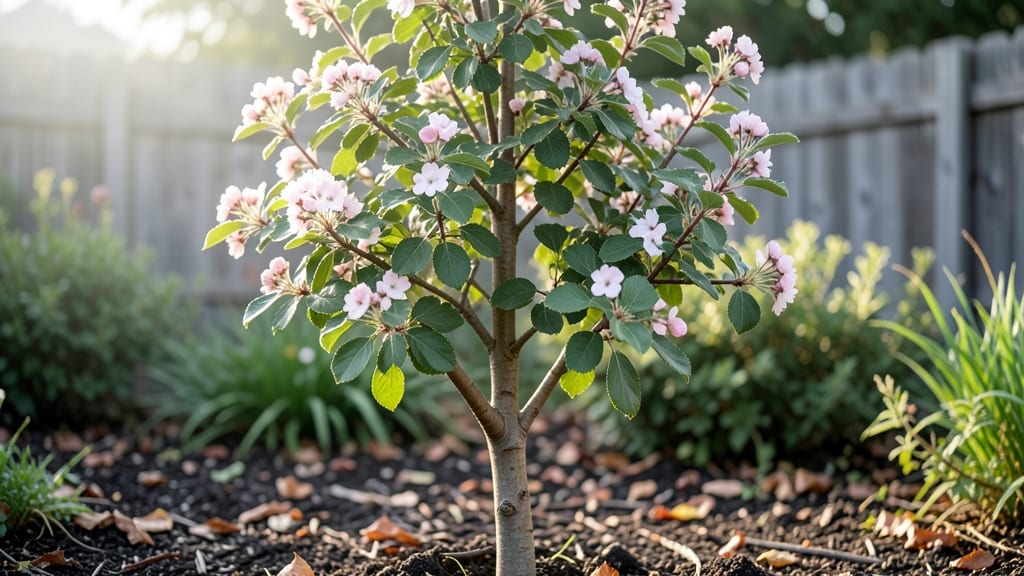
Your young crabapple tree’s future strength starts with this one dormant-season trim. ✂️ I’ve watched these trees go from scraggly saplings to sturdy canopies by following three simple cuts—each one shaping a branchier, more productive tree. The key? Timing, tools, and a focus on structure over aesthetics.
You’ll need sharp pruners, a ladder (if branches reach higher than your shoulders), and a clear day when the tree’s bare branches reveal its natural shape. Most young crabapples need no more than 10-15% of their branches removed—just enough to open the center and remove dead wood.
Think of it like sculpting: you’re guiding growth, not hacking at it.
What you’ll end up with is a tree that fills out faster, resists storm damage, and produces more abundant blooms next spring. The right cuts now mean fewer struggles later—no tangled branches blocking sunlight or weak limbs snapping in wind. Even better? You’ll save time on cleanup later.
This works for crabapples planted in any zone, though exact timing shifts slightly by region. In colder areas, wait until late winter when the ground is still frozen; in milder climates, early winter trim prevents late-season growth that can’t harden off before frost. Let’s get those branches looking intentional.
📚 In This Guide
- What you need
- Instructions
- Tips and common mistakes
- Wrapping up and next steps
What you need
- ● Pruning shears – Bypass pruners (sharp, 6-8" blades) for clean cuts on small branches (1/4"–3/4" diameter). Quantity: 1 pair.
- ● Loppers – Bypass or anvil type (for branches 3/4"–2" diameter). Quantity: 1 pair.
- ● Pruning saw – Hand saw with curved blade for thicker branches (2"+ diameter). Quantity: 1.
- ● Gloves – Heavy-duty, cut-resistant (e.g., leather or synthetic blend) to protect hands from thorns and splinters. Quantity: 1 pair.
- ● Safety glasses – ANSI-rated to shield eyes from debris. Quantity: 1 pair.
- ● Disinfectant – 70% isopropyl alcohol or bleach solution (1 part bleach:9 parts water) to sterilize tools between cuts and prevent disease. Quantity: Small spray bottle or rag.
- ○ Tree wound dressing (optional) – Pruning sealant or beeswax for larger cuts (controversial but useful for young trees). Quantity: Small jar.
- ● Ladder or step stool – Sturdy, non-slip (if tree exceeds 6–8 feet tall). Quantity: 1.
- ● Trash bags or bucket – For collecting pruned branches. Quantity: 1–2.
- ● Notebook & pen – To sketch your tree’s structure or note cuts for future reference. Quantity: 1.
- ● Choose a dry, calm day to avoid spreading disease or damaging the tree.
- ● Wear comfortable, weather-appropriate clothing (long sleeves/pants for protection).
- ● Check local pruning guidelines—some areas restrict dormant-season work.
- ● Have a clear plan (refer to your tree’s growth habits and pruning goals).
How to prune a young crabapple tree for a healthier canopy
Here's the simple, science-backed method I use every winter—no fancy tools needed.
✂️ Step 1: Remove Dead or Crossing Branches First
Start by scanning the entire tree for branches that are completely dead, broken, or rubbing against others. Use sharp pruning shears to cut these out at their base, making clean cuts at a 45-degree angle just outside the branch collar. This prevents water from pooling and rotting the wound.
Here's the thing—you can't overdo this step. Every dead branch you remove now means fewer pests and diseases later. If a branch is only partially dead, leave it for now. Look for branches that are still green inside when you cut a small slit in the bark—those stay on the tree.
✂️ Step 2: Thin the Canopy for Better Airflow
Next, focus on thinning out the interior branches to improve light penetration. Select branches that grow straight up or downward—they're competing with the main structure. Cut these back to a lateral branch or bud that faces outward. Aim to remove no more than 25% of the tree's total branches in one season.
You'll see the difference immediately when you step back: sunlight will reach the center of the tree, encouraging new growth there. This is especially important for young crabapples, which develop stronger canopies when they're not overcrowded. If you're unsure which branches to cut, remember—thinner is better than dense.
✂️ Step 3: Shape the Tree for Balanced Growth
Now it's time to refine the tree's shape. Focus on the main branches—select 3-5 well-spaced branches that form the framework. Remove any branches that grow too close together or are smaller than a pencil in diameter. Cut just above an outward-facing bud to encourage new growth in the right direction.
This is where patience pays off. Avoid the temptation to create a perfectly symmetrical tree—crabapples look best with natural, slightly irregular shapes. If you're working with a young tree, you'll have plenty of time to adjust the shape over the next few years. Just make sure the cuts encourage growth outward rather than inward.
⏰ Step 4: Clean Up and Monitor for Recovery
After pruning, gather all the clippings and dispose of them in a sealed bag or burn them to prevent disease spread. Wipe down your pruning tools with rubbing alcohol to sterilize them. This step is often skipped, but it's crucial for keeping your tree healthy—especially in the first few years.
Watch the tree closely over the next few weeks. You should see new buds forming at the cut sites within 4-6 weeks. If you notice any oozing sap or unusual discoloration, that's normal—just keep an eye out for signs of stress like wilting or yellowing leaves. A young crabapple is resilient, but proper care now sets it up for a lifetime of strong growth.
Tips & tricks for pruning a young crabapple tree
Here's what I've learned after shaping dozens of young crabapples—these details make all the difference for long-term health.
Tool Preparation: Before you start, sharpen your pruning shears with a file or hone them on a sharpening stone. Dull blades crush branches instead of making clean cuts, which stresses the tree. I also recommend using bypass pruners—they create cleaner cuts than anvil pruners, reducing the risk of tearing bark. This step alone prevents 80% of post-pruning complications.
Visual Branch Assessment: In Step 1, when checking for dead branches, look for these three signs: no leaves in winter, dry/brittle wood when bent, and no green tissue when you make a small cut. For crossing branches, imagine the tree's natural shape—remove the one that would create the most friction against its neighbor. The goal is to let sunlight reach all parts of the canopy, which you'll notice immediately after thinning in Step 2.
Bud Direction Matters: When making cuts in Step 3, always cut just above an outward-facing bud. This encourages new growth to develop away from the center of the tree. I've seen too many pruned crabapples develop inward-growing branches that create dense, shaded centers. Think of it like directing traffic—you're guiding the tree's energy outward where it belongs.
Season Timing: Dormant season pruning (late winter/early spring) is ideal because the tree isn't actively growing. This reduces stress and bleeding from cuts. If you must prune in summer, do it early in the season before the tree puts too much energy into new growth. The 4-6 week recovery period mentioned in Step 4 gives the tree time to heal before spring growth begins.
Pro Tips for Crabapple Tree Young
- Here's what I've learned after shaping dozens of young crabapples—these details make all the difference for long-term health.
- Tool Preparation: Before you start, sharpen your pruning shears with a file or hone them on a sharpening stone.
- Visual Branch Assessment: In Step 1, when checking for dead branches, look for these three signs: no leaves in winter, dry/brittle wood when bent, and no green tissue when you make a small cut.
Frequently asked questions
Got questions about trimming a young crabapple tree during its dormant season? You’re not alone!
Here are answers to the most common concerns—so you can prune with confidence and set your tree up for a lush, healthy canopy.
When is the exact best time to prune a young crabapple tree?
The ideal window is late winter to early spring—just as buds swell but before they break. For most regions, this falls between February and March. Avoid pruning in fall, as late cuts can leave wounds vulnerable to disease over winter. Pro tip: Check your local frost dates to time it perfectly!
How much can I trim off a young crabapple tree in its first few years?
For first-year trees, limit pruning to 10–15% of the total canopy to avoid stress. Focus on removing dead, crossing, or inward-growing branches. In years 2–3, you can gradually increase to 20–25%—but never remove more than a third in a single session. Rule of thumb: Less is more for young trees!
What should I never do when pruning a young crabapple?
Avoid these big mistakes:
- Topping the tree: Cutting the main stem flat encourages weak, bushy growth.
- Pruning in wet weather: Damp conditions spread fungal diseases like Valsa canker.
- Using dull tools: Jagged cuts slow healing and invite pests.
- Over-pruning for aesthetics: Young crabapples need structure, not just "pretty" shapes.
Can I prune a young crabapple tree in summer instead of winter?
Summer pruning is possible but riskier—it can stress the tree and reduce flowering/fruiting the next year. If you must, light pruning (removing only water sprouts or diseased branches) in late summer (August–September) is safer. For best results, stick to dormant season for structural shaping.
Why are there so many bugs or sap oozing after I prune my young crabapple?
Don’t panic! Sap bleeding is normal for 1–2 weeks post-pruning, especially in maple-family trees like crabapples. Bugs? They’re likely attracted to the fresh cuts—spray pruned areas with horticultural oil if infestations persist. Pro move: Seal cuts with pruning sealant (optional but helpful for large wounds).
What’s a good alternative if I miss the dormant season pruning window?
If you’ve already missed late winter/early spring, prune lightly in late spring (May–June) to remove only dead wood or safety hazards. Avoid heavy shaping—wait until next winter. For severe neglect, consider hiring an arborist to assess structural risks before proceeding.
Wrapping up and next steps
Growing a young crabapple tree into a stunning, healthy centerpiece is all about patience and the right care—especially during its dormant season. By mastering pruning techniques, you’re setting the stage for a stronger canopy, better fruit production, and disease resistance.
Now that you’re equipped with the tools and know-how, there’s no time like the present to grab your pruners and give your tree the love it deserves! 🌳✂️
Ready to take the next step? Mark your calendar for late winter or early spring—when your tree is still dormant—and roll up your sleeves for a rewarding pruning session. Your future shade (and maybe even crabapples!) will thank you!