
Size
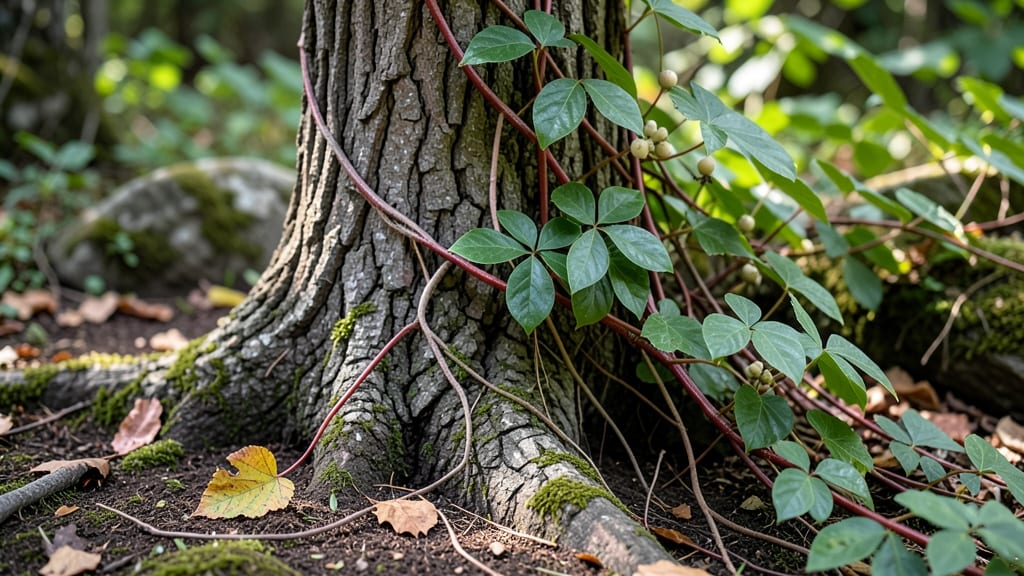
Does poison ivy grow up trees, and if so, how does it turn a single trunk into an itchy fortress of vines—using sneaky haustoria to steal nutrients right from the bark? 🌿 I’ve seen it transform a lone tree into a dense, curtain that spreads to neighboring branches, making removal a nightmare.
The key to stopping it starts with recognizing its sneaky growth patterns before it takes over.
Most people assume poison ivy only grows on the ground, but its aerial roots let it scale smooth-barked trees (like oak or maple) just as easily as rough ones. The vines twist clockwise around trunks, forming thick mats that block sunlight from reaching the tree’s leaves.
Worse, those fallen leaves become new starting points for next year’s infestation—so one tree can turn into a garden-wide problem if ignored.
Here’s the good news: you can outsmart it with the right tools and timing. Vine cutters, protective gloves, and a trash bag for debris are your first line of defense.
The goal isn’t just to yank it off—it’s to starve the roots by cutting the vines at the base and smothering regrowth with mulch or landscape fabric. I’ve removed entire patches this way, and the tree always bounces back healthier than before.
Prevention is easier than cleanup, though. Keep tree trunks clear of debris, monitor for early tendrils (especially in spring), and consider copper tape around trunks as a natural deterrent.
The moment you spot that classic three-leaf pattern climbing upward, act fast—before it turns your backyard into an itchy jungle. Let’s tackle this step by step.
📚 In This Guide
- What you need
- Instructions
- Tips and common mistakes
- Wrapping up and next steps
What you need
- ● Safety gear: Long sleeves & pants (preferably thick, tightly woven fabric)
- ● Heavy-duty gloves (nitrile or leather, waterproof)
- ● Safety goggles (to protect eyes from sap or debris)
- ○ N95 respirator mask (optional but highly recommended for dusty or allergic reactions)
- ● Identification tools: Field guidebook or app (e.g., iNaturalist, PlantNet)
- ● Handheld magnifying glass (for inspecting leaves up close)
- ● Digital camera (to document findings)
- ● Small pruning shears (sterilized, for safe sampling)
- ● Cleanup supplies: Rags or paper towels (disposable, for wiping sap)
- ● Trash bags (heavy-duty, for disposal)
- ● Rubbing alcohol (70% or higher, for sanitizing tools)
- ● Hose or water source (for rinsing tools/gear)
- ● First-aid kit: Calamine lotion or hydrocortisone cream (for rashes)
- ● Antihistamines (e.g., Benadryl, for allergic reactions)
- ● Cold compress (for soothing irritated skin)
- ● Ladder or sturdy step stool (for inspecting taller trees safely)
- ● Garden kneeler or pad (for comfort during ground checks)
- ● UV flashlight (to check for glowing poison ivy sap under UV light)
- ● Disposable coveralls (if working in heavily infested areas)
- ● Poison ivy removal spray (e.g., vinegar-based solutions, for large areas)
Understanding how poison ivy climbs trees and what to watch for
Here's how to spot poison ivy's climbing patterns and identify the trees it loves.
🌿 Step 1: Recognize Poison Ivy's Climbing Tendencies
Poison ivy climbs using aerial rootlets that attach to tree bark like tiny suction cups. These roots aren't visible until the vine reaches 6-12 inches in length—then you'll see them as small, hair-like growths along the stem. The plant itself grows in a zigzag pattern when climbing vertically, which helps distinguish it from other vines.
Look for clusters of three glossy leaves (the classic "leaves of three, let it be") growing directly from the vine. The leaves often appear in patches along the tree trunk or branches, rather than uniformly spaced. This uneven growth pattern is a dead giveaway for poison ivy's climbing behavior.
🌳 Step 2: Identify Common Host Trees for Poison Ivy
Poison ivy thrives on trees with rough bark that provides grip for its rootlets. Oak, maple, and hickory are its favorite hosts because their textured bark gives the vine plenty of purchase points. Avoid touching any vines growing on these trees—even if the leaves look different, the roots may still contain urushiol oil.
You'll often find poison ivy starting at the base of the tree before climbing upward. Check the lower trunk first, especially where sunlight filters through the canopy. The plant prefers partial shade but can grow in full sun if moisture is available. Young trees are particularly vulnerable because their smoother bark makes climbing easier for the vine.
☀️ Step 3: Spot the Warning Signs of Poison Ivy Growth
Watch for reddish stems that turn brown as they mature—this is a key identifier. The stems often have a slightly fuzzy texture when young, which becomes smoother with age. In fall, the leaves turn a brilliant yellow or orange, making them stand out against tree bark.
If you see white berries in late summer or fall, that's another red flag. These berries are poisonous and can spread the plant through bird droppings. Never assume a vine is harmless just because it looks different from classic poison ivy—some varieties have adapted their leaf patterns to blend into tree foliage.
✂️ Step 4: Safe Removal and Prevention Techniques
If you find poison ivy climbing a tree, never pull it by hand—the broken stems release more urushiol oil. Instead, use long-handled pruners to cut the vine at the base. Wear gloves, long sleeves, and eye protection at all times. Immediately wash any exposed skin with cold water and soap within 10 minutes of contact.
For established vines, you may need to cut and paint the stems with vinegar or a commercial herbicide to prevent regrowth. Apply the treatment on a dry, wind-free day to avoid spreading the solution to other plants. Monitor the area for new shoots for at least two growing seasons—poison ivy roots can remain dormant underground.
Tips & tricks for identifying poison ivy on trees
Poison ivy's climbing habits can be tricky to spot—here's how to become a pro at recognizing it before it becomes a problem.
Look for the Zigzag Pattern: In Step 1, when you're checking for climbing tendencies, focus on the vine's growth pattern. Poison ivy grows in a distinctive zigzag pattern when climbing vertically, unlike other vines that might grow in smooth spirals. This zigzag is your first clue that you're dealing with poison ivy, especially when you see it climbing up rough bark like oak or hickory.
Check the Base First: Step 2 mentions starting at the base of the tree, and that's where you'll often find the most obvious signs. Poison ivy typically begins its climb from the ground, so if you see clusters of three leaves at the tree's base, that's a strong indicator. The uneven spacing of these leaf clusters is another key detail that sets poison ivy apart from other plants.
Seasonal Color Changes: The warning signs in Step 3 about reddish stems and fall color changes are critical. In autumn, poison ivy leaves turn a brilliant yellow or orange, making them stand out dramatically against tree bark. This seasonal transformation is a dead giveaway, especially if you're checking trees in late summer or fall when berries might also appear.
Safety First When Removing: Step 4's removal techniques can't be emphasized enough. Always use long-handled pruners to cut the vine at the base—never pull it by hand. The 10-minute window for washing with cold water and soap after any potential contact is your best defense against the plant's urushiol oil, which can cause severe skin reactions. Wear gloves and protective clothing to avoid accidental exposure.
Pro Tips for Does Poison Ivy Grow Up Trees
- Poison ivy's climbing habits can be tricky to spot—here's how to become a pro at recognizing it before it becomes a problem.
- Look for the Zigzag Pattern: In Step 1, when you're checking for climbing tendencies, focus on the vine's growth pattern.
- Check the Base First: Step 2 mentions starting at the base of the tree, and that's where you'll often find the most obvious signs.
Frequently asked questions
Got questions about poison ivy’s climbing habits and how it affects trees? You’re not alone! Here are some of the most common concerns—and straightforward answers—to help you stay informed and prepared.
Can poison ivy actually kill a tree?
Poison ivy rarely kills a healthy tree, but it can weaken it over time. The vine competes for sunlight and nutrients, and its roots may damage bark or roots. If the tree is already stressed (disease, drought, or old age), poison ivy can be the final straw. Pro tip: Remove poison ivy early to protect your tree’s health!
When is poison ivy most aggressive on trees?
Poison ivy grows fastest in spring and early summer (April–July in most regions), when temperatures are warm and moisture is plentiful. That’s also when it’s most likely to climb higher up trees. Act now: Prune or treat infestations during these months to prevent it from spreading!
How do I tell if a vine on my tree is poison ivy?
Use the “leaves of three, let it be” rule: poison ivy has three shiny, pointed leaves with jagged edges. Look for reddish stems and white berries (toxic too!). If you’re unsure, snap a photo and compare it to trusted sources like the Poison Ivy Identification Guide.
Will cutting poison ivy at the base stop it from growing back?
Nope! Cutting alone won’t kill the roots. The vine can regrow from the base or spread from nearby plants. For removal, use vinegar (50% acetic acid), boiling water, or a glyphosate-based herbicide (follow label instructions). Safety first: Wear gloves and long sleeves—even dead vines can cause rashes!
Are there non-toxic vines that look like poison ivy?
Yes! Virginia creeper and Boston ivy mimic poison ivy’s leaf shape but are harmless. Virginia creeper has five leaflets (not three) and turns red in fall. Boston ivy has coarser leaves and clings with tendrils. Quick test: Rub the leaves—poison ivy’s oil (urushiol) causes an itchy reaction in sensitive people.
Wrapping up and next steps
Now that you know poison ivy does climb trees—thanks to its aerial roots and vines—you’re better equipped to spot and avoid it! 🌿 Whether it’s wrapping around oak, maple, or even fence posts, recognizing its three-leaf clusters and hairy vines is your first line of defense.
Stay vigilant, and if you suspect an infestation, act fast to protect your yard or outdoor space.
Next step: Grab some gloves, a spray bottle of vinegar or soap solution, and tackle those vines before they spread. Your skin (and your trees!) will thank you. 🛡️