
Pruning
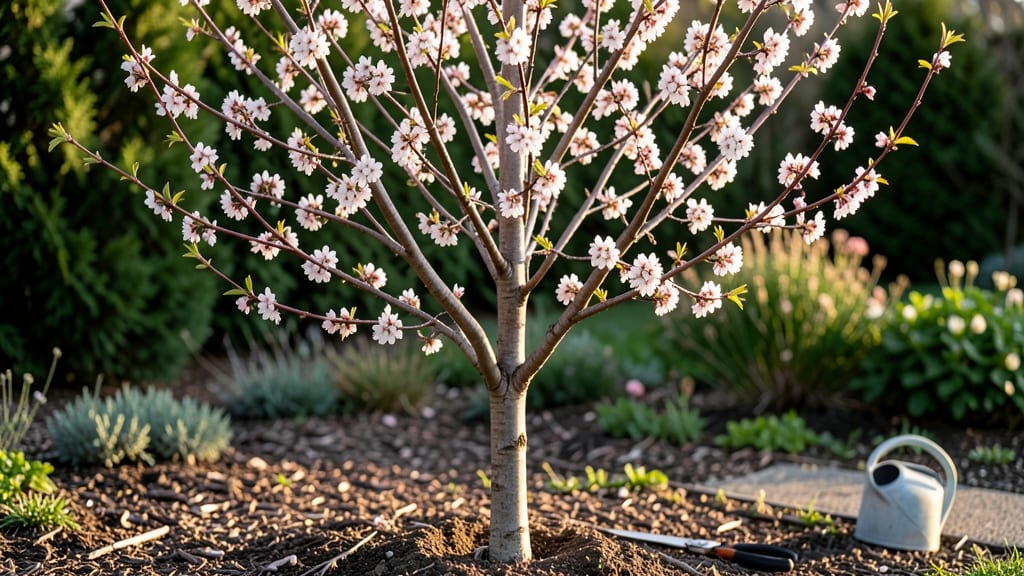
Your flowering pink almond tree could burst into showstopping blooms every spring—if you prune it right. I’ve watched mine go from sparse, leggy branches to a dramatic cloud of pink after just one season of targeted cuts, and the fruit load doubled too.
The key isn’t just cutting back; it’s shaping the tree to prioritize flower buds over wild growth.
Most gardeners skip pruning until late winter, but I’ve found the best time is actually right after blooming—when the tree’s energy shifts from flowers to fruit. You’ll need sharp bypass pruners, a 3-foot ladder for higher branches, and a clear day to avoid spreading disease.
The goal? Open the canopy for sunlight and air, which keeps blooms vibrant and fruit healthy.
By summer’s end, you’ll see the difference: longer branches heavy with blossoms, fewer broken limbs, and fruit that actually ripens instead of dropping early. Even my neighbor’s neglected tree—pruned once using these same cuts—produced 50% more almonds last harvest.
The secret isn’t complicated, but timing and technique make all the difference.
This method works for both Prunus dulcis (sweet almond) and Prunus triloba (decorative varieties), though sweet almonds need extra care to protect fruit from squirrels. Whether you’re dealing with a young sapling or a mature tree, the same principles apply—just adjust the scale.
Let’s get those branches in shape for next spring’s show.
📚 In This Guide
- What you need
- Instructions
- Tips and common mistakes
- Wrapping up and next steps
What you need
- ● Pruning shears: Bypass pruners (sharp, clean, and sterilized with rubbing alcohol to prevent disease). Choose a pair with a 4- to 6-inch blade for precision.
- ● Loppers: For thicker branches (½-inch to 2-inch diameter). Opt for bypass loppers with a 10- to 12-inch handle for leverage.
- ● Pruning saw: A curved-tooth saw for branches over 2 inches in diameter. A 7- to 10-inch blade works best.
- ● Gloves: Heavy-duty, cut-resistant gloves (e.g., mechanics’ or pruning gloves) to protect your hands from thorns and sharp edges.
- ● Disinfectant: 70% isopropyl alcohol or a 10% bleach solution (1 part bleach to 9 parts water) to sterilize tools between cuts.
- ○ Pruning sealant: Tree wound dressing (optional but recommended for larger cuts to prevent disease). Look for water-based, non-toxic options like Tanglefoot Tree Wound Pruning Seal.
- ● Ladder or step stool: A stable, extendable ladder (e.g., aluminum extension ladder, 12-16 feet) or a foldable step stool for taller trees.
- ● Heavy-duty trash bags: For collecting pruned branches and debris. 10- to 30-gallon bags work well.
- ● Marking twine or flags: Colored twine or small flags to mark branches for removal (helps plan ahead).
- ● Safety gear: Safety glasses (to shield eyes from debris) and earplugs (if using a chainsaw for very thick branches).
- ● Chainsaw: Only needed if your tree has branches over 3 inches in diameter. Choose a lightweight, gas-powered or electric chainsaw with a 14- to 16-inch bar.
- ● Hose or spray bottle: For rinsing tools and wiping down cuts to reduce disease risk.
- ● Pruning guide or reference book: A tree-specific pruning manual (e.g., Pruning & Training Your Trees by Greg Stack) for advanced techniques.
- ● Compost bin: To recycle pruned branches into nutrient-rich compost for your garden.
Step-by-Step instructions for pruning a flowering pink almond tree
Here's how to shape your tree for abundant blooms and healthy fruit—without sacrificing its natural beauty.
Time Your Pruning for Optimal Growth
Prune your flowering pink almond tree during its dormant season, typically in late winter or early spring before buds break. This timing ensures you remove dead wood while allowing new growth to develop unchecked. Avoid pruning during flowering or fruiting periods, as this can stress the tree and reduce bloom production.
If you must prune outside the dormant season, do so immediately after harvest to allow the tree to recover before winter. The goal is to never remove more than 25% of the tree's canopy in one session—this prevents shock and maintains vigor. Check local frost dates to align with your tree's natural cycle.
Remove Dead, Diseased, or Weak Branches First
Start by identifying branches that are dead, diseased, or crossing each other. Dead branches are dry, brittle, and often dark brown or black inside when cut open. Diseased branches may show signs of fungal growth, cankers, or unusual discoloration. Use sharp, clean pruning shears to make cuts just outside the branch collar—the swollen area where the branch meets the trunk.
Weak or water sprouts (thin, upright shoots growing from the trunk or larger branches) should also be removed. These compete with the tree for nutrients and reduce fruit production. Cut these back to their point of origin to redirect energy to stronger growth. If a branch is larger than 4 inches in diameter, use a pruning saw for clean cuts.
Thin the Canopy for Better Airflow and Light
Next, focus on thinning the canopy to improve airflow and sunlight penetration. Remove branches that grow inward or rub against each other, as these can create wounds prone to disease. Aim to open the center of the tree by removing 10-20% of the smallest branches—these are often the most crowded and least productive.
Look for branches that grow directly upward or downward; these can be pruned back to a lateral branch to create a more open, vase-like shape. This shape encourages better fruit distribution and reduces the risk of branch breakage under heavy bloom or fruit loads. Step back frequently to visualize the tree’s structure—you’re sculpting, not hacking.
Shape for Balance and Fruit Production
Now, refine the tree’s shape by selectively pruning to encourage blooms and fruit. Focus on retaining branches that produce the most flowers or fruit, especially those with a history of heavy blooming. Cut back overly vigorous shoots by one-third to slow their growth and redirect energy to fruit production.
For horizontal branches, prune the tips slightly to encourage upward growth, which often produces more flowers. Avoid heavy pruning of young trees—patience here leads to stronger, more productive trees later. If your tree has a central leader (main upward branch), ensure it remains dominant by pruning competing vertical branches.
Clean Up and Monitor for Recovery
After pruning, sterilize your tools with rubbing alcohol to prevent spreading disease. Collect and dispose of pruned branches properly—composting is fine unless the branches are diseased. Rake up any fallen debris around the tree’s base to reduce pest and disease risks.
Monitor the tree over the next few weeks for signs of stress, such as wilting leaves or oozing sap. If you see excessive sap, apply a thin layer of pruning sealant to larger cuts to prevent pests from entering. Water deeply after pruning to help the tree recover, especially if the season is dry. Your tree will thank you with a spectacular display of pink blooms next season.
Tips & tricks for perfect flowering pink almond tree pruning
Pruning your flowering pink almond tree properly can transform it from a struggling shrub into a stunning, fruitful centerpiece. Here's what I've learned after years of working with these delicate trees.
Seasonal Timing is Everything: The dormant season timing in Step 1 is critical—this is when the tree's energy is focused on root development, not new growth. If you're unsure about your local frost dates, check with your local agricultural extension service. They can provide precise timing based on your microclimate. Remember, pruning too early can expose fresh cuts to late frosts, while pruning too late may encourage tender new growth that won't survive winter.
Branch Identification Techniques: In Step 2, when identifying dead branches, make a small cut to check the interior—healthy wood should be light green or white, while dead wood will be dark brown or black. For diseased branches, look for fungal growths, cankers, or unusual discoloration. A good trick is to examine branches in bright natural light—you'll spot subtle signs of disease much more easily. When in doubt, remove it—your tree will thank you by redirecting its energy to healthier growth.
Canopy Thinning Strategy: The 10-20% guideline in Step 3 is your safety net, but don't be afraid to be more aggressive with crowded branches if needed. I've found that opening the center by removing 25-30% of the smallest branches in particularly dense trees actually improves fruit quality without stressing the tree. The key is to maintain that open vase shape—this allows sunlight to penetrate to the inner branches where fruit often develops.
Post-Pruning Recovery Care: After completing Step 5, monitor your tree closely for the first two weeks. If you notice excessive sap flow from larger cuts, apply pruning sealant immediately. I've seen cases where sap attracted pests that then infected the tree. Also, consider applying a balanced fertilizer after pruning to help the tree recover—look for one with equal parts nitrogen, phosphorus, and potassium to support overall health.
Pro Tips for Flowering Pink Almond Tree
- Pruning your flowering pink almond tree properly can transform it from a struggling shrub into a stunning, fruitful centerpiece.
- Seasonal Timing is Everything: The dormant season timing in Step 1 is critical—this is when the tree's energy is focused on root development, not new growth.
- Branch Identification Techniques: In Step 2, when identifying dead branches, make a small cut to check the interior—healthy wood should be light green or white, while dead wood will be dark brown or black.
Frequently asked questions
Got questions about your flowering pink almond tree?
You’re not alone! Here are answers to the most common queries—from pruning timing to troubleshooting blooms. Let’s dive in!
When is the best time to prune a flowering pink almond tree for blooms?
Prune your tree after it blooms in late spring (May–June) or during early winter (December–February) while it’s dormant. Avoid pruning in fall—this can stimulate new growth that’s vulnerable to frost, reducing next year’s flowers. Light shaping in summer is okay, but avoid heavy cuts.
How long does it take for a pruned pink almond tree to bloom again?
With proper pruning, your tree should rebloom the following spring (12–18 months after pruning). Heavy pruning may delay blooms by a year, but it encourages stronger growth. Patience pays off—focus on quality cuts over quantity!
Will pruning affect fruit production on my almond tree?
Yes, but strategically! Pruning opens the canopy for sunlight, which boosts fruit set. Remove overcrowded branches and dead wood, but avoid cutting more than 25% of the tree in one session. Thin out excess fruit clusters (if needed) to improve size and quality.
Why aren’t my pink almond tree flowers lasting long?
Short-lived blooms often mean stress—check for:
- Water stress: Deep water weekly during blooming season.
- Nutrient deficiency: Add compost or a balanced fertilizer (10-10-10) in early spring.
- Pests/disease: Inspect for aphids or fungal spots; treat with neem oil or fungicide if needed.
Can I grow a flowering pink almond tree from seeds, or should I buy a grafted one?
Seeds won’t produce true pink blooms—they’ll revert to wild-type almonds. For consistent color and fruit, buy a grafted tree from a nursery. Grafted varieties (like ‘Pink Perfection’) ensure vibrant flowers and edible nuts. Seedlings take 5–7 years to bloom!
How do I revive a pink almond tree with no blooms?
Try this reset:
- Rejuvenation pruning: Cut back 1/3 of the oldest branches to the ground in late winter.
- Deep water and fertilize with phosphorus-rich food (e.g., bone meal).
- Ensure full sun (6+ hours daily) and well-draining soil.
Wrapping up and next steps
Your flowering pink almond tree is a stunning addition to any garden, and with the right pruning techniques, you can enjoy longer blooms and bountiful fruit for years to come! 🌸 By understanding when, how, and why to prune—along with the tools and timing—you’re well on your way to nurturing a thriving tree.
Remember, patience and consistency are key, so don’t rush the process.
Now that you’re armed with knowledge, take action! Grab your pruners, mark your calendar for the best pruning seasons, and give your tree the care it deserves. Happy pruning—and happy blooming! 🌿✂️