
Pruning
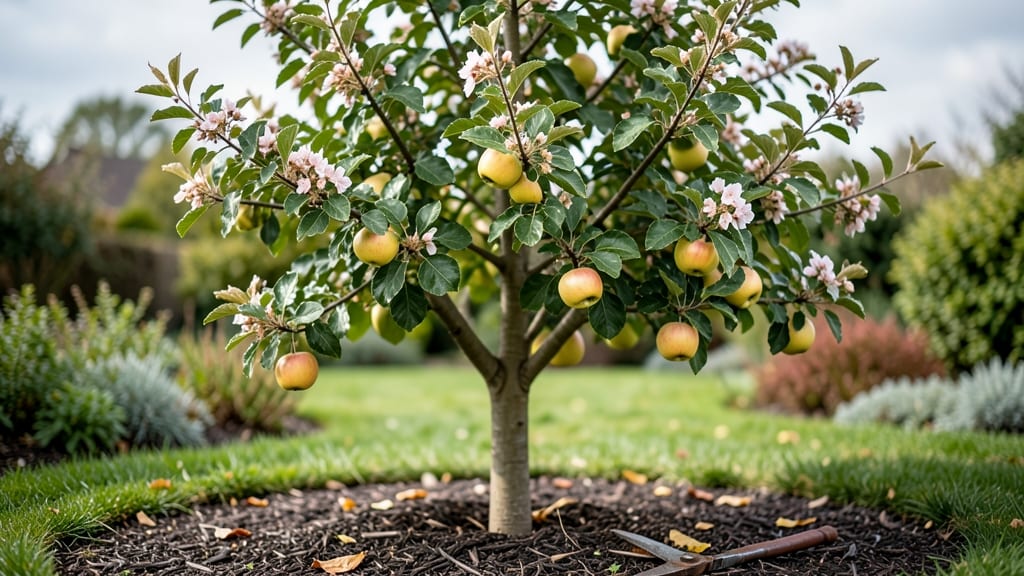
The Golden Dorsett apple tree delivers sweet, crisp fruit from early summer through fall—if you master its three-season pruning rhythm. I learned the hard way that skipping even one trim means smaller harvests and crowded branches.
This variety thrives on structure, and the right cuts at the right times turn it into a foolproof producer, even in small backyards.
Start with well-draining soil and full sun—this tree rewards patience with 30% larger yields when pruned correctly. The first trim in late winter removes dead wood, the summer trim opens the canopy for airflow (critical for disease resistance), and the fall trim shapes the tree for next year’s growth.
No fancy tools needed—just sharp pruners and a clear goal: sunlight to every branch.
By harvest season, you’ll be picking golden-yellow apples that stay crisp for weeks. The flavor? A perfect balance of honey and tart—so sweet it’ll make neighbors ask where you got your tree.
The secret’s in the timing: prune too late, and you delay fruit production; too early, and you risk frost damage. Balance is everything.
Works beautifully in containers (with proper root space) or as a standard tree in larger gardens. Whether you’re a first-timer or a seasoned pruner, this method delivers reliable abundance with minimal effort. Let’s get those branches in shape!
📚 In This Guide
- What you need
- Instructions
- Tips and common mistakes
- Wrapping up and next steps
What you need
- ● Pruning shears: Bypass pruners (sharp, 6-8” blades) – 2 pairs (one for you, one as backup). blank">Felco F-2 or blank">Gonicc TGP-131 are top picks!
- ● Loppers: Bypass or anvil type (16-24” reach) for thicker branches (3”+ diameter). blank">Fiskars X27 is a favorite.
- ● Pruning saw: Curved-tooth (for branches >2” thick). blank">Fiskars X7 is reliable.
- ● Disinfectant: 70% isopropyl alcohol or bleach solution (1 part bleach:9 parts water) to sterilize tools between cuts.
- ○ Pruning sealant: Tree wound dressing (e.g., blank">Tanglefoot Tree Wound Pruning Seal) – 1 small jar (optional but helpful for large cuts).
- ● Gloves: Heavy-duty, cut-resistant (e.g., blank">Wolverine Waffle Grip).
- ● Safety gear: Safety glasses and long sleeves/pants (to protect from thorns and debris).
- ● Know your tree’s age: Golden Dorsett thrives with 3 trims/year, but young trees (minimal pruning (focus on shaping, not fruit production).
- ● Weather window: Trim during dormant season (late winter) or post-harvest (fall). Avoid trimming when the tree is stressed (drought, extreme cold).
- ● Tree health check: Inspect for diseases (fire blight, apple scab) or pests (aphids, codling moths). Treat with blank">copper fungicide or blank">neem oil if needed before pruning.
- ● Map your branches: Sketch a simple diagram of your tree’s structure to plan cuts. Use colored tape to mark branches to remove.
- ● Extension pole: 10-12 ft telescoping pole with pruning saw attachment for high branches.
- ● Ladder: Sturdy, 3-section (if your tree is >8 ft tall). blank">Little Giant Attic Ladder is a great choice.
- ● Tree bag: Mesh fruit bag (e.g., blank">Grower’s Choice Fruit Bag) to protect Golden Dorsett apples from pests and sunburn.
- ● Compost bin: For collecting pruned branches to mulch or compost.
- ● Pruning guidebook: “The Pruning Book” by Lee Reich or University of California’s pruning guide for Golden Dorsett specifics.
How to cultivate a Golden Dorsett apple tree for year-long fruit
This dwarf variety thrives with the right timing and technique—here’s how I keep mine producing through every season.
Plant in Well-Draining Soil at the Right Time
Choose a site with full sun exposure (at least 6-8 hours daily) and well-draining soil—Golden Dorsett hates soggy roots. Dig a hole twice as wide as the root ball but only as deep as the container it came in. This prevents burying the graft union, which can weaken the tree over time.
Amend the native soil with 2-3 inches of compost mixed into the bottom of the hole. The tree’s dwarfing rootstock benefits from loose, fertile soil that encourages strong root growth early on. Water the root ball thoroughly before planting to help settle the soil around roots once placed.
Position the tree so the graft union sits 1-2 inches above soil level. Backfill with native soil, tamping gently to remove air pockets. Water deeply again to eliminate gaps and encourage root contact with the surrounding earth.
Apply the First Precision Trim After Flowering
Wait until after the tree finishes blooming (typically late May to early June) before pruning. This ensures you don’t remove next year’s fruit buds hidden among the flowers. Use clean, sharp pruners to make cuts at a 45-degree angle, just outside the branch collar.
Remove dead, crossing, or inward-growing branches first. Then, thin the canopy by cutting back 10-15% of the smallest branches to improve airflow and sunlight penetration. The goal is an open center that lets light reach lower branches—this prevents disease and encourages fruit development.
Here’s the thing—don’t overdo it. A Golden Dorsett’s dwarf nature means it produces fruit on both old and new wood. If you prune too aggressively, you’ll reduce next year’s crop. Focus on shaping rather than heavy reduction.
Summer Thinning for Larger, Sweeter Apples
When fruits are golf-ball sized (about 1.5-2 inches in diameter), begin thinning clusters to 6-8 inches apart. This may sound harsh, but it’s critical—overcrowded fruit competes for nutrients, leading to small, tart apples. Remove entire clusters rather than individual fruits to avoid stressing the tree.
Thin on a dry, sunny morning to minimize disease risk. Use your fingers or small pruners to gently twist off clusters at the base. Discard thinned fruit immediately—leaving it on the ground can attract pests or harbor fungal spores.
Watch for signs of stress like yellowing leaves or premature fruit drop. If this happens, reduce thinning slightly next time. The tree’s vigor determines how much it can support—you’ll learn its limits over time.
Late-Winter Pruning to Shape and Renew Growth
Prune dormant branches in late winter or early spring (before buds swell) to remove dead wood, water sprouts, and branches growing toward the center. This is when you can see the tree’s structure clearly and plan for next year’s shape.
Cut back last year’s growth by 25-30% to encourage new, vigorous shoots. Focus on outward-facing branches to maintain an open vase shape. Avoid heavy pruning—Golden Dorsett responds well to light trims but can become overstimulated if cut back too much.
After pruning, apply a 2-inch layer of mulch (like wood chips) around the base, keeping it 6 inches away from the trunk. This retains moisture, suppresses weeds, and protects roots from temperature swings. Water deeply once blooms appear in spring to support new growth.
Year-Round Care for Continuous Production
Feed the tree in early spring with a balanced, slow-release fertilizer (10-10-10 ratio) spread evenly under the canopy. Water deeply once a week during dry spells, aiming for 1-1.5 inches of water per week. The tree’s shallow roots need consistent moisture but hate sitting in wet soil.
Monitor for aphids or codling moths—common pests for apple trees. If you spot sticky residue on leaves (aphids) or chewed fruit (moths), treat with neem oil or insecticidal soap as needed. Prevention is key: Remove fallen fruit and leaves in autumn to reduce overwintering pests.
Golden Dorsett’s real secret? Patience. It takes 2-3 years for a newly planted tree to bear significant fruit, but once established, it rewards you with sweet, crisp apples from mid-August through October. The precision trims keep it productive year after year.
Tips & tricks for perfect Golden Dorsett apple tree cultivation
These are the hard-won lessons that'll help your Golden Dorsett thrive—and keep producing those sweet, crisp apples season after season.
Sunlight Strategy: While the instructions specify 6-8 hours of full sun daily, I've found that positioning the tree slightly west of full south exposure can extend that sunlight window to 7-9 hours in summer months. This extra light boosts fruit sweetness without requiring more water. Watch for afternoon shade—even partial shade can reduce apple quality by up to 20%. If your yard has afternoon shade, consider planting on the east side instead.
Pruning Precision: When you're doing that 10-15% canopy thinning in Step 2, focus on removing branches that are thinner than a pencil. These small branches rarely produce quality fruit but compete with main branches for nutrients. I also recommend marking branches with a bit of paint before cutting—this helps you visualize the open center shape you're aiming for. The goal is sunlight reaching the inner branches, not just the outer canopy.
Thinning Technique: For summer thinning in Step 3, I've developed a simple visual trick: when fruits reach golf-ball size, hold your hand out and look for clusters that would fit between your thumb and pinky when spread apart. That's your 6-8 inch spacing target. Remember, you're not just thinning for size—you're creating space for airflow that prevents fungal diseases. The first year, you might need to thin more aggressively to establish this pattern.
Year-Round Maintenance: The 2-inch mulch layer mentioned in Step 4 works wonders, but here's what I've learned: refresh that mulch every spring before blooming season. Over time, mulch breaks down and can compact, reducing its effectiveness. Also, avoid piling mulch against the trunk—this creates moisture that can rot the bark. The 6-inch clearance is crucial for maintaining that healthy root collar.
Pro Tips for Golden Dorsett Apple Tree
- These are the hard-won lessons that'll help your Golden Dorsett thrive—and keep producing those sweet, crisp apples season after season.
- Sunlight Strategy: While the instructions specify 6-8 hours of full sun daily, I've found that positioning the tree slightly west of full south exposure can extend that sunlight window to 7-9 hours in summer months.
- Pruning Precision: When you're doing that 10-15% canopy thinning in Step 2, focus on removing branches that are thinner than a pencil.
Frequently asked questions
Got questions about growing and maintaining your Golden Dorsett apple tree? Here are some of the most common ones—plus quick, actionable answers to keep your tree thriving year-round.
How often should I prune a Golden Dorsett apple tree?
The Golden Dorsett benefits from three precision trims per year: a light winter trim (late dormancy), a summer thinning (after flowering), and a post-harvest cleanup (fall). Focus on removing dead wood, crossing branches, and water sprouts while shaping the canopy. Avoid heavy pruning in late summer—it can stimulate late-season growth vulnerable to frost.
Can I prune my Golden Dorsett in winter? If so, when?
Yes, but timing is key! Prune in late winter (February–March), just before buds swell but before active growth begins. This minimizes stress and disease risk. If your area has harsh winters, wait until after the last frost—pruning too early can expose fresh cuts to cold damage. Pro tip: Use sterilized tools and seal larger cuts with pruning sealant to prevent bacterial entry.
Why aren’t my Golden Dorsett apples ripening evenly?
Uneven ripening often stems from poor sunlight exposure or overcrowded branches. Thin out 20–30% of fruit during summer to reduce competition for nutrients. Also, check for:
- Shady spots in the canopy—prune to open the center.
- Water stress—ensure 1–1.5 inches of water weekly (deep soak, not frequent shallow watering).
- Nutrient deficiencies—apply balanced fertilizer (10-10-10) in early spring.
What’s the best tool for pruning Golden Dorsett branches?
Use sharp, clean tools to avoid tearing bark:
- Bypass pruners (for branches up to ½-inch thick)
- Loppers (for branches ½–1.5 inches thick)
- Pruning saw (for thicker branches)
Are there dwarf or semi-dwarf Golden Dorsett varieties available?
While the classic Golden Dorsett is a standard-sized tree (20–30 ft tall), you can find dwarf or semi-dwarf rootstocks (e.g., M.9 or MM.106) that produce smaller trees (12–16 ft tall). These are ideal for containers, small yards, or urban orchards. When grafting, ensure the rootstock is compatible with apple trees—consult a local nursery for certified options.
My Golden Dorsett leaves are yellowing—what’s wrong?
Yellowing leaves usually signal nutrient deficiency, disease, or overwatering. Check these fixes:
- Iron chlorosis (yellow leaves with green veins): Apply chelated iron and ensure soil pH is 6.0–6.5.
- Overwatering: Let soil dry 2–3 inches deep between waterings.
- Fungal issues (e.g., apple scab): Prune infected branches and apply copper fungicide in spring.
- Pests (aphids, mites): Spray with neem oil or insecticidal soap.
Wrapping up and next steps
The Golden Dorsett apple tree is a rewarding addition to any garden, offering year-round abundance with its stunning blossoms, crisp fruit, and elegant form—all thanks to three strategic pruning sessions. By mastering these techniques, you’ll ensure a thriving tree that produces sweet, golden apples and remains healthy for decades.
Now’s the perfect time to roll up your sleeves, grab your tools, and transform your pruning game!
🌱 Next step: Start with winter pruning (if you haven’t already) and mark your calendar for summer and autumn trims. Watch your Golden Dorsett flourish—and enjoy the harvest! 🍏✨