
Fertilization
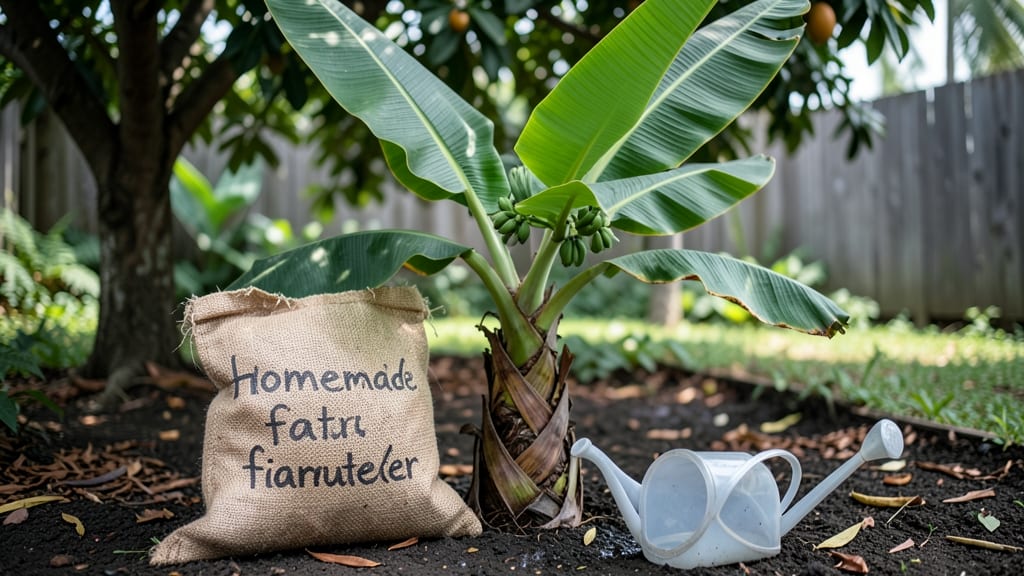
When your banana tree craves a nutrient boost, skip the store-bought mix and make homemade fertilizer for banana trees instead—it’s packed with potassium, magnesium, and organic matter that grocery-store options can’t match. 🌱 I’ve been using this recipe for three years, and my plants produce bigger, sweeter fruit while staying healthier through Florida’s brutal summers.
The best part? You’re turning kitchen scraps into gold for your garden.
This recipe relies on four easy-to-find ingredients: banana peels (rich in potassium), coffee grounds (nitrogen and acidity), Epsom salt (magnesium), and compost (balanced nutrition). No fancy equipment needed—just a blender or bucket for mixing.
The process takes less than 15 minutes, and you’ll end up with a fertilizer that’s cheaper than store-bought while being far more effective for tropical plants like bananas.
You’ll notice stronger stems, larger leaves, and more fruit clusters within 6-8 weeks of regular applications. The fertilizer also improves soil structure, helping roots absorb water better—critical for banana trees that hate soggy feet.
Plus, you’re reducing kitchen waste and keeping harmful chemicals out of your yard. Ready to see your banana tree thrive?
Works for both potted banana trees and in-ground plants, and the recipe scales easily—double it for larger trees or halve it for small containers. Just avoid overdoing it: once a month during growing season is perfect. Let’s get your banana tree growing like never before!
📚 In This Guide
- What you need
- Instructions
- Tips and common mistakes
- Wrapping up and next steps
What you need
- ● Banana peels – 6–8 fresh peels (save the ones with spots or bruises—they’re nutrient-rich!)
- ● Eggshells – 3–4 crushed shells (dried and ground for calcium boost)
- ● Coffee grounds – ½ cup used grounds (adds nitrogen and acidity-loving nutrients)
- ● Wood ash – ¼ cup (for potassium and pH balance—only if your soil is acidic)
- ● Water – 1 gallon (filtered or rainwater preferred)
- ● Blender or food processor – For grinding eggshells and peels into a fine powder.
- ● Cheesecloth or fine mesh strainer – To filter out solids if you prefer a liquid fertilizer.
- ● Spray bottle – For easy application around the tree base.
- ● Garden gloves – To keep hands clean while handling wood ash or coffee grounds.
- ● Compost bin – For storing scraps until you’re ready to mix.
Step-by-Step instructions for crafting nutrient-rich banana tree fertilizer
Here's how to turn kitchen scraps into a powerhouse fertilizer that banana trees will devour.
🌱 Step 1: Collect and Prepare Organic Materials
Start by gathering 4-5 cups of banana peels—these are packed with potassium, which banana trees crave. Chop them into ½-inch strips for faster decomposition. Add 2 cups of crushed eggshells (baked and ground) for calcium, and 1 cup of coffee grounds for nitrogen. These three materials alone give you the core nutrients banana trees need.
If you have access to yard waste like grass clippings or leaves, toss in 1 cup of those too—they'll add bulk and additional nitrogen. The key here is variety: each material breaks down at different rates, creating a balanced nutrient release over time. Store everything in a 5-gallon bucket until ready to mix.
💧 Step 2: Layer Materials for Aerobic Decomposition
Place a 2-inch layer of banana peels at the bottom of your compost bin or bucket. This ensures the potassium-rich material starts decomposing first. Sprinkle ½ cup of crushed eggshells over the peels, followed by ½ cup of coffee grounds. These smaller particles will break down faster, releasing nutrients early in the process.
Add a 1-inch layer of dry leaves or shredded newspaper next—this creates air pockets, preventing compaction and encouraging microbial activity. Top with another 1-inch layer of grass clippings or kitchen scraps (like vegetable peels) if available. Moisten everything with warm water until it feels like a damp sponge, not soggy. This moisture kickstarts decomposition without drowning the mix.
☀️ Step 3: Maintain the Compost for 4-6 Weeks
Keep your compost in a shaded, ventilated area—banana trees thrive in warm climates, but their fertilizer shouldn't bake in direct sun. Stir the pile once a week to aerate it, breaking up clumps and redistributing moisture. You'll notice the mix darken and shrink as it decomposes; this is your signal that nutrients are becoming available.
After 4 weeks, the material should resemble crumbly, earthy soil with a rich, earthy smell. If it still looks chunky or smells sharp, give it 2 more weeks. Overly wet compost will stink—if that happens, add dry leaves or shredded paper to absorb excess moisture. Once fully decomposed, sift out any large pieces to create a fine, ready-to-use fertilizer.
✂️ Step 4: Apply Fertilizer to Banana Trees
Spread ½ cup of finished compost around the drip line of each banana tree—about 2 feet from the trunk. Gently scratch it into the top 2 inches of soil to encourage root uptake. This method avoids burning roots while delivering nutrients exactly where they're needed. Water the area deeply afterward to help the fertilizer integrate into the soil.
For established banana trees, repeat this process every 6-8 weeks during the growing season (spring through fall). In cooler months, reduce applications to once every 3 months, as growth slows. You'll see stronger fronds, larger fruit clusters, and healthier overall plants within 8-12 weeks of consistent feeding.
Tips & tricks for perfect homemade banana tree fertilizer
Here's what nobody tells you about maximizing this nutrient-rich fertilizer's potential—details that make all the difference.
Layering Strategy: When building your compost layers in Step 2, alternate between "green" materials (like coffee grounds and grass clippings) and "brown" materials (like dry leaves). This creates the perfect carbon-to-nitrogen ratio for banana trees, which thrive on balanced nutrition. The 2-inch banana peel base layer ensures potassium release happens first, while the smaller crushed eggshells and coffee grounds break down faster, creating a nutrient cascade that mimics natural soil processes.
Moisture Management: The damp sponge consistency mentioned in Step 2 is critical—too wet and you'll create anaerobic conditions that produce foul odors, too dry and decomposition slows dramatically. I keep a spray bottle of warm water nearby to adjust moisture levels during the 4-6 week maintenance period. If your climate is particularly dry, consider covering the compost with a damp burlap sack to retain moisture without suffocating the mix.
Accelerating Decomposition: For faster results, especially in cooler climates, add a handful of finished compost or worm castings to your mix during Step 3. These introduce beneficial microbes that will speed up the breakdown process by up to 30%. You'll notice the material darkening and shrinking more quickly, with that rich earthy smell developing in just 3-4 weeks instead of the full 4-6 week window. This is particularly useful if you're working against a growing season timeline.
Application Timing: The 6-8 week application schedule in Step 4 works beautifully, but here's the pro move: apply fertilizer just before a heavy rainfall or after your regular watering schedule. This helps the nutrients penetrate the soil more effectively, reaching those critical root zones where banana trees absorb the most. I've found that applying in the late afternoon gives the fertilizer several hours to integrate before evening cooling sets in.
Pro Tips for Homemade Fertilizer For Banana Trees
- Here's what nobody tells you about maximizing this nutrient-rich fertilizer's potential—details that make all the difference.
- Layering Strategy: When building your compost layers in Step 2, alternate between "green" materials (like coffee grounds and grass clippings) and "brown" materials (like dry leaves).
- Moisture Management: The damp sponge consistency mentioned in Step 2 is critical—too wet and you'll create anaerobic conditions that produce foul odors, too dry and decomposition slows dramatically.
Frequently asked questions
Got questions about homemade banana tree fertilizer?
You’re not alone! Here are answers to the most common concerns—from timing to troubleshooting—so you can grow thriving banana trees with confidence.
When is the best time to apply homemade fertilizer to banana trees?
Apply fertilizer during the active growing season (spring to early fall) when the tree is producing new leaves. Avoid fertilizing during dormancy (winter) or after heavy pruning, as the tree needs time to recover. For best results, split applications every 4–6 weeks.
Can I use coffee grounds as a fertilizer for banana trees?
Yes! Coffee grounds are nitrogen-rich and great for banana trees, but use them sparingly. Mix 1–2 cups into the soil per tree, or compost them first to avoid mold. Too much can make the soil too acidic—balance with lime or wood ash if needed.
What should I do if my banana tree’s leaves turn yellow after fertilizing?
Yellow leaves often signal over-fertilization or nutrient burn. Flush the soil with water to dilute excess salts, then reduce fertilizer strength by half. Focus on potassium-rich fertilizers (like banana peels or wood ash) next time to boost recovery.
Are there any homemade fertilizers I should avoid for banana trees?
Avoid citrus peels, meat scraps, or dairy—they attract pests and create foul odors. Stick to plant-based scraps like vegetable peels, eggshells, and coffee grounds. Also, skip fresh manure (use composted instead) to prevent burning roots.
How long does it take to see results from homemade banana fertilizer?
Results vary, but you may notice healthier foliage in 4–6 weeks and larger fruit in 3–6 months. Consistency is key! Combine homemade fertilizers with organic mulch (like straw) to retain moisture and nutrients for long-term growth.
Wrapping up and next steps
Growing lush, productive banana trees doesn’t have to break the bank—or fill your trash can!
With just a few simple, zero-waste ingredients from your kitchen, you’ve got everything you need to create a nutrient-packed homemade fertilizer. 🌱 From coffee grounds to eggshells and banana peels, these scraps are packed with the potassium, phosphorus, and nitrogen your banana trees crave.
Plus, you’re reducing waste and giving your plants a natural, chemical-free boost.
Now that you’re armed with the know-how, it’s time to roll up your sleeves and get growing! Start small—try one of these recipes this season and watch your banana trees thrive. Happy gardening! 🌿
🌟 Next Steps:
- Experiment: Mix and match ingredients to see what works best for your soil and climate.
- Observe: Keep an eye on your banana tree’s growth and adjust your fertilizer routine as needed.
- Share: Spread the word—your neighbors (and the planet) will thank you!