
Orchid Care
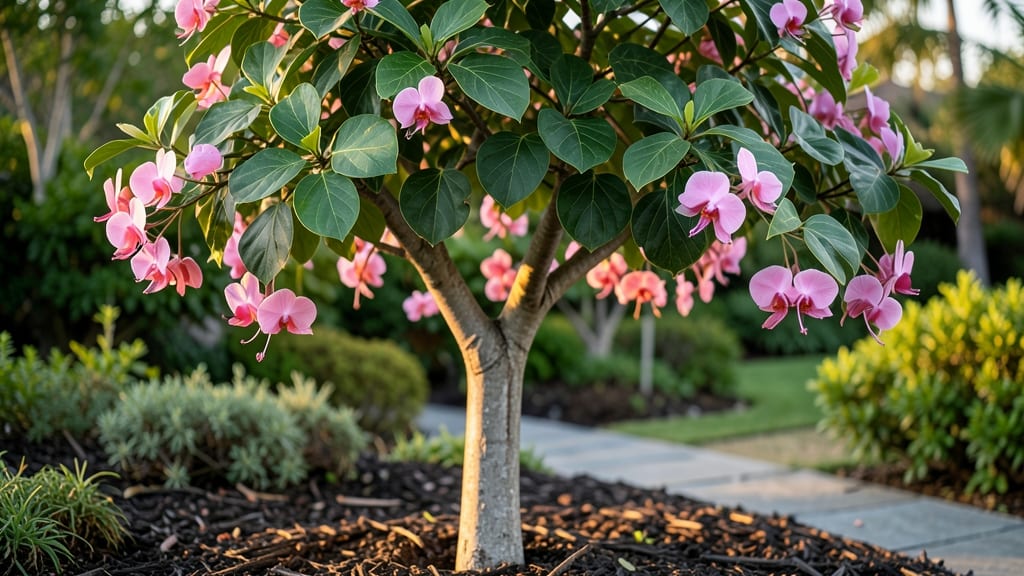
The intoxicating Hong Kong orchid tree flower—with its jasmine-like scent—can bloom year-round in your garden if you master the art of strategic pruning. 🌿 I’ve watched these trees transform from sparse branches to lush canopies dripping with two-toned blooms after mastering just a few key cuts.
The secret isn’t complicated, but it does require timing and patience.
This subtropical beauty thrives in Hong Kong’s humid climate but adapts well to containers if you live elsewhere. It craves bright, indirect light—think morning sun and afternoon shade—and well-draining soil that mimics its native rocky hillsides.
Water when the top inch dries out, but never let it sit soggy. The real magic happens when you prune after flowering: this forces fresh growth and more blooms.
With the right approach, you’ll end up with a tree that flowers continuously, its delicate pink-and-white blooms releasing that intoxicating scent even in winter. The leaves stay glossy, the branches fill out, and you’ll get more flowers than you know what to do with.
Trust me, your neighbors will ask for cuttings.
Works equally well in urban gardens, large pots, or even as a striking street tree. The key is consistency—prune at the right time, feed lightly, and watch it reward you with fragrance and beauty all year. Ready to turn your tree into a flowering powerhouse?
📚 In This Guide
- What you need
- Instructions
- Tips and common mistakes
- Wrapping up and next steps
What you need
- ● Hong Kong Orchid Tree: 1–3 mature plants (for pruning/propagation) or
- ● Seeds (if starting from scratch—germination can be tricky!)
- ● Pruning Tools: 1 pair of sterilized bypass pruners (for clean cuts)
- ● 1 sharp pruning saw (for thicker branches, ½"–1" diameter)
- ○ 1 hand saw or loppers (optional, for larger branches)
- ● Soil & Potting Mix: Well-draining cactus/succulent mix (or 50% potting soil + 50% perlite/sand)
- ● 1–2 drainage trays (to prevent root rot)
- ● Fertilizer: Balanced 10-10-10 or 20-20-20 fertilizer (diluted to ½ strength)
- ○ Slow-release orchid fertilizer (optional, for potted plants)
- ● 1 rooting hormone (to boost cutting success)
- ● 1 spray bottle (for misting cuttings)
- ● 1 clear plastic bag (to create a humidity dome)
- ● 1 thermometer/hygrometer (to monitor ideal conditions: 70–80°F / 21–27°C)
- ● A sunny location (6+ hours of direct sunlight daily)
- ● Patience! Orchid Trees bloom best when mature (3–5 years for seeds, 1–2 for cuttings).
- ● Access to running water (for deep watering—avoid soggy soil!)
How to prune your Hong Kong orchid tree for year-round blooms
Here's the method I've used to keep my tree flowering nonstop—no dead branches, no wasted energy.
✂️ Step 1: Time Your Pruning for Maximum Impact
Prune your Hong Kong orchid tree right after flowering peaks—usually late winter or early spring. This timing lets the tree recover before summer heat while still maintaining its shape. I always wait until at least 50% of blooms have dropped before touching the shears. The plant needs to redirect energy from spent flowers to new growth.
Never prune during active bloom—you'll cut off next year's flowers. If you missed the window, late summer is the second-best time, though you'll sacrifice some winter blooms. Watch for new buds forming along branches; these are your signal that the tree is ready for shaping.
✂️ Step 2: Remove Dead and Overcrowded Branches First
Start by cutting out any dead, diseased, or crossing branches—these compete with healthy growth. Use clean, sharp pruners to make cuts at a 45-degree angle, about ¼ inch above a leaf node or outward-facing bud. This encourages outward growth rather than inward crowding.
Look for branches growing straight up or rubbing against others—these need removal first. I like to step back every few cuts to visualize the tree's natural shape. The goal is to open up the center for air circulation while maintaining a full, rounded silhouette. Never remove more than 25% of the tree's foliage in one session.
✂️ Step 3: Shape for Continuous Flowering
For year-round blooms, focus on maintaining an open, airy structure. Cut back overly long branches by ⅓ their length to encourage bushier growth and more flower buds. Make cuts just above a leaf node where new growth will emerge. This is where the magic happens—the tree responds by producing multiple new shoots from that point.
Pay special attention to branches that haven't bloomed in the past year. These often need more aggressive pruning to stimulate new flower production. I always prune these branches back to just above a strong lateral bud—this forces the tree to redirect energy into flowering rather than maintaining old wood.
☀️ Step 4: Post-Pruning Care for Strong Recovery
After pruning, give your tree a balanced fertilizer (10-10-10 works well) to support new growth. Water deeply within 24 hours to help the tree recover from the stress of pruning. The soil should be moist to 6 inches deep—stick your finger in to check.
Place the tree in bright, indirect light for the first week after pruning. Avoid direct sun until new growth appears—this prevents leaf scorch. You'll see new shoots emerging within 3-4 weeks if everything's right. If you don't see new growth by then, the pruning was too aggressive or the tree needs more fertilizer.
Tips & tricks for perfect Hong Kong orchid tree pruning
Here's what I've learned after years of keeping my orchid tree blooming continuously—these small details make all the difference.
Timing is Everything: That 50% bloom drop rule is non-negotiable. I learned this the hard way after pruning too early and getting sparse blooms all summer. Wait until you see at least half the flowers wilting naturally—this ensures you're not cutting off next year's buds. If you're unsure, snap a photo of your tree's current bloom stage and compare it to reference images online.
The 45-Degree Angle Secret: When making cuts in Step 2, that quarter-inch above the leaf node isn't just a suggestion—it's where new growth emerges. I always make my cuts at a 45-degree angle to prevent water from pooling on the wound, which could cause rot. Use a sharp pruner and wipe the blades with rubbing alcohol between cuts to prevent spreading disease.
Visualizing the Shape: Step back every few cuts to check your progress—this is where most people go wrong. Your goal should be a rounded silhouette with an open center. Think of it like sculpting: you're removing branches that block light from reaching the interior. I like to imagine the tree as a clock face, ensuring branches are evenly spaced around the center.
Post-Pruning Light Strategy: After pruning, bright indirect light is crucial for the first week. I place my tree near an east-facing window where it gets morning sun but is shaded from harsh afternoon rays. If you don't have ideal window space, consider using a grow light on a timer for 12 hours a day—this mimics natural light cycles and prevents leaf scorch while new growth establishes.
Pro Tips for Hong Kong Orchid Tree Flower
- Here's what I've learned after years of keeping my orchid tree blooming continuously—these small details make all the difference.
- Timing is Everything: That 50% bloom drop rule is non-negotiable.
- The 45-Degree Angle Secret: When making cuts in Step 2, that quarter-inch above the leaf node isn't just a suggestion—it's where new growth emerges.
Frequently asked questions
When is the best time to prune my Hong Kong Orchid Tree for maximum flowers?
The ideal time to prune is late winter or early spring (February–March), just before new growth begins. This encourages lush, flowering branches while avoiding damage to dormant buds. Avoid heavy pruning after flowering (summer), as it may reduce next year’s blooms. Light shaping can be done anytime, but never prune during frost or extreme heat.
How much should I trim back my tree? Can I be too aggressive?
Start with 1/3 of the plant’s height—cut back to a strong outward-facing bud—to maintain shape and density. Over-pruning (cutting >50%) risks stunting growth or reducing flowers. Focus on removing dead, crossing, or weak branches first. Pro tip: Use sterilized shears to prevent disease!
Why isn’t my Hong Kong Orchid Tree flowering? What’s wrong?
Lack of flowers often stems from poor light, over-fertilization, or improper pruning. Ensure it gets full sun (6+ hours/day) and fertilize lightly (balanced 10-10-10) in spring/summer. If pruned too late or harshly, it may delay blooms. Check for pests (aphids, scale) too—they stress the tree. Patience helps: Young trees (under 3 years) may take longer to flower.
Are there alternatives to the Hong Kong Orchid Tree for fragrant, low-maintenance flowers?
Yes! Consider these fragrant, drought-tolerant options for similar impact:
For year-round interest, pair with evergreen shrubs like Gardenia (fragrant white flowers) or Lantana (colorful, pollinator-friendly). Yellowing leaves often signal overwatering, nutrient deficiency, or root stress. Check soil moisture—water deeply but infrequently (let top 2–3 inches dry). If roots are exposed or soil is waterlogged, improve drainage. Feed with iron supplement (for yellowing) or slow-release fertilizer (for overall health). Avoid mulch piles near the trunk to prevent rot.
My tree’s leaves are yellowing or dropping—what should I do?
Wrapping up and next steps
The Hong Kong Orchid Tree (Bauhinia × blakeana) isn’t just a stunner—it’s a year-round fragrance machine when you master the art of pruning! By following the right techniques, you’ll enjoy lush blooms, vibrant colors, and that signature sweet scent for months.
Whether you’re a beginner or a seasoned gardener, a little precision goes a long way in keeping your tree thriving.
Ready to transform your garden or balcony? Grab your pruners, pick a sunny spot, and start pruning with confidence—your orchid tree (and your nose!) will thank you. 🌸✨