
Pruning
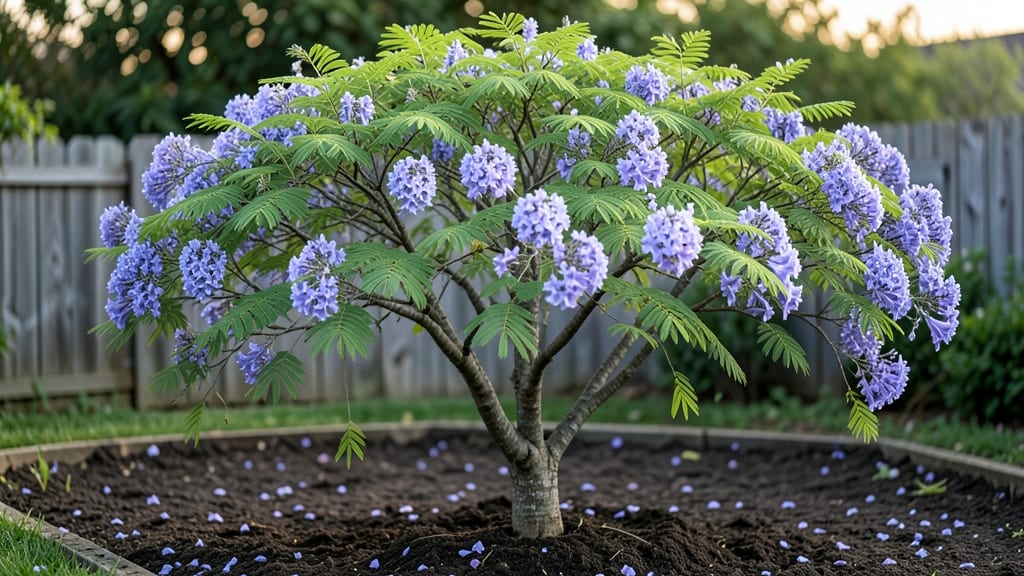
The dazzling jacaranda tree flower transforms your yard into a lavender-blue dream each spring—but with smart pruning, those branches could bloom even more spectacularly. I’ve spent years watching mine go from a few scattered blooms to dramatic, foot-long cascades after learning the simple timing and technique.
The key isn’t just cutting back—it’s understanding when to shape the tree for maximum flower production while keeping its iconic silhouette intact.
Most gardeners prune too late or too aggressively, which cuts off next year’s blooms. But jacarandas flower on new wood, meaning strategic cuts in late winter or early spring trigger dense clusters.
You’ll need sharp pruners, a ladder (for mature trees), and about 30 minutes to shape a small-to-medium specimen. The payoff? A canopy so thick with blossoms that neighbors ask how you did it—no magic, just smart pruning.
What you’ll end up with is a tree that looks like it’s wearing a watercolor masterpiece for months, not just weeks. The flowers stay vibrant longer, the branches stay sturdy, and you avoid the sad, bare look that happens when pruning goes wrong.
Even better, this method works for young trees too—start now, and you’ll have a showstopper in just a few years.
Works whether you’re shaping a young sapling or maintaining a mature tree in your front yard. The same principles apply to container-grown jacarandas too—just scale the tools. Ready to turn your tree into a blooming superstar? Let’s get those shears out.
📚 In This Guide
- What you need
- Instructions
- Tips and common mistakes
- Wrapping up and next steps
What you need
- ● Pruning shears – Bypass or anvil type, sharp enough to cut ½-inch thick branches (e.g., blank">Felco F-2 or blank">Gonicc 8201B). Quantity: 1
- ● Loppers – For branches ½-inch to 2-inches thick (e.g., blank">Fiskars X27). Quantity: 1
- ● Pruning saw – For thicker branches 2+ inches (e.g., blank">Fiskars X7). Quantity: 1
- ● Gloves – Heavy-duty, cut-resistant (e.g., blank">Worthington Industrial). Quantity: 1 pair
- ● Safety goggles – To protect against debris. Quantity: 1 pair
- ● Disinfectant (70% isopropyl alcohol or bleach solution) – For sterilizing tools between cuts. Quantity: Small bottle
- ○ Pruning sealant (optional) – For large cuts >1-inch diameter (e.g., blank">Tanglefoot Tree Wound Pruning Sealer). Quantity: Small tube
- ● Ladder or extension pole – Sturdy, 10–15 ft tall (e.g., blank">Lopper-style pole saw for hard-to-reach branches). Quantity: 1
- ● Heavy-duty trash bags – For collecting pruned branches. Quantity: 2–3
- ● Notebook & pen – To sketch your tree’s structure before pruning. Quantity: 1
- ● Best time to prune: Late winter or early spring (before new growth begins) or right after flowering (summer). Avoid pruning during active bloom to preserve flowers! ⏳
- ● Weather check: Choose a dry, calm day (no rain forecasted for 24 hours).
- ● Tree health assessment: Inspect for diseased, dead, or crossing branches before starting.
- ● Water access: Have a hose nearby to drench roots post-pruning (helps recovery).
- ● Tree pruning spray – Fungicide (e.g., blank">Ortho Fruit & Citrus Tree Spray) to prevent infections.
- ● Branch spreader – For shaping wide-spreading branches (e.g., Tree branch spreader straps).
- ● Camera or phone – To document before/after progress!
- ● Refreshments & snacks – Pruning is hard work—earn those blooms! 🍪☕
Step-by-step instructions for pruning jacaranda trees to maximize bloom
Pruning jacarandas isn't just about shaping—it’s about unlocking their genetic potential for dramatic, year-round color. Here’s how I’ve refined my approach after years of watching these trees transform from sleepy specimens into flowering powerhouses.
Time Your Pruning for Optimal Growth and Bloom
Jacarandas bloom on old wood, so timing is everything. Prune right after their spring bloom—typically late April to early May—when flowers have faded but new growth hasn’t yet begun. This ensures the tree directs energy into next year’s flower buds rather than leafy growth. I wait until at least 50% of the blossoms have dropped, as this signals the tree’s natural shift from flowering to vegetative growth.
Never prune in fall or winter. Doing so removes next year’s flower buds before they’ve formed, and the tree won’t compensate. If you miss the spring window, hold off until early summer—just avoid heavy pruning after mid-July, as this can stimulate tender new growth vulnerable to late-season frosts.
Assess the Tree’s Structure and Remove Dead or Weak Wood
Start by removing any dead, diseased, or crossing branches—these compete with healthy growth and reduce overall vigor. Use clean, sharp pruning shears to make cuts just outside the branch collar (the swollen area where the branch meets the trunk). I make a slight upward angle on the cut to prevent water from pooling and rotting the wound.
Next, identify water sprouts—those fast-growing, vertical shoots that steal energy from flowering. These are easy to spot: they’re thinner, leafier, and often grow straight up like arrows. Cut them back to their point of origin. Thin the canopy by removing up to 20% of the tree’s total branches, prioritizing those that improve air circulation and sunlight penetration to the inner branches.
Shape for Balance and Encourage Flowering Branches
Jacarandas naturally grow with a broad, rounded canopy, but pruning can refine their shape while promoting more flowering branches. Focus on open-center pruning: remove branches that grow inward or downward, as these block light and reduce airflow. Aim to create a balanced, vase-like structure with strong, outward-facing branches—these are where the most vibrant flowers will appear.
For larger branches over 1.5 inches in diameter, use pruning saws to make clean cuts. For smaller branches, shears work best. Always cut back to a bud or lateral branch rather than leaving a stub. This encourages new growth in the right direction and prevents unsightly regrowth. Step back frequently to visualize the tree’s silhouette—you’re sculpting, not just trimming.
Fertilize and Hydrate to Support Post-Pruning Recovery
After pruning, jacarandas need a boost to recover and set next year’s flower buds. Apply a balanced, slow-release fertilizer (like 10-10-10) around the drip line of the tree—this is where the roots actively absorb nutrients. Water deeply immediately after pruning to reduce stress, then maintain 1-2 inches of soil moisture for the next 4-6 weeks. Mulch with 2-3 inches of organic mulch (like wood chips) to retain moisture and regulate soil temperature.
Here’s the thing—jacarandas are drought-tolerant once established, but they’ll reward you with more abundant blooms if you support them post-pruning. Avoid overwatering, though; soggy soil invites root rot. If your tree is in a container, reduce watering slightly after pruning, as the root system will adjust to the new growth demands.
Monitor and Adjust for Year-Round Blooms
After your first pruning session, keep an eye on the tree’s response. Healthy new growth should appear within 4-6 weeks, and you’ll notice small, fuzzy flower buds forming along the branches by late summer. If the tree produces fewer flowers than expected, it may need light pruning in early summer to encourage a second flush of blooms—just remove only the tips of branches to promote bushiness without sacrificing next year’s flowers.
Real talk: Jacarandas are forgiving, but consistency is key. I prune mine annually at the same time each year, and they’ve gone from sporadic bloomers to reliable, show-stopping displays for over a decade. The secret? Treat pruning like a conversation with the tree—listen to its growth patterns and adjust accordingly.
Tips & tricks for perfect jacaranda tree pruning
Timing and technique make all the difference when transforming your jacaranda into a flowering powerhouse—here's how to avoid common pitfalls and maximize those vibrant blooms.
Timing is Everything: The late April to early May window is non-negotiable for spring pruning because jacarandas bloom on old wood. I've learned the hard way that pruning too early removes flower buds that haven't formed yet, while waiting too long shifts the tree's energy toward leafy growth. Watch for that 50% blossom drop—it's your clear signal to begin. For summer pruning, stick to early summer only, never after mid-July when new growth becomes vulnerable to frost damage.
Precision Cutting Technique: When removing branches, always cut just outside the branch collar using clean, sharp pruning shears. The slight upward angle prevents water pooling that leads to rot. For branches over 1.5 inches, use a pruning saw—never make cuts larger than necessary. I've seen too many trees develop unsightly stubs that become entry points for disease when proper cutting techniques aren't followed.
Canopy Management Strategy: The 20% thinning rule is your guide for removing competing branches. Focus on inward-growing or downward branches that block sunlight and airflow. These branches steal energy from flowering and create ideal conditions for fungal diseases. Step back frequently to visualize the tree's silhouette—you're sculpting an open vase shape that promotes maximum bloom potential.
Post-Pruning Care: The immediate deep watering after pruning is crucial for reducing stress, but maintaining 1-2 inches of soil moisture for 4-6 weeks supports root recovery. I've found that applying 2-3 inches of organic mulch creates a moisture-retaining barrier while regulating soil temperature—this makes all the difference in establishing next year's flower buds.
Pro Tips for Jacaranda Tree Flower
- Timing and technique make all the difference when transforming your jacaranda into a flowering powerhouse—here's how to avoid common pitfalls and maximize those vibrant blooms.
- Timing is Everything: The late April to early May window is non-negotiable for spring pruning because jacarandas bloom on old wood.
- Precision Cutting Technique: When removing branches, always cut just outside the branch collar using clean, sharp pruning shears.
Frequently asked questions
Got questions about keeping your jacaranda tree flower showstopper thriving? We’ve got answers! Here are some of the most common queries from gardeners looking to maximize those stunning blooms.
When is the best time to prune jacaranda trees for flowers?
The ideal time to prune is right after flowering (late spring to early summer). This encourages healthy growth for the next blooming season. Avoid heavy pruning in fall or winter, as it may delay spring flowers. Light shaping can be done anytime, but wait until after blooms drop to avoid cutting off next year’s buds.
How much can I prune a jacaranda tree without harming it?
Jacarandas are resilient, but never remove more than 25% of the canopy in one session. Focus on thinning out dense branches (especially those rubbing together) and shaping for airflow. Over-pruning can stress the tree and reduce flower production. For mature trees, spread pruning over 2-3 years if needed.
Why aren’t my jacaranda flowers as vibrant as they used to be?
Dull or sparse blooms often signal nutrient deficiencies, overwatering, or improper pruning. Boost phosphorus (key for flowers) with a balanced fertilizer in early spring. Ensure the tree gets full sun (6+ hours/day) and well-draining soil. If you’ve pruned too late, next year’s flowers may be delayed—adjust timing for future seasons!
Can I grow a jacaranda tree in a container? How does pruning differ?
Yes! Dwarf varieties (like Jacaranda mimosifolia ‘Little Leaf’) thrive in large containers (15+ gallons). Prune more aggressively in containers to control size, but still avoid heavy cuts after winter. Use a slow-release fertilizer and ensure drainage—root-bound trees bloom poorly. Repot every 2-3 years for best results.
Are jacaranda flowers toxic to pets or wildlife?
Great news! Jacaranda flowers and leaves are non-toxic to dogs, cats, and wildlife. However, the seeds can be mildly irritating if ingested in large quantities. While your furry friends can safely enjoy the shade, keep an eye on curious pets nibbling on fallen seeds. Birds and bees adore them—perfect for pollinator gardens!
What’s the fastest way to revive a jacaranda tree with dead branches?
Start by removing all dead/diseased wood with sterilized pruners. Apply a fungicide if you spot signs of infection (like black spots). Water deeply but reduce frequency if the soil stays soggy. Feed with a high-potassium fertilizer to strengthen recovery. With proper care, healthy branches will sprout within 1-2 seasons!
Wrapping up and next steps
The jacaranda tree’s vibrant purple blooms are a sight to behold—but keeping them thriving requires a little effort. By mastering the art of pruning, you can ensure year-round color and a healthier tree. Remember: timing, technique, and tools are your best friends! 🌸
Ready to transform your garden? Grab your pruners, mark your calendar, and start planning your next pruning session. With patience and practice, your jacaranda will reward you with stunning, seasonal beauty for years to come!