
Landscaping
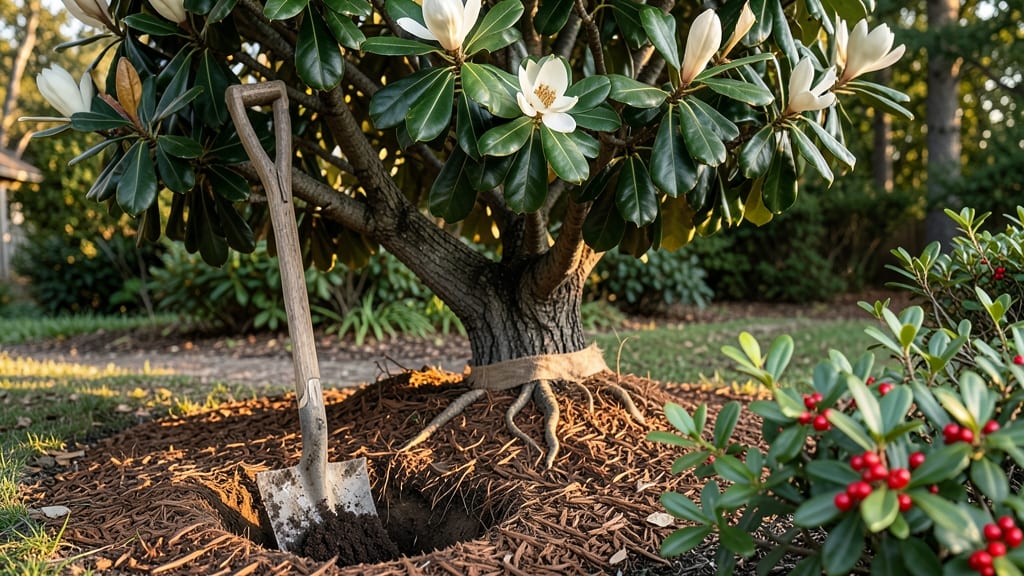
The right tree and shrub placement turns your yard from ordinary to extraordinary—landscape tree and shrub planting isn’t just about digging holes, it’s about crafting a living canvas that changes with every season.
I learned this the hard way when my first oak tree blocked the morning sun from my patio, turning my sun-loving roses into sad, leggy shadows by noon.
Start with the big picture: mature size matters most. A 30-foot oak planted 20 feet from your house might seem fine now, but in 15 years, it’ll be scraping your roof.
Pair tall evergreens like arborvitae with flowering shrubs like hydrangeas for year-round texture and color—think dark green backdrops with pops of pink or purple blooms when spring arrives. The key is spacing: most shrubs need 3-6 feet between plants, while trees should get at least their mature width in clearance.
What you’ll end up with is a landscape that feels intentional, not random—where every plant has a purpose, whether it’s framing a view, providing shade, or creating privacy.
The best designs layer plants by height, with tall trees at the back, mid-height shrubs in the middle, and low ground covers up front. Even in winter, when most plants go dormant, the structure and color of evergreens and bare branches will keep your yard looking alive.
This approach works for any yard size, from suburban backyards to small urban lots. The only rule? Plan for the future, not just the present. Once you see how a well-thought-out planting transforms a space, you’ll never look at your yard the same way again.
📚 In This Guide
- What you need
- Instructions
- Tips and common mistakes
- Wrapping up and next steps
What you need
- ● Trees & Shrubs: Choose healthy, container-grown or balled-and-burlapped (B&B) plants. Quantity depends on your design—plan for 1-3 plants per 100 sq. ft. for shrubs and 1 tree per 200-400 sq. ft. for mature spacing.
- ● Shovel or Spade: A round-point shovel (16-18") for digging holes and a flat-edged spade (12-14") for edging.
- ● Garden Trowel: For finer adjustments, especially around roots.
- ● Wheelbarrow or Bucket: To haul soil, mulch, and tools (aim for 5+ gallons capacity).
- ● Measuring Tape: Essential for accurate spacing (trees: 1.5x their mature width; shrubs: 2-3x their width).
- ● Garden Gloves: Heavy-duty, waterproof gloves to protect your hands.
- ● Pruners: Bypass pruners for clean cuts (avoid anvil pruners—they crush stems).
- ● Soil Amendment: Compost or aged manure (2-3 gallons per plant) to enrich native soil.
- ● Mulch: 3-4 inches of organic mulch (pine straw, shredded bark, or wood chips) to retain moisture and suppress weeds.
- ● Watering Can or Hose with Nozzle: For deep watering post-planting.
- ○ Stakes & Twine (Optional but Helpful): For young, top-heavy trees (use 2-3 stakes per tree).
- ● Post-Hole Digger: For planting larger trees or shrubs in clay-heavy soil.
- ● Soil pH Test Kit: To check if your soil needs lime (to raise pH) or sulfur (to lower pH).
- ● Root Stimulator: A mycorrhizal fungus or liquid fertilizer to boost root growth.
- ● Edging Tool: For clean lines around mulch or plant beds.
- ● Knee Pads: Because gardening is hard on the knees! 😅
- ● Plant Tags & Marker: To label varieties and track planting dates.
Step-by-Step instructions for planting trees and shrubs like a pro
Here's how I've planted dozens of trees and shrubs—this method guarantees strong roots and stunning year-round curb appeal.
Test Soil and Prepare Planting Holes
Before digging, test your soil's drainage by filling a small hole with water. If it doesn't drain within 2 hours, amend the soil with 2-3 inches of compost and a 50/50 mix of native soil and organic matter. This prevents root rot in heavy clay or waterlogged spots.
Dig holes twice as wide as the root ball but only as deep as the container or root system. Set your shovel aside—you'll use it to score the sides of the hole for better root penetration. I always check the depth by placing the plant in the hole and ensuring the top of the root ball sits 1-2 inches below ground level—this prevents stem rot while keeping the plant stable.
Position Plants for Optimal Growth and Aesthetics
Step back and visualize the mature size of each plant. Trees should have 8-10 feet of clearance from sidewalks, driveways, and structures, while shrubs need 3-5 feet of breathing room. I mark the center of the hole with a stake to ensure perfect alignment before lowering the plant.
For layered landscapes, place taller shrubs and trees toward the back, with medium-height plants in the middle and low-growing ground covers in front. This creates depth and visual interest. If planting near a fence or wall, position the plant 2-3 feet away to allow for airflow and future pruning.
Backfill and Water for Immediate Stability
Remove the plant from its container and gently loosen the roots if they're circling. Place it in the hole so the top of the root ball is level with the surrounding soil. Fill the hole with the amended soil, tamping lightly every 2-3 inches to eliminate air pockets. Avoid compacting too firmly—roots need room to spread.
Water deeply right after planting to settle the soil and eliminate air gaps. Use 1-2 gallons of water for small shrubs and 5-10 gallons for mature trees, depending on size. The soil should be moist 6-8 inches deep—check with your finger. Mulch the base with 2-3 inches of organic mulch, keeping it 3-4 inches away from the trunk to prevent moisture buildup and rot.
Stake and Protect for Long-Term Success
Only stake trees if they're taller than 6 feet or in windy areas. Use two stakes placed diagonally from the trunk, tied loosely with soft fabric strips to avoid girdling the stem. The goal is to provide temporary support—roots should stabilize the plant within 1-2 years.
Protect newly planted trees and shrubs from deer, rabbits, or lawn equipment by installing tree guards or wire mesh. Water deeply once a week for the first month, then taper to every 2 weeks once established. Avoid overwatering—soggy soil suffocates roots. You'll know you're doing it right when leaves stay vibrant and new growth appears within 4-6 weeks.
Tips & tricks for perfect landscape tree and shrub planting
Planting trees and shrubs right the first time means years of trouble-free growth. Here's what I've learned from planting dozens of landscapes—simple tricks that make all the difference.
Soil Prep Secret: The 2-hour drainage test in Step 1 is your safety net against root rot. If water pools after 2 hours, you're dealing with heavy clay. I've seen plants fail spectacularly in unamended clay—don't skip this test! For extra insurance, mix in 1 cup of perlite per cubic foot of amended soil to improve aeration without changing the structure too much.
Root Ball Placement: That 1-2 inch depth guideline in Step 1 isn't just about stability—it's about preventing stem rot. I've buried root balls too deep in my excitement, and those plants struggled for years. Use a level to check depth before backfilling, and mark the original soil line on the container with a marker if needed.
Watering Wisdom: The 6-8 inch moisture check in Step 3 is crucial, but here's what nobody tells you: water until you see runoff from the hole. This ensures water reaches all the way down to the roots. For trees, I use a garden hose with a slow setting—it takes about 30 minutes to deliver those 5-10 gallons properly.
Mulch Matters: That 2-3 inch mulch layer in Step 3 isn't just decoration—it's insulation. Keep it consistent around the base, but remember the 3-4 inch clearance from the trunk. Too much mulch touching the bark creates a perfect environment for rot. I use shredded bark mulch because it breaks down slowly and improves soil structure over time.
Pro Tips for Landscape Tree And Shrub Planting
- Planting trees and shrubs right the first time means years of trouble-free growth.
- Soil Prep Secret: The 2-hour drainage test in Step 1 is your safety net against root rot.
- Root Ball Placement: That 1-2 inch depth guideline in Step 1 isn't just about stability—it's about preventing stem rot.
Frequently asked questions
Got questions about transforming your yard with trees and shrubs? You’re not alone! Here are answers to the most common queries to help you plant with confidence and ease.
What’s the best time of year to plant trees and shrubs for long-term success?
The ideal window is early spring (after the last frost) or early fall (4-6 weeks before the first frost). These times let roots establish before extreme heat or cold. Pro tip: Avoid planting in summer or winter—roots struggle in either case!
How do I determine the correct spacing between plants?
Spacing depends on the plant’s mature size. Check the tag or research guidelines: small shrubs (3–6 ft) need 2–3 ft apart; large trees (30+ ft) require 20–30 ft. Rule of thumb: Leave room for growth—crowding leads to competition for water/nutrients.
Can I plant trees and shrubs too close to my house or driveway?
Yes! Avoid planting within 15–20 ft of structures (roots can damage foundations) or under power lines. For driveways, keep trees 10+ ft away to prevent root cracks. Always check local codes—some areas restrict invasive roots near sidewalks.
How often should I water newly planted trees and shrubs?
Water deeply 2–3 times per week for the first year (1–1.5 inches total). After that, taper to once a week (or during droughts). Mulch 2–3 inches thick to retain moisture. Warning: Overwatering suffocates roots—always check soil moisture before watering.
What should I do if my new plants look stressed or wilted?
Stress often means underwatering, overwatering, or transplant shock. Check soil moisture, prune damaged leaves, and apply a balanced fertilizer (like 10-10-10). If pests (aphids, spider mites) are the culprit, use neem oil or insecticidal soap. Most plants recover in 2–4 weeks with TLC!
Are there low-maintenance alternatives to traditional trees/shrubs?
Try drought-tolerant natives (e.g., dwarf ninebark, crepe myrtle, or boxwood) or evergreens (like juniper or holly) for year-round color. Bonus: Succulents and ornamental grasses need minimal care too!
Wrapping up and next steps
Transforming your outdoor space with landscape tree and shrub planting is a rewarding project that enhances beauty and value year-round! 🌿 By mastering proven spacing and placement, you’ll create a thriving, low-maintenance garden that delights every season.
Whether you’re a beginner or a seasoned gardener, the key is thoughtful planning—now’s the perfect time to roll up your sleeves and turn your vision into reality.
Ready to get started? Sketch your layout, gather your tools, and begin planting with confidence. Your future landscape will thank you!