
Pruning
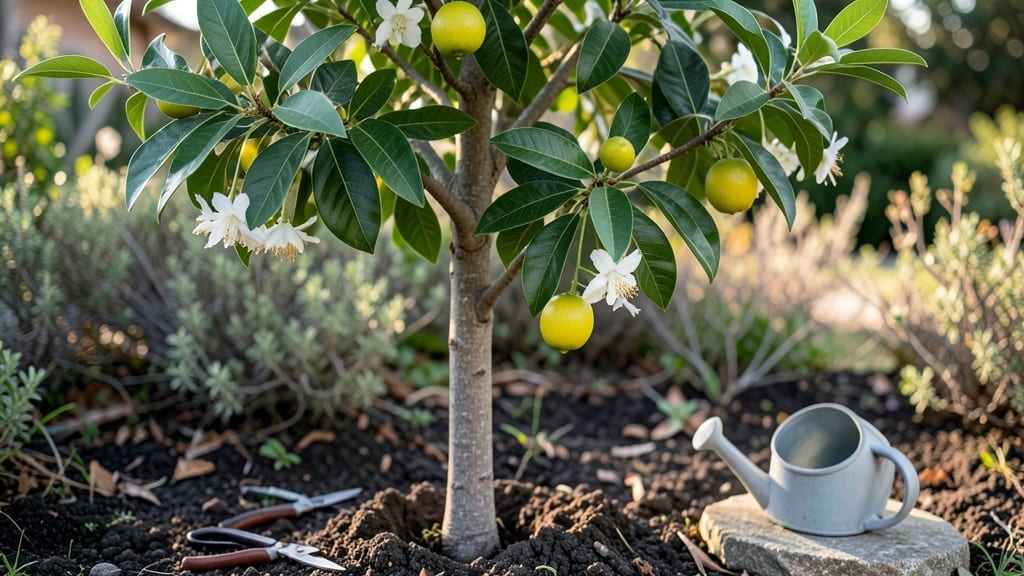
Growing a dwarf lemon guava tree in small spaces means you can finally enjoy that tropical flavor without sacrificing your patio or balcony. 🌱 I learned the hard way—my first attempt nearly outgrew its container, but now I’ve got a 5-foot-tall powerhouse producing fruit year after year.
The secret lies in the right dwarf variety, precise pruning, and understanding its quirky needs.
This tree thrives in USDA Zones 10-11, but with the right care, you can even overwinter it indoors in cooler climates. It’s not fussy about soil—just well-draining and slightly acidic—but it hates soggy roots.
A 15-gallon container is perfect for dwarf varieties, and with regular pruning, you’ll keep it compact while encouraging heavy fruit production. The key is patience: it takes about 18-24 months from planting to first harvest, but once it starts, you’ll wonder why you didn’t try this sooner.
Imagine plucking bright yellow, citrus-scented fruit straight from your balcony—no grocery store needed. The flavor is a mix of lemon and guava, sweet-tart and perfect for jams, teas, or fresh eating.
With the right pruning schedule (I do it twice a year), your tree will stay manageable while producing dozens of fruits per season. The best part? It’s drought-tolerant once established, so watering becomes a breeze after the first year.
Even if you’ve never grown a fruit tree before, this dwarf variety forgives mistakes—just avoid overwatering and give it 6+ hours of sunlight daily. Whether you’re in a city apartment or a sunny backyard, this little tree packs a big punch. Let’s get you growing!
📚 In This Guide
- What you need
- Instructions
- Tips and common mistakes
- Wrapping up and next steps
What you need
- ● Dwarf lemon guava sapling: 1 (ensure it’s grafted for compact growth; check local nurseries or online plant shops).
- ● Well-draining potting mix: 5–10 gallons (use a blend of cactus/succulent mix + perlite or coconut coir for aeration).
- ● Container: 1–3 gallon pot (with drainage holes; terracotta or fabric pots work best).
- ● Pruning tools: Bypass pruners (sharp, sterilized): 1 pair.
- ○ Hand saw (for thicker branches): 1 (optional for mature trees).
- ● Fertilizer: Balanced organic fertilizer (10-10-10 or citrus-specific blend) + slow-release granules.
- ● Mulch: 1–2 inches of organic mulch (e.g., wood chips or straw) to retain moisture.
- ● Gloves: 1 pair (nitrile or leather for protection).
- ● Watering can or hose: With a gentle spray nozzle.
- ● pH test kit: To monitor soil acidity (ideal range: 5.5–6.5).
- ● Support stake: 1 (bamboo or metal, 3–4 ft tall for stability).
- ○ Optional: Grow lights (LED, full-spectrum) for indoor setups.
- ● Tree collar spray (copper-based) to prevent fungal issues.
- ● Trellis or cage (for vertical growth in tight spaces).
- ● Location: Full sun (6+ hours/day) or bright indirect light (for indoors).
- ● Climate: Warmth-loving (USDA Zones 9–11; containerized trees can be overwintered indoors).
- ● Water access: Regular irrigation (keep soil moist but not soggy).
Step-by-Step guide to cultivating a thriving dwarf lemon guava tree
Here's how to coax a tropical fruit tree into small-space success.
🌱 Step 1: Select and Prepare the Perfect Container
Choose a 15-20 gallon container with drainage holes—dwarf varieties need room to develop roots but won't outgrow a patio. I use fabric grow bags because they prevent root circling and allow excess moisture to evaporate. Fill the bottom third with 3-4 inches of coarse gravel for drainage, then add a 2-inch layer of orchid bark mix to mimic the tree's native well-draining soil.
This layered approach prevents soggy roots, which are the #1 killer of container-grown tropicals. The bark mix also provides aeration that dwarf guavas crave. Avoid garden soil—it compacts and suffocates roots. Instead, blend 50% premium potting mix with 50% perlite for that ideal air-to-soil ratio.
🌿 Step 2: Plant with Precision and Support
Dig a hole twice as wide as the root ball but only as deep as the container's original planting level. Gently loosen any circling roots with your fingers—never cut them. Place the tree so the root flare (where roots meet trunk) sits 1 inch above soil level. This prevents stem rot from buried bark.
Stake immediately with a 5-foot bamboo stake tied loosely to the trunk with soft plant tape—dwarf guavas grow top-heavy. I use a 3-way branch spreader to gently angle the main branches outward while they're still pliable. This creates an open canopy that maximizes fruit exposure to sunlight.
☀️ Step 3: Master the Light-Water Balance
Position your tree where it gets 6-8 hours of direct sun daily—south or west windows are ideal. Dwarf guavas tolerate partial shade but will produce 50% fewer fruits without full sun exposure. Rotate the container quarter-turn weekly so the tree grows evenly toward all light sources.
Water deeply every 3-4 days until water runs freely from drainage holes—this encourages deep root growth. Let the top 2 inches of soil dry between waterings. Overwatering causes root rot, while underwatering leads to leaf drop. I use a moisture meter to check—when it reads 40% or less, it's time to water.
✂️ Step 4: Prune for Fruit Production and Shape
After the first flush of flowers appears, prune back one-third of the longest branches to encourage bushier growth. Remove any crossing branches or those growing inward—these compete for energy and reduce fruit quality. I always make cuts just above a leaf node where new growth can emerge.
Thin fruits to 6-8 inches apart when they're 1 inch in diameter. This prevents branch breakage and ensures larger, sweeter guavas. Harvest when the fruit easily detaches with slight pressure—they won't ripen further off the tree. Wear gloves; the sap can irritate skin.
🪴 Step 5: Winterize and Fertilize Strategically
When temperatures drop below 50°F, move your container indoors near a bright window or under grow lights. Reduce watering to every 7-10 days—dormant trees need less moisture. I wrap the container in bubble wrap to protect roots from cold drafts, but never cover the foliage.
Fertilize monthly during growing season with a balanced 10-10-10 formula, halving the recommended dose. Dwarf guavas are sensitive to excess salts. In late winter, switch to a high-phosphorus 5-10-5 to stimulate flowering. Stop fertilizing 6 weeks before first frost—new growth is vulnerable to cold damage.
Tips & tricks for perfect dwarf lemon guava trees
These game-changing insights will help you transform your small-space container into a tropical fruit powerhouse.
Container Layering: The 3-4 inches of coarse gravel in Step 1 isn't just for drainage—it creates a thermal buffer that prevents root shock from temperature fluctuations. I've seen containers without this layer develop root rot within weeks because cold drafts would seep up from the bottom. The orchid bark mix on top mimics the airy, well-draining soil of tropical forests where guavas thrive naturally.
Root Flare Placement: That 1-inch elevation above soil level in Step 2 is critical—it's where the tree's vascular system meets its roots. If you bury the root flare, you'll suffocate the tree's natural defense against stem rot. I've had to rescue several trees by carefully excavating and repositioning them when people ignored this detail. Use your finger to verify the flare sits just above the soil line after planting.
Sunlight Strategy: The 6-8 hours of direct sun in Step 3 is non-negotiable for fruit production, but here's the pro move: place your container on a wheeled dolly during summer months. Move it to follow the sun's arc throughout the day. This gives your tree near-perfect light exposure while preventing leaf scorch from intense afternoon rays. South-facing windows work best, but west exposures give that final burst of energy for fruit development.
Pruning Precision: When you prune back one-third of the longest branches in Step 4, make your cuts at a 45-degree angle just above a leaf node. This creates a natural water runoff and exposes the bud to light, encouraging vigorous new growth. I always sterilize my pruners with rubbing alcohol between cuts to prevent disease transmission—especially important when working with tropical trees that are more susceptible to fungal infections.
Pro Tips for Lemon Guava Tree
- These game-changing insights will help you transform your small-space container into a tropical fruit powerhouse.
- Container Layering: The 3-4 inches of coarse gravel in Step 1 isn't just for drainage—it creates a thermal buffer that prevents root shock from temperature fluctuations.
- Root Flare Placement: That 1-inch elevation above soil level in Step 2 is critical—it's where the tree's vascular system meets its roots.
Frequently asked questions
Got questions about growing and caring for your lemon guava tree? You’re not alone! Here are some of the most common queries—plus straightforward answers to keep your dwarf variety thriving in small spaces.
How often should I prune my lemon guava tree?
Prune your lemon guava tree twice a year: once in late winter (before new growth starts) to shape it and remove dead branches, and again after fruiting to encourage airflow and more fruit. Use sharp, sterilized shears to avoid disease. Pro tip: Avoid heavy pruning in summer—it stresses the tree!
When will my lemon guava tree start producing fruit?
With proper care, a dwarf lemon guava tree can bear fruit in 1–2 years, though some varieties take up to 3 years. Patience is key! Ensure it gets full sun (6+ hours/day), well-draining soil, and regular watering. Bonus: Heavy fruiting often follows a good pruning session.
Why aren’t my lemon guavas ripening on the tree?
If fruit stays green or falls prematurely, it’s often due to underripe harvests, pests, or poor pollination. Try hand-pollinating with a soft brush, check for aphids or mites, and ensure the tree gets enough sunlight. Harvest tip: Pick when fruit turns yellow-green and yields slightly to gentle pressure.
Can I grow a lemon guava tree in a pot? Yes—but what size?
Dwarf varieties thrive in 15–20 gallon containers with drainage holes. Use a mix of potting soil and perlite, and repot every 2–3 years. Place the pot in a sunny spot (like a balcony or patio) and water when the top inch of soil is dry. Container hack: Rotate the pot monthly for even growth!
How cold-hardy is the lemon guava tree?
Most lemon guava trees tolerate temps down to 25–30°F, but prolonged cold (<20°F) can damage leaves or fruit. In colder climates, grow it in a pot and move it indoors or under cover during winter. Frost tip: Mulch the base to protect roots if planted outdoors.
Wrapping up and next steps
Growing a dwarf lemon guava tree in small spaces is not only possible—it’s a rewarding adventure! With the right pruning techniques, you’ll enjoy abundant fruit, compact growth, and a thriving plant that fits your patio, balcony, or even a sunny corner.
Start small, stay consistent, and soon you’ll be harvesting sweet, tangy treats straight from your own backyard.
Ready to take the next step? Pick a sunny spot, grab your tools, and begin pruning today—your future harvest is waiting! 🌱🍋