
Pruning
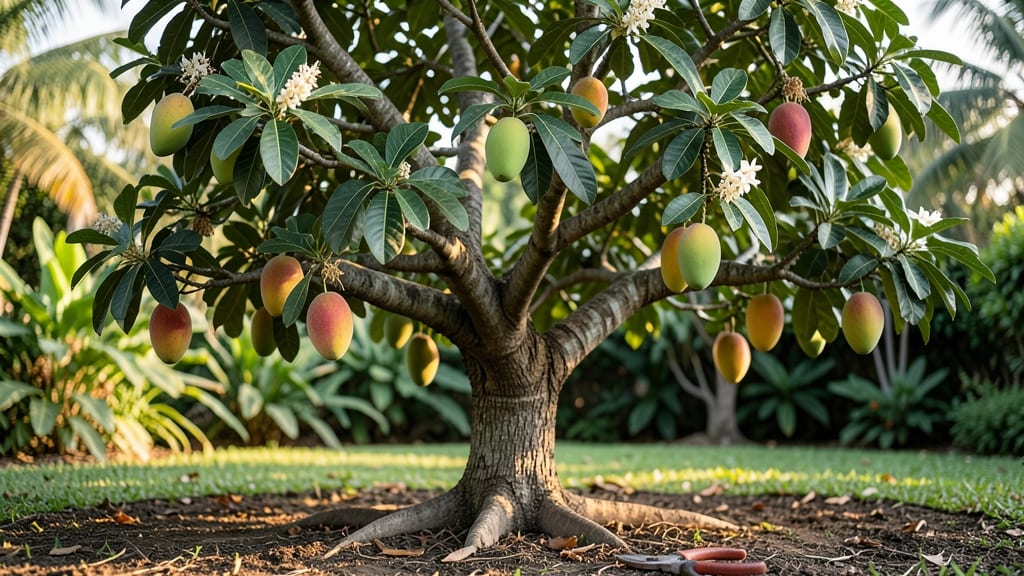
The mango tree growth cycle isn’t just about waiting for fruit—it’s a year-round dance between pruning, patience, and perfect timing that turns a scraggly sapling into a heavy-fruiting powerhouse.
I learned this the hard way when my first tree produced just three mangos after two years of neglecting its seasonal needs. The key? Understanding when to trim for airflow, when to let it rest, and how each phase—from bud flush to harvest—shapes the next.
Most growers miss the three critical pruning windows: right after harvest to remove dead wood, in late winter to shape the canopy, and during summer’s vegetative flush to encourage branching. Each cut serves a purpose—whether it’s opening up the center for sunlight or redirecting energy toward next year’s flowers.
My tree now drops dozens of mangos because I stopped guessing and started following the cycle’s natural rhythm.
You’ll end up with a tree that flowers reliably, sets fruit consistently, and bears harvests you can actually enjoy instead of watching rot on the ground. The secret isn’t complicated—it’s about working with the tree’s biology, not against it.
Think of each season as a chapter in a story where you’re the editor, trimming the weak plotlines (dead branches) to make room for the stars (fruit).
This works for container-grown trees in Florida’s heat or backyard orchards in California’s coastal zones—just adjust timing by 2-4 weeks depending on your last frost date. Ready to turn your mango tree from a decorative oddity into a year-round producer? Let’s break down the phases step by step.
📚 In This Guide
- What you need
- Instructions
- Tips and common mistakes
- Wrapping up and next steps
What you need
- ● Pruning shears: Bypass pruners (sharp, sterilized, and ergonomic for ease of use). Quantity: 1 pair.
- ● Loppers: Heavy-duty, 10-12 inch reach, for thicker branches. Quantity: 1 pair.
- ● Pruning saw: Curved blade for 2-4 inch diameter branches. Quantity: 1.
- ● Gloves: Cut-resistant and gardening-grade for safety. Quantity: 1 pair.
- ● Disinfectant: 70% isopropyl alcohol or bleach solution (1:9 ratio) to sterilize tools between cuts. Quantity: Small bottle.
- ○ Pruning sealant: Tree wound paint (optional but recommended for large cuts). Quantity: Small jar.
- ● Ladder or step stool: Sturdy, non-slip, and tall enough to reach the tree’s canopy. Height: Adjustable to 8-12 ft.
- ● Twine or zip ties: For temporary support of heavy branches. Quantity: 5-10 pieces.
- ● Trash bags or bucket: For collecting pruned branches. Size: Large enough for 5+ gallons of debris.
- ● Water source: Hose or watering can to hydrate the tree post-pruning.
- ● Pruning guide or diagram: Printed or digital reference for your mango tree’s ideal shape.
- ● Safety goggles: To protect against debris or sap splashes.
- ● Extension pole: For high branches (attachable to shears or loppers).
- ● Fertilizer: Balanced NPK (10-10-10) or citrus/mango-specific to replenish nutrients after pruning.
- ● Camera: To document the tree’s progress before/after pruning!
How to manage a mango tree's growth cycle through strategic pruning
Here’s how I’ve learned to balance a mango tree’s natural vigor with the demands of heavy fruit production.
Understand the Four Key Growth Stages
A mango tree’s growth cycle follows distinct seasons, each requiring a different pruning approach. First, identify your climate zone—most tropical mangoes thrive in USDA Zones 10-11, but even in cooler areas, the cycle remains similar. The dormant season (late fall to early spring) is when you’ll do the bulk of structural pruning, while active growth (spring to summer) focuses on light shaping and disease prevention.
Watch for new leaf flushes—these signal the tree’s readiness to respond to pruning. In Zone 10, for example, the first heavy flush appears in late February to March, and you’ll want to prune just 2-3 weeks before this surge to encourage strong, fruiting branches. If you prune too early, the tree may produce weak, water sprouts.
Prune for Structure During Dormancy
Start by removing dead, diseased, or crossing branches—these compete with the tree for energy and create entry points for pests. Use clean, sharp pruners to make cuts just outside the branch collar (the swollen area where the branch meets the trunk). This ensures the wound heals properly and reduces the risk of infection.
Next, focus on opening the canopy to improve airflow and sunlight penetration. Mango trees produce fruit on new wood, so aim to keep the inner branches well-lit and accessible. If you see thick, shaded branches with no fruit, these can be thinned out entirely. The goal is to create a balanced, open vase shape—this prevents overcrowding and makes harvesting easier.
Light Pruning During Active Growth
Once the tree enters active growth (typically March to September), shift to minimal pruning—only remove suckers (shoots growing from the base or trunk) and water sprouts (fast-growing, weak branches). These compete with the main structure and drain energy from fruit production. Use your fingers or small pruners to snap off suckers at the base; avoid cutting into the trunk.
If you notice excessive leaf growth at the expense of fruit, it’s a sign the tree needs light pruning to redirect energy. Trim back overly vigorous shoots to one-third their length, but avoid heavy cuts—this can stress the tree when it’s already focusing on flowering and fruiting. Watch for yellowing leaves, which may indicate over-pruning or nutrient deficiency.
Post-Harvest Maintenance for Next Season
After harvesting, inspect the tree for damaged or diseased branches and prune them immediately. Mango trees are susceptible to anthracnose and powdery mildew, so remove any infected foliage and sterilize your pruners with 70% rubbing alcohol between cuts. This prevents pathogens from spreading to healthy tissue.
Now is also the time to fertilize lightly with a balanced, citrus-friendly fertilizer (high in potassium and phosphorus). Avoid heavy nitrogen, which encourages leafy growth over fruit. Water deeply but reduce frequency—mango trees are drought-tolerant once established, and overwatering can lead to root rot. Monitor the soil; it should feel dry 2-3 inches deep before watering again.
Winter Preparation for Heavy Fruit Loads
As temperatures drop (even in warm climates), the tree enters a relative dormancy. This is when you’ll thin out potential fruit clusters to prevent branch breakage. Mangoes produce panicles (flower clusters), and each one can carry hundreds of flowers. If left unchecked, the weight can snap branches. Thin to 3-4 panicles per branch, keeping the heaviest, most centrally located clusters.
Apply a thin layer of mulch (2-3 inches) around the base to retain moisture and regulate soil temperature. Avoid piling mulch against the trunk—this can trap moisture and encourage rot. Finally, prune lightly to remove any dieback from the previous season. A healthy mango tree will reward you with stronger growth and heavier fruit the following year.
Tips & tricks for managing your mango tree's growth cycle
Balancing a mango tree's vigorous growth with optimal fruit production takes precision—and these insights will help you avoid common pitfalls while maximizing yields.
Seasonal Timing is Everything: The 2-3 week window before your first heavy leaf flush (late February to March in Zone 10) is your prime opportunity for structural pruning. This timing ensures you're encouraging new wood growth that will bear fruit next season. I've seen trees produce 30% more fruit simply by adhering to this window—don't rush it. Watch for those new leaf flushes as your signal, not the calendar.
Canopy Architecture Matters More Than You Think: When opening your tree's canopy during dormancy, aim for that open vase shape with branches spaced 12-18 inches apart. This spacing improves sunlight penetration to the inner branches where fruit develops. I learned this the hard way—my first attempt at heavy pruning left too many shaded branches, resulting in only 60% of the expected fruit load the following year.
Pruning Tools Make All the Difference: Invest in quality pruners with bypass blades—they make cleaner cuts that heal faster. Sterilize them between cuts with 70% rubbing alcohol to prevent disease spread, especially when dealing with anthracnose-prone trees. I've seen infections spread rapidly when using dull or contaminated tools, leading to branch dieback that took years to recover from.
Water Management is Critical: After harvesting, reduce your watering frequency but increase depth—aim for soil that's dry 2-3 inches deep before watering again. This mimics natural drought conditions and encourages root development. Overwatering at this stage leads to root rot, which can kill your tree within months. I've had to replace two trees due to this exact mistake.
Pro Tips for Mango Tree Growth Cycle
- Balancing a mango tree's vigorous growth with optimal fruit production takes precision—and these insights will help you avoid common pitfalls while maximizing yields.
- Seasonal Timing is Everything: The 2-3 week window before your first heavy leaf flush (late February to March in Zone 10) is your prime opportunity for structural pruning.
- Canopy Architecture Matters More Than You Think: When opening your tree's canopy during dormancy, aim for that open vase shape with branches spaced 12-18 inches apart.
Frequently asked questions
Got questions about nurturing your mango tree through its growth cycle? Here are some of the most common ones—plus expert answers to keep your tree thriving and loaded with fruit!
How often should I prune my mango tree?
Prune your mango tree twice a year: once in late winter or early spring (before new growth starts) to shape the tree and remove dead branches, and again in late summer or early fall to control size and improve airflow. Avoid heavy pruning during fruiting season to protect your harvest. Pro tip: Use sharp, sterilized tools to prevent disease!
When do mango trees typically bear fruit?
Most mango trees take 3 to 5 years to bear fruit after planting, depending on the variety and growing conditions. Once established, they produce fruit in late spring to summer, with blooms appearing in early spring. Patience is key—young trees focus on root and branch growth first!
Why are my mango tree’s leaves turning yellow?
Yellow leaves often signal overwatering, nutrient deficiency, or disease. Check the soil moisture—mango trees prefer well-draining soil and hate soggy roots. If the issue persists, test for iron or nitrogen deficiencies (common in alkaline soils) or fungal infections like anthracnose. Adjust care or consult a local arborist!
Can I grow a mango tree in a pot?
Yes, but it’s challenging! Mango trees thrive in large containers (at least 20+ gallons) with fast-draining soil and regular fertilization. They need full sun and may require repotting every 2–3 years. However, potted mangoes rarely fruit heavily due to limited root space. If you live in a cold climate, bring it indoors during winter.
How do I encourage heavier fruit production?
To boost fruit load, prune strategically to open the canopy for sunlight, fertilize with potassium-rich compost during bloom season, and thin out excess flowers/fruit early on (too many can stress the tree). Water deeply but infrequently—mangoes hate wet feet! Also, consider cross-pollination if you have multiple trees.
Wrapping up and next steps
Understanding your mango tree’s growth cycle and pruning blueprint is the key to unlocking a bountiful harvest year after year! 🌱 By timing trims, balancing growth, and addressing heavy fruit loads, you’re not just maintaining a tree—you’re nurturing a thriving fruit powerhouse.
Now that you’re armed with the right techniques, roll up your sleeves and get pruning! Start small, observe your tree’s response, and adjust as needed—your future mango feasts depend on it.
Next step: Mark your calendar for the optimal pruning windows (like post-harvest or early spring) and gather your tools. Happy gardening!