
Trees
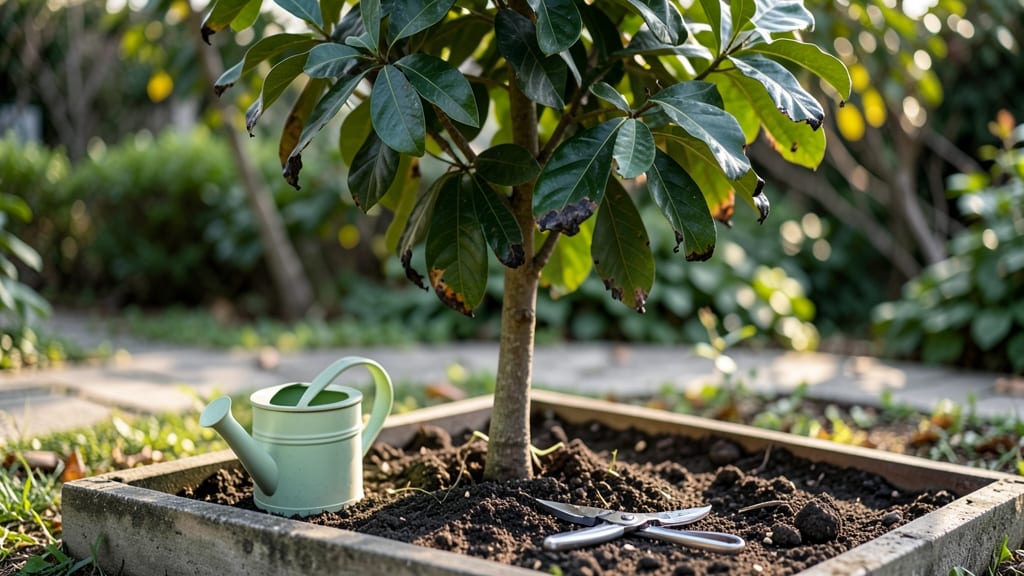
When your mango tree leaves turn black, it’s usually a fungal blight like anthracnose—and the fix is simpler than you think. I’ve saved my own trees from total collapse by acting fast, and you can too.
The key is catching it early, before the black spots spread like ink on wet paper.
Start by pruning the worst-affected leaves (sterilize your shears with rubbing alcohol first) and applying a copper fungicide spray—it’s the organic go-to for blight.
For severe cases, a neem oil solution (1 tablespoon per quart of water) works too, but spray in the early morning so the leaves dry quickly. Prevention is easier: thin the canopy for better airflow and water at the base, never overhead.
📚 In This Guide
- What you need
- Instructions
- Tips and common mistakes
- Wrapping up and next steps
What you need
- ● Gardening gloves (1 pair) – Nitrile or rubber gloves to protect your hands from sap and fungi.
- ● Pruning shears (1 pair) – Sterilized, sharp shears (blade length: 6–8 inches) for trimming infected leaves.
- ● Disinfectant solution (1 bottle) – 70% isopropyl alcohol or bleach-water mix (1:9 ratio) for sterilizing tools.
- ● Fungicide spray (1 bottle) – Copper-based or sulfur-based fungicide (e.g., Copper Soap or Neem Oil Fungicide).
- ● Garden sprayer (1) – Adjustable nozzle sprayer (1–2 gallon capacity) for even coverage.
- ● Plastic bag or bucket (1) – For collecting and disposing of infected leaves.
- ● Hose with nozzle (1) – For rinsing tools and leaves.
- ● Magnifying glass – To inspect leaves for spores or fungal signs up close.
- ● Pruning saw – If you need to trim larger, infected branches.
- ● Organic mulch (e.g., straw or wood chips) – To improve soil health and prevent reinfection.
- ● Label maker – To mark treated areas if tracking progress.
How to revive a mango tree with blackened leaves
Blackened leaves on your mango tree don’t mean the end—just a fungal battle to win.
Identify and Confirm the Fungal Issue
Start by examining the blackened leaves up close. Fungal blight often begins as dark spots that spread and turn leaves entirely black, sometimes with a velvety texture. Check the undersides of leaves too—yellow or brown patches there confirm fungal activity. Avoid touching the leaves with wet hands, as this can spread spores.
Compare the blackened areas to healthy leaves on the same tree. Healthy leaves should be glossy green with no discoloration. If you spot black spots or a sooty appearance, you’re dealing with a fungal infection like anthracnose or sooty mold. These thrive in warm, humid conditions, which is why mango trees often succumb during rainy seasons or after heavy watering.
Prune Infected Leaves and Improve Airflow
Use clean, sharp pruning shears to remove all blackened or spotted leaves immediately. Don’t leave them on the ground—bag them and dispose of them in the trash, not your compost. Pruning encourages new growth and reduces the fungal load on the tree. Focus on removing leaves from the lower branches first, as these often stay damp longer and foster fungal growth.
After pruning, thin out any dense foliage to improve airflow. Fungal spores spread more easily in crowded, humid conditions. Aim for a balance where sunlight can reach the inner branches and air can circulate freely. You’ll know you’ve done enough when you can see light filtering through the canopy without obstruction.
Apply Fungicide and Adjust Watering Practices
Once you’ve pruned, treat the tree with a copper-based fungicide or a neem oil solution (mix 2 tablespoons of neem oil with 1 gallon of water and a few drops of dish soap). Spray the solution evenly over all leaves, including the undersides, until they’re fully coated. Repeat this treatment every 7-10 days for at least 3 weeks to break the fungal cycle. Early morning applications work best, as the solution will dry before evening humidity sets in.
Adjust your watering routine to prevent future outbreaks. Mango trees need deep watering once a week, but avoid overhead sprinkling, which keeps leaves wet for long periods. Water at the base of the tree instead, using a soaker hose or drip irrigation. If your tree is in a humid climate, consider spacing waterings further apart—every 10-14 days—to let the foliage dry out completely between sessions.
Tips & tricks for reviving blackened mango tree leaves
Here's what nobody tells you about saving your mango tree—these tricks make all the difference when fighting fungal blight.
Timing is Everything: Don't wait to prune those blackened leaves—act immediately. Fungal spores spread rapidly, especially in warm, humid conditions. I've seen trees recover completely when pruned within 48 hours of first noticing black spots, but wait a week and you're fighting an uphill battle. Focus on lower branches first, as they stay damp longest and become fungal hotspots.
Tool Prep Matters: Before you start pruning, sterilize your pruning shears with rubbing alcohol or a 10% bleach solution. This prevents cross-contamination between healthy and infected branches. I learned this the hard way after accidentally spreading the infection to previously healthy parts of my tree. Also, use clean gloves—fungal spores can linger on your hands and spread to other plants.
Fungicide Application Strategy: When applying your copper-based fungicide or neem oil solution, focus on the undersides of leaves—they're where fungal spores love to hide. Use a handheld sprayer with a fine mist setting to ensure complete coverage. I like to apply in the early morning when humidity is lower, giving the solution time to dry before evening moisture sets in. This 7-10 day treatment schedule is non-negotiable for breaking the fungal cycle.
Watering Wisdom: The deep watering routine is crucial, but timing matters just as much. Water in the early morning so leaves have plenty of time to dry before evening. I've found that watering at the base with a soaker hose prevents overhead moisture that fuels fungal growth. In humid climates, consider moving to every 10-14 days—your tree's roots will thank you for the chance to dry out completely between waterings.
Pro Tips for Mango Tree Leaves Turning Black
- Here's what nobody tells you about saving your mango tree—these tricks make all the difference when fighting fungal b...
- Timing is Everything: Don't wait to prune those blackened leaves—act immediately. Fungal spores spread rapidly, espec...
- Tool Prep Matters: Before you start pruning, sterilize your pruning shears with rubbing alcohol or a 10% bleach solut...
Frequently asked questions
Got questions about your mango tree’s blackened leaves? You’re not alone! Here are some of the most common concerns—and quick fixes—to get your tree thriving again.
Why are my mango tree leaves turning black so fast?
Blackening leaves are often caused by fungal blight (like anthracnose) or bacterial infections, especially in humid or rainy seasons. Poor air circulation, overwatering, or weak tree health can also speed up the process. Act fast—fungus spreads quickly!
How long does it take for black leaves to fall off?
Blackened leaves usually drop within 3–10 days if the issue isn’t treated. However, if the problem is severe (e.g., deep fungal roots), new leaves may also show signs. Prune affected foliage immediately to stop the spread and improve airflow.
Should I water my mango tree less if leaves are turning black?
Yes! Overwatering worsens fungal growth. Let the top 2–3 inches of soil dry out between waterings. If your tree is in a pot, ensure the container has drainage holes. Morning watering is best—it reduces humidity buildup overnight.
What’s the fastest home remedy for black leaves?
Mix 1 tbsp baking soda + 1 tsp dish soap + 1 gallon water in a spray bottle and apply to leaves every 5–7 days. For stubborn cases, use a copper fungicide (follow label instructions). Always spray early in the morning to avoid burning leaves.
Can black leaves come back green after treatment?
Unfortunately, already black leaves won’t recover—they’re dead. But with proper care (fungicide, pruning, and adjusted watering), new healthy leaves should grow within 2–4 weeks. Monitor for repeat issues and adjust your tree’s environment.
Still stumped? Snap a photo of the affected leaves and compare them to common mango diseases for a faster diagnosis!
Wrapping up and next steps
Don’t let blackened mango leaves stress you out—your tree can bounce back with the right care! 🌿 By identifying the issue (likely fungal blight or environmental stress), gathering the right tools, and following a simple treatment plan, you’ll restore your mango tree’s health in no time. Start today by inspecting your tree, trimming affected leaves, and applying fungicide or natural remedies like neem oil.
Need extra help? Check local gardening forums or consult a horticulturist for personalized advice. Your mango tree will thank you with lush, vibrant foliage—and maybe even sweet fruit soon! 🍈