
Trees
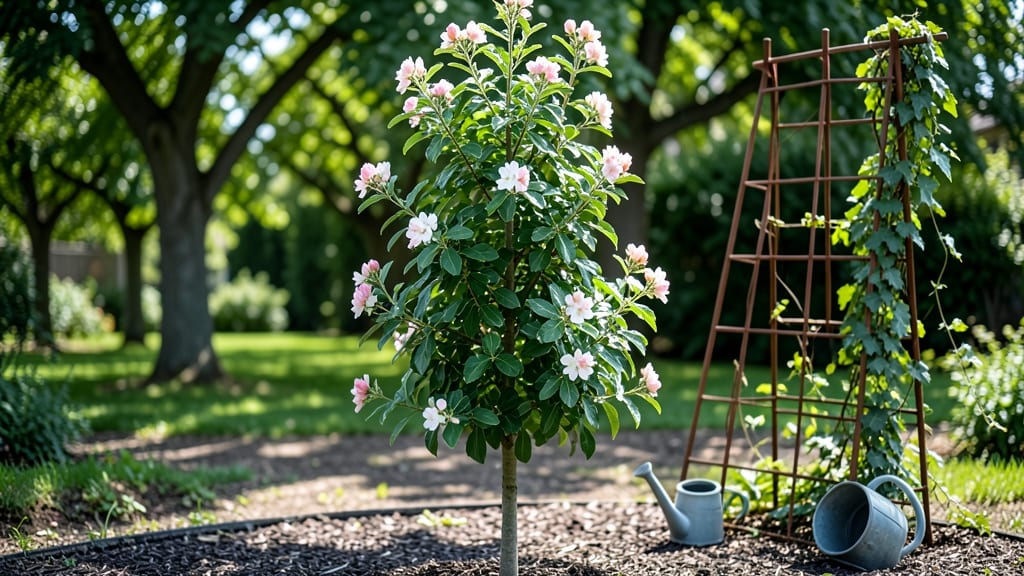
Growing miniature fruit trees on your patio means fresh peaches, apples, and citrus—without needing a backyard. 🌱 I learned the hard way that not all dwarf varieties thrive in containers, but the right choices produce fruit just like their full-sized cousins, only smaller and more manageable.
The secret lies in selecting cold-hardy rootstocks that stay compact while still bearing heavy crops.
You’ll need containers at least 15-20 gallons for most varieties, well-draining potting mix, and a sunny spot with 6+ hours of light daily. Pruning isn’t just about size control—it’s about shaping the tree to maximize airflow and fruit production.
My first attempt with a poorly pruned lemon tree ended in tangled branches and sparse harvests, but once I mastered the basics, the results were game-changing.
By summer, you’ll be harvesting sweet, sun-ripened fruit that tastes better than anything store-bought. The trees stay under 6 feet tall, making them perfect for balconies, small patios, or even large windowsills.
With the right care, some varieties even produce fruit within 2-3 years—far faster than traditional fruit trees.
Works for urban apartments, suburban patios, or even greenhouses. Whether you’re growing apples, peaches, or citrus, these space-saving trees prove you don’t need acres to enjoy a homegrown harvest. Let’s get those tiny orchards thriving!
📚 In This Guide
- What you need
- Instructions
- Tips and common mistakes
- Wrapping up and next steps
What you need
- ● Miniature fruit tree (dwarf or semi-dwarf variety): 1–3 trees (choose 2–3 different types for pollination, if needed—e.g., apple + crabapple)
- ● Rootstock: M9 (dwarf) or B9 (semi-dwarf) for compact growth
- ● Container or pot: 5–15 gallon capacity (depends on tree size; 10 gallons is ideal for most dwarfs)
- ● Material: Terracotta, fabric, or plastic (ensure drainage holes!)
- ● High-quality potting mix: Well-draining, organic-rich soil (avoid garden soil—it compacts!)
- ○ Optional: Add perlite or sand (10–20%) for aeration
- ● Fertilizer: Balanced 10-10-10 or organic (e.g., fish emulsion, compost)
- ● Slow-release granules for convenience
- ● Tools: Trowel or small shovel
- ● Pruning shears (sterilized!)
- ● Watering can with a rose nozzle (gentle watering = happy roots!)
- ● Mulch (shredded bark or straw) to retain moisture
- ● Tree supports (stakes or cages for windy areas)
- ● pH test kit (ideal range: 6.0–7.0 for most fruit trees)
- ● Drip irrigation system (for automated watering)
- ● Pollination aid (paintbrush or bee-friendly flowers nearby)
How to cultivate miniature fruit trees in containers
These compact varieties deliver real fruit in tiny spaces—here's how to keep them thriving.
🌱 Step 1: Select the Right Varieties and Containers
Choose dwarf or columnar cultivars like 'Columnar Honeycrisp' apples or 'Patio Princess' peaches, bred to stay under 6 feet tall. Avoid standard varieties—they'll outgrow containers quickly. For 4 trees, use 5-gallon pots with 18-inch diameter (minimum) to accommodate root growth without crowding.
Drill 4 drainage holes in the bottom of each pot—miniature trees still need excellent drainage. I line the holes with ¼-inch mesh to prevent soil loss while allowing excess water to escape. Terra cotta pots help regulate soil moisture, but plastic retains warmth better in cooler climates.
☀️ Step 2: Prepare Soil and Plant with Proper Spacing
Fill each pot with 2 gallons of high-quality potting mix (avoid garden soil—it compacts and suffocates roots). Amend with 1 cup perlite per pot to improve aeration and prevent soggy soil. The mix should feel like a damp sponge when squeezed—not wet or crumbly.
Plant your miniature trees at the same depth they were in their nursery pots. Press the soil firmly around the roots to eliminate air pockets, then water deeply until it runs out the drainage holes. Space 4 trees 3 feet apart if using a raised bed, or keep them isolated in individual containers.
💧 Step 3: Water and Fertilize for Optimal Growth
Water when the top 2 inches of soil feel dry—stick your finger in to check. Miniature trees dry out faster in small pots, but overwatering causes root rot. I use a self-watering pot for my balcony trees to maintain consistent moisture without drowning them.
Fertilize every 4-6 weeks during growing season with a balanced 10-10-10 formula. Reduce to half-strength in winter. Young trees need more nitrogen for leaf growth, but mature trees benefit from phosphorus-heavy feeds to encourage fruiting. Watch for yellowing leaves—they signal either over- or under-fertilization.
✂️ Step 4: Prune for Shape and Fruit Production
Prune in late winter (before buds swell) to remove dead, crossing, or inward-growing branches. Use clean, sharp shears to make cuts at a 45-degree angle just above a leaf node. This encourages outward growth and better light penetration to the center of the tree.
Thin fruit when they're pea-sized to prevent overcrowding. Leave 1-2 fruits per cluster—this ensures larger, higher-quality harvests. Avoid heavy pruning in summer; it stresses the tree and reduces next year's crop. A well-pruned miniature tree should have an open center with branches spaced 4-6 inches apart.
🪴 Step 5: Protect and Overwinter for Long-Term Success
Move pots to a sheltered location before temperatures drop below 20°F. Wrap the pots in burlap and cover the tree with a frost blanket if your winter lows dip below 10°F. Miniature trees are hardier than you'd think, but their small root systems freeze easily.
Reduce watering in winter to once every 2-3 weeks, only when the soil is completely dry. Resume normal care in early spring when buds begin to swell. With proper overwintering, your trees will return stronger each year, producing fruit for 10+ years in their containers.
Tips & tricks for perfect miniature fruit trees
Here's what nobody tells you about keeping these space-saving trees thriving for years to come.
Container Selection: The 18-inch diameter pots specified are non-negotiable for root health, but consider adding a saucer underneath to catch drainage. I've found that terra cotta pots actually work better in hot climates—they wick moisture away from roots, while plastic retains warmth better in cooler zones. For urban balconies, opt for pots with built-in casters to make seasonal relocations easier.
Soil Mix Secrets: That 1 cup perlite per pot isn't just for aeration—it's also your insurance against compacted soil. Mix in an additional ½ cup of worm castings per pot at planting time for natural nutrients and microbial activity. The soil should crumble easily between your fingers when squeezed; if it forms a ball, add more perlite.
Fertilization Timing: The 4-6 week fertilization schedule assumes ideal growing conditions. In hot summers, increase to every 3-4 weeks, but always reduce to half-strength in winter. I've learned the hard way that yellowing leaves often mean over-fertilization—when in doubt, fertilize less frequently rather than more heavily.
Winter Protection Strategy: The 20°F threshold for moving pots is your first line of defense, but don't wait until the last minute. I start monitoring forecasts in October and have my frost blankets ready. For extreme cold below 10°F, consider adding a layer of straw mulch around the base of the pot—this adds an extra 5-10°F of protection to those vulnerable roots.
Pro Tips for Miniture Fruit Trees
- Here's what nobody tells you about keeping these space-saving trees thriving for years to come.
- Container Selection: The 18-inch diameter pots specified are non-negotiable for root health, but consider adding a saucer underneath to catch drainage.
- Soil Mix Secrets: That 1 cup perlite per pot isn't just for aeration—it's also your insurance against compacted soil.
Frequently asked questions
Got questions about growing miniature fruit trees? You're not alone! Here are some of the most common queries—plus straightforward answers to help you get started with confidence.
How much space do miniature fruit trees really need?
Miniature fruit trees thrive in containers as small as 5-gallon pots (for dwarf varieties) or 15–20 gallons for semi-dwarf types. Place them 8–12 inches apart if growing multiple trees in the same container. For patios, a 4’x4’ area can comfortably fit 2–4 trees with proper spacing. Just ensure the container has drainage holes!
When is the best time to plant miniature fruit trees?
Plant in early spring (after the last frost) or late fall (6–8 weeks before winter). Avoid transplanting during extreme heat or cold. If buying bare-root trees, plant as soon as possible—within 24–48 hours of purchase. Container-grown trees can be planted year-round in mild climates.
Can I grow any fruit variety in miniature form?
No—only dwarf or semi-dwarf rootstocks (like B9, M9, or Cotoneaster) are suitable for miniatures. Popular choices include apple, peach, cherry, plum, fig, and citrus varieties. Always check the label for self-pollinating vs. pollinating needs—some require a second tree for fruit production!
What’s the biggest challenge with growing miniature fruit trees?
The top issues are overwatering (let soil dry slightly between waterings) and pests (aphids, spider mites). Use neem oil or insecticidal soap for mild infestations. Root-bound trees (circling roots) may need repotting—gently prune roots if needed. Prune in late winter to encourage airflow and shape.
Will the fruit from miniature trees taste the same as full-size ones?
Yes! While fruit may be smaller in quantity, the flavor is often more concentrated due to focused care. Dwarf trees produce harvests in 2–3 years (vs. 5+ for full-size trees). For best taste, hand-pollinate flowers with a soft brush if bees are scarce in your area.
Wrapping up and next steps
Miniature fruit trees are the perfect way to bring the joy of fresh produce to small spaces—whether you’re dreaming of tiny apples on your balcony or dwarf citrus by your patio door.
With the right variety, care, and a dash of creativity, you can enjoy homegrown fruit without sacrificing space. 🌱
Ready to take the next step? Start by choosing a variety that suits your climate and taste, then grab your gardening tools and get planting! Whether you’re a beginner or a seasoned green thumb, miniature fruit trees make growing your own food deliciously simple.