
Pruning
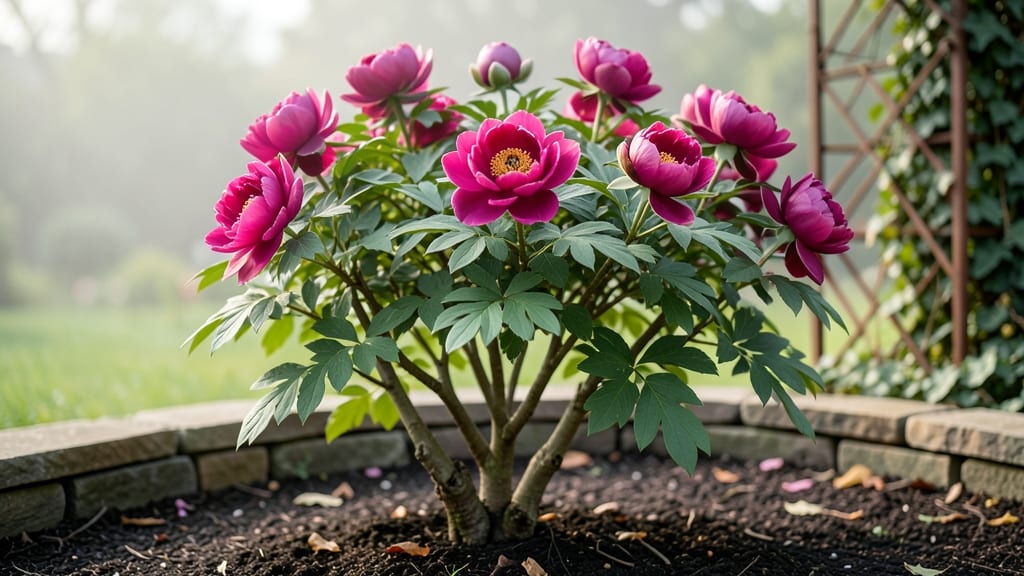
The Paeonia tree peony rewards patience with stunning, long-lasting blooms—but their pruning secrets are what unlock that showstopping display. ✨ I’ve pruned these woody giants for years, and the dormant season is when you set the stage for next year’s performance.
One wrong cut now means fewer flowers later, but get it right and you’ll have branches heavy with velvety blossoms by spring.
The key is timing and precision. You’ll need sharp pruners, a clean workspace, and a clear understanding of what to remove—dead wood, crossing branches, and any suckers stealing energy from the main stems.
Most gardeners over-prune, but tree peonies thrive with minimal trimming. Think of it as sculpting, not shearing: you’re shaping the plant’s future, not just tidying up what’s there.
What you’ll end up with is a stronger, more vigorous tree peony that blooms earlier, lasts longer, and produces bigger flowers than ever before. The branches will stand taller, the foliage denser, and the whole plant will look like it’s been pampered by a pro.
This isn’t just pruning—it’s an investment in next season’s masterpiece.
Works for both young and mature tree peonies, whether you’re in a cold climate or a milder zone. The principles stay the same, but we’ll adjust for your specific growing conditions. Ready to transform those branches into a floral centerpiece?
📚 In This Guide
- What you need
- Instructions
- Tips and common mistakes
- Wrapping up and next steps
What you need
- ● Pruning shears – Bypass pruners (sharp, clean, and capable of cutting through ½-inch stems). Quantity: 1 pair.
- ● Loppers – For thicker branches (up to 1.5 inches in diameter). Quantity: 1 pair.
- ● Gloves – Heavy-duty, cut-resistant gloves (tree peonies can have thorns!). Quantity: 1 pair.
- ● Disinfectant – 70% isopropyl alcohol or rubbing alcohol to sterilize tools between cuts. Quantity: Small bottle.
- ○ Pruning sealant – Optional but helpful for larger cuts (e.g., tree wound paint). Quantity: Small tube.
- ● Garden twine or tape – To mark branches for removal (if needed). Quantity: Small roll.
- ● Trash bags or bucket – For collecting pruned branches. Quantity: 1-2.
- ● Ladder (if needed) – For taller tree peonies (extendable or sturdy step ladder). Height: At least 6-8 feet.
- ● Hand saw – For stubborn, thick branches (if loppers aren’t enough).
- ● Pruning saw – Fine-toothed for clean cuts on woody stems.
- ● Garden hose – To rinse tools and branches post-pruning.
- ● Notebook & pen – To sketch a pruning map of your tree peony’s structure.
- ● Compost bin – To recycle pruned branches as nutrient-rich mulch.
Step-by-Step guide for pruning tree peonies in dormancy
Here's how to refresh your tree peony for next season's biggest, healthiest blooms.
✂️ Step 1: Time Your Pruning Precisely
Wait until after the first hard frost when the plant is completely dormant—typically late winter to early spring—before the buds begin to swell. Pruning too early risks encouraging new growth that won't survive cold snaps. I check for dormancy by tapping the branches: if they sound hollow and the leaves have crisped to brown, it's time.
Real talk: if you miss the window and buds start swelling, just wait until after flowering to prune lightly. The plant will forgive you, but you'll sacrifice some bloom size that season. Mark your calendar for February or March depending on your climate zone.
✂️ Step 2: Assess and Remove Dead or Weak Wood
Start by removing any branches that are dead, diseased, or crossing at sharp angles. Dead wood is easy to spot—it's brittle, brown, and won't bend without snapping. Use clean, sharp pruners to make 45-degree cuts just above a healthy outward-facing bud or branch junction.
Here's the thing—tree peonies naturally develop a layered, vase-like shape. You'll see the main trunk with several strong branches radiating outward. Remove only the weakest branches (about 10-20% of the total), never more than a third at once. Think of it like giving your plant a haircut—you're shaping, not deforesting.
✂️ Step 3: Thin for Better Airflow and Light
Next, focus on improving airflow by thinning out crowded branches. Look for areas where branches rub against each other or grow too close together. These spots create moisture pockets that lead to fungal diseases. Remove the smaller of the two branches at the base where it meets the main trunk.
You'll notice that tree peonies often grow with multiple stems from the base. If you have more than 3-5 main stems, thin them out to the strongest, most vigorous ones. This ensures each remaining branch gets enough energy to produce spectacular blooms. Don't worry about leaving some bare spots—they'll fill in beautifully over time.
✂️ Step 4: Shape for Optimal Bloom Display
Now it's time to shape your tree peony for maximum impact. Step back and visualize how the blooms will display. Remove any branches growing inward that would block light from reaching the center. Cut just above an outward-facing bud to encourage new growth in the right direction.
For a more natural look, I like to maintain the plant's natural vase shape. Avoid cutting back the main stems unless they're clearly dead or damaged. The goal is to create an open center that lets light reach all branches, which leads to more abundant flowering. You'll see the difference in just one season—blooms will be larger and more numerous.
🌿 Step 5: Clean Up and Protect for Next Season
After pruning, rake up and dispose of all debris from around the plant. This removes overwintering pests and fungal spores that could infect your tree peony. I like to add a 2-inch layer of mulch around the base (but not touching the trunk) to protect roots from temperature swings and retain moisture.
Here's where it gets fun—watch how your tree peony responds. Within a few weeks, you'll see fresh green growth emerging from the pruned branches. This new growth will develop into next year's blooms, so give it plenty of water during the growing season. Your careful pruning now will pay off with showstopping flowers that'll make your neighbors green with envy.
Tips & tricks for perfect tree peony pruning
Here's what I've learned after years of shaping my own tree peonies—these details make all the difference between decent blooms and showstopping flowers.
Dormancy Check: The timing in Step 1 is everything—don't rely on the calendar alone. Test dormancy by gently tapping branches: they should sound hollow (like knocking on wood) and the leaves must be crispy brown. If you see any green, wait! I've made the mistake of pruning too early, and while the plant survived, the blooms were half the size. Trust the plant's natural signals over the date.
Cutting Technique: When you're making those 45-degree cuts in Step 2, position your pruners just above a healthy outward-facing bud. This ensures new growth emerges in the right direction. I use a small pencil to mark the cut line first—it keeps me from cutting too close to the bud. Also, always sterilize your pruners between cuts with rubbing alcohol to prevent spreading disease.
Thinning Strategy: In Step 3, focus on creating that open center by removing branches that grow inward. Think of it like arranging a bouquet—you want everything facing outward to catch the light. I like to step back every few minutes to visualize how the blooms will display. And remember, you're aiming for 3-5 main stems—this might mean removing some perfectly healthy branches, but it pays off with bigger, more abundant flowers.
Post-Pruning Care: After cleaning up in Step 5, don't forget to water thoroughly right after mulching. The mulch layer helps retain moisture, but the roots still need hydration to recover from pruning. I give my tree peonies a deep watering every week during the growing season, especially after pruning. This jumpstarts the new growth that will become next year's blooms.
Pro Tips for Paeonia Tree Peony
- Here's what I've learned after years of shaping my own tree peonies—these details make all the difference between decent blooms and showstopping flowers.
- Dormancy Check: The timing in Step 1 is everything—don't rely on the calendar alone.
- Cutting Technique: When you're making those 45-degree cuts in Step 2, position your pruners just above a healthy outward-facing bud.
Frequently asked questions
When is the exact best time to prune my tree peony?
The ideal window is late winter to early spring—right after the coldest snap but before new growth begins (typically February–March in most climates). Pruning too early risks frost damage, while waiting too long can stress the plant. Pro tip: If you’re in a warmer zone, aim for January–February to avoid accidental bud stimulation.
Can I prune tree peonies in fall or winter?
Fall pruning is not recommended—it can leave cuts vulnerable to winter dieback. If you miss the dormant-season window, hold off until early spring. Exception: Light cleanup (removing dead wood) is fine in late fall, but avoid heavy pruning. Winter pruning is risky unless your region has consistent sub-freezing temps—new growth can be frost-killed.
How much can I cut back? Should I remove all the old wood?
Tree peonies are hardy and don’t need drastic cuts—focus on shaping and removing dead/diseased wood. Trim back 1/3 of last year’s growth to encourage bushier blooms. Never cut into old wood (the thick, woody stems)—this reduces next year’s flower potential. Think of it as a haircut, not a buzz cut!
My tree peony has brown, mushy stems—what’s wrong?
Mushy, brown stems often signal bacterial blight or root rot, especially if the soil stays soggy. Act fast: Prune affected stems below the damage with sterilized tools, then treat with copper fungicide. Improve drainage by amending soil with compost or sand. Warning: If rot spreads, you may need to remove the entire plant to save nearby peonies.
Are there alternatives to pruning if I’m overwhelmed?
If pruning feels daunting, focus on these low-effort steps:
- Deadheading: Snip spent blooms (but never cut into old wood).
- Thinning: Remove only crowded stems to improve airflow.
- Mulching: Add 2–3 inches of organic mulch to protect roots and retain moisture.
Wrapping up and next steps
Pruning your paeonia tree peony during dormancy isn’t just about tidying up—it’s your secret weapon for stunning blooms and robust growth next season! 🌸 With the right tools, timing, and technique, you’ll encourage healthier stems, more vibrant flowers, and a thriving plant that steals the show.
Now that you’re armed with the know-how, there’s no time like the present to grab those pruners and give your tree peony the care it deserves.
Next steps:
- ✅ Mark your calendar for late winter or early spring—just before new growth starts.
- 🌱 Grab your tools and head outside for a refreshing pruning session.
- 📸 Snap a before-and-after photo to track your progress and celebrate your green thumb!