
Pruning
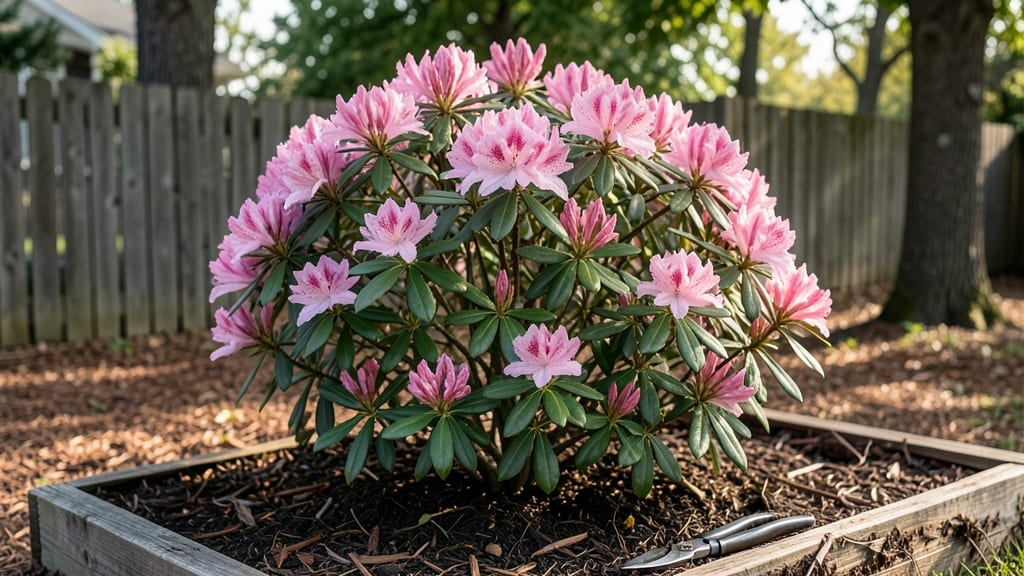
Pruning your pink azalea tree isn’t just about keeping it tidy—it’s the key to unlocking those vibrant spring blooms that make your garden pop for months. I learned this the hard way after my first azalea dumped its flowers early, leaving me with sparse branches and a lesson in timing.
These trees bloom on old wood, meaning last year’s growth holds next year’s flowers, so every cut matters.
The secret lies in three simple steps: prune right after flowering, shape gently to maintain a natural form, and never remove more than a third of the branches at once.
My ‘Girard’s Pink’ azalea now bursts with blooms from late spring through summer, and the foliage stays lush even when the flowers fade. The right approach turns pruning from a chore into a way to extend your garden’s color show.
You’ll end up with a tree that looks fuller, blooms longer, and resists pests better because it’s not stressed by aggressive cuts. Plus, the fragrance from those pink blooms? Nothing beats it on a warm spring morning. Ready to transform your azalea into a year-round star?
Works for all pink varieties—whether you’ve got the classic ‘Hino Crimson’ or a newer hybrid—just adjust timing slightly based on when your tree flowers. Let’s get those shears sharp and those branches blooming!
📚 In This Guide
- What you need
- Instructions
- Tips and common mistakes
- Wrapping up and next steps
What you need
- ● Pruning shears: Bypass pruners (sharp, clean, and comfortable to use—look for ergonomic handles for long sessions). Quantity: 1 pair.
- ● Loppers: For thicker branches (1/4" to 1" diameter). Quantity: 1 pair.
- ● Hand saw: Pruning saw with a curved blade for stubborn branches (2"–3" diameter). Quantity: 1.
- ● Gloves: Heavy-duty gardening gloves (cut-resistant for safety). Quantity: 1 pair.
- ● Disinfectant: 70% isopropyl alcohol or pruning sealant (to prevent disease spread). Quantity: Small bottle.
- ○ Pruning sealant (optional): For larger cuts (1–2" diameter) to promote faster healing.
- ● Ladder or step stool: If your azalea is tall (6+ feet). Safety note: Use a stable, non-slip model.
- ● Timing: Prune after blooming (late spring to early summer) for best results. Avoid pruning in fall/winter—it can damage buds!
- ● Weather check: Choose a dry, overcast day to minimize stress on the tree.
- ● Safety gear: Safety glasses (to protect from debris) and closed-toe shoes.
- ● Cleanup supplies: Trash bag (for pruned branches) and a small broom (to sweep up debris).
- ● Sharpen your tools! Dull blades tear bark—use a file or pruning tool sharpener before starting. 🔪
- ● Sterilize between cuts: Wipe tools with alcohol after each snip to avoid spreading fungal diseases. ✨
- ● Mark your cuts: Use a pencil to outline where you’ll prune for cleaner results.
Step-by-step guide to pruning pink azaleas for vibrant blooms
Here’s how to keep your pink azaleas flourishing with bold, healthy blooms every season.
✂️ Step 1: Prune Immediately After Flowering
Cut back spent blooms as soon as they fade—this prevents seed formation and redirects energy into next year’s flowers. Use clean, sharp pruners to make cuts just above a set of leaves or a bud. Avoid cutting into old wood, as azaleas bloom on new growth from last year’s stems.
Real talk: If you wait until summer, you’ll miss the best time to shape the plant. Azaleas bloom on last year’s growth, so pruning too late means fewer flowers next spring. Focus on removing only dead or crossing branches—never more than a third of the plant at once.
🌿 Step 2: Thin Out Overcrowded Branches
Look for branches growing inward or rubbing against others—these compete for sunlight and weaken the plant. Remove them completely at the base, cutting just outside the branch collar where it meets the main stem. This improves airflow and reduces disease risk.
You’ll notice thicker, more open growth within weeks. Azaleas naturally grow in a rounded shape, so avoid heavy shearing. Instead, selectively prune to encourage a natural, bushy form. If a branch is too thick to cut cleanly, make the cut at a slight angle to avoid tearing the bark.
✂️ Step 3: Shape for Balance and Light Penetration
Step back and assess the plant’s overall shape. Aim for a slightly open center to allow sunlight to reach inner branches. Trim back any overly long or leggy growth to encourage denser foliage. Cut just above an outward-facing bud to promote growth in the right direction.
Here’s the thing—azaleas hate being sheared into a tight ball. Instead of hacking away, focus on refining the natural form. If you’re unsure where to cut, imagine the plant’s ideal shape and trim to guide it there. A well-shaped azalea blooms more evenly and stays healthier longer.
☀️ Step 4: Fertilize and Water After Pruning
After pruning, apply an acid-loving plant fertilizer to replenish nutrients lost during trimming. Water deeply to help the plant recover, ensuring the soil stays moist but not soggy. Azaleas thrive in well-draining, slightly acidic soil with a pH between 5.0 and 6.0.
You’ll see new growth within a few weeks if the conditions are right. Mulch around the base with 2-3 inches of organic mulch to retain moisture and regulate soil temperature. Avoid piling mulch against the trunk, as this can cause rot. Keep the root zone consistently moist but never waterlogged.
⏰ Step 5: Monitor and Maintain Year-Round
Check your azalea monthly for signs of stress, like yellowing leaves or sparse blooms. These often signal overpruning, poor drainage, or nutrient deficiency. Adjust care as needed—add fertilizer in early spring or improve drainage if leaves look unhealthy.
This is the moment that matters: Consistent care keeps azaleas blooming for years. Prune lightly each year after flowering, and your pink azalea will reward you with vibrant, long-lasting color season after season. With patience and the right techniques, you’ll have a showstopping shrub that’s the envy of the neighborhood.
Tips & tricks for perfect pink azalea pruning
A few simple tricks will help you avoid common mistakes and keep your azaleas looking their best year after year.
Timing is Everything: The instructions emphasize pruning immediately after flowering, and there's a reason for that urgency. Azaleas bloom on last year's growth, so cutting too late means you're essentially pruning away next year's flowers. I've seen people wait until summer and then wonder why their azaleas only have sparse blooms the following spring. Mark your calendar right after the last pink bloom fades—this is your one-week window for optimal pruning.
Tool Selection Matters: While the instructions mention using clean, sharp pruners, I can't stress enough how important this is. Dull pruners tear plant tissue instead of making clean cuts, which can damage the plant and invite disease. Invest in a good pair of bypass pruners (the kind with curved blades) for larger branches and hand pruners for smaller trimming. Always clean your tools with rubbing alcohol between cuts to prevent spreading any potential pathogens from one part of the plant to another.
The 1/3 Rule: The instructions warn against removing more than a third of the plant at once, and this is a critical guideline. Azaleas are resilient, but they can't recover from drastic pruning. Think of it like giving your plant a haircut—you wouldn't shave off all your hair at once, would you? If your azalea looks particularly overgrown, consider spreading the pruning over two seasons rather than trying to fix everything at once. You'll get better results and less stress on the plant.
Post-Pruning Care: After you've finished pruning, don't just walk away. The instructions mention fertilizing and watering, but here's what nobody tells you—this is when you should also inspect your cuts. If you see any ragged edges or torn bark, use a small amount of horticultural sealant to protect those areas. It's like putting a band-aid on a scrape—it helps the plant heal faster and prevents infection. Also, give your azalea a good drink of water right after pruning to help it recover from the stress.
Pro Tips for Pink Azalea Tree
- A few simple tricks will help you avoid common mistakes and keep your azaleas looking their best year after year.
- Timing is Everything: The instructions emphasize pruning immediately after flowering, and there's a reason for that urgency.
- Tool Selection Matters: While the instructions mention using clean, sharp pruners, I can't stress enough how important this is.
Frequently asked questions
Got questions about keeping your pink azalea tree in tip-top shape?
You’re not alone! Here are the most common concerns—plus expert answers to keep those blooms coming year after year.
When is the best time to prune my pink azalea tree for blooms?
Prune your pink azalea right after its spring blooming season (typically late May to June) to encourage fresh growth and next year’s flowers. Avoid pruning in fall or winter, as this can damage buds forming for spring.
Can I prune my azalea tree too much? What are the signs?
Yes! Over-pruning can stress your tree, leading to fewer blooms or even leaf drop. Watch for bare branches, stunted growth, or yellowing leaves—these are red flags. Stick to removing only 1/3 of the plant’s height at a time.
How often should I prune my pink azalea tree?
Light maintenance (removing dead or crossing branches) can be done anytime, but major pruning should happen once a year post-bloom. Young trees may need occasional shaping, while mature ones thrive with minimal annual trims.
What if my azalea isn’t blooming? Could pruning fix it?
Pruning alone won’t solve poor blooming, but it helps! First, check for sunlight (6+ hours/day), acidic soil (pH 4.5–6.0), and proper watering. If conditions are right, prune to improve airflow and reduce stress.
Are there alternatives to pink azaleas with easier pruning?
If pink azaleas feel high-maintenance, try knockout roses (disease-resistant, low-prune) or hydrangeas (bloom on new growth, so prune anytime). For similar color, crapemyrtles are drought-tolerant and prune-friendly!
Wrapping up and next steps
Pruning your pink azalea tree doesn’t have to be intimidating—it’s all about timing, technique, and a little love! 🌸 By mastering the art of shaping and maintaining its branches, you’ll unlock a cascade of vibrant blooms year after year.
Whether you’re a seasoned gardener or just starting, the key is patience and consistency.
Ready to transform your azalea into a showstopper? Grab your tools and get pruning! Start with a single branch this season, observe how it responds, and build confidence. Before you know it, your garden will be the talk of the neighborhood—thanks to your blooming success! 🌿