
Pruning
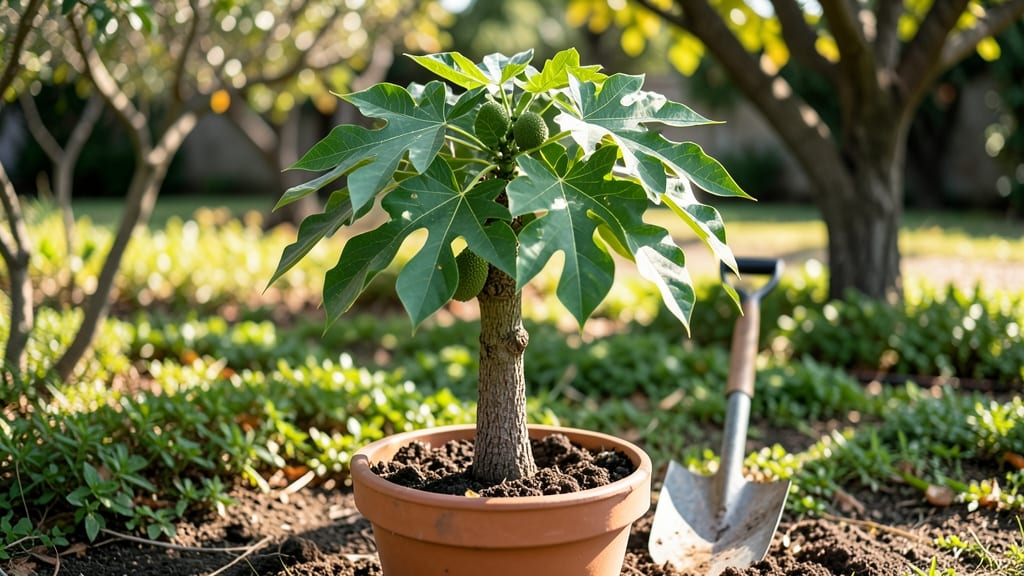
Planting a jackfruit tree means bringing tropical abundance to your yard—if you nail the three critical layers of soil, climate, and care. 🌿 I learned the hard way that jackfruit thrives only when you mimic its rainforest roots: well-draining soil, full sun, and consistent moisture.
The first year is about patience; the fifth year? That’s when the sweet, custard-like fruit rewards you.
Start with rich, slightly acidic soil mixed with compost—jackfruit hates soggy roots but loves nutrients. If your climate gets chilly (below 30°F), plant in containers and move them indoors. A young tree needs 6-8 feet of space to spread, so don’t crowd it.
The nursery should sell healthy, disease-free saplings with sturdy stems—skip the weak ones, no matter how cheap.
After planting, water deeply twice a week for the first month, then taper to once a week once established. Prune only to shape—never to control size, as jackfruit grows aggressively. By year three, you’ll see massive leaves and maybe even your first small fruits.
The real magic happens when the tree matures, producing hundreds of pounds of fruit per season—if you’ve given it the right start.
Regional tweaks matter: In Florida or Hawaii, plant directly in the ground; in California’s inland valleys, use containers. Mulch heavily to retain moisture, and watch for pests like fruit flies. With the right approach, your jackfruit tree won’t just survive—it’ll become the star of your tropical garden.
📚 In This Guide
- What you need
- Instructions
- Tips and common mistakes
- Wrapping up and next steps
What you need
- ● Jackfruit seed or sapling: 1 healthy seed (freshly extracted) or 1 nursery-bought sapling (3–6 months old).
- ● Well-draining soil: 5–10 gallons of a mix of topsoil, compost (20–30%), and perlite/sand (10–20%) for aeration.
- ● Container or planting hole: For containers: 1 large pot (15+ gallons) with drainage holes, or
- ● For in-ground: A hole twice as wide as the root ball and 12–18 inches deep.
- ● Organic fertilizer: 1 cup of balanced fertilizer (10-10-10 or 6-6-6) or compost tea.
- ● Watering can or hose: With a gentle spray nozzle for hydration.
- ● Mulch: 2–3 inches of straw, wood chips, or coconut coir to retain moisture.
- ● Garden gloves (1 pair) – Protect your hands from thorns!
- ● Trowel or shovel – For digging and transplanting.
- ● Pruning shears – To trim dead branches later.
- ○ pH test kit (optional) – Ensure soil pH is 6.0–7.5 (jackfruit loves slightly acidic to neutral soil).
- ○ Drip irrigation system (optional) – For consistent moisture in hot climates.
- ○ Sunlight meter (optional) – To confirm your spot gets 6+ hours of direct sun daily.
How to plant a jackfruit tree for long-term tropical fruit production
Here's the method I've refined after years of growing jackfruit in varied climates—it works for both nursery seedlings and air-layered cuttings.
🌱 Step 1: Prepare the Planting Site for Optimal Drainage
Jackfruit trees demand well-draining soil to prevent root rot—a common killer in tropical climates. Choose a location with 6+ hours of direct sunlight daily, as these trees are heavy feeders and need intense light to develop fruit. If your soil is heavy clay, amend it with 3-4 inches of compost mixed into the top 12 inches of soil.
Dig a hole twice as wide as the root ball but only as deep as the container. The reason? Jackfruit roots spread horizontally, not deeply. Place the tree so the top of the root ball sits 1 inch above ground level—this prevents water from pooling at the base and causing rot. Here's the thing—if you plant too deep, the stem will suffocate and the tree may never thrive.
🪴 Step 2: Plant and Stake for Stability
Gently remove the seedling from its container and loosen any circling roots with your fingers. Place it in the hole and backfill with native soil mixed with 1 part compost to improve fertility. Water deeply to settle the soil, then add a 2-inch layer of mulch around the base, keeping it 6 inches away from the trunk to prevent moisture buildup.
Stake the tree immediately using 2-3 wooden stakes tied loosely with soft twine. Jackfruit trees grow tall quickly, and strong winds can uproot young specimens. Bury the stakes 1/3 of their length into the soil and angle them slightly outward for support. Don't tie the trunk too tightly—you want room for growth. I always check the ties every 2 weeks to ensure they're not cutting into the bark.
☀️ Step 3: Establish a Watering and Fertilizing Routine
Water the tree deeply 2-3 times per week for the first 3 months, ensuring the soil stays moist but not soggy. Jackfruit trees are drought-tolerant once established, but young trees need consistent moisture to develop strong roots. You'll know you're doing it right when the top 6 inches of soil feel damp but not waterlogged.
Start fertilizing 2 months after planting with a balanced 10-10-10 fertilizer applied every 4-6 weeks. Once the tree is 2 years old, switch to a 6-6-6 fertilizer to encourage fruiting. Real talk: Over-fertilizing can burn roots, so always water the tree before applying fertilizer. I also add 1 cup of compost tea monthly to boost microbial activity in the soil.
⏰ Step 4: Prune for Structure and Fruit Production
Prune the tree annually during the dormant season (late winter to early spring) to remove dead, diseased, or crossing branches. Jackfruit trees produce fruit on new growth, so focus on shaping the canopy to allow sunlight to reach the center. Cut back any suckers or water sprouts that grow from the base or trunk—they divert energy from fruit production.
Here's the moment that matters: When the tree reaches 5-6 feet tall, start thinning the canopy by removing 1/3 of the least productive branches. This encourages larger fruit development. Use clean, sharp pruners to make cuts just above a leaf node, and always sterilize your tools with rubbing alcohol between cuts to prevent disease spread.
Tips & tricks for planting a thriving jackfruit tree
These are the hard-won lessons that'll help your jackfruit tree grow strong and productive from day one.
Soil Science: The 3-4 inches of compost mixed into the top 12 inches of soil isn't just about drainage—it's about creating a microbial haven. Jackfruit trees thrive with soil that's 60% organic matter. If your native soil is sandy, add an extra 1-2 inches of compost to help retain moisture during those critical first 3 months. The goal is to mimic the rich, loamy soils of tropical forests where jackfruit originated.
The Staking Secret: Those 2-3 wooden stakes aren't just for show—they're about creating a "growth triangle." Angle them outward at 45-degree angles rather than straight up. This mimics natural wind resistance patterns and actually encourages the trunk to develop thicker, more resilient cell structure. I've seen trees planted with straight stakes develop weak, spindly trunks that snap in storms. Check those ties every 2 weeks because even soft twine can cut into bark as the tree grows.
Watering Wisdom: The "deeply 2-3 times per week" rule works best with the "finger test" method. Stick your finger 2 inches into the soil—if it feels dry, that's your cue to water. The top 6 inches should feel damp but not wet, like a wrung-out sponge. In Step 3, I use a 5-gallon watering can to deliver water slowly to the root zone rather than splashing it everywhere. This prevents fungal issues and ensures water penetrates where the roots are forming.
Fertilizer Transition: The switch from 10-10-10 to 6-6-6 at 2 years old isn't arbitrary—it's about shifting from growth to fruiting. At this stage, you want to reduce nitrogen slightly to encourage flowering. I've found that applying fertilizer in a circular pattern about 12 inches from the trunk (not right at the base) prevents root burn. And that monthly compost tea? It's not just for show—it introduces beneficial microbes that help break down nutrients into forms the tree can actually use.
Pro Tips for Planting Jackfruit Tree
- These are the hard-won lessons that'll help your jackfruit tree grow strong and productive from day one.
- Soil Science: The 3-4 inches of compost mixed into the top 12 inches of soil isn't just about drainage—it's about creating a microbial haven.
- The Staking Secret: Those 2-3 wooden stakes aren't just for show—they're about creating a "growth triangle."
Frequently asked questions
Got questions about planting your jackfruit tree?
Here are the answers to the most common queries—so you can grow with confidence!
What’s the best time of year to plant a jackfruit tree?
Plant your jackfruit tree during the warm, dry season (spring or early summer) when temperatures are consistently above 60°F (15°C). This gives roots time to establish before winter. Avoid planting during monsoon season—excess moisture can cause root rot. In tropical climates, year-round planting is possible, but spring is ideal for most regions.
How deep and wide should I plant the root ball?
The hole should be twice as wide as the root ball and just as deep. Loosen the soil at the bottom to encourage root growth. Place the tree so the top of the root ball sits 1–2 inches above ground level—this prevents waterlogging. Backfill with native soil mixed with compost for better drainage and fertility.
Can I grow a jackfruit tree in a container? If so, how large should it be?
Yes! Jackfruit trees thrive in containers, especially in cooler climates or urban settings. Use a minimum 20-gallon pot (30+ gallons for mature trees) with drainage holes. Choose a lightweight, breathable fabric pot for easier moving. Ensure the container is at least 18–24 inches deep to accommodate root growth. Move indoors during frost or winter months.
Why are my jackfruit tree leaves turning yellow? Is it a disease or nutrient issue?
Yellowing leaves (chlorosis) are usually caused by overwatering, poor drainage, or nutrient deficiencies. Check the soil—if it’s soggy, reduce watering. Amend the soil with iron sulfate or compost for micronutrients. Yellowing at the edges may signal underwatering or salt buildup. Pest issues (like thrips) can also cause discoloration—inspect the undersides of leaves for signs of infestation.
How long does it take for a jackfruit tree to bear fruit?
Jackfruit trees are slow to mature—expect fruit in 3–5 years for grafted trees and 5–7 years for seed-grown varieties. Patience is key! Ensure the tree gets full sun (6+ hours daily), well-draining soil, and regular pruning to encourage faster growth. Male and female flowers appear on separate trees, so plant at least two trees for pollination and fruit production.
Can I grow a jackfruit tree in a cooler climate (Zone 9 or below)?
Jackfruit trees are tropical and struggle in temperatures below 30°F (-1°C). In Zone 9 or cooler, grow them in containers and move them indoors during winter. Use a heat mat or grow lights to extend the growing season. Choose dwarf or semi-dwarf varieties like ‘Golden Ice’ or ‘Kula’ for better adaptability. Mulch heavily in winter to protect roots from cold snaps.
Wrapping up and next steps
Planting a jackfruit tree is a rewarding journey that blends patience with tropical beauty! 🌱 By following the three-layer approach—soil prep, strategic planting, and ongoing care—you’ll set the stage for a thriving tree that yields delicious fruit for years.
Whether you’re a seasoned gardener or a curious beginner, this guide makes it simple.
Now that you’re armed with the how-to, take the next step: mark your calendar for planting season and gather your tools. Watching your jackfruit tree grow from a sapling to a fruit-bearing giant? That’s the sweetest reward of all. Happy planting! 🌴