
Lawn
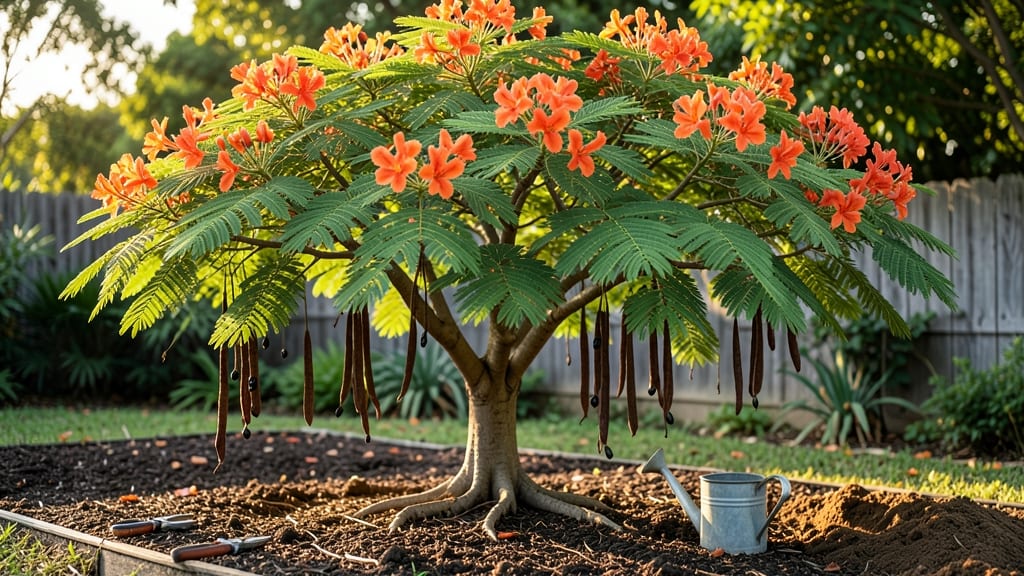
Growing royal poinciana trees from seed pods is the fastest way to get those shockingly vibrant orange blooms in your landscape. 🌿 I’ve started dozens of these tropical beauties, and the secret to quick germination lies in timing, moisture, and a little patience—though the payoff makes it worth every minute.
You’ll need fresh pods (harvested when they’re brown but still slightly pliable), a warm spot with bright, indirect light, and a mix of well-draining potting soil.
The pods are tough—scratching the outer shell helps speed up sprouting—but once you crack that code, you’ll see tiny roots emerge within 2-4 weeks.
What you end up with is a sturdy seedling ready for transplanting by spring, its first leaves unfurling into a deep, glossy green. The key is keeping the soil consistently moist (not soggy) and protecting young plants from pests like aphids, which love tender new growth.
Perfect for warm climates (zones 10-11), but with proper care, you can even overwinter seedlings indoors. Here’s how to turn those pods into a sun-drenched centerpiece for your yard.
📚 In This Guide
- What you need
- Instructions
- Tips and common mistakes
- Wrapping up and next steps
What you need
- ● Royal Poinciana seed pods: 3–5 mature, dry pods (harvested in late fall/winter for best results).
- ● Well-draining potting mix: 1–2 gallons (use a cactus/succulent blend or mix with perlite/pumice for aeration).
- ○ Small pots or seed trays: 4–6 (4–6 inches deep) with drainage holes. Optional: Biodegradable peat pots for easy transplanting.
- ● Planting containers: 1–2 larger pots (10–12 inches) for mature seedlings.
- ● Spray bottle: For gentle watering (avoid over-saturation!).
- ● Clear plastic wrap or humidity dome: To create a mini greenhouse effect.
- ● Grow lights or sunny windowsill: Bright, indirect light (6+ hours daily). Pro tip: South-facing windows work best! 🌞
- ○ Fertilizer (optional): Balanced liquid fertilizer (5-5-5 NPK) for seedlings after 4–6 weeks.
- ● Pruning shears: For trimming seed pods and shaping mature plants.
- ● Label markers: To track planting dates (germination can take 2–6 weeks!).
- ● Patience: Royal Poincianas grow slowly—expect 1–2 years before transplanting outdoors.
- ● Warm climate: These trees thrive in USDA Zones 10–11. Indoors? Use a heat mat (70–85°F) for faster germination.
- ● Outdoor space: A sunny, sheltered spot (full sun + wind protection) for mature trees (they can reach 20–30 feet!).
Step-by-step instructions for germinating royal poinciana tree seeds
Here's how to coax these tropical beauties into sprouts without the usual months-long wait.
🌱 Step 1: Extract and Prepare the Seeds
Royal poinciana pods are tough—you'll need to carefully crack them open with pliers or a knife to reveal the 1-2 inch-long, flat, brown seeds inside. Handle them gently; the outer shell protects delicate embryos. I soak the seeds in lukewarm water for 24 hours first—this softens the seed coat and speeds up germination by breaking dormancy. The water should cover the seeds completely, but don't let them float freely; a shallow dish works best.
After soaking, check for any seeds that float—they're likely empty or nonviable. Discard those immediately. The good seeds will sink to the bottom. Here's the thing—these seeds are sensitive to drying out, so keep them moist (not soggy) until you're ready to plant. A damp paper towel in a sealed container works well for short-term storage if you're not planting right away.
💧 Step 2: Sow in Moist, Well-Draining Medium
Use a sterile seed-starting mix combined with 20% perlite or coarse sand to improve drainage—royal poincianas hate soggy roots. Fill small pots or a seed tray with this mix and moisten it until damp but not dripping. Plant the seeds ½ inch deep—any deeper and they'll struggle to push through the soil. I like to use biodegradable pots because these seedlings develop strong taproots early and shouldn't be disturbed.
Here's where it gets fun—watch for the first signs of germination in 10-21 days, though some stubborn seeds may take up to 45 days. The key is consistency: keep the soil evenly moist by watering from the bottom (place pots in a tray of water for 10 minutes, then drain). Overwatering now causes rot, while letting the soil dry out completely kills germination. You'll know it's right when the soil surface looks slightly damp but not glistening.
☀️ Step 3: Provide Warmth and Indirect Light
Royal poinciana seeds need warmth (75-85°F) to germinate—closer to the upper end for faster results. A seedling heat mat works wonders, or place the pots in a warm, bright spot like near a south-facing window (but not in direct sun yet). Once sprouts emerge, move them to bright, indirect light immediately—these seedlings are shade-sensitive and will stretch toward any light source if deprived.
You'll see the first true leaves appear within 2-4 weeks after germination, but don't rush to transplant. The seedlings need time to develop a sturdy root system. At this stage, I use a grow light on a 14-hour cycle to prevent leggy growth. If a seedling grows too tall too quickly, it's a sign of insufficient light—adjust immediately to avoid weak stems that can't support the plant's weight.
🪴 Step 4: Transplant to Larger Containers
Once seedlings have 3-4 sets of true leaves (about 3-4 months old), it's time to move them to 5-gallon containers with fresh potting mix. Royal poincianas grow fast, so give them room to develop. Handle the seedlings carefully—their taproots are fragile. I like to use a clay pot with drainage holes because the roots appreciate the breathability, but plastic works too if you're in a cooler climate.
After transplanting, water deeply to settle the soil around the roots, then reduce watering slightly. These young trees prefer to dry out between waterings. Place them in a spot with full sun exposure (6+ hours daily), but protect them from harsh afternoon sun for the first two weeks to avoid leaf scorch. You'll notice new growth within 2-3 weeks—that's your signal everything is working.
⏰ Step 5: Harden Off Before Outdoor Planting
Royal poincianas are tropical and can't handle frost, so wait until all danger of frost has passed in your area before moving them outside permanently. Start hardening off by placing the containers outside in a sheltered spot for 1-2 hours daily, gradually increasing their time outdoors over 2-3 weeks. This slow acclimation prevents shock and helps the seedlings adjust to wind and direct sun.
Real talk: These trees grow 10-20 feet per year once established, so give them space! Plant them in a location where they have 15+ feet of clearance above and around them—royal poincianas develop wide canopies and deep root systems. With patience and the right conditions, you'll have a stunning shade tree in just a few years.
Tips & tricks for germinating royal poinciana tree seeds
Here's what nobody tells you—these seeds have hidden quirks that make all the difference between success and frustration.
Soaking Strategy: The 24-hour lukewarm soak is non-negotiable for breaking dormancy, but here's the secret: use filtered or distilled water instead of tap. Chlorine and fluoride can inhibit germination, even in small amounts. I also add a few drops of hydrogen peroxide (3%) to the water—it sterilizes the seeds and boosts oxygen uptake, which can cut germination time by 3-5 days. Just don't exceed 10 minutes of exposure, or you'll damage the seed coats.
Seed Viability Test: After your 24-hour soak, perform the float test immediately—don't wait. Place seeds in fresh water and observe for 5 minutes. Any that remain submerged are viable; discard those that float. Here's what I learned the hard way: some seeds may sink initially but then float after 24 hours. These are often empty or damaged—trust the final test, not the initial one.
Temperature Precision: While the instructions mention 75-85°F, I've found the sweet spot is actually 80-82°F for fastest germination. Use a seedling heat mat set to 80°F and monitor with a thermometer—fluctuations outside this range can delay sprouting by weeks. For those in cooler climates, place pots on top of a refrigerator (not inside) to create a stable warm environment without risking overheating.
Germination Timeline Reality Check: The 10-21 day window is accurate, but here's the catch: most seeds germinate within 14-18 days if conditions are perfect. If you're not seeing sprouts by day 21, check for these common issues first—soil that's either too wet or too dry, inconsistent temperatures, or seeds planted too deeply. I've had batches that took 30 days because the soil dried out completely between waterings, so that 10-minute bottom-watering method is crucial.
Pro Tips for Royal Poinciana Tree Seed Pods
- Here's what nobody tells you—these seeds have hidden quirks that make all the difference between success and frustration.
- Soaking Strategy: The 24-hour lukewarm soak is non-negotiable for breaking dormancy, but here's the secret: use filtered or distilled water instead of tap.
- Seed Viability Test: After your 24-hour soak, perform the float test immediately—don't wait.
Frequently asked questions
Got questions about growing royal poinciana tree seed pods? You’re not alone! Here are answers to the most common queries to help you succeed with your germination project.
How long do royal poinciana seed pods take to germinate?
Royal poinciana seeds can take anywhere from 2 to 6 weeks to germinate, depending on temperature, moisture, and seed freshness. For faster results, soak seeds for 24 hours before planting and maintain soil temps between 70–85°F (21–29°C). Patience is key—some seeds may take longer!
Why aren’t my royal poinciana seeds sprouting?
If your seeds aren’t germinating, check these common issues:
- Cold soil: These tropical seeds need warmth—use a heat mat if temps drop below 70°F (21°C).
- Dry conditions: Keep soil consistently moist (not soggy) during germination.
- Old seeds: Freshness matters—plant seeds within 1–2 years of harvest for best results.
- Poor seed viability: Some pods may contain non-viable seeds; test a few to confirm.
Can I grow royal poinciana from store-bought seed pods?
Yes! Store-bought seed pods (like those from tropical plant nurseries) can work, but freshness is critical. Look for pods that are firm, dry, and haven’t been exposed to extreme heat or cold. If the pods feel soft or moldy, skip them—they’re likely past their prime.
How do I speed up germination for royal poinciana seeds?
Try these pro tips to encourage faster sprouts:
- Pre-soak seeds in warm water for 24–48 hours before planting.
- Use a heat mat to keep soil temps ideal (75–85°F / 24–29°C).
- Scarify seeds lightly with sandpaper to break dormancy (optional but helpful).
- Plant shallowly—just ½ inch deep—to avoid suffocating sprouts.
Are royal poinciana seed pods toxic to pets or kids?
Royal poinciana pods and seeds are not considered toxic to pets or humans, but always exercise caution. The seeds have a hard outer shell that’s difficult to digest—supervise children or pets if they’re curious. The tree itself is non-toxic, but ingestion in large quantities may cause mild stomach upset.
Wrapping up and next steps
Growing royal poinciana tree seed pods into thriving plants is a rewarding journey—just remember, patience and consistency are key!
With the right soil, warmth, and care, you’ll soon enjoy vibrant, fast-growing sprouts that could one day shade your garden. Now that you’re armed with tips and tricks, why not share your progress with fellow plant enthusiasts or even start a small collection?
🌱 Next Steps to Try:
- Experiment with different germination methods (like soaking vs. direct planting).
- Join a local gardening group to swap seeds or advice!
- Document your sprouts’ growth—it’s a fun way to track success.