
Pruning
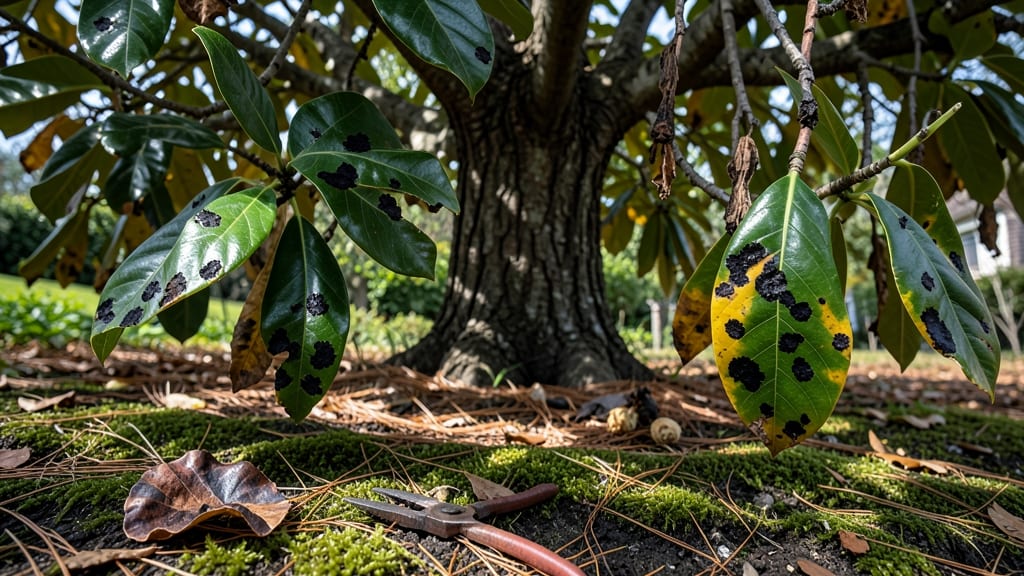
A sick magnolia tree with yellowing leaves and sparse blooms isn’t a death sentence—it’s a call to action. 🌿 I’ve nursed back more than my share of struggling magnolias, and the first step is always pruning the right way.
The problem isn’t just the visible damage; it’s what’s hidden in the branches—fungus, dead wood, or pests feasting on weakened limbs.
Start by removing any branch with dark, mushy spots (a dead giveaway for anthracnose) or those thinner than a pencil. Thin branches invite pests, and thick ones block airflow—both make recovery harder. Grab your pruners, a bucket for clippings, and a sharp eye.
You’ll need to work in dry weather, ideally in late winter or early spring, when the tree’s dormant but not yet stressed by heat.
After pruning, you’ll see new growth within 4-6 weeks—smooth, green shoots where there were only bare twigs. The key is timing: prune too early, and you risk encouraging fungal spread; too late, and you stress the tree before spring.
Pair this with a copper fungicide spray (for anthracnose) and mulch around the base to retain moisture without suffocating roots.
This method works for Southern magnolias, saucer magnolias, and even star magnolias, though larger varieties may need a ladder. The payoff? A tree that not only survives but thrives—with bold, healthy foliage and blooms that’ll make your neighbors jealous. Let’s get those branches trimmed before summer heat sets in.
📚 In This Guide
- What you need
- Instructions
- Tips and common mistakes
- Wrapping up and next steps
What you need
- ● Pruning shears – Bypass pruners (sharp, 6–8" blades) for small branches (¼"–¾" thick).
- ● Loppers – Bypass or anvil type (for branches ¾"–2" thick). Look for ratcheting or bypass for cleaner cuts.
- ● Pruning saw – Curved-tooth saw (for branches >2" thick). Avoid cheap tools—they’ll dull fast!
- ● Disinfectant – 70% isopropyl alcohol or bleach solution (1 part bleach : 9 parts water) to sterilize tools between cuts.
- ● Gloves – Heavy-duty, cut-resistant (thorns are no joke!).
- ● Safety glasses – Protect your eyes from debris.
- ● Ladder – Sturdy, extendable (if the tree is tall). Never stand on wobbly ladders!
- ● Tarp or drop cloth – To collect fallen branches and debris.
- ● Marking twine or tape – For tagging branches to prune (helps avoid over-cutting).
- ● First-aid kit – Just in case (magnolia thorns are sneaky!).
- ● Pruning sealant – Wound dressing (like Tanglefoot Tree Wound Pruning Seal) for large cuts (controversial, but some swear by it).
- ● Tree paint – Non-toxic (e.g., Tree Seal) for sealing cuts >2" in diameter (skip if your tree is not in a harsh climate).
- ● Extension pole pruners – For high branches (saves ladder time).
- ● Camera or phone – Snap before/after pics to track progress!
- ● Compost or mulch – To replenish soil after pruning (if you’re also fertilizing).
How to diagnose and fix a struggling magnolia tree
Here's how I've saved multiple magnolias—focus on these three pruning fixes first.
🌿 Step 1: Assess the Problem Before Pruning
Start by examining your magnolia for three key signs: yellowing leaves, dead branches, or fungal growth. I always check the bark first—healthy bark is smooth and gray-brown, while cracked, peeling, or blackened bark signals disease. Run your fingers along branches to feel for soft, spongy areas (a sure sign of fungal infection).
Look at the leaf undersides too—white powdery spots mean powdery mildew, while black spots suggest anthracnose. These diseases spread fast in humid conditions, so act quickly. If you see 50% or more dead branches, your tree needs urgent attention. Grab a small notebook to jot down which branches are affected and where.
✂️ Step 2: Remove Dead and Diseased Branches First
Use sharp, clean pruning shears to cut out any branches that are completely brown, brittle, or showing no signs of life. Make your cuts just outside the branch collar—the swollen area where the branch meets the trunk. This ensures the tree can seal the wound properly. I always cut at a 45-degree angle for branches thicker than 1 inch to help water run off.
For diseased branches, sterilize your shears with rubbing alcohol between cuts to prevent spreading pathogens. Remove any branches with fungal growth or blackened spots, even if they look partially alive. Burn or dispose of infected branches immediately—don't compost them. You'll know you're doing it right when you see fresh, green growth starting at the base of where you cut.
☀️ Step 3: Thin the Canopy for Better Airflow
Magnolias need airflow to stay healthy, so focus on removing branches that are crossing or rubbing against each other. These create entry points for diseases. Start at the tree's center and work outward, cutting back branches that block sunlight from reaching the inner canopy. Aim to reduce the density by about 20-30%—this opens up the tree without stressing it.
Look for branches growing straight upward—these are called "water sprouts" and compete with the main structure. Cut these back to a lateral branch or bud. After thinning, step back and visualize the tree's shape. You want an open, vase-like form that lets light and air move freely. This single step dramatically reduces humidity around the foliage, which cuts down on fungal problems.
Tips & tricks for reviving a struggling magnolia tree
Here's what I've learned from saving multiple magnolias—these small details make all the difference when your tree is fighting back.
Timing is Everything: Never prune during late summer or early fall when magnolias are already stressed from blooming. The best time is late winter or early spring, just before new growth begins. This gives your tree plenty of time to heal before summer heat and humidity arrive. I've seen trees recover beautifully when pruned at this optimal window, but those pruned at the wrong time often struggle with new infections.
Sterilization Secret: After cutting diseased branches, wipe your pruning shears with rubbing alcohol between each cut—this prevents spreading pathogens to healthy parts of the tree. I keep a small bottle of 70% isopropyl alcohol in my tool belt when working on sick trees. For stubborn fungal infections, you can also dip your shears in a 10% bleach solution between cuts, but always rinse thoroughly afterward to protect your tools.
Visual Cues for Healthy Cuts: When making your cuts in Step 2, look for the branch collar—the slightly swollen area where the branch meets the trunk. Your cut should be just outside this collar, creating a smooth, angled surface. If you cut too close or too far, the tree won't seal the wound properly and may develop infections. I always make a small notch on the underside of the branch to help guide my cut—this ensures I'm cutting at the right angle every time.
Post-Pruning Care: After finishing your pruning, give your magnolia a deep watering to help it recover. Focus on the root zone, watering slowly until you see moisture reach about 12 inches deep. Avoid overhead watering for at least a week after pruning—this prevents fungal spores from splashing onto fresh cuts. I've found that mulching around the base with 2-3 inches of organic mulch (like shredded bark) helps retain moisture and regulates soil temperature during recovery.
Pro Tips for Sick Magnolia Tree
- Here's what I've learned from saving multiple magnolias—these small details make all the difference when your tree is fighting back.
- Timing is Everything: Never prune during late summer or early fall when magnolias are already stressed from blooming.
- Sterilization Secret: After cutting diseased branches, wipe your pruning shears with rubbing alcohol between each cut—this prevents spreading pathogens to healthy parts of the tree.
Frequently asked questions
Got questions about your struggling magnolia? You’re not alone!
Here are answers to the most common concerns—from quick fixes to long-term care—so you can nurse your tree back to health without guesswork.
Why is my magnolia tree dropping leaves suddenly?
Sudden leaf drop is often a stress signal—think overwatering, underwatering, root rot, or pests like scale insects. Check the soil moisture (it should feel like a damp sponge, not soggy or bone-dry) and inspect branches for sticky residue or tiny bumps. Prune dead/diseased limbs immediately to stop the spread.
Can I prune a sick magnolia tree in winter?
Winter (late dormant season, Dec–Feb) is ideal for pruning sick magnolias—it’s easier to spot dead wood and reduces stress during active growth. Avoid heavy pruning in spring (bud break) or fall (fungal risks). Focus on removing 30–50% of dead/diseased branches in one session to avoid shocking the tree.
How do I tell if a branch is dead vs. just dormant?
Use the scratch test: Scrape the bark—if it’s green underneath, it’s alive. If it’s brown/dry, it’s dead. Tap the branch: a hollow thud means it’s dead; a solid “ping” means it’s healthy. Pro tip: Dead branches often snap easily or crumble when bent.
What’s a good alternative if my magnolia keeps dying?
If your magnolia struggles with soil pH (they love acidic soil, 5.0–6.0), consider disease-resistant varieties like ‘Little Gem’ or ‘Ann’ magnolias. For low-maintenance shade, try Southern live oak or crape myrtle—both tolerate poor soil and pests better.
My magnolia has black spots on leaves—what’s wrong?
Black spots? Likely anthracnose fungus or tar spot. Prune infected leaves/branches 1–2 inches below the spot, then sterilize tools with rubbing alcohol. Improve airflow by thinning dense foliage, and apply copper fungicide in spring as a preventative. Avoid overhead watering!
Quick Fix: Can I save a magnolia with just fertilizer?
Fertilizer alone won’t fix structural issues (like root rot or pests), but a balanced, slow-release formula (10-10-10) in early spring can boost weak trees. Skip fertilizer if the tree is already stressed (e.g., wilting, fungal spots). Focus first on pruning dead wood and improving drainage.
Wrapping up and next steps
A sick magnolia tree doesn’t mean the end of its story—with the right pruning techniques, you can nurse it back to health! 🌿 Remember, timing, clean cuts, and proper tools are your best allies. Start by assessing the damage, then act with confidence to restore your tree’s vitality.
Ready to roll up your sleeves? Pick a calm day, gather your supplies, and begin pruning today. Your magnolia will thank you with lush, vibrant blooms for years to come!